



 本文介绍了如何在.NET自定义控件中定义和使用自定义事件,包括声明事件参数、事件委托及事件名称的具体步骤,并提供了完整的代码示例。
转自:http://www.cnblogs.com/bobbychencj/archive/2010/12/01/1893361.html
这次我们主要将上回自定义控件的Attribute部分如何定义Event事件属性简单说明下:
在自定义的控件中添加自定义的事件属性步骤:
1.需要声明自定义事件参数,一般是继承自EventArgs类;
2.声明事件委托;
3.定义事件名称;
下面我们来看看一个自定义事件的示例:
我们首先定义一个窗体控件【SecondControl自定义控件的Event属性.cs】,代码如下:
using System;
using System.Collections.Generic;
using System.ComponentModel;
using System.Data;
using System.Drawing;
using System.Text;
using System.Windows.Forms;

namespace WinFormControlLibrary
{
    public partial class SecondControl自定义控件的Event属性 : TextBox
    {
        /// <summary>
        /// Constructor
        /// </summary>
        public SecondControl自定义控件的Event属性()
        {
            InitializeComponent();
        }

        /// <summary>
        /// 声明CustomerLogin自定义事件参数
        /// </summary>
        public sealed class CustomerLoginEventArgs : EventArgs { }

        /// <summary>
        /// 声明CustomerLogout自定义事件参数
        /// </summary>
        public sealed class CustomerLogoutEventArgs : EventArgs { }

        /// <summary>
        /// 声明CustomerLogin事件委托
        /// </summary>
        public delegate void CustomerLoginEventHandler(object sender, CustomerLoginEventArgs e);

        /// <summary>
        /// 声明CustomerLogout事件委托
        /// </summary>
        public delegate void CustomerLogoutEventHandler(object sender, CustomerLogoutEventArgs e);

        /// <summary>
        /// 声明事件名称
        /// </summary>
        [CategoryAttribute("自定义事件")]
        public event CustomerLoginEventHandler CustomerLogin
        {
            add { }
            remove { }
        }

        /// <summary>
        /// 声明事件名称
        /// </summary>
        [CategoryAttribute("自定义事件")]
        public event CustomerLogoutEventHandler CustomerLogout
        {
            add { }
            remove { }
        }

        protected override void OnPaint(PaintEventArgs pe)
        {
            base.OnPaint(pe);
        }
    }
}
接下来,新建Form并添加这个自定义控件,代码如下:
namespace 自定义窗体控件Demo
{
    partial class 之三窗体控件设计时Event属性Attribute
    {
        /// <summary>
        /// Required designer variable.
        /// </summary>
        private System.ComponentModel.IContainer components = null;

        /// <summary>
        /// Clean up any resources being used.
        /// </summary>
        /// <param name="disposing">true if managed resources should be disposed; otherwise, false.</param>
        protected override void Dispose(bool disposing)
        {
            if (disposing && (components != null))
            {
                components.Dispose();
            }
            base.Dispose(disposing);
        }

        #region Windows Form Designer generated code

        /// <summary>
        /// Required method for Designer support - do not modify
        /// the contents of this method with the code editor.
        /// </summary>
        private void InitializeComponent()
        {
            this.secondControl自定义控件的Event属性1 = new WinFormControlLibrary.SecondControl自定义控件的Event属性();
            this.SuspendLayout();
            //
            // secondControl自定义控件的Event属性1
            //
            this.secondControl自定义控件的Event属性1.Location = new System.Drawing.Point(55, 48);
            this.secondControl自定义控件的Event属性1.Name = "secondControl自定义控件的Event属性1";
            this.secondControl自定义控件的Event属性1.Size = new System.Drawing.Size(100, 20);
            this.secondControl自定义控件的Event属性1.TabIndex = 0;
            //
            // 之三窗体控件设计时Event属性Attribute
            //
            this.AutoScaleDimensions = new System.Drawing.SizeF(6F, 13F);
            this.AutoScaleMode = System.Windows.Forms.AutoScaleMode.Font;
            this.ClientSize = new System.Drawing.Size(284, 262);
            this.Controls.Add(this.secondControl自定义控件的Event属性1);
            this.Name = "之三窗体控件设计时Event属性Attribute";
            this.Text = "之三窗体控件设计时Event属性Attribute";
            this.ResumeLayout(false);
            this.PerformLayout();

        }

        #endregion

        private WinFormControlLibrary.SecondControl自定义控件的Event属性 secondControl自定义控件的Event属性1;
    }
}
添加完成后,我们就可以在设计时的属性栏中看见我们自定义的属性了。
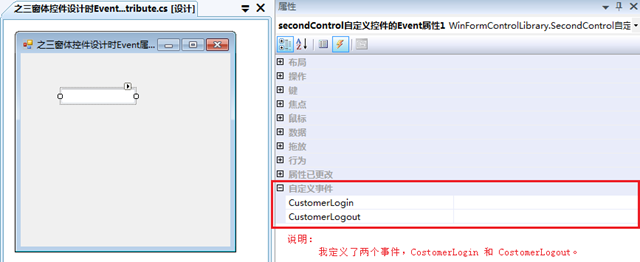
关于设计时的Attribute就基本介绍到这里。





 扫一扫
扫一扫


 165
165

 被折叠的 条评论
为什么被折叠?
被折叠的 条评论
为什么被折叠?
 到【灌水乐园】发言





