



 本文围绕C++展开,介绍了函数对象,即重载()运算符的类对象。还阐述了std::function,它是函数对象包装类模板,能实现泛型回调机制。同时详细讲解了std::bind,包括其对普通函数、模板函数、lambda表达式等的绑定及返回值类型转换。
1: 函数对象
如果一个类将()运算符重载为成员函数,这个类就称为函数对象类,这个类的对象就是函数对象。函数对象是一个对象,但是使用的形式看起来像函数调用,实际上也执行了函数调用,因而得名。
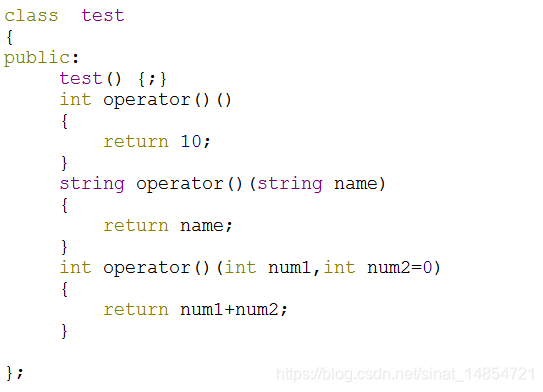
通俗一点就是 运算符重载, 只不过 重载的 运算符是() 。和别的 运算符号 重载 调用 一样。 支持重载 和缺省
使用 方法:
test t;
cout<<t(10,20)<<endl;
2: std::function
function是一组函数对象包装类的模板,实现了一个泛型的回调机制。function与函数指针比较相似,优点在于它允许用户在目标的实现上拥有更大的弹性,即目标既可以是普通函数,也可以是函数对象和类的成员函数,而且可以给函数添加状态。
声明一个function时,需要给出所包装的函数对象的返回值类型和各个参数的类型。比如,声明一个function,它返回一个bool类型并接受一个int类型和一个float类型的参数,可以像下面这样:
function<bool (int, float)> f;个人 认为 和map 一起使用 可以达到对 函数进行包装的效果: 相当于 接口,更简洁,方便

• 函数模板说明
以cplusplus.com中描述的原型说明:
基于Fn参数返回一个函数对象,并且以Args参数绑定为函数对象的参数。每个参数要么绑定一个参数值,要么绑定为一个std::placeholders。如果参数绑定成一个值,那么返回的函数对象将总使用绑定的参数值做为调用参数,即调用传入参数将不起作用;如果参数绑定为std::placeholders,那么返回的函数对象在被调用时需要传入实时参数,参数填充的位置即由placeholder指定的序号。
bind函数返回的函数对象类型和Fn一致,除非用户在Ret参数中指定了返回类型。需要注意的是,Ret参数只是一个模板参数,它并不能由传入该函数的参数进行隐式推导。
• 模板参数说明
以cplusplus.com中描述的原型说明:
Fn : 函数对象、普通函数指针或类成员函数指针。
Args : 用于绑定的参数列表。其中每个参数要么是参数值要么是一个placeholder
std::bind详解
• 绑定普通函数

#include <iostream>
#include <functional>
using namespace std;

int g_Minus(int i, int j)
{
    return i - j;
}

int main()
{
    function<int(int, int)> f1 = bind(g_Minus, 1, 2);
    function<int()>         f2 = bind(g_Minus, 1, 2);                   // 绑定参数返回的函数对象实际等同这种形式
    function<int(int, int)> f3 = bind(g_Minus, placeholders::_1, placeholders::_2);
    function<int(int)>      f4 = bind(g_Minus, 1, placeholders::_1);    // 绑定第一个参数
    function<int(int)>      f5 = bind(g_Minus, placeholders::_1, 1);    // 绑定第二个参数

    cout << f1(3, 2) << endl;                                           // -1,实际传入参数将不起作用
    cout << f2()     << endl;                                           // -1
    cout << f3(3, 2) << endl;                                           // 1
    cout << f4(3)    << endl;                                           // -2
    cout << f5(3)    << endl;                                           // 2

    return 1;
}
• 绑定模板函数
#include <iostream>
#include <functional>
using namespace std;

template <class T>
T g_Minus(T i, T j)
{
    return i - j;
}

int main()
{
    function<int(int, int)> f1 = bind(g_Minus<int>, 1, 2);
    function<int()>         f2 = bind(g_Minus<int>, 1, 2);                  // 绑定参数返回的函数对象实际等同这种形式
    function<int(int, int)> f3 = bind(g_Minus<int>, placeholders::_1, placeholders::_2);
    function<int(int)>      f4 = bind(g_Minus<int>, 1, placeholders::_1);   // 绑定第一个参数
    function<int(int)>      f5 = bind(g_Minus<int>, placeholders::_1, 1);   // 绑定第二个参数

    cout << f1(3, 2) << endl;                                               // -1,实际传入参数将不起作用
    cout << f2()     << endl;                                               // -1
    cout << f3(3, 2) << endl;                                               // 1
    cout << f4(3)    << endl;                                               // -2
    cout << f5(3)    << endl;                                               // 2

    return 1;
}
• 绑定lambda表达式
#include <iostream>
#include <functional>
using namespace std;

int main()
{
    function<int(int, int)> f = bind([](int i, int j){ return i - j; }, placeholders::_1, placeholders::_2);
    cout << f(2, 3) << endl;                                            // -1
    return 1;
}
• 绑定函数对象
#include <iostream>
#include <functional>
using namespace std;

struct Minus
{
    int operator() (int i, int j)
    {
        return i - j;
    }
};

int main()
{
    function<int(int, int)> f = bind(Minus(), placeholders::_1, placeholders::_2);
    cout << f(2, 3) << endl;                                            // -1
    return 1;
}
• 绑定类静态成员函数
#include <iostream>
#include <functional>
using namespace std;

class Math
{
public:
    static int Minus(int i, int j)
    {
        return i - j;
    }
};

int main()
{
    function<int(int, int)> f = bind(&Math::Minus, placeholders::_1, placeholders::_2);
    cout << f(2, 3) << endl;                                            // -1
    return 1;
}
• 绑定类对象成员函数
#include <iostream>
#include <functional>
using namespace std;

class Math
{
public:
    int Minus(int i, int j)
    {
        return i - j;
    }
};

int main()
{
    Math m;
    function<int(int, int)> f = bind(&Math::Minus, &m, placeholders::_1, placeholders::_2);
    cout << f(2, 3) << endl;                                            // -1
    return 1;
}
• 返回值的类型转换
#include <iostream>
#include <functional>
using namespace std;

class Math
{
public:
    int Minus(int i, int j)
    {
        return i - j;
    }
};

struct Result
{
    int m_Result;

    Result() : m_Result(0) {}
    Result(int result) : m_Result(result) {}
};

int main()
{
    Math m;
    auto   f = bind<Result>(&Math::Minus, &m, placeholders::_1, placeholders::_2);
    Result r = f(2, 3);
    cout << r.m_Result << endl;                                         // -1
    return 1;
}





 扫一扫
扫一扫


 539
539

 被折叠的 条评论
为什么被折叠?
被折叠的 条评论
为什么被折叠?
 到【灌水乐园】发言





