



一、合并两个有序链表
1、题目描述
https://leetcode.cn/problems/merge-two-sorted-lists
2、算法分析
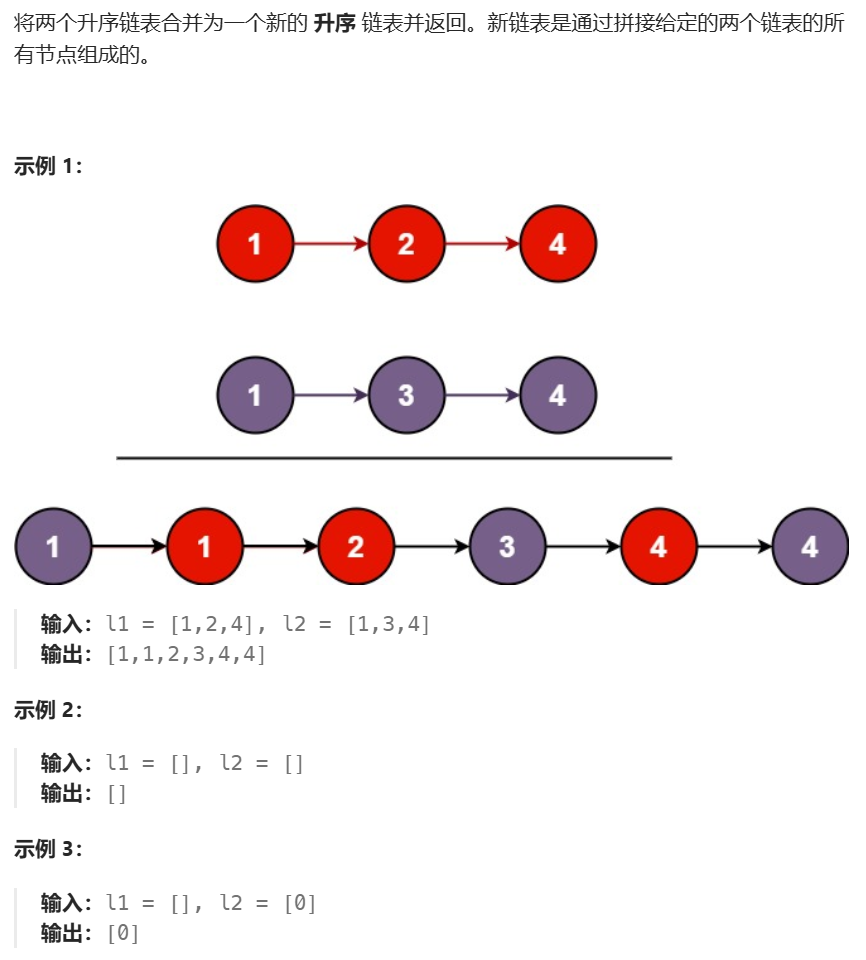
这道题和之前的合并两个有序数组的思路很像,创建空链表即可,可以很轻松地写出如下代码。
/**
 * Definition for singly-linked list.
 * struct ListNode {
 *     int val;
 *     struct ListNode *next;
 * };
 */
typedef struct ListNode ListNode;
struct ListNode* mergeTwoLists(struct ListNode* list1, struct ListNode* list2)
{
    if(list1 == NULL)
    {
        return list2;
    }
    if(list2 == NULL)
    {
        return list1;
    }

    //创建空链表
    ListNode* newHead = NULL;
    ListNode* newTail = NULL;

    ListNode* l1 = list1;
    ListNode* l2 = list2;

    while(l1 && l2)
    {
        if(l1->val >= l2->val)
        {
            //l2尾插到新链表中
            if(newHead == NULL)
            {
                newHead = newTail = l2;
            }
            else
            {
                //链表非空
                newTail->next = l2;
                newTail = newTail->next;
            }
            l2 = l2->next;
        }
        else
        {
            //l1尾插到新链表中
            if(newHead == NULL)
            {
                newHead = newTail = l1;
            }
            else
            {
                newTail->next = l1;
                newTail = newTail->next;
            }
            l1 = l1->next;
        }
    }
    //要么l1为空,要么l2为空
    if(l1)
        newTail->next = l1;
    if(l2)
        newTail->next = l2;

    return newHead;
}
虽然这个代码可以运行通过,但有个很严重的问题——太过冗余!虽然我们可以将尾插的代码封装成函数来解决,但是这里我提供一个更好的方法。导致代码冗余的根本原因就在于我们创建的是一个空的新链表,因此要进行if…else…语句判断,那我直接一开始向系统申请一块空间,创建新的非空的链表不就可以了。至于新的非空链表的val值是什么,我们不用在乎,因为这个非空链表起的是一个占位置的作用(在后续的链表学习中,这种起到占位置作用的节点,我们称之为“哨兵位”)。所有节点按题目要求尾插完成后,新链表就是如下图所示的样子:

这里要注意,我们此时不能返回newHead,而是应该返回newHead的下一个节点才对。并且我们向系统申请的空间在结束后也要释放(虽然在OJ平台上是否释放不会影响整体程序,但还是要养成好习惯~)
3、参考代码
/**
 * Definition for singly-linked list.
 * struct ListNode {
 *     int val;
 *     struct ListNode *next;
 * };
 */
typedef struct ListNode ListNode;
struct ListNode* mergeTwoLists(struct ListNode* list1, struct ListNode* list2)
{
    if(list1 == NULL)
    {
        return list2;
    }
    if(list2 == NULL)
    {
        return list1;
    }

    //创建非空链表
    ListNode* newHead, *newTail;
    newHead = newTail = (ListNode*)malloc(sizeof(ListNode));

    ListNode* l1 = list1;
    ListNode* l2 = list2;

    while(l1 && l2)
    {
        if(l1->val >= l2->val)
        {
            //l2尾插到新链表中
            newTail->next = l2;
            newTail = newTail->next;
            l2 = l2->next;
        }
        else
        {
            //l1尾插到新链表中
            newTail->next = l1;
            newTail = newTail->next;
            l1 = l1->next;
        }
    }
    //要么l1为空,要么l2为空
    if(l1)
    {
        newTail->next = l1;
    }
    if(l2)
    {
        newTail->next = l2;
    }
    ListNode* retHead = newHead->next;
    free(newHead);
    newHead = NULL;
    return retHead;
}
二、链表的回文结构
1、题目描述
https://www.nowcoder.com/share/jump/1753713495724
2、算法分析
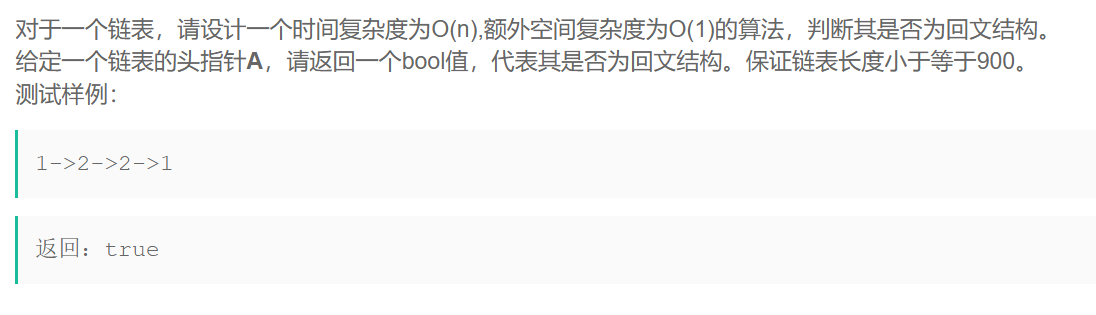
提到回文结构,我们会很自然地想到去定义两个指针,一个指向头,一个指向尾,比较两个值是否相等,再让头指针往后走,尾指针往前走。但这道题是一个单向链表,尾指针没有办法往前走。所以这个方法不太行。那我们又想到,找到中间位置,从中间位置向两边走,但是同理还是不行。既然在链表中我们无法判断是否回文,那我们创建一个新数组,把链表的值遍历到新数组中,在数组中判断回文结构不就可以了吗?这里注意,题目中明确指出空间复杂度为O(1),因此这里我们创建一个定长数组arr[900]即可。(题目说了保证链表长度小于等于900)
根据上述思路,给出参考代码如下:
/*
struct ListNode {
    int val;
    struct ListNode *next;
    ListNode(int x) : val(x), next(NULL) {}
};*/
class PalindromeList
{
public:
    bool chkPalindrome(ListNode* A)
    {
        //创建数组
        int arr[900] = {0};
        //遍历链表,将链表中的值保存在数组中
        ListNode* pcur = A;
        int i = 0;
        while(pcur)
        {
            arr[i] = pcur->val;
            i++;
            pcur = pcur->next;
        }
        //判断数组是否为回文结构
        int left = 0;
        int right = i - 1;
        while(left < right)
        {
            if(arr[left] != arr[right])
            {
                return false;
            }
            left++;
            right--;
        }
        return true;
    }
};
但是这个方法毕竟是应试,有点“投机取巧”,所以这里给出更严谨、更合理的方法。
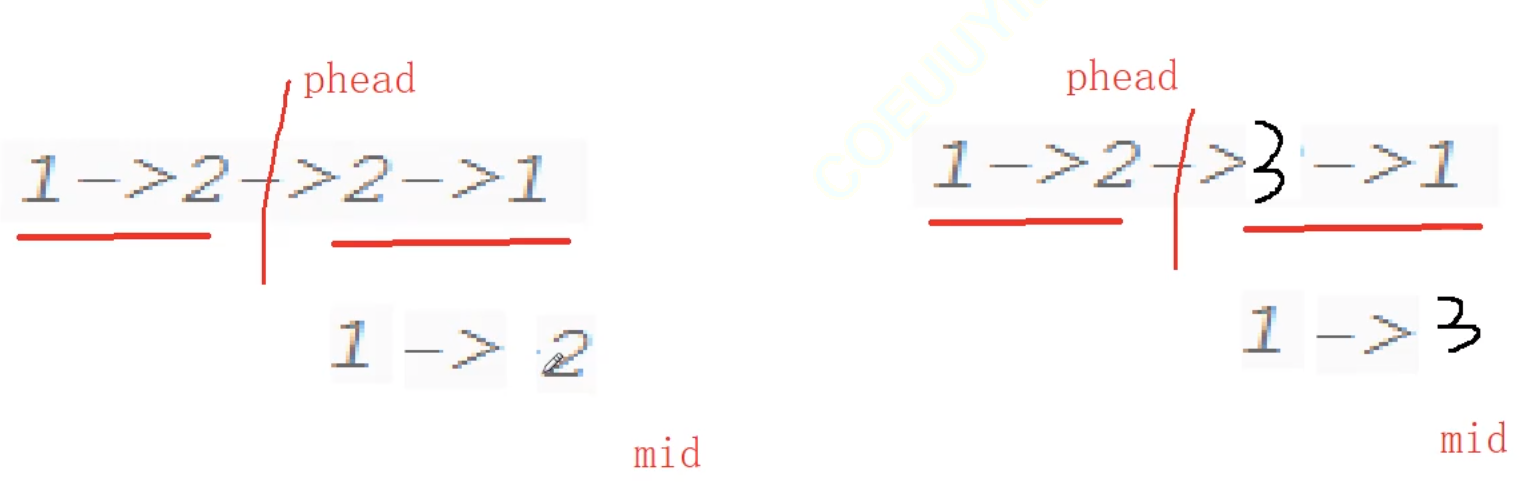
思路2:找链表的中间结点,将中间节点作为新的链表的头结点进行反转链表。
3、参考代码
/*
struct ListNode {
    int val;
    struct ListNode *next;
    ListNode(int x) : val(x), next(NULL) {}
};*/
class PalindromeList {
public:
    //找中间节点
    ListNode* middleNode(ListNode* head)
    {
        ListNode* slow, *fast;
        slow = fast = head;
        while(fast && fast->next)
        {
            slow = slow->next;
            fast = fast->next->next;
        }
        return slow;
    }
    //反转链表
    ListNode* reverseList(ListNode* head)
    {
        if(head == nullptr)
        {
            return head;
        }
        ListNode* n1, *n2, *n3;
        n1 = nullptr;
        n2 = head;
        n3 = n2->next;
        while(n2)
        {
            n2->next = n1;
            n1 = n2;
            n2 = n3;
            if(n3)
            {
                n3 = n3->next;
            }
        }
        return n1;
    }

    bool chkPalindrome(ListNode* A)
    {
        //找中间节点
        ListNode* mid = middleNode(A);
        //反转中间节点之后的链表
        ListNode* right = reverseList(mid);
        //遍历原链表和反转之后的链表
        ListNode* left = A;
        while(right)
        {
            if(left->val != right->val)
            {
                return false;
            }
            left = left->next;
            right = right->next;
        }
        return true;
    }
};
三、相交链表
1、题目描述
https://leetcode.cn/problems/intersection-of-two-linked-lists
2、算法分析
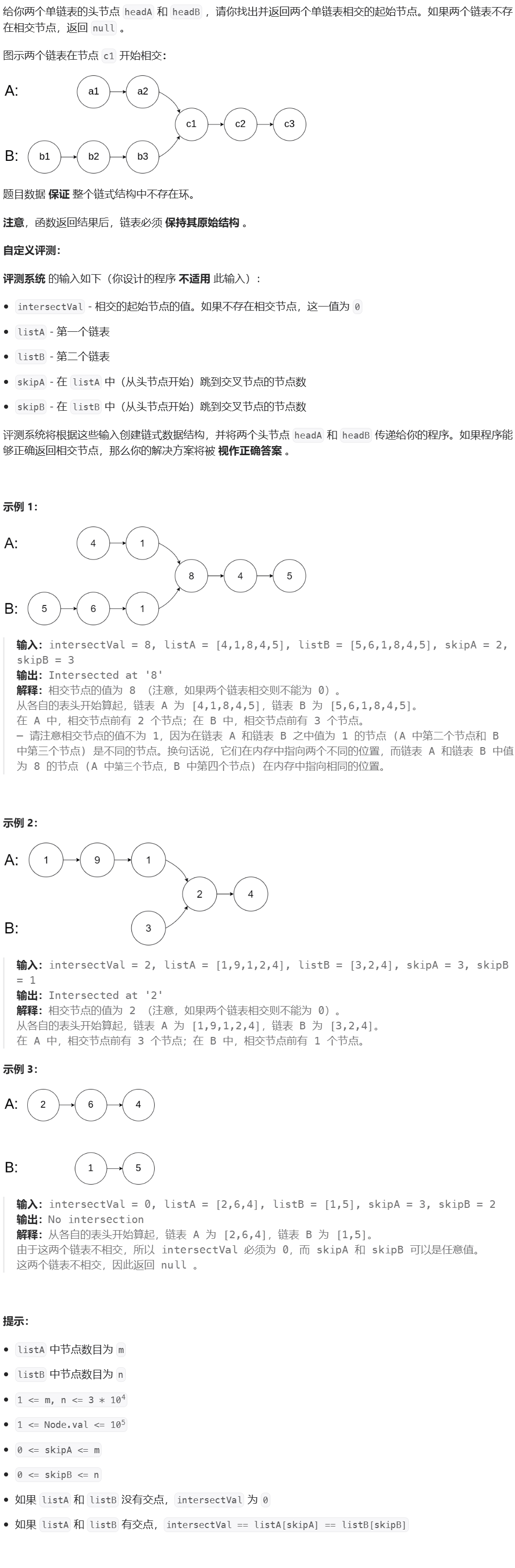
思路:求两个链表的长度并计算长度差,长链表先走长度差步,然后两个链表同时往后遍历。
3、参考代码
/**
 * Definition for singly-linked list.
 * struct ListNode {
 *     int val;
 *     struct ListNode *next;
 * };
 */
typedef struct ListNode ListNode;
struct ListNode *getIntersectionNode(struct ListNode *headA, struct ListNode *headB)
{
    //求两个链表的长度
    ListNode* pa = headA;
    ListNode* pb = headB;
    int sizeA = 0, sizeB = 0;
    while(pa)
    {
        sizeA++;
        pa = pa->next;
    }
    while(pb)
    {
        sizeB++;
        pb = pb->next;
    }
    //计算长度差
    int gap = abs(sizeA - sizeB);//abs函数:用于求绝对值
    //让长链表先走gap步
    ListNode* shortList = headA;
    ListNode* longList = headB;
    if(sizeA > sizeB)
    {
        longList = headA;
        shortList = headB;
    }
    while(gap--)
    {
        longList = longList->next;
    }
    //longList和shortList在同一起跑线
    while(shortList)
    {
        if(longList == shortList)
        {
            return longList;
        }
        shortList = shortList->next;
        longList = longList->next;
    }
    return NULL;
}





 扫一扫
扫一扫


 被折叠的 条评论
为什么被折叠?
被折叠的 条评论
为什么被折叠?
 到【灌水乐园】发言





