


 文章讨论了C++中子类友元的权限限制,指出友元函数可以访问父类的protected成员,但不能访问private成员。通过两个示例展示了这一规则的应用。
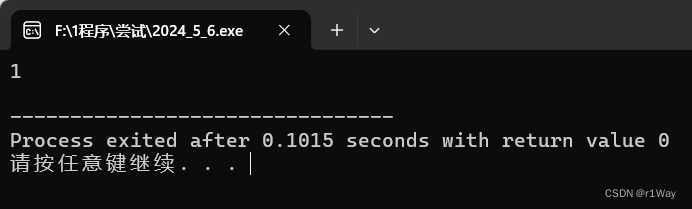
子类友元可以使用父类protected成员
- 样例
#include<iostream>
using namespace std;
class A
{
	public:
	A(int temp=1):a(temp){
	}
	protected:
		int a;
};

class B:public A
{
	friend void print(B b);
};

void print(B b)
{
	cout<<b.a<<endl;
}

int main()
{
	B b;
	print(b);
	return 0;
 }
- 运行
子类友元不可以使用父类private成员
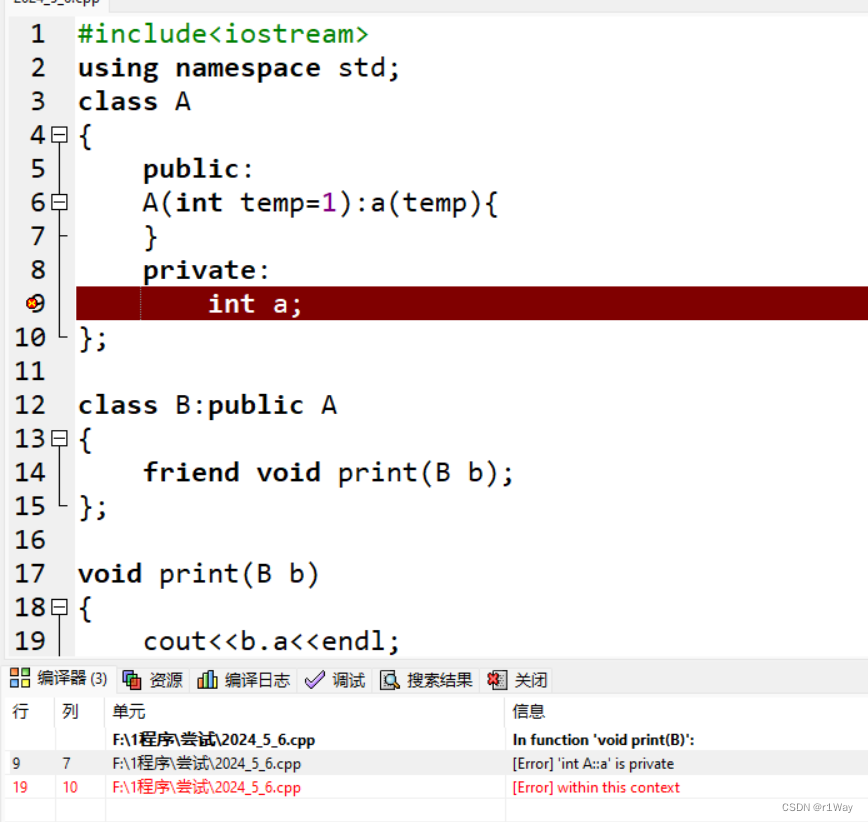
- 样例
#include<iostream>
using namespace std;
class A
{
	public:
	A(int temp=1):a(temp){
	}
	private://修改的地方
		int a;
};

class B:public A
{
	friend void print(B b);
};

void print(B b)
{
	cout<<b.a<<endl;
}

int main()
{
	B b;
	print(b);
	return 0;
 }
- 运行
结论
子类友元可以使用父类protected成员
子类友元不可以使用父类private成员





 扫一扫
扫一扫


 2027
2027

 被折叠的 条评论
为什么被折叠?
被折叠的 条评论
为什么被折叠?
 到【灌水乐园】发言





