


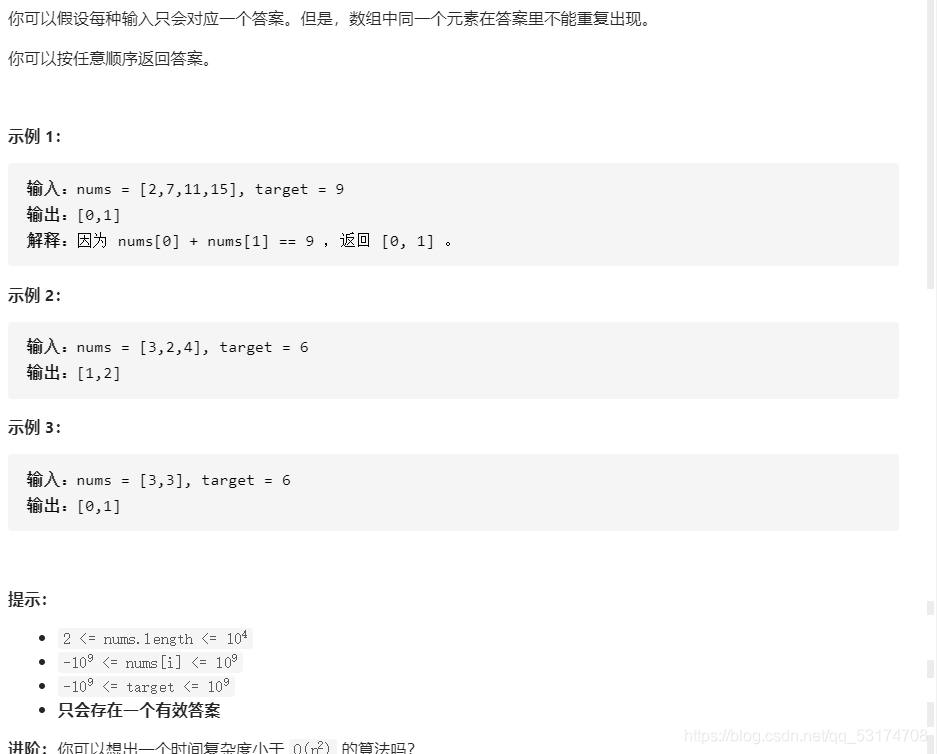
1,两数之和
class Solution(object):
    def twoSum(self, nums, target):
        """
        :type nums: List[int]
        :type target: int
        :rtype: List[int]
        """
        hashmap = {}
        for index, num in enumerate(nums):
            another_num = target - num
            if another_num in hashmap:
                return [hashmap[another_num], index]
            hashmap[num] = index
        return None
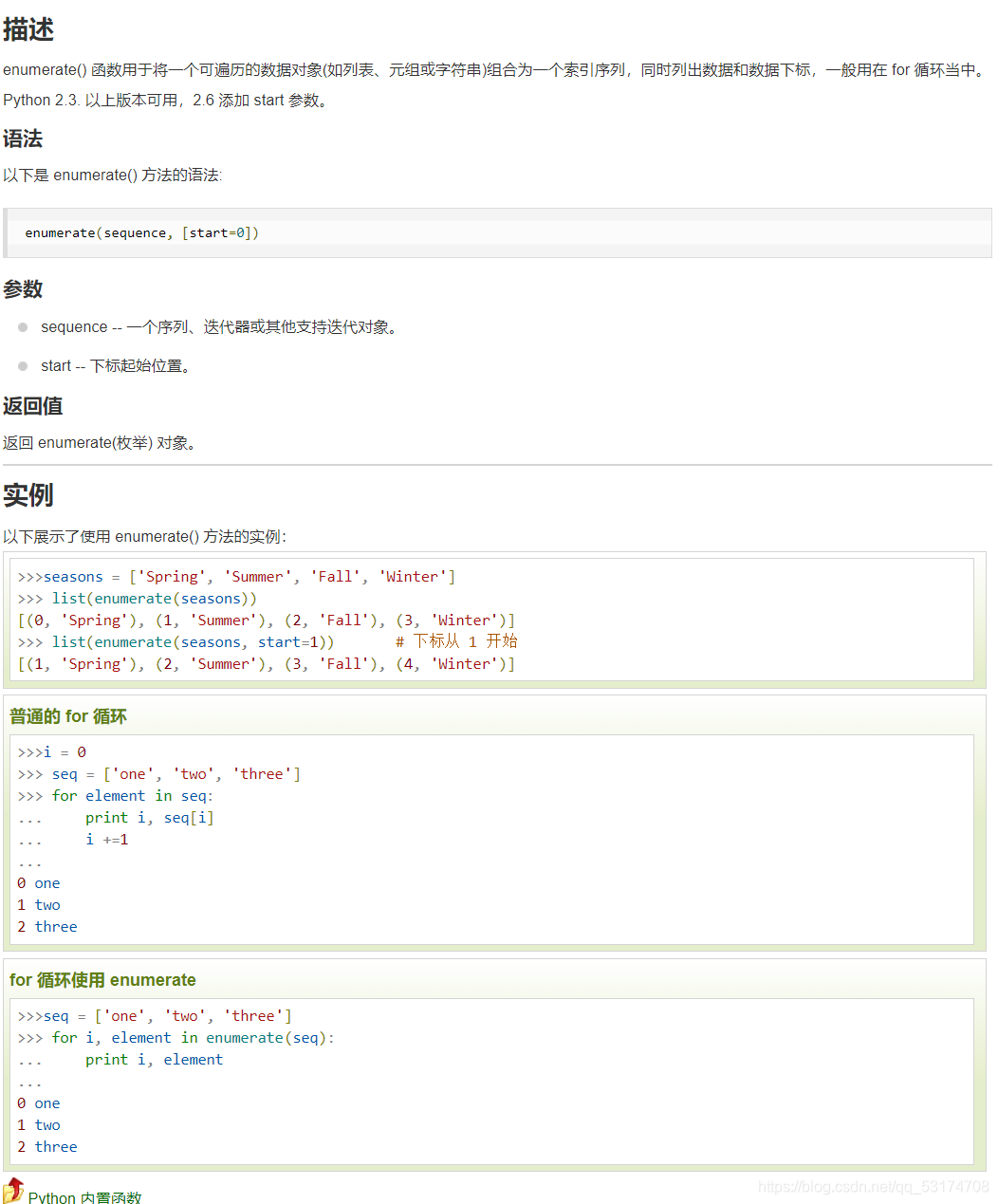
看了一下,这道题,快的都是用的哈希表。
下面是C语言暴力破解,还不错。
/**
 * Note: The returned array must be malloced, assume caller calls free().
 */
int* twoSum(int* nums, int numsSize, int target, int* returnSize){

    int i,j;
    int *result=NULL;
    for(i=0;i<numsSize-1;i++)
    {
        for(j=i+1;j<numsSize;j++)
        {
            if(nums[i]+nums[j]==target)
            {
                 result=(int*)malloc(sizeof(int)*2);
                 result[0]=i;
                 result[1]=j;
                 *returnSize=2;
                 return result;
            }
        }
    }
    return 0;
}
#c++写法
class Solution {
public:
    vector<int> twoSum(vector<int>& nums, int target) {
        int i,j;
        for(i=0;i<nums.size()-1;i++)
        {
            for(j=i+1;j<nums.size();j++)
            {
                if(nums[i]+nums[j]==target)
                {
                   return {i,j};
                }
            }
        }
        return {i,j};
    };
};
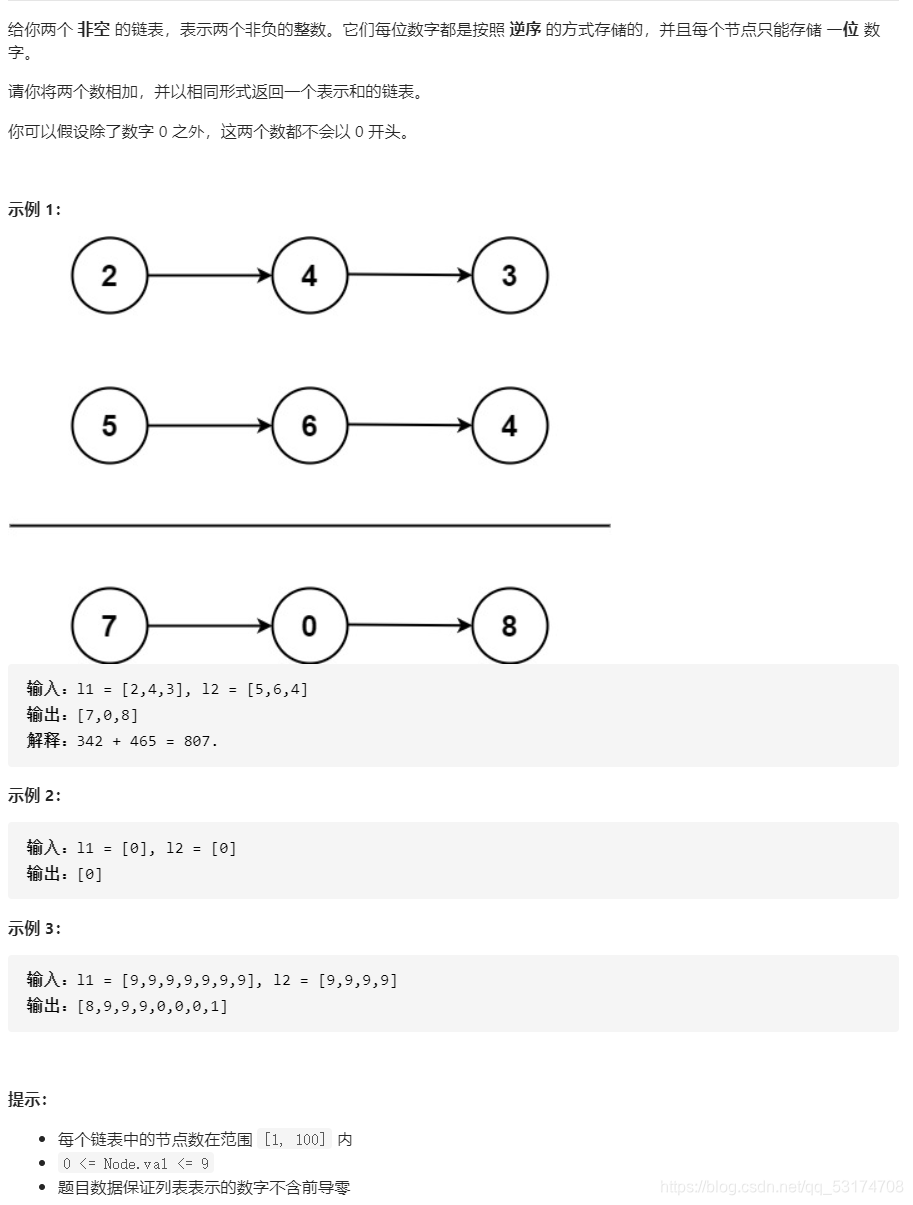
2,两数相加
c艹
/**
 * Definition for singly-linked list.
 * struct ListNode {
 *     int val;
 *     ListNode *next;
 *     ListNode() : val(0), next(nullptr) {}
 *     ListNode(int x) : val(x), next(nullptr) {}
 *     ListNode(int x, ListNode *next) : val(x), next(next) {}
 * };
 */
class Solution {
public:
    ListNode* addTwoNumbers(ListNode* l1, ListNode* l2) {
int len1=1;
int len2=1;
ListNode *p=l1;
ListNode *q=l2;
while(p->next!=NULL)
    {
        len1++;
        p=p->next;
    }
while(q->next!=NULL)
    {
        len2++;
        q=q->next;
    }
if(len1>len2)
    {
        for(int i=1;i<len1-len2;i++)
        {
            p->next=new ListNode(0);
            p=p->next;
        }
    }
    else
    {
        for(int j=0;j<len2-len1;j++)
        {
            q->next=new ListNode(0);
            q=q->next;
        }
    }
p=l1;
q=l2;
ListNode *l3=new ListNode(-1);
ListNode*w=l3;
bool count=false;
int i=0;
while(p!=NULL&&q!=NULL)
{
    i=count+p->val+q->val;
    w->next=new ListNode(i%10);
    count=i>=10?true:false;
            w=w->next;
            p=p->next;
            q=q->next;
}
        if(count)//若最后还有进位
        {
            w->next=new ListNode(1);
            w=w->next;
        }
        return l3->next;


}
};





 扫一扫
扫一扫


 298
298


 到【灌水乐园】发言



