


一、什么是function calling
Function Calling = 让大模型不仅“说话”,还会“用工具”。当你把“工具列表(schema)”传给模型后,它有两种输出选择:
- 直接回答(自然语言)
- 发起函数调用请求(一个带 name 和 arguments 的
JSON),你再用自己的代码执行这个函数,把结果回传给模型,由模型把结果转成人话给用户。
你可以把它理解成:
“模型像个助理,会在需要时说:‘我去查一下(调用某函数),查完再回来回答。’”
二、安装环境
conda create -n llm python=3.10
pip install openai
export OPENAI_API_KEY="your-api-key"
三、demo
from openai import OpenAI
import json
from datetime import date

client = OpenAI()

# 定义函数 (工具) schema
tools = [
    {
        "type": "function",
        "function": {
            "name": "get_weather",
            "description": "查询城市天气",
            "parameters": {
                "type": "object",
                "properties": {
                    "city": {"type": "string"},
                    "date": {"type": "string", "description": "日期 YYYY-MM-DD"}
                },
                "required": ["city", "date"]
            }
        }
    }
]

# 本地实现的函数(模拟调用真实 API)
def get_weather(city, date):
    return {"city": city, "date": date, "weather": "Sunny", "temperature": "28°C"}

# 用户输入
user_msg = {"role": "user", "content": "查一下北京明天的天气"}

# 第一步:让模型决定是否调用函数
resp = client.chat.completions.create(
    model="gpt-4.1-mini",
    messages=[user_msg],
    tools=tools,
    tool_choice="auto"
)

msg = resp.choices[0].message
print("🟡 模型输出:", msg)

# 如果模型调用了函数
if msg.tool_calls:
    tool_call = msg.tool_calls[0]
    args = json.loads(tool_call.function.arguments)

    # 调用本地函数
    result = get_weather(**args)

    # 第二步:把结果交给模型生成自然语言回答
    final = client.chat.completions.create(
        model="gpt-4.1-mini",
        messages=[
            user_msg,
            msg,  # 模型的函数调用请求
            {
                "role": "tool",
                "tool_call_id": tool_call.id,
                "name": tool_call.function.name,
                "content": json.dumps(result, ensure_ascii=False)
            }
        ]
    )

    print("✅ 最终回答:", final.choices[0].message.content)
四、常见问题

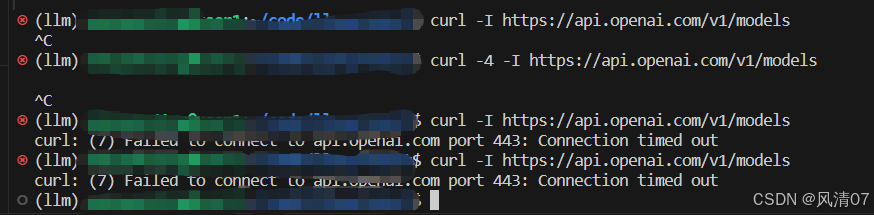
经测试,服务器无法直连 OpenAI API。
是因为访问openai需要代理。
因为是公用服务器,故决定使用SSH反向端口转发,将服务器的流量通过本机127.0.0.1:7980进行转发。
ssh -R 7890:127.0.0.1:7890 user@服务器ip
export HHTPS_PROXY="http://127.0.0.1:7980"
export HHTP_PROXY="http://127.0.0.1:7980"






 扫一扫
扫一扫


 被折叠的 条评论
为什么被折叠?
被折叠的 条评论
为什么被折叠?
 到【灌水乐园】发言





