



 本文介绍了线性表的抽象数据类型,并详细阐述了顺序表的实现方法,包括插入数据和查找元素等操作。通过实例展示了如何在顺序表中进行数据管理,最终得出运行结果。
整体的架构:

以下是要实现的线性表的抽象数据类型,用一接口来表示其所包含的方法:
package 线性表;

public interface List_way {
    //线性表的抽象数据类型
    public void clear();     //线性表置空
    public boolean isEmpty();  //判断线性表是否为空
    public int length();  //获取线性表元素个数并返回其值
    public Object get(int i) throws Exception; //获取第i个元素的值
    public void insert(int i,Object x) throws Exception;  //在第i个元素之前插入值为x的数据元素
    public void remove(int i) throws Exception;//删除第i个元素
    public int indexOf(Object x);  //返回线性表中首次出现的指定的数据元素的位序号,若不包含,返回-1
    public void display();  //输出线性表中各个元素的值
}
以下是在顺序表类中对各个方法的实现:
package 线性表;

public class 顺序表 implements List_way{
    private Object[] listElem;  //线性表存储空间
    private  int curLen;    //线性表的当前长度
    public 顺序表(int maxSize){
        curLen = 0;  //置当前空间长度为0
        listElem = new Object[maxSize];   //为顺序表分配maxSize个存储单元
    }
    @Override
    public void clear() {  //置当前表的长度为空
        curLen=0;
    }

    @Override
    public boolean isEmpty() {  //若当前长度不为空则表不为空
        return curLen==0;
    }

    @Override
    public int length() {  //获取当前长度
        return curLen;
    }

    @Override
    public Object get(int i) throws Exception{
        if (i<0 || i>curLen-1){  //当所输入的i不在规定范围时;
            throw new Exception("第"+ i +"个元素不存在");
        }
        return listElem[i]; //返回第i个元素的值
    }

    @Override
    public void insert(int i, Object x) throws Exception{
        if (curLen == listElem.length){  //当表的当前长度与表的空间相等时
            throw new Exception("顺序表已满");
        }
        if (i<0||i>curLen){//判断插入位置是否合法
            throw new Exception("插入位置不合法");
        }
        for (int j =curLen ;j>i ;j--){//将元素后移
            listElem[j]=listElem[j-1];
        }
        listElem[i]=x;//插入此元素
        curLen++;  //当前长度加1
    }

    @Override
    public void remove(int i) throws Exception {
        if (i <0 || i>curLen-1){ //判读位置的合法性
            throw new Exception("删除位置不合法");
        }
        for (int j=i;j<curLen-1;j++){  //将后一元素的值赋给前一元素
            listElem[j] =listElem[j+1];
        }
        curLen--;  //当前长度减一
    }

    @Override
    public int indexOf(Object x) {
        int j =0;
        //依次比较
        while (j<curLen && !listElem[j].equals(x))
            j++;
        //判断j的位置是否在顺序表中
        if (j<curLen)
            return j;   //返回其值
        else
            return -1;//不在,返回-1

    }

    @Override
    public void display() {
        //利用循环输出每一元素的值
        for (int j=0;j<curLen;j++)
            System.out.println(listElem[j] + " ");
        System.out.println();
    }
}
使用顺序表的实例:
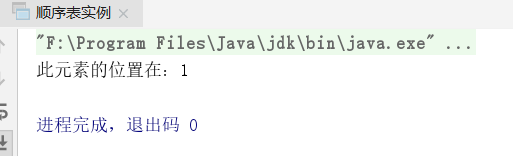
先插入数据,最后查找元素3的第一次出现的位置
package 线性表;

public class 顺序表实例 {
    public static void main(String[] args) throws Exception{
        顺序表 sxb =new 顺序表(20); //构造一个含有20个存储单元的空顺序表
        sxb.insert(0,2);
        sxb.insert(1,3);
        sxb.insert(2,4);
        sxb.insert(3,3);

        //查找值为3的元素第一次出现的位置
        int order = sxb.indexOf(3);
        if(order != -1){
            System.out.println("此元素的位置在:"+order);

        }else
            System.out.println("顺序表中无此元素");

    }
}
运行结果:





 扫一扫
扫一扫


 831
831

 被折叠的 条评论
为什么被折叠?
被折叠的 条评论
为什么被折叠?
 到【灌水乐园】发言





