



 本文详细介绍了使用Curator实现的Zookeeper分布式锁InterProcessMutex的内部工作原理,包括其成员变量、构造方法和获取锁的流程,特别是acquire(long time, TimeUnit unit)方法的详细步骤,探讨了lock的获取与撤销过程。"
1204926,129049,交易智慧:《Trading For A Living》读后感及交易策略解析,"['交易系统', '市场趋势', '技术分析', '投资策略', '风险管理']
本文详细介绍了使用Curator实现的Zookeeper分布式锁InterProcessMutex的内部工作原理,包括其成员变量、构造方法和获取锁的流程,特别是acquire(long time, TimeUnit unit)方法的详细步骤,探讨了lock的获取与撤销过程。"
1204926,129049,交易智慧:《Trading For A Living》读后感及交易策略解析,"['交易系统', '市场趋势', '技术分析', '投资策略', '风险管理']
1、分布式锁实例(网上找的)
先声明自己瞎看的。有错误或者啥的欢迎指出。
先看下这个zk分布锁例子
public static void main(String[] args) {
        CuratorFramework curatorFramework  = CuratorFrameworkFactory.builder().connectString("127.0.0.1:2181")
                .sessionTimeoutMs(30000).retryPolicy(new ExponentialBackoffRetry(4000,3))
                .build();
        curatorFramework.start();
        //InterProcessMutex这个锁为公平锁可重入锁
        final InterProcessMutex interProcessMutex = new InterProcessMutex(curatorFramework,"/locks");
        ExecutorService fixedThreadPool = Executors.newFixedThreadPool(5);
        for (int i = 0; i < 5; i++) {
            fixedThreadPool.submit(new Runnable() {
                public void run() {
                    boolean flag = false;
                    try {
                        //
                        Thread currentThread = Thread.currentThread();
                        //尝试获取锁,最多等待10秒
                        flag = interProcessMutex.acquire(20, TimeUnit.SECONDS);
                        if(flag){
                            System.out.println("线程"+currentThread.getId()+"获取锁成功");
                        }else{
                            System.out.println("线程"+currentThread.getId()+"获取锁失败");
                        }
                        //模拟业务逻辑,延时4秒
                        Thread.sleep(2000);
                    } catch (Exception e) {
                        e.printStackTrace();
                    } finally{
                        if(flag){
                            try {
                                //释放锁
                                interProcessMutex.release();
                            } catch (Exception e) {
                                e.printStackTrace();
                            }
                        }
                    }
                }
            });
        }
    }
2、相关类的成员变量
InterProcessMutex 成员变量
| 类型 | 名称 | 含义 |
|---|---|---|
| LockInternals | internals | 锁内部构件类 |
| String | basePath | 锁节点的根路径 |
| ConcurrentMap<Thread, LockData> | threadData | 锁信息映射表 |
| String | LOCK_NAME | 常量:lock- |
| LockData | lockData | 静态内部类 锁信息 |
2.1、LockData 成员变量
| 类型 | 名称 | 含义 |
|---|---|---|
| Thread | owningThread | 等待线程 |
| String | lockPath | 该线程对应的锁节点 |
| AtomicInteger | lockCount | 获取锁的次数 |
2.2、 LockInternals 成员变量
| 类型 | 名称 | 含义 |
|---|---|---|
| WatcherRemoveCuratorFramework | client | 客户端 |
| String | path | basePath+lockName |
| String | basePath | 锁节点根路径 |
| LockInternalsDriver | driver | 驱动 |
| String | lockName | 锁的名字 |
| AtomicReference < RevocationSpec> | revocable | 撤销事件 里面存了撤销时线程和线程池 |
| CuratorWatcher | revocableWatcher | 撤销监听器 |
| volatile int | maxLeases | 同时最多几个。例如读锁同时能有很多,写锁同时只能有一个 |
| Watcher | watcher | 监听。动作是notifyall() |
| static final byte[] | REVOKE_MESSAGE | 字符串为 —REVOKE— 的byte数组 |
3、 InterProcessMutex构造方法
public InterProcessMutex(CuratorFramework client, String path)
client :客户端
path :锁路径
几个构造方法最终都会走到下面这个构造方法
 InterProcessMutex(CuratorFramework client, String path, String lockName, int maxLeases, LockInternalsDriver driver){
 		//验证锁路径是否合规
        basePath = PathUtils.validatePath(path);
        //这里maxLeases为1. driver为StandardLockInternalsDriver
        internals = new LockInternals(client, driver, path, lockName, maxLeases);
 }
4、 获取锁的流程图
图片从别人那里拐的。自己画的话,不太行
图片来自
添加链接描述
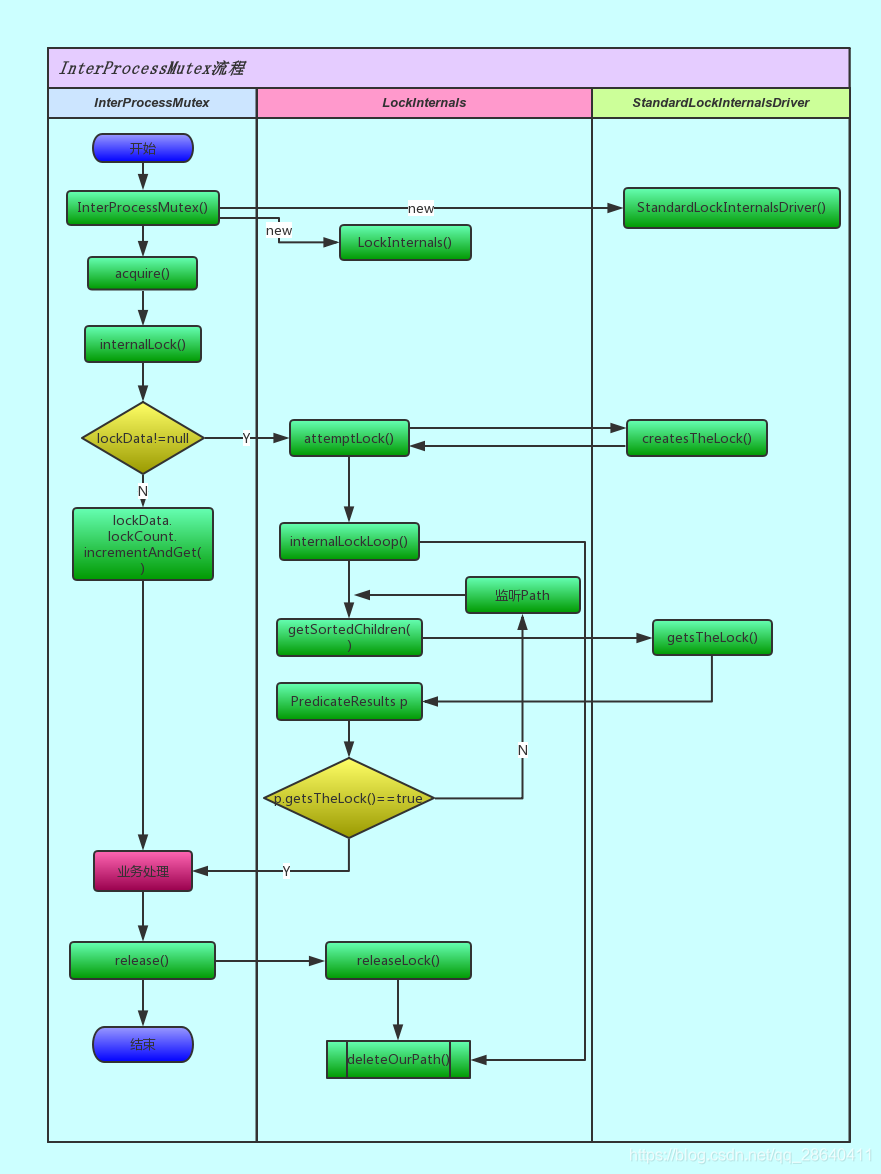
接下来主要是分析这一行代码
flag = interProcessMutex.acquire(20, TimeUnit.SECONDS); //获取锁
5、 acquire(long time, TimeUnit unit)
@Override
    public boolean acquire(long time, TimeUnit unit) throws Exception
    {
        return internalLock(time, unit);
    }
private boolean internalLock(long time, TimeUnit unit) throws Exception{


        Thread currentThread = Thread.currentThread();
		//当前线程作为键去获取对应的锁信息对象
        LockData lockData = threadData.get(currentThread);
        //获得过锁的话
        if ( lockData != null ){
            // 锁信息对象中锁次数加1    (可重入锁)
            lockData.lockCount.incrementAndGet();
            return true;
        }
		//尝试获取锁  getLockNodeBytes在该类中返回null,子类有其他实现。
        String lockPath = internals.attemptLock(time, unit, getLockNodeBytes());
        //获取到锁的话
        if ( lockPath != null ){
        	//锁信息对象中放入  线程:锁路径
            LockData newLockData = new LockData(currentThread, lockPath);
            //放入  线程:锁信息对象
            threadData.put(currentThread, newLockData);
            return true;
        }
        return false;
    }
5.1、 internals.attemptLock(time, unit, getLockNodeBytes());
String attemptLock(long time, TimeUnit unit, byte[] lockNodeBytes) throws Exception
    {
    	//开始时间。用于internalLockLoop(startMillis, millisToWait, ourPath); 这里去计算时间
        final long      startMillis = System.currentTimeMillis();
        //等待时间
        final Long      millisToWait = (unit != null) ? unit.toMillis(time) : null;
        //如果撤销事件不为空,设置为new byte[0]
        final byte[]    localLockNodeBytes = (revocable.get() != null) ? new byte[0] : lockNodeBytes;
        //重试次数
        int             retryCount = 0;

        String          ourPath = null;
        boolean         hasTheLock = false;
        boolean         isDone = false;
        while ( !isDone )
        {
            isDone = true;

            try
            {
            	//递归创建path路径的临时有序节点,带初始内容,但此时为初始为null
                ourPath = driver.createsTheLock(client, path, localLockNodeBytes);
                //time时间内去获取锁
                hasTheLock = internalLockLoop(startMillis, millisToWait, ourPath);
            }
            catch ( KeeperException.NoNodeException e )
            {
                //当StandardLockInternalsDriver找不到锁节点时引发
				//这可能发生在会话到期等情况下。因此,如果重试允许,请再试一次
                if ( client.getZookeeperClient().getRetryPolicy().allowRetry(retryCount++, System.currentTimeMillis() - startMillis, RetryLoop.getDefaultRetrySleeper()) )
                {
                    isDone = false;
                }
                else
                {
                    throw e;
                }
            }
        }
		//获取到锁返回锁的节点路径,没有返回空
        if ( hasTheLock )
        {
            return ourPath;
        }

        return null;
    }
5.1.1、 driver.createsTheLock(client, path, localLockNodeBytes);
    @Override
    public String createsTheLock(CuratorFramework client, String path, byte[] lockNodeBytes) throws Exception
    {
        String ourPath;
        if ( lockNodeBytes != null )
        {
        	//递归创建临时有序锁节点,并且设置值
            ourPath = client.create().creatingParentContainersIfNeeded().withProtection().withMode(CreateMode.EPHEMERAL_SEQUENTIAL).forPath(path, lockNodeBytes);
        }
        else
        {
        	//递归创建临时有序锁节点
            ourPath = client.create().creatingParentContainersIfNeeded().withProtection().withMode(CreateMode.EPHEMERAL_SEQUENTIAL).forPath(path);
        }
        //返回锁节点路径
        return ourPath;
    }
5.1.2、 internalLockLoop(startMillis, millisToWait, ourPath);
private boolean internalLockLoop(long startMillis, Long millisToWait, String ourPath) throws Exception{

        boolean     haveTheLock = false;
        boolean     doDelete = false;
        try
        {
        	//有撤销请求
            if ( revocable.get() != null )
            {
            	// 锁节点内容监听 revocableWatcher监听。
            	// revocableWatcher:当变动节点的内容为 __REVOKE__ 就执行 revocable中的定义线程
                client.getData().usingWatcher(revocableWatcher).forPath(ourPath);
            }
			//客户端为started状态,并且没有获得锁
            while ( (client.getState() == CuratorFrameworkState.STARTED) && !haveTheLock )
            {
            	//获取LockInternals类中basePath路径下的所有子节点路径,并且按照截取lock-后面的数字排序
                List<String>        children = getSortedChildren();
                //获取创建的节点名称
                String              sequenceNodeName = ourPath.substring(basePath.length() + 1); // +1 to include the slash
				//去获取锁
                PredicateResults    predicateResults = driver.getsTheLock(client, children, sequenceNodeName, maxLeases);
                //获取到锁了设置为true
                if ( predicateResults.getsTheLock() )
                {
                    haveTheLock = true;
                }
                else
                {
                	//上一个获取到锁的节点路径
                    String  previousSequencePath = basePath + "/" + predicateResults.getPathToWatch();

                    synchronized(this)
                    {
                        try
                        {
                            // 监听上个锁节点。usingWatcher(watcher) 中是notifyall 如果上个锁有变动,并且没超时。监听器就唤醒自己开始获取锁
                            client.getData().usingWatcher(watcher).forPath(previousSequencePath);
                            //设置的等待时间为空或者等待时间还没耗尽就一直wait
                            if ( millisToWait != null )
                            {
                                millisToWait -= (System.currentTimeMillis() - startMillis);
                                startMillis = System.currentTimeMillis();
                                if ( millisToWait <= 0 )
                                {
                                    doDelete = true;    // timed out - delete our node
                                    break;
                                }

                                wait(millisToWait);
                            }
                            else
                            {
                                wait();
                            }
                        }
                        catch ( KeeperException.NoNodeException e )
                        {
                            // it has been deleted (i.e. lock released). Try to acquire again
                        }
                    }
                }
            }
        }
        catch ( Exception e )
        {
            ThreadUtils.checkInterrupted(e);
            doDelete = true;
            throw e;
        }
        finally
        {
        	//删除ourpath节点
            if ( doDelete )
            {
                deleteOurPath(ourPath);
            }
        }
        return haveTheLock;
    }
5.1.2.1 predicateResults = driver.getsTheLock(client, children, sequenceNodeName, maxLeases);
@Override
    public PredicateResults getsTheLock(CuratorFramework client, List<String> children, String sequenceNodeName, int maxLeases) throws Exception
    {
    	//获取创建的锁节点在锁集合中的位置
        int             ourIndex = children.indexOf(sequenceNodeName);
        //验证ourIndex是否为-1
        validateOurIndex(sequenceNodeName, ourIndex);
		//当前创建的锁节点位置<1  也就是第0个。则当前线程获取到锁    maxLeases这个是写死的1.
        boolean         getsTheLock = ourIndex < maxLeases;
        //获取到锁的话。pathToWatch为空。没有则监听前一个锁节点。
        String          pathToWatch = getsTheLock ? null : children.get(ourIndex - maxLeases);

        return new PredicateResults(pathToWatch, getsTheLock);
    }
6 互斥锁撤销
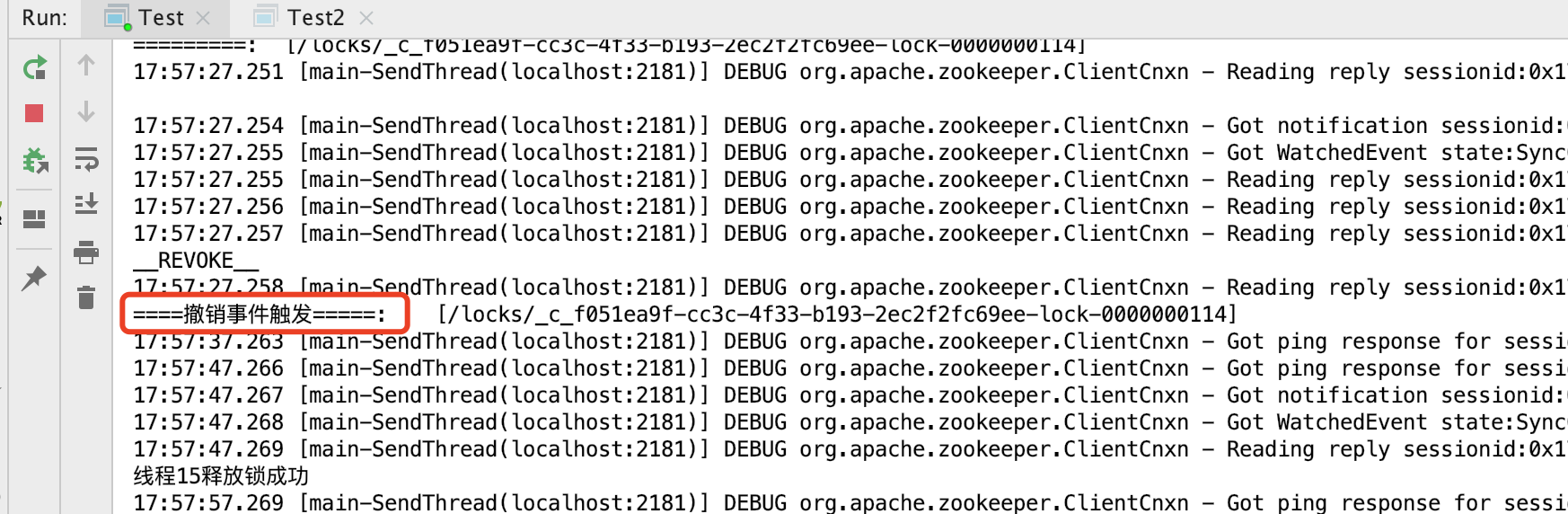
可以运行下这个例子
在有线程获取锁后,修改锁内容为LockInternals.REVOKE_MESSAGE,触发监听。
但是我自己现在还没想到哪些场景会有这个情况。
public static void main(String[] args) {
        final CuratorFramework curatorFramework  = CuratorFrameworkFactory.builder().connectString("127.0.0.1:2181")
                .sessionTimeoutMs(30000).retryPolicy(new ExponentialBackoffRetry(4000,3))
                .build();
        curatorFramework.start();
        //InterProcessMutex这个锁为公平锁可重入锁
        final InterProcessMutex interProcessMutex = new InterProcessMutex(curatorFramework,"/locks");
        interProcessMutex.makeRevocable(new RevocationListener<InterProcessMutex>() {
            public void revocationRequested(InterProcessMutex forLock) {
                //获取当前节点的名称
                try {
                    Collection<String> nameList = forLock.getParticipantNodes();
                    System.out.println("====撤销事件触发=====:\t"+ Arrays.toString(nameList.toArray(new String[nameList.size()])));
                } catch (Exception e) {
                    e.printStackTrace();
                }
            }
        });
        ExecutorService fixedThreadPool = Executors.newFixedThreadPool(1);
        for (int i = 0; i < 1; i++) {
            fixedThreadPool.submit(new Runnable() {
                public void run() {
                    boolean flag = false;
                    try {
                        Thread currentThread = Thread.currentThread();
                        //
                        //尝试获取锁,最多等待10秒
                        flag = interProcessMutex.acquire(20, TimeUnit.SECONDS);
                        if(flag){
                            System.out.println("线程"+currentThread.getId()+"获取锁成功");
                        }else{
                            System.out.println("线程"+currentThread.getId()+"获取锁失败");
                        }
                        //输出锁根路径下锁有锁节点
                        Collection<String> nameList = interProcessMutex.getParticipantNodes();
                        ArrayList<String> ll = new ArrayList<String>(nameList);
                        System.out.println("=========:\t"+ Arrays.toString(nameList.toArray(new String[nameList.size()])));
                        byte[] data1 = curatorFramework.getData().forPath(ll.get(0));
                        System.out.println(new String(data1));
                        //改变第一个锁节点的值。触发撤销事件
                        //锁节点设值为  LockInternals.REVOKE_MESSAGE 这里不知道为啥报错所有直接写字符串了
                        curatorFramework.setData().forPath(ll.get(0), "__REVOKE__".getBytes("UTF-8"));
                        byte[] data2 = curatorFramework.getData().forPath(ll.get(0));
                        System.out.println(new String(data2));
                        //模拟业务逻辑,延时4秒
                        Thread.sleep(20000);
                    } catch (Exception e) {
                        e.printStackTrace();
                    } finally{
                        if(flag){
                            try {
                                //释放锁
                                interProcessMutex.release();
                                System.out.println("线程"+Thread.currentThread().getId()+"释放锁成功");
                            } catch (Exception e) {
                                e.printStackTrace();
                            }
                        }
                    }
                }
            });
        }
    }
执行效果结果为:





 扫一扫
扫一扫


 1万+
1万+

 被折叠的 条评论
为什么被折叠?
被折叠的 条评论
为什么被折叠?
 到【灌水乐园】发言





