


 本文深入探讨Vue的响应式原理,详细分析了`observe`、`Observer`、`Dep`和`Watcher`的角色及交互。通过`beforeMount`阶段的渲染Watcher收集依赖,当数据变化时,setter触发依赖更新,实现页面动态刷新。同时,介绍了如何在原型链上增强数组方法以实现响应式。
背景
在 Vue 的初始化阶段,_init 方法执行的时候,会执行 initState(vm) ,它的定义在 src/core/instance/state.js 中。在初始化 data 和 props option 时我们注意 initProps 和 initData 方法中都调用了 observe 方法。通过 observe (value),就可以将数据变成响应式。
export function initState (vm: Component) {vm._watchers = []const opts = vm.$optionsif (opts.props) initProps(vm, opts.props)if (opts.methods) initMethods(vm, opts.methods)if (opts.data) {initData(vm)} else {observe(vm._data = {}, true /* asRootData */)}if (opts.computed) initComputed(vm, opts.computed)if (opts.watch && opts.watch !== nativeWatch) {initWatch(vm, opts.watch)}
}
-
initProps
if (value === undefined) {observe(value);}* initDataobserve(data, true /* asRootData */)目标
– -
理解 Vue 数据响应式原理,了解响应式原理依赖收集的过程
-
了解在什么阶段会触发依赖收集
源码解读
入口函数:observe
observe 方法定义在 src/core/observer/index.js 中。如果是一个非 VNode 的对象类型的数据,它会尝试给这个值去创建一个 observer 实例,如果创建成功,返回新的 observer。或者如果 ob 已经存在了,就会直接返回一个现有的 observer。
/** * 尝试给这个值去创建一个 observer 实例,如果创建成功,返回新的 observer* 或者如果值已经有了,返回一个现有的 observer * @param {*} value* @param {boolean} asRootData* @returns Observer | void */
export function observe (value: any, asRootData: ?boolean): Observer | void {if (!isObject(value) || value instanceof VNode) {return}let ob: Observer | void// 如果 value 已经有 observer,就返回现有的 observer// 否则如果不是服务器渲染,value是数组或者对象,value 是可扩展的,value 不是 vue 实例,就创建一个新的 observerif (hasOwn(value, '__ob__') && value.__ob__ instanceof Observer) {ob = value.__ob__} else if (shouldObserve &&!isServerRendering() &&(Array.isArray(value) || isPlainObject(value)) &&Object.isExtensible(value) &&!value._isVue) {ob = new Observer(value)}// 如果是根组件,vmCount 不为0if (asRootData && ob) {ob.vmCount++}return ob
}
通过 new Observer(value) 可以给 value 创建一个 observer 实例,那么 Observer 类的定义和作用是什么?在同一个文件下可以看到 class Observer 是如何定义的。
class Observer
Observer 方法定义在 src/core/observer/index.js 中。在它的构造函数中,首先实例化 Dep 对象(主要用来存放它的 watcher列表),接着通过执行 def 函数把自身实例添加到数据对象 value 的 ob 属性上,所以存在 ob 属性意味着已经被观察过。最后判断 value 为数组的情况下,会数组项遍历,给数组的每一项创建一个 observe 实例;如果是对象,那么遍历所有的属性,通过Object.defineProperty修改getter/setters。
/** * Observer 类和每个响应式对象关联。 * observer 会转化对象的属性值的 getter/setters 方法收集依赖和派发更新。 */
export class Observer {value: any;dep: Dep;vmCount: number; // number of vms that have this object as root $dataconstructor(value: any) {this.value = valuethis.dep = new Dep() // 存放 Observer 的 watcher 列表this.vmCount = 0def(value, '__ob__', this) // __ob__ 指向自身 observe 实例,存在 __ob__ 属性意味着已经被观察过// 如果是数组if (Array.isArray(value)) {// hasProto = '__proto__' in {} 判断对象是否存在 __proto__ 属性if (hasProto) {// 如果有 __proto__,就将 value.__proto__ 指向 arrayMethodsprotoAugment(value, arrayMethods)} else {// 否则,就遍历 arrayMethods,将值复制到 value 上copyAugment(value, arrayMethods, arrayKeys)}this.observeArray(value) // 数组项遍历,给数组的每一项创建一个 observe 实例} else {this.walk(value) // 遍历所有的属性,修改 getter/setters}}// 遍历所有的属性,修改 getter/setters,这个方法只有在 value 是object时调用walk (obj: Object) {const keys = Object.keys(obj)for (let i = 0; i < keys.length; i++) {defineReactive(obj, keys[i])}}// 数组项遍历,给数组的每一项创建一个 observe 实例observeArray (items: Array<any>) {for (let i = 0, l = items.length; i < l; i++) {observe(items[i])}}
}
我们来看看对于数组和对象, Observe 分别做了什么处理。
Observe 如何处理数组
首先,对于 value 为数组而言,由于 proto 不是标准属性,有些浏览器不支持,比如 IE6-10,Opera10.1,所以需要根据对象是否存在 proto 属性区分在原型链上添加方法, protoAugment 和 copyAugment 都是在目标对象上添加属性值。
/** * 将 target.__proto__ 指向 src * 拦截原型链__proto__,来增强目标对象或数组 * @param {*} target* @param {Object} src*/
function protoAugment (target, src: Object) {/* eslint-disable no-proto */target.__proto__ = src/* eslint-enable no-proto */
}

/** * 遍历 key 属性值列表,将 src 中的 key 属性值逐一定义到 target 的属性中 * 通过定义隐藏属性,来增强目标对象或数组 * @param {Object} target* @param {Object} src* @param {Array<string>} keys*/
/* istanbul ignore next */
function copyAugment (target: Object, src: Object, keys: Array<string>) {for (let i = 0, l = keys.length; i < l; i++) {const key = keys[i]def(target, key, src[key]) // // 为 target 定义 key 和值}
}
在原型链上添加的属性方法 arrayMethods 在 src/core/observer/array.js 可以找到他的定义。实际上 arrayMethods 就是 push pop shift unshift splice sort reverse 七个个方法。这么做的目的是因为要通过 proto 操作数据的原型链,覆盖数组默认的七个原型方法,以实现数组响应式。
Observe 如何处理对象
其次,对于对象而言,会去遍历对象的每个 key,调用 defineReactive(obj, keys[i]) 方法。它会为 obj[key] 创建一个依赖类 dep(会帮这个key 定义一个 id 和 subs(watcher 订阅者列表) 方便依赖收集)然后再利用 Object.defineProperty 对对象的 get 和 set 方法做了处理。get 拦截对 obj[key] 的读取操作,set 拦截对 obj[key] 的写操作。
/** * 在对象上定义一个响应式的属性。 * @param {Object} obj* @param {string} key* @param {*} val* @param {*} customSetter* @param {*} shallow* @returns*/
export function defineReactive (obj: Object,key: string,val: any,customSetter?: ?Function,shallow?: boolean
) {const dep = new Dep() // 为 Object 的 key 创建一个依赖类,会帮这个key 定义一个 id 和 subs(watcher 订阅者列表)const property = Object.getOwnPropertyDescriptor(obj, key)// 获取 obj[key] 的属性描述符,发现它是不可配置对象的话直接 returnif (property && property.configurable === false) {return}// cater for pre-defined getter/settersconst getter = property && property.getconst setter = property && property.setif ((!getter || setter) && arguments.length === 2) {val = obj[key]}// 对 obj[key] 进行观察,保证对象中的所有 key 都被观察let childOb = !shallow && observe(val)Object.defineProperty(obj, key, {enumerable: true,configurable: true,get: function reactiveGetter () {const value = getter ? getter.call(obj) : valif (Dep.target) {dep.depend()if (childOb) {childOb.dep.depend()if (Array.isArray(value)) {dependArray(value)}}}return value},set: function reactiveSetter (newVal) {// 旧的 obj[key]const value = getter ? getter.call(obj) : val// 如果新老值一样,则直接 return,不跟新更不触发响应式更新过程/* eslint-disable no-self-compare */if (newVal === value || (newVal !== newVal && value !== value)) {return}/* eslint-enable no-self-compare */if (process.env.NODE_ENV !== 'production' && customSetter) {customSetter()}// setter 不存在说明该属性是一个只读属性,直接 return// #7981: for accessor properties without setterif (getter && !setter) return// 设置新值if (setter) {setter.call(obj, newVal)} else {val = newVal}// 对新值进行观察,让新值也是响应式的childOb = !shallow && observe(newVal)dep.notify() // 通知依赖的观察者更新}})
}
可以看到,defineReactive(obj, keys[i]) 中对对象做了处理,不论嵌套的多深,都会 observe(value) 继续观察,在设置了新的值后,也会重新对新值进行观察,让新值也是响应式的。
上面的代码中,在 Observer 类构造函数执行时创建了一个 new Dep(),之后在定义对象的响应式属性时,也为 Object 的 key 创建一个依赖类 const dep = new Dep(),然后在 set 数据值会触发 dep.notify()。那么 Dep 的作用是什么呢?
class Dep
Dep 类的定义在 src/core/observer/dep.js 下。它的构造函数中定义了 id 和一个用于储存订阅这个 dep 的 watcher 的数组 subs[]。
/** * 一个 dep 对应一个 object.key,每次 key 更新时调用 dep.notify(), * dep 下的 subs 存放 Watcher 列表,可以调用 dep.notify() 触发 watcher.update() 使 Watcher 列表更新。 */
export default class Dep {static target: ?Watcher; // Dep 类的静态属性,可以使用 Dep.target 访问,内容是 Watcherid: number;subs: Array<Watcher>; // Watcher 组成的订阅列表constructor() {this.id = uid++this.subs = [] // watcher 订阅者列表}// 向订阅者列表中添加一个订阅者 WatcheraddSub (sub: Watcher) {this.subs.push(sub)}// 从订阅者列表中删掉一个 WatcherremoveSub (sub: Watcher) {remove(this.subs, sub)}// 让全局唯一的 watcher 添加当前的依赖depend () {if (Dep.target) {Dep.target.addDep(this)}}// 通知订阅者列表触发更新notify () {// 用 slice() 方法拷贝一个 subs,不影响 this.subsconst subs = this.subs.slice()if (process.env.NODE_ENV !== 'production' && !config.async) {// 如果不是运行异步,Watcher 列表不会在调度器中排序,我们需要去对他们进行排序以确保他们按顺序正确的调度subs.sort((a, b) => a.id - b.id)}// 依次触发 Watcher.update()for (let i = 0, l = subs.length; i < l; i++) {subs[i].update()}}
}
Dep.target
这里的 Dep.target 就是一个 watcher实例,在依赖收集时会调用 watcher.addDep(this) 向观察者中添加自己这个依赖。 Dep.notify() 会通知这个依赖的观察者们依次触发 Watcher.update()。
Dep.target 是当前正在执行的 watcher,同一时间只会有一个 watcher 在执行。
Dep.target = null
const targetStack = []

// 在需要进行依赖收集的时候调用,设置 Dep.target = watcher
export function pushTarget (target: ?Watcher) {targetStack.push(target)Dep.target = target
}

// 依赖收集结束调用,设置 Dep.target 为对堆栈中前一个 watcher
export function popTarget () {targetStack.pop()Dep.target = targetStack[targetStack.length - 1]
}
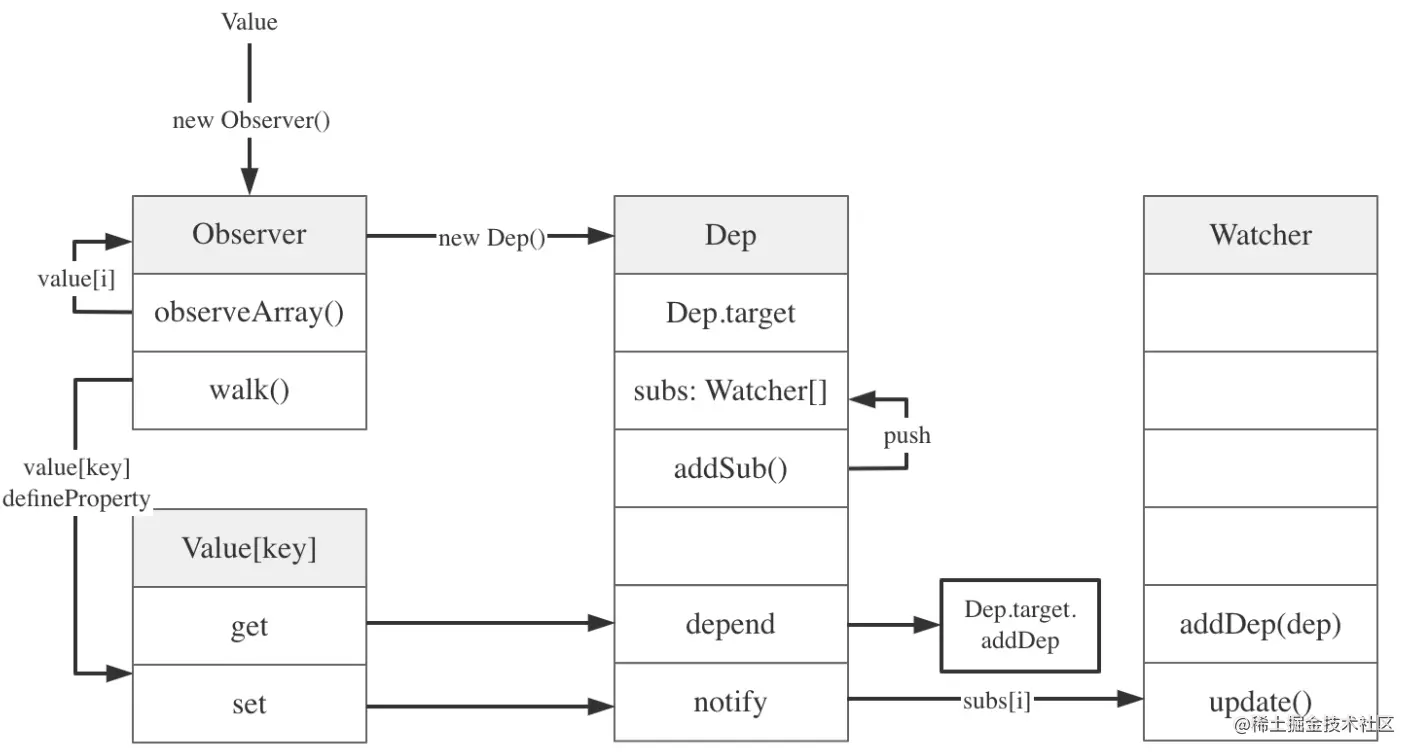
class Watcher
Watcher类定义在 src/core/observer/watcher.js 中。一个组件渲染时创建一个 watcher。或者一个表达式创建一个 Watcher ,当表达式发生改变时触发调度。
Watcher 的原型方法中和依赖收集相关的方法有 get() addDep() cleanupDep()等。在 watcher 的构造函数中会调用它的原型方法 get(),它将 Dep.target 指向当前 watcher。
/** * Watcher 解析一个表达式,收集依赖,当表达式发生改变时触发调度。Watcher 类用于 $watch() api 和指令。 */
export default class Watcher {vm: Component;expression: string;cb: Function;id: number;deep: boolean;user: boolean;lazy: boolean;sync: boolean;dirty: boolean;active: boolean;deps: Array<Dep>; // deps 表示上一次添加的 Dep 实例数组newDeps: Array<Dep>; // newDeps 表示新添加的 Dep 实例数组depIds: SimpleSet;newDepIds: SimpleSet;before: ?Function;getter: Function;value: any;constructor( // 类实例化时传入的参数会用作构造函数的参数vm: Component,expOrFn: string | Function,cb: Function,options?: ?Object,isRenderWatcher?: boolean ) {this.vm = vmif (isRenderWatcher) {vm._watcher = this}vm._watchers.push(this)// optionsif (options) {this.deep = !!options.deepthis.user = !!options.userthis.lazy = !!options.lazythis.sync = !!options.syncthis.before = options.before} else {this.deep = this.user = this.lazy = this.sync = false}this.cb = cbthis.id = ++uid // uid for batchingthis.active = truethis.dirty = this.lazy // for lazy watchersthis.deps = []this.newDeps = []this.depIds = new Set()this.newDepIds = new Set()this.expression = process.env.NODE_ENV !== 'production'? expOrFn.toString(): ''// parse expression for getterif (typeof expOrFn === 'function') {this.getter = expOrFn} else {this.getter = parsePath(expOrFn)if (!this.getter) {this.getter = noopprocess.env.NODE_ENV !== 'production' && warn(`Failed watching path: "${expOrFn}" ` +'Watcher only accepts simple dot-delimited paths. ' +'For full control, use a function instead.',vm)}}this.value = this.lazy? undefined: this.get()}// 一些原型方法// 以下是定义在 watcher 类原型对象上的方法,用 Watcher.prototype.get() 访问/** * Evaluate the getter, and re-collect dependencies. */get () {// 将 Dep.target 指向当前 watcherpushTarget(this)let valueconst vm = this.vmtry {// 让 vm 调用 this.getter,并传入 vm 作为参数// this.getter = expOrFnvalue = this.getter.call(vm, vm)} catch (e) {if (this.user) {handleError(e, vm, `getter for watcher "${this.expression}"`)} else {throw e}} finally {// 如果需要监听对象内部值的变化,那么调用 traverse 方法if (this.deep) {traverse(value) // 递归遍历 value 的每个属性, 确保每个属性都被监听}// 当前 vm 的数据依赖收集已经完成,恢复 Dep.targetpopTarget()this.cleanupDeps()}return value}/** * Add a dependency to this directive. * 添加一个依赖:如果dep数组中没有dep.id,那么触发 dep 订阅当前 watcher */addDep (dep: Dep) {const id = dep.idif (!this.newDepIds.has(id)) {this.newDepIds.add(id)this.newDeps.push(dep)if (!this.depIds.has(id)) {dep.addSub(this)}}}/** * Clean up for dependency collection. * 清除依赖收集 */cleanupDeps () {// 先保持 deps 和 newDepIds数量相同let i = this.deps.lengthwhile (i--) {const dep = this.deps[i]if (!this.newDepIds.has(dep.id)) {dep.removeSub(this) // 如果当前 dep 中没有 newDepIds,就移除它的订阅者列表}}// 更新 depIds、deps 为当前的 deps,然后清除 newDepIds 和 newDepslet tmp = this.depIdsthis.depIds = this.newDepIdsthis.newDepIds = tmpthis.newDepIds.clear()tmp = this.depsthis.deps = this.newDepsthis.newDeps = tmpthis.newDeps.length = 0}/** * Subscriber interface. * Will be called when a dependency changes. */// 订阅者接口,当依赖改变时将会被调用update () {/* istanbul ignore else */if (this.lazy) {this.dirty = true} else if (this.sync) {this.run()} else {queueWatcher(this)}}/** * Scheduler job interface. * Will be called by the scheduler. */// 调度器工作接口,将会被调度器调用run () {if (this.active) {const value = this.get()if (value !== this.value ||// Deep watchers and watchers on Object/Arrays should fire even// when the value is the same, because the value may// have mutated.isObject(value) ||this.deep) {// set new valueconst oldValue = this.valuethis.value = valueif (this.user) {const info = `callback for watcher "${this.expression}"`invokeWithErrorHandling(this.cb, this.vm, [value, oldValue], this.vm, info)} else {this.cb.call(this.vm, value, oldValue)}}}}/** * Evaluate the value of the watcher. * This only gets called for lazy watchers. */evaluate () {this.value = this.get()this.dirty = false}/** * Depend on all deps collected by this watcher. */depend () {let i = this.deps.lengthwhile (i--) {this.deps[i].depend()}}/** * Remove self from all dependencies' subscriber list. * 从所有依赖项的订阅者列表中删除 self */teardown () {if (this.active) {// remove self from vm's watcher list// this is a somewhat expensive operation so we skip it// if the vm is being destroyed.// 如果组件不是正在被销毁if (!this.vm._isBeingDestroyed) {remove(this.vm._watchers, this) // 从数组中删除一个项目。}let i = this.deps.lengthwhile (i--) {this.deps[i].removeSub(this)}this.active = false}}
}
上面的流程是在 Vue 初始化时对数据做的处理,调用创建了 observe 实例和 dep 实例。但是并没有提到 watcher 实例是在什么时候创建的。我们先来看看一些使用 Watcher 的地方。
Watcher 的应用
- beforeMount在 beforeMount 生命周期时,会通过 new Watcher 生成一个渲染 Watcher,它会在页面渲染的过程中访问每个数据对象的 getter 属性,从而进行依赖的收集。
- initComputed()遍历 computed 中的每个 key,向 computed watcher 列表中新增一个 watcher 实例。
- initWatch()遍历 watch 中的每一个 key,调用 vm.$watch 创建一个 watcher 实例。
何时触发依赖收集?
在 src/core/instance/lifecycle.js 中可以看到,在 beforeMount 阶段实例化了一个 render watcher,并传入一个 updateComponent 的 expOrFn 方法。之后 watcher 调用它的 this.get()。\
callHook(vm, 'beforeMount')

updateComponent = () => {vm._update(vm._render(), hydrating)
}

new Watcher(vm, updateComponent, noop, {before () {if (vm._isMounted && !vm._isDestroyed) {callHook(vm, 'beforeUpdate')}}
}, true /* isRenderWatcher */)
在 get() 中先调用了 pushTarget(this) 将 Dep.target 指向当前的渲染 watcher。然后调用了 this.getter.call(vm, vm),实际上意味着执行了 vm._update(vm._render(), hydrating)。vm._render() 返回了一个 vnode,vm._update完成页面更新。在这个过程中会对 vm 上的数据访问,这个时候就触发了数据对象的 getter。
// this.getter = expOrFn = updateComponent()
value = this.getter.call(vm, vm)
数据的 getter 中触发 dep.depend() 进行依赖收集。
get: function reactiveGetter () {const value = getter ? getter.call(obj) : valif (Dep.target) {dep.depend()if (childOb) {childOb.dep.depend()if (Array.isArray(value)) {dependArray(value)}}}return value
},
当依赖收集完成后会popTarget(),恢复 Dep.target() = null。最后清空这些依赖。
popTarget()
this.cleanupDeps()
数据变化时,如何进行更新?
数据更新时,会执行setter,首先会对这个新值 newVal observe(newVal),再调用这个属性的 dep.notify() 通知它的订阅者们进行更新。
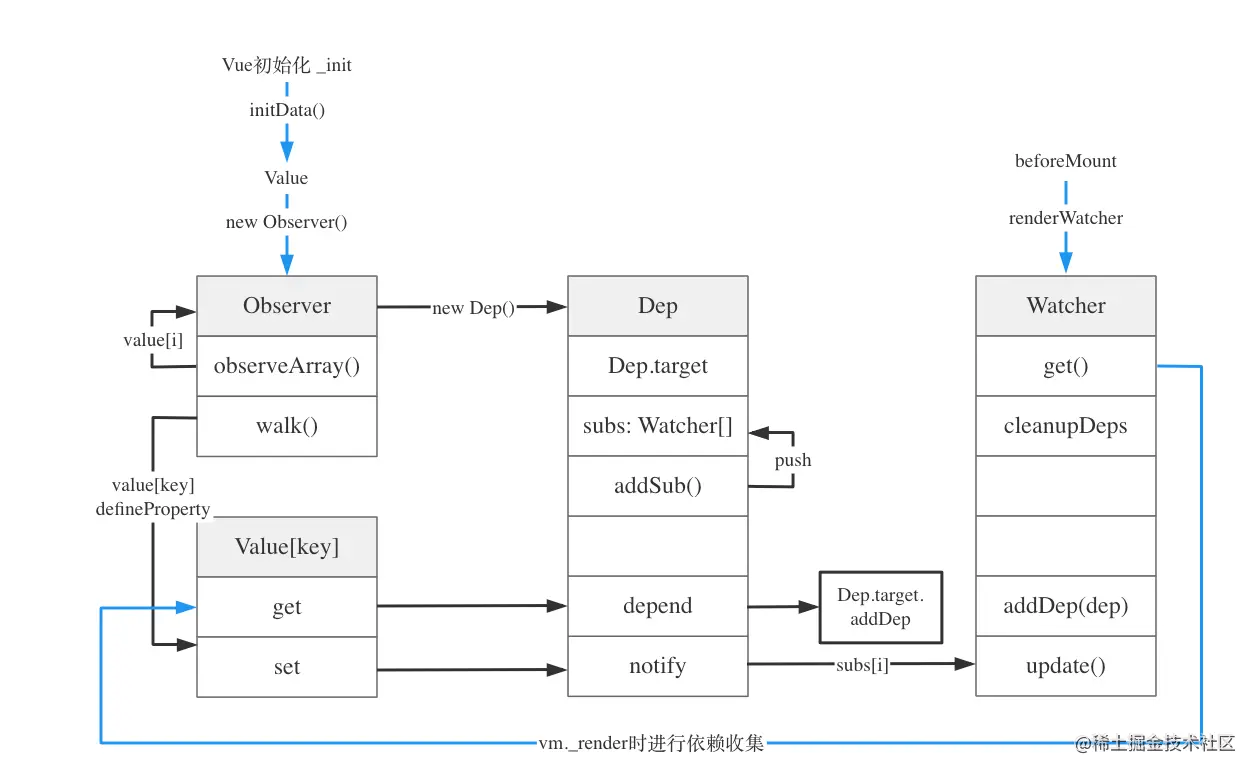
总结
- Vue 初始化时就会通过 Object.defineProperty 拦截属性的 getter 和 setter ,为对象的每个值创建一个 dep 并用 Dep.addSub() 来存储该属性值的 watcher 列表。
- 触发依赖收集的阶段是在 beforeMount 时,它会为组件创建一个渲染 Watcher,在执行 render 的过程中就会触发对象的 getter 方法,通过dep.depend()将订阅者收集起来。通俗的来说,渲染的时候会先解析模板,由于模板中有使用到 data 中的数据,所以会触发 get 操作,从将渲染的 Watcher 对象搜集起来,以便在 set 的时候批量更新。
最后
整理了75个JS高频面试题,并给出了答案和解析,基本上可以保证你能应付面试官关于JS的提问。


有需要的小伙伴,可以点击下方卡片领取,无偿分享





 扫一扫
扫一扫


 2264
2264

 被折叠的 条评论
为什么被折叠?
被折叠的 条评论
为什么被折叠?
 到【灌水乐园】发言





