设计模式-装饰模式 Java

【重温设计模式】装饰模式及其Java示例 在我们的编程世界中,有一种设计模式叫做装饰模式,它以一种独特的方式赋予了代码更多的灵活性。装饰模式是一种结构型设计模式,它允许我们在运行时动态地为对象添加新的行为。这就像是我们在装饰一个房间时,可以随意添加或更换装饰品,而不需要对整个房间进行改造。装饰模式的特点是,它可以保持代码的清晰和简洁,同时提供了强大的扩展性。这种模式在很多场景中都有应用,比如在Java的IO流中,我们就可以看到装饰模式的影子。@Override在上面的Java代码示例中,我们定义了一个基类OneMore和一个装饰器类。 阅读详情

模式概述

装饰模式(Decorator Pattern)是一种结构型设计模式,它允许向一个现有对象动态添加新功能,同时又不改变其结构。这种模式创建了一个装饰类,用于包装原有的类,提供了比继承更有弹性的替代方案。

核心思想:通过组合而非继承的方式,在运行时动态地扩展对象功能,遵循"开闭原则"(对扩展开放,对修改关闭

简单代码示例

// 1. 抽象构件
interface DataSource {
    void writeData(String data);
    String readData();
}

// 2. 具体构件
class FileDataSource implements DataSource {
    private String filename;
    
    public FileDataSource(String filename) {
        this.filename = filename;
    }
    
    @Override
    public void writeData(String data) {
        System.out.println("Writing data to file: " + data);
    }
    
    @Override
    public String readData() {
        return "Data from file";
    }
}

// 3. 抽象装饰类
abstract class DataSourceDecorator implements DataSource {
    protected DataSource wrappee;
    
    public DataSourceDecorator(DataSource source) {
        this.wrappee = source;
    }
}

// 4. 具体装饰类 - 加密装饰器
class EncryptionDecorator extends DataSourceDecorator {
    public EncryptionDecorator(DataSource source) {
        super(source);
    }
    
    @Override
    public void writeData(String data) {
        String encrypted = encrypt(data);
        wrappee.writeData(encrypted);
    }
    
    @Override
    public String readData() {
        String data = wrappee.readData();
        return decrypt(data);
    }
    
    private String encrypt(String data) {
        return "ENCRYPTED(" + data + ")";
    }
    
    private String decrypt(String data) {
        return data.replace("ENCRYPTED(", "").replace(")", "");
    }
}

// 5. 具体装饰类 - 压缩装饰器
class CompressionDecorator extends DataSourceDecorator {
    public CompressionDecorator(DataSource source) {
        super(source);
    }
    
    @Override
    public void writeData(String data) {
        String compressed = compress(data);
        wrappee.writeData(compressed);
    }
    
    @Override
    public String readData() {
        String data = wrappee.readData();
        return decompress(data);
    }
    
    private String compress(String data) {
        return "COMPRESSED[" + data + "]";
    }
    
    private String decompress(String data) {
        return data.replace("COMPRESSED[", "").replace("]", "");
    }
}

// 客户端代码
public class DecoratorDemo {
    public static void main(String[] args) {
        // 基本文件数据源
        DataSource source = new FileDataSource("data.txt");
        
        // 添加加密功能
        DataSource encryptedSource = new EncryptionDecorator(source);
        encryptedSource.writeData("Sensitive data");
        System.out.println("Read encrypted: " + encryptedSource.readData());
        
        // 添加压缩和加密功能
        DataSource secureSource = new CompressionDecorator(
                                  new EncryptionDecorator(source));
        secureSource.writeData("Large sensitive data");
        System.out.println("Read compressed & encrypted: " + secureSource.readData());
    }
}

技术细节

1.模式组成

组件职责说明
抽象构件定义对象接口,可以动态添加职责
具体构件实现Component接口,定义要添加功能的对象
抽象装饰类继承Component,维护一个Component对象的引用
具体装饰类向构件添加具体职责

2.优缺点

优点:

  • 比继承更灵活,符合开闭原则,无需修改现有代码
  • 支持运行时动态添加或移除功能

缺点:

  • 会产生大量小对象,增加系统复杂性
  • 多层装饰时调试困难

模式应用

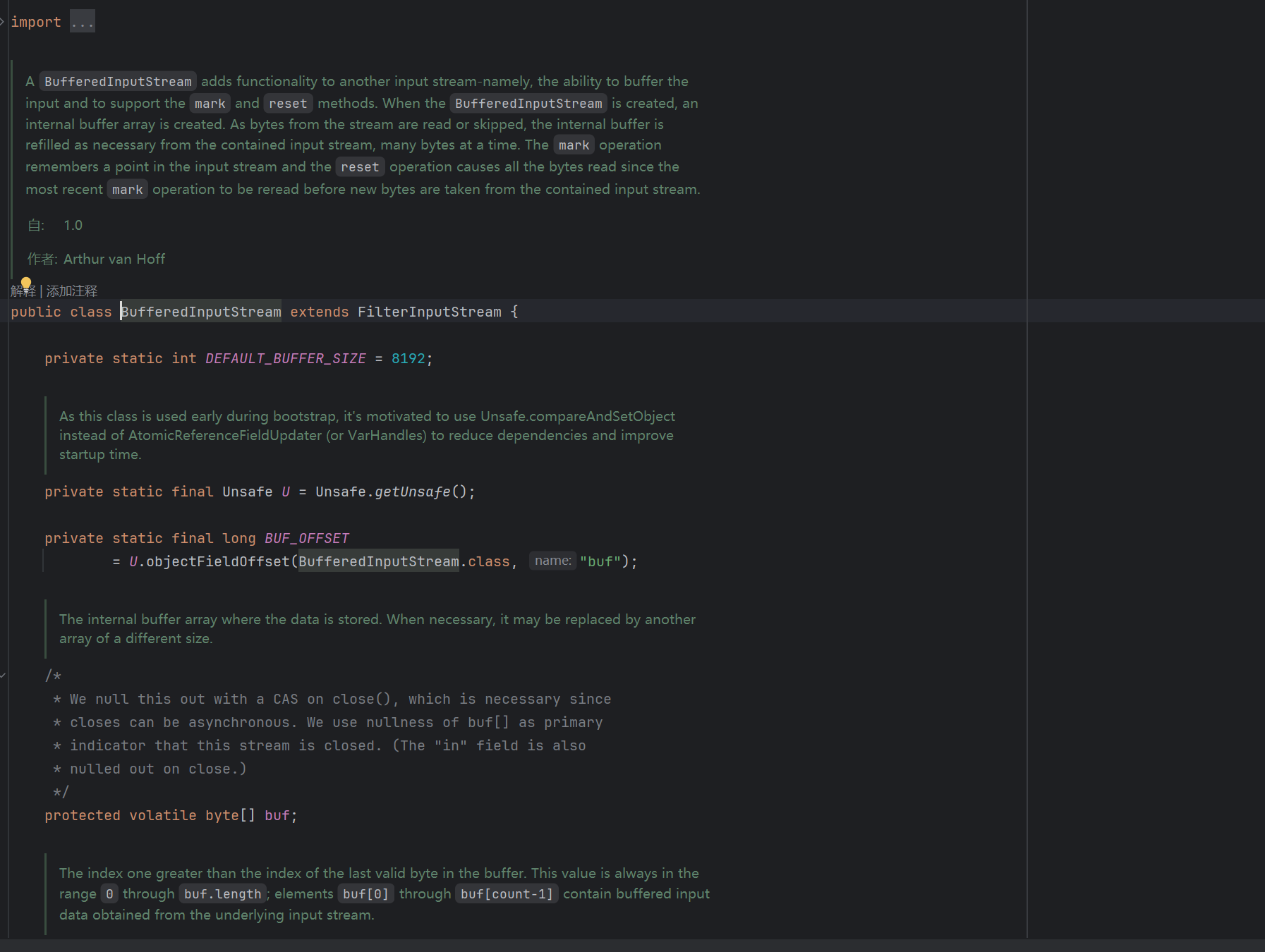
I/O流是装饰器模式的完美范例,它通过装饰器模式为基本的I/O操作提供了灵活而强大的扩展能力
在这里插入图片描述

Wi-Fi Sigma测试系统 Wi-Fi Sigma测试系统是Wi-Fi联盟(WFA)提出的一套全自动的WiFi认证测试系统,几乎涵盖的所有Wi-Fi的功能及性能(throughput)的自动化测试。该系统正逐步取代以前的WiFi认证测试系统。 阅读详情

相关推荐

深入浅出PWM:用示波器带你理解占空比与滤波效果

本文通过示波器实测,深入浅出地解析了PWM(脉宽调制)的核心原理。从占空比与平均电压的关系入手,详细演示了RC及有源滤波器如何将数字方波“翻译”为平滑模拟电压,并探讨了PWM-DAC的精度、响应速度等关键设计考量,为硬件调试与电路设计提供了实用的实践指导。

weixin_29292431的博客 345

装饰模式——初学JAVA设计模式

文章目录一、基本概念模式角色二、简单实例实例一、变形金刚类图代码实现结果截图实例二、喜羊羊与灰太狼类图方式一:透明模式代码实现结果截图方式二:半透明模式+透明模式代码实现结果截图三、透明模式和半透明模式的区别辨析透明模式半透明模式四、小结优缺点适用场景 一、基本概念 装饰模式是一种用于替代继承的技术,它通过一种无须定义子类的方式来给对象动态增加职责,使用对象之间的关联关系取代类之间的继承关系。 装...

发子鸡的博客 1497

Carla-编译CarlaUE4提示HoloLens.Automation项目缺少Windows程序集?

编译CarlaUE4提示HoloLens.Automation项目缺少Windows程序集?不妨看看这个!

DSK_981029的博客 2573

Java设计模式-装饰模式

装饰模式是一种非常有用的设计模式,它可以动态地为对象添加新的功能,而不需要修改原有的代码。通过定义一个抽象的装饰器类和具体的装饰器类,我们可以非常方便地扩展对象的功能,以满足不同的业务需求。虽然装饰模式增加了代码的复杂性和运行时开销,但是它在许多情况下仍然是一种非常有效的解决方案。

小薯条的博客 703

mtk-drm commit送显流程(二):内核态atomic_commit实现解析

本文深入解析了mtk-drm框架中atomic_commit机制的内核态实现流程,详细介绍了从用户态触发到硬件提交的完整调用链,包括状态检查、硬件提交等关键阶段。特别分析了MTK平台在动态刷新率、内存带宽优化等方面的特有实现策略,为开发者提供了调试技巧和常见问题解决方案。

weixin_30839881的博客 1305

保姆级教程:用NX机电概念设计与RobotStudio实现ModbusTCP联合仿真(附完整代码)

本文提供了一份详细的NX机电概念设计与RobotStudio联合仿真实战教程。通过ModbusTCP协议构建数据桥梁,实现机械行为与机器人控制逻辑的双向实时同步。文章从环境搭建、信号配置、RAPID代码编写到联合调试,逐步拆解了实现数字孪生核心链路的关键步骤,并分享了常见问题排查方法,助力工程师在虚拟环境中提前验证产线协同。

sat99的博客 1098

Java设计模式之装饰模式

装饰模式(Decorator Pattern)是一种结构型设计模式,用于在运行时动态地给对象添加额外的职责,而无需通过继承来扩展对象的功能。

LHR__123的博客 642

【AI智能体】Codex 浏览器操作自动化任务实战操作详解

【AI智能体】Codex 浏览器操作自动化任务实战操作详解

congge 4082

JAVA设计模式之装饰模式

在阎宏博士的《JAVA与模式》一书中开头是这样描述装饰(Decorator)模式的:   装饰模式又名包装(Wrapper)模式。装饰模式以对客户端透明的方式扩展对象的功能,是继承关系的一个替代方案。 装饰模式的结构   装饰模式以对客户透明的方式动态地给一个对象附加上更多的责任。换言之,客户端并不会觉得对象在装饰前和装饰后有什么不同。装饰模式可以在不使用创造更多子类的情况下,将对象...

weixin_30270561的博客 101

SAP CDS View 教程里的标准视图:SEPM_I_SalesOrderItem_E 当成一张表来用之前,你需要先弄清它到底是什么

摘要:SEPM_I_SalesOrderItem_E 是 SAP EPM demo 中的预交付 CDS 视图,用于表示销售订单行项目数据。它采用 VDM 命名规范,_E 后缀表示对外隐藏内部 UUID 键,提供业务友好的外部 ID 接口。该视图常见于 ABAP Platform 7.50+、开发版系统及 Gateway 教程中,可像表一样通过 Open SQL 查询。实际项目中,这类视图能有效解决内外系统键值映射问题,示例代码展示了如何查询其数据。使用时需注意系统是否安装了 EPM demo 内容。

2007 年 ~ 2025 年,深耕 SAP 技术 18 年 547

YOLOv11改进 | 损失函数改进篇 | EIoU、SIoU、WIoU、DIoU、FocusIoU等二十余种损失函数

这篇文章介绍了YOLOv11的重大改进,特别是在损失函数方面的创新。它不仅包括了多种IoU损失函数的改进和变体,如SIoU、WIoU、GIoU、DIoU、EIOU、CIoU,还融合了“Focus”思想,创造了一系列新的损失函数。这些组合形式的损失函数超过了二十余种,每种都针对特定的目标检测挑战进行优化。文章会详细探讨这些损失函数如何提高YOLOv11在各种检测任务中的性能,包括提升精度、加快收敛速度和增强模型对复杂场景的适应性。

Snu77的博客 6193

【设计模式】用Java实现装饰模式

装饰模式(Decorator Pattern)是一种结构型设计模式它允许在不改变现有对象结构的情况下,动态地将责任附加到对象上。装饰模式通过将对象包装在装饰器对象中,形成一条装饰链,每个装饰器对象都可以在被装饰对象的行为前后加上自己的行为。装饰模式的核心思想是通过组合而不是继承来扩展对象的功能。它遵循开放-关闭原则,即对扩展开放,对修改关闭,使得我们可以在不修改现有代码的情况下,灵活地添加新的功能。应用场景:需要在不改变现有对象结构的情况下,动态地为对象添加额外的功能。

分享Java硬核干货 1万+

PyTorch深度学习实战(24)——使用U-Net架构进行图像分割

图像分割 (Image segmentation) 是计算机视觉领域中的一个重要任务,旨在将图像划分为具有语义信息的不同区域或对象。与目标检测任务不同,图像分割要求像素级别的精确定位和分类,将每个像素标记为属于哪个类别或属于哪个区域。在本节中,我们将介绍图像分割的基本概念,并训练一个基于 U-Net 架构的图像分割模型。

盼小辉丶的博客 1万+

浅析Java设计模式——装饰模式

浅析Java设计模式——装饰模式装饰模式也是结构型模式的一种,该模式是一种用于替代继承关系的技术。降低系统的耦合度。1、定义:可以动态地给某个对象增加一些额外的职责。2、模式结构:(1)Component(抽象构件):定义了对象的接口,是具体构件和抽象装饰类的共同父类,可以动态地给对象增加方法。(2)ConcreteComponent(具体构件):定义了具体的构件对象,实现了抽象构件中的方法。(3...

zyn_1024的博客 703

efm32 入门.pdf

本PDF共计22页,介绍的是操作驱动API,下载与否自己斟酌。

C# WinForm 基于DirectShow.dll编写的程序,可边预览边保存视频,音频和图片

基于微软的DirectShow.dll的二次开发1.自动识别连接的摄像头跟麦克风且可以对其进行选择(默认选中第一个)2.可录制wmv和avi两种格式的视频并且都带有音频,avi可以录制的分辨率和帧数进行选择,wmv默认进行了淸晰度优化如不喜欢可去除代码中有相关提示3.可在预览点开之后进行拍照,也可边录制视频边拍照4.添加了视频和音频的压缩功能(酌情使用)这次二次开发发现C#对DirectShow的相关信息太少,这次做完也不敢藏私共享出来,还望大家指正

java 设计模式之装饰模式

Java装饰模式允许在运行时动态地修改对象的行为,它与继承具有替代作用。Java IO流和Java Servlet API 中都广泛使用了装饰模式。在日常的Java开发中,也可以充分应用装饰模式来避免冗余代码,提高代码的复用性。

melck的博客 345

深度学习工具包 DeepLearningToolbox

深度学习工具包Deprecation notice.-----This toolbox is outdated and no longer maintained.There are much better tools available for deep learning than this toolbox, e.g. [Theano](http://deeplearning.net/software/theano/), [torch](http://torch.ch/) or [tensorflow](http://www.tensorflow.org/)I would suggest you use one of the tools mentioned above rather than use this toolbox.Best, Rasmus.DeepLearnToolbox================A Matlab toolbox for Deep Learning.Deep Learning is a new subfield of machine learning that focuses on learning deep hierarchical models of data.It is inspired by the human brain's apparent deep (layered, hierarchical) architecture.A good overview of the theory of Deep Learning theory is[Learning Deep Architectures for AI](http://www.iro.umontreal.ca/~bengioy/papers/ftml_book.pdf)For a more informal introduction, see the following videos by Geoffrey Hinton and Andrew Ng.* [The Next Generation of Neural Networks](http://www.youtube.com/watch?v=AyzOUbkUf3M) (Hinton, 2007)* [Recent Developments in Deep Learning](http://www.youtube.com/watch?v=VdIURAu1-aU) (Hinton, 2010)* [Unsupervised Feature Learning and Deep Learning](http://www.youtube.com/watch?v=ZmNOAtZIgIk) (Ng, 2011)If you use this toolbox in your research please cite [Prediction as a candidate for learning deep hierarchical models of data](http://www2.imm.dtu.dk/pubdb/views/publication_details.php?id=6284)```@MASTERSTHESIS\{IMM2012-06284, author = "R. B. Palm", title = "Prediction as a candidate for learning deep hierarchical models of data", year = "2012",}```Contact: rasmusbergpalm at gmail dot comDirectories included in the toolbox-----------------------------------`NN/` - A library for Feedforward Backpropagation Neural Networks`CNN/` - A library for Convolutional Neural Networks`DBN/` - A library for Deep Belief Networks`SAE/` - A library for Stacked Auto-Encoders`CAE/` - A library for Convolutional Auto-Encoders`util/` - Utility functions used by the libraries`data/` - Data used by the examples`tests/` - unit tests to verify toolbox is workingFor references on each library check REFS.mdSetup-----1. Download.2. addpath(genpath('DeepLearnToolbox'));Example: Deep Belief Network---------------------```matlabfunction test_example_DBNload mnist_uint8;train_x = double(train_x) / 255;test_x = double(test_x) / 255;train_y = double(train_y);test_y = double(test_y);%% ex1 train a 100 hidden unit RBM and visualize its weightsrand('state',0)dbn.sizes = [100];opts.numepochs = 1;opts.batchsize = 100;opts.momentum = 0;opts.alpha = 1;dbn = dbnsetup(dbn, train_x, opts);dbn = dbntrain(dbn, train_x, opts);figure; visualize(dbn.rbm{1}.W'); % Visualize the RBM weights%% ex2 train a 100-100 hidden unit DBN and use its weights to initialize a NNrand('state',0)%train dbndbn.sizes = [100 100];opts.numepochs = 1;opts.batchsize = 100;opts.momentum = 0;opts.alpha = 1;dbn = dbnsetup(dbn, train_x, opts);dbn = dbntrain(dbn, train_x, opts);%unfold dbn to nnnn = dbnunfoldtonn(dbn, 10);nn.activation_function = 'sigm';%train nnopts.numepochs = 1;opts.batchsize = 100;nn = nntrain(nn, train_x, train_y, opts);[er, bad] = nntest(nn, test_x, test_y);assert(er < 0.10, 'Too big error');```Example: Stacked Auto-Encoders---------------------```matlabfunction test_example_SAEload mnist_uint8;train_x = double(train_x)/255;test_x = double(test_x)/255;train_y = double(train_y);test_y = double(test_y);%% ex1 train a 100 hidden unit SDAE and use it to initialize a FFNN% Setup and train a stacked denoising autoencoder (SDAE)rand('state',0)sae = saesetup([784 100]);sae.ae{1}.activation_function = 'sigm';sae.ae{1}.learningRate = 1;sae.ae{1}.inputZeroMaskedFraction = 0.5;opts.numepochs = 1;opts.batchsize = 100;sae = saetrain(sae, train_x, opts);visualize(sae.ae{1}.W{1}(:,2:end)')% Use the SDAE to initialize a FFNNnn = nnsetup([784 100 10]);nn.activation_function = 'sigm';nn.learningRate = 1;nn.W{1} = sae.ae{1}.W{1};% Train the FFNNopts.numepochs = 1;opts.batchsize = 100;nn = nntrain(nn, train_x, train_y, opts);[er, bad] = nntest(nn, test_x, test_y);assert(er < 0.16, 'Too big error');```Example: Convolutional Neural Nets---------------------```matlabfunction test_example_CNNload mnist_uint8;train_x = double(reshape(train_x',28,28,60000))/255;test_x = double(reshape(test_x',28,28,10000))/255;train_y = double(train_y');test_y = double(test_y');%% ex1 Train a 6c-2s-12c-2s Convolutional neural network %will run 1 epoch in about 200 second and get around 11% error. %With 100 epochs you'll get around 1.2% errorrand('state',0)cnn.layers = { struct('type', 'i') %input layer struct('type', 'c', 'outputmaps', 6, 'kernelsize', 5) %convolution layer struct('type', 's', 'scale', 2) %sub sampling layer struct('type', 'c', 'outputmaps', 12, 'kernelsize', 5) %convolution layer struct('type', 's', 'scale', 2) %subsampling layer};cnn = cnnsetup(cnn, train_x, train_y);opts.alpha = 1;opts.batchsize = 50;opts.numepochs = 1;cnn = cnntrain(cnn, train_x, train_y, opts);[er, bad] = cnntest(cnn, test_x, test_y);%plot mean squared errorfigure; plot(cnn.rL);assert(er<0.12, 'Too big error');```Example: Neural Networks---------------------```matlabfunction test_example_NNload mnist_uint8;train_x = double(train_x) / 255;test_x = double(test_x) / 255;train_y = double(train_y);test_y = double(test_y);% normalize[train_x, mu, sigma] = zscore(train_x);test_x = normalize(test_x, mu, sigma);%% ex1 vanilla neural netrand('state',0)nn = nnsetup([784 100 10]);opts.numepochs = 1; % Number of full sweeps through dataopts.batchsize = 100; % Take a mean gradient step over this many samples[nn, L] = nntrain(nn, train_x, train_y, opts);[er, bad] = nntest(nn, test_x, test_y);assert(er < 0.08, 'Too big error');%% ex2 neural net with L2 weight decayrand('state',0)nn = nnsetup([784 100 10]);nn.weightPenaltyL2 = 1e-4; % L2 weight decayopts.numepochs = 1; % Number of full sweeps through dataopts.batchsize = 100; % Take a mean gradient step over this many samplesnn = nntrain(nn, train_x, train_y, opts);[er, bad] = nntest(nn, test_x, test_y);assert(er < 0.1, 'Too big error');%% ex3 neural net with dropoutrand('state',0)nn = nnsetup([784 100 10]);nn.dropoutFraction = 0.5; % Dropout fraction opts.numepochs = 1; % Number of full sweeps through dataopts.batchsize = 100; % Take a mean gradient step over this many samplesnn = nntrain(nn, train_x, train_y, opts);[er, bad] = nntest(nn, test_x, test_y);assert(er < 0.1, 'Too big error');%% ex4 neural net with sigmoid activation functionrand('state',0)nn = nnsetup([784 100 10]);nn.activation_function = 'sigm'; % Sigmoid activation functionnn.learningRate = 1; % Sigm require a lower learning rateopts.numepochs = 1; % Number of full sweeps through dataopts.batchsize = 100; % Take a mean gradient step over this many samplesnn = nntrain(nn, train_x, train_y, opts);[er, bad] = nntest(nn, test_x, test_y);assert(er < 0.1, 'Too big error');%% ex5 plotting functionalityrand('state',0)nn = nnsetup([784 20 10]);opts.numepochs = 5; % Number of full sweeps through datann.output = 'softmax'; % use softmax outputopts.batchsize = 1000; % Take a mean gradient step over this many samplesopts.plot = 1; % enable plottingnn = nntrain(nn, train_x, train_y, opts);[er, bad] = nntest(nn, test_x, test_y);assert(er < 0.1, 'Too big error');%% ex6 neural net with sigmoid activation and plotting of validation and training error% split training data into training and validation datavx = train_x(1:10000,:);tx = train_x(10001:end,:);vy = train_y(1:10000,:);ty = train_y(10001:end,:);rand('state',0)nn = nnsetup([784 20 10]); nn.output = 'softmax'; % use softmax outputopts.numepochs = 5; % Number of full sweeps through dataopts.batchsize = 1000; % Take a mean gradient step over this many samplesopts.plot = 1; % enable plottingnn = nntrain(nn, tx, ty, opts, vx, vy); % nntrain takes validation set as last two arguments (optionally)[er, bad] = nntest(nn, test_x, test_y);assert(er < 0.1, 'Too big error');```[![Bitdeli Badge](https://d2weczhvl823v0.cloudfront.net/rasmusbergpalm/deeplearntoolbox/trend.png)](https://bitdeli.com/free "Bitdeli Badge")

JAVA设计模式-装饰模式

装饰模式是一种结构型模式,在不改变现有对象结构的前提下,给现有对象添加新的功能,动态增加职责,是现有类的一个包装。装饰模式可以动态的扩展一个实现类的功能,动态添加功能或动态撤销,并且不会修改原有对象的结构,是继承的一个替代模式。比较容易搞混的是代理模式,代理模式主要是由代理对象去控制原有对象。装饰模式主要注重增加撤销功能,代理模式主要强调对原有对象的控制。

胥平勇的博客 856

计算机控制技术及应用

《计算机控制技术及应用》通过总结作者的科研成果和吸收国内外的先进理论、方法和技术,以计算机控制系统的网络化、开放化、智能化和集成化发展趋势为主线索,主要介绍计算机控制系统的基本概念和计算机控制系统的典型形式,计算机控制系统的数学描述与基本分析方法,以及数字PID控制器、最少拍控制系统、达林算法、状态变量设计法等设计方法及其各种改进算法。重点突出计算机控制系统输入输出通道接口的设计方法和典型控制系统的设计案例与实现方法等。

Java——设计模式 装饰模式(封装器)

Java——设计模式 装饰模式(封装器) 装饰模式是一种结构型设计模式,允许你通过将对象放入包含行为的特殊对象中为原来对象绑定新的行为结构。 装饰模式结构 部件(Component)声明封装器和被封装对象的公用接口。 具体部件 (Concrete Component)类是被封装对象所属的类。它定义了基础行为,但装饰类可以改变这些行为。 基础装饰 (Base Decorator)类拥有一个指向被封装对象的引用成员变量。该变量的类型应当被声明为通用部件接口,这样 它就可以引用具体的部件和装饰。装饰的基类会将

warehouse_mouse的博客 409

装饰模式 java_java设计模式:装饰模式

java设计模式:装饰模式导语:Java是一门面向对象编程语言,不仅吸收了C++语言的各种优点,还摒弃了C++里难以理解的多继承、指针等概念,因此Java语言具有功能强大和简单易用两个特征。下面我们来看看装饰模式,希望对大家有所帮助。装饰模式(Decorator Pattern):在不必改变原类文件和使用继承的情况下,动态地扩展一个对象的功能。它是通过创建一个包装对象,也就是装饰来包裹真实的对象。...

weixin_39563420的博客 280

设计模式之 装饰模式 Java

设计模式之 装饰模式 Java

xiaoyustudiowww的博客 545

Java设计模式——装饰模式(Decorator Pattern)

57524ds5gds

阿Q的小窝 706

【JAVA进阶系列】JAVA 设计模式 -- 装饰模式(Decorator)

增加功能时的核心角色;

embelfe_segge的博客 365

【详解】JAVA设计模式装饰模式(Decorator)

首先,定义一个接口或抽象类,这个接口或抽象类描述了基本的行为。

牛肉胡辣汤 1493

Java 设计模式---装饰模式

一、装饰模式 1.引子 装饰模式? ①肯定让你想起又黑又火的家庭装修来。其实两者在道理上还是有很多相像的 地方。家庭装修无非就是要掩盖住原来实而不华的墙面,抹上一层华而不实的涂料,让生活多一点色彩。而墙还是那堵墙,他的本质一点都没有变,只是多了一层外衣而已。 ②回想一下 Java 当中的各种输入输出流,各种功能一层嵌套一层,就好像不断得 给一个产品加功能,加完以后在消费者看来,原来是是什么产品现在还是什么产 品,只不过用的时候功能增加了。 那设计模式中的装饰模式,是什么样子呢? 2.定义与结构

杀神lwz的博客 248
上一篇: Bug 记录:SecureRandom.getInstanceStrong()导致验证码获取阻塞
下一篇: 设计模式-策略模式 Java
刘火锅
博客等级 码龄7年 121粉丝 37原创
评论
成就一亿技术人!
拼手气红包6.0元
还能输入1000个字符
 
 条评论被折叠 查看
添加红包

请填写红包祝福语或标题

个

红包个数最小为10个

元

红包金额最低5元

当前余额3.43元 前往充值 >
需支付:10.00元
成就一亿技术人!
领取后你会自动成为博主和红包主的粉丝 规则
hope_wisdom
发出的红包
实付元
使用余额支付
点击重新获取
扫码支付
钱包余额 0

抵扣说明:

1.余额是钱包充值的虚拟货币,按照1:1的比例进行支付金额的抵扣。
2.余额无法直接购买下载,可以购买VIP、付费专栏及课程。

余额充值