 Java IO流异常处理及AutoCloseable接口


一、IO流标准的异常处理
JDK7版本之前,异常处理、关闭字节流的标准操作
public static void main(String[] args) {
    FileOutputStream fos = null;
    try {
        fos = new FileOutputStream("d:\\a.txt");
        fos.write("hello world".getBytes());
        fos.flush();
    } catch (Exception e) {
        e.printStackTrace();
    }finally {
        try {
            // 判断字节流对象是否为空,避免空指针异常
            if (fos != null) {
                fos.close();
            }
        } catch (Exception e) {
            e.printStackTrace();
        }
    }
}
JDK7版本之后,异常处理、关闭字节流的标准操作
public static void main(String[] args) {
    // try () 中对象自动调用close()方法,有异常也会执行
    try (FileOutputStream fos = new FileOutputStream("d:\\a.txt")){
        fos.write("hello world".getBytes());
        fos.flush();
    } catch (Exception e) {
        e.printStackTrace();
    }
}
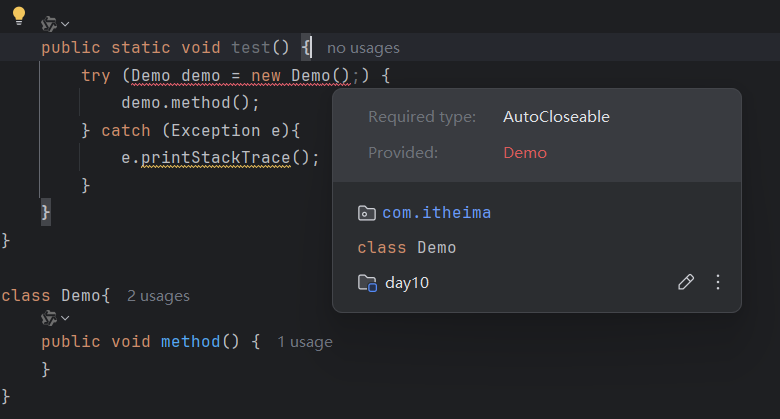
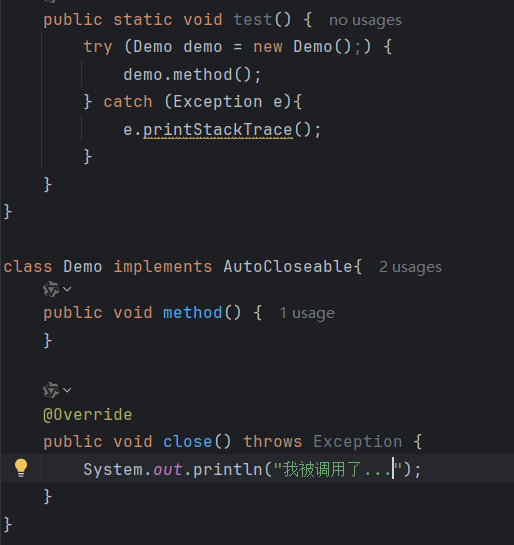
注:try () 中的对象需要实现过 AutoCloseable 接口
try () 中创建的自定义类对象,没有实现AutoCloseable接口时,如下图:
try () 中创建的自定义类对象,实现了AutoCloseable接口,并重写了close()方法,如下图:





 扫一扫
扫一扫


 2640
2640

 被折叠的 条评论
为什么被折叠?
被折叠的 条评论
为什么被折叠?
 到【灌水乐园】发言





