



 本文介绍了Java中构造方法的重载概念,并通过一个具体示例展示了如何实现构造方法的重载,包括不同参数类型的构造函数的选择过程。此外,还强调了返回值类型不能作为方法重载的依据。
如在程序中不声明限制修饰,则默认当前类有效。
当其他类引用此类的时候,只有public可用。
构造方法重载:
public Somese(int a)
{
    if(a>0){this.a=a;}
}
public Somese(int a,String text)
{
   if(a>0){this.a=a;}
    if(text!=null){
    this.text=text;
}
根据参数类型选择使用哪一个构造函数。
完整代码:
package cc.openhome;

public class Somese {
private int a=10;
private String text="n.a.";
int getA()
{
    return a;
}
String getText()
{
    return text;
}
public Somese(int a)
{
    if(a>0){this.a=a;}
}
public Somese(int a,String text)
{
   if(a>0){this.a=a;}
    if(text!=null){
    this.text=text;
}}
    public static void main(String[] args) {
    Somese some=new Somese(1);
    System.out.printf("Somese(%d)%n", some.getA());
    Somese come=new Somese(1,"string");
   System.out.printf("Somese(%d,%s)%n", come.getA(),come.getText());
    }

}
结果:
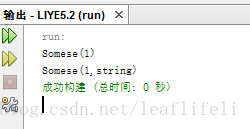
特别说明: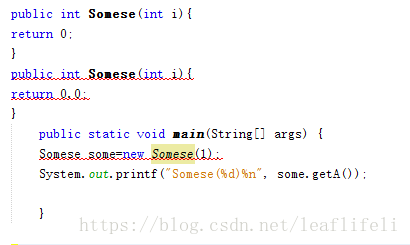
返回值类型不可以作为方法重载依据。编译程序会将两个someMethod()视为重复定义而编译失败;





 扫一扫
扫一扫


 721
721

 被折叠的 条评论
为什么被折叠?
被折叠的 条评论
为什么被折叠?
 到【灌水乐园】发言





