


Sentinel源码分析
1.Sentinel的基本概念
Sentinel实现限流、隔离、降级、熔断等功能,本质要做的就是两件事情:
统计数据:统计某个资源的访问数据(QPS、RT等信息)
规则判断:判断限流规则、隔离规则、降级规则、熔断规则是否满足
这里的资源就是希望被Sentinel保护的业务,例如项目中定义的controller方法就是默认被Sentinel保护的资源。
1.1.ProcessorSlotChain
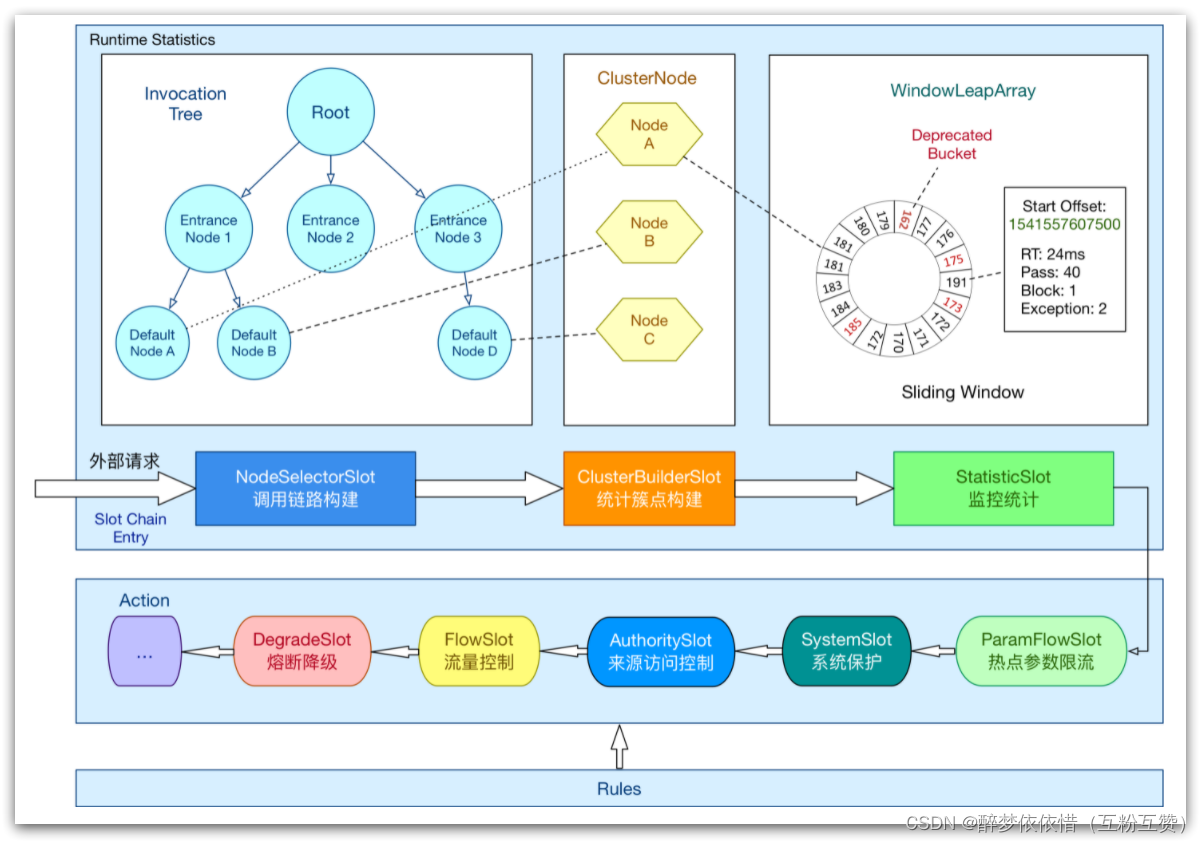
实现上述功能的核心骨架是一个叫做ProcessorSlotChain的类。这个类基于责任链模式来设计,将不同的功能(限流、降级、系统保护)封装为一个个的Slot,请求进入后逐个执行即可。
其工作流如图:
责任链中的Slot也分为两大类:
统计数据构建部分(statistic)
NodeSelectorSlot:负责构建簇点链路中的节点(DefaultNode),将这些节点形成链路树
ClusterBuilderSlot:负责构建某个资源的ClusterNode,ClusterNode可以保存资源的运行信息(响应时间、QPS、block 数目、线程数、异常数等)以及来源信息(origin名称)
StatisticSlot:负责统计实时调用数据,包括运行信息、来源信息等
规则判断部分(rule checking)
AuthoritySlot:负责授权规则(来源控制)
SystemSlot:负责系统保护规则
ParamFlowSlot:负责热点参数限流规则
FlowSlot:负责限流规则
DegradeSlot:负责降级规则
1.2.Node
Sentinel中的簇点链路是由一个个的Node组成的,Node是一个接口,包括下面的实现:
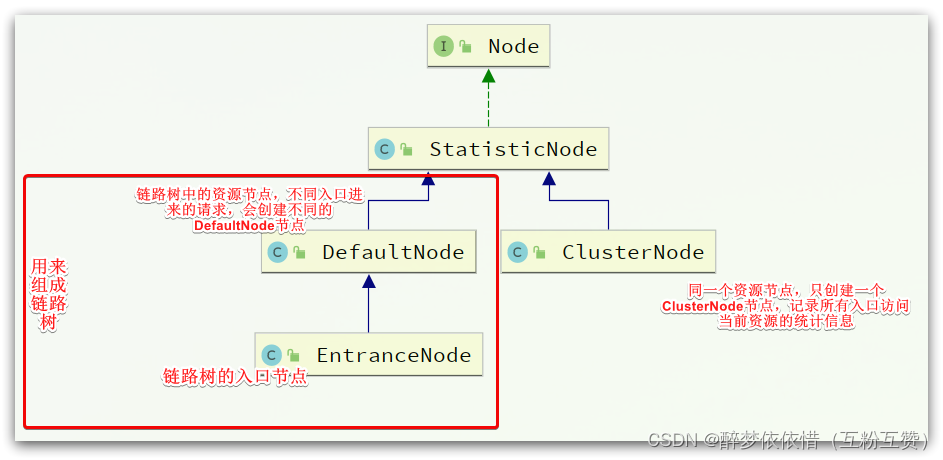
controller里面的每一个方法都是不同的入口节点方法,比如两个controller方法调用service中的同一个方法,那么service的该资源方法就会创建两个不同的defaultNode节点。
可以认为DefaultNode类型是链路模式使用的,而ClusterNode类型则是非链路模式使用。
所有的节点都可以记录对资源的访问统计数据,所以都是StatisticNode的子类。
按照作用分为两类Node:
DefaultNode:代表链路树中的每一个资源,一个资源出现在不同链路中时,会创建不同的DefaultNode节点。而树的入口节点叫EntranceNode,是一种特殊的DefaultNode
ClusterNode:代表资源,一个资源不管出现在多少链路中,只会有一个ClusterNode。记录的是当前资源被访问的所有统计数据之和。
DefaultNode记录的是资源在当前链路中的访问数据,用来实现基于链路模式的限流规则。ClusterNode记录的是资源在所有链路中的访问数据,实现默认模式、关联模式的限流规则。
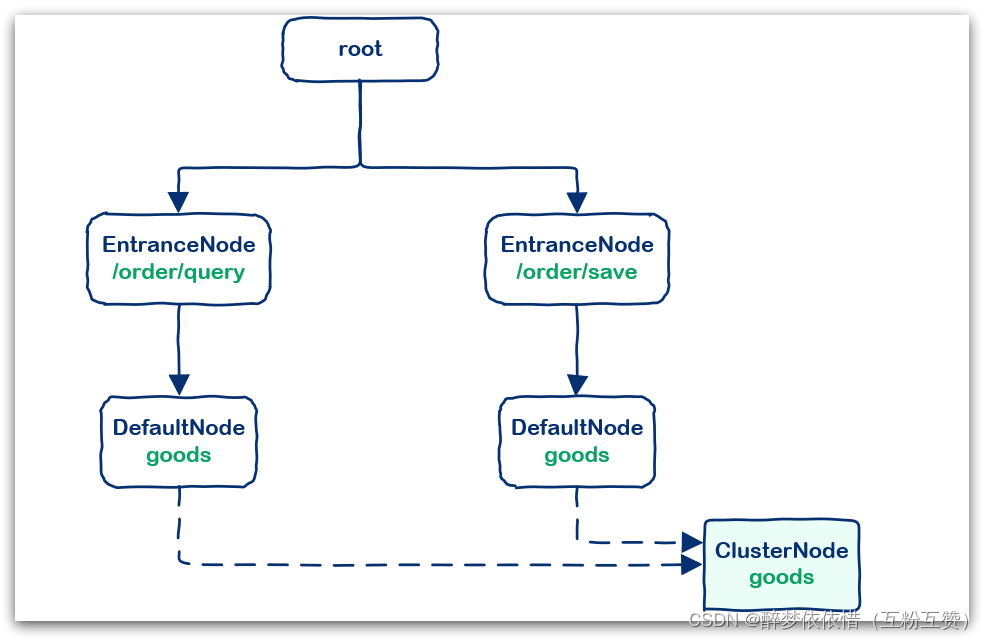
例如:我们在一个SpringMVC项目中,有两个业务:
业务1:controller中的资源
/order/query访问了service中的资源/goods业务2:controller中的资源
/order/save访问了service中的资源/goods创建的链路图如下:
1.3.Entry
默认情况下,Sentinel会将controller中的方法作为被保护资源,那么问题来了,我们该如何将自己的一段代码标记为一个Sentinel的资源呢?
Sentinel中的资源用Entry来表示。声明Entry的API示例:
// 资源名可使用任意有业务语义的字符串,比如方法名、接口名或其它可唯一标识的字符串。
try (Entry entry = SphU.entry("resourceName")) {
  // 被保护的业务逻辑
  // do something here...
} catch (BlockException ex) {
  // 资源访问阻止,被限流或被降级
  // 在此处进行相应的处理操作
}
1.3.1.自定义资源
例如,我们在order-service服务中,将
OrderService的queryOrderById()方法标记为一个资源。1)首先在order-service中引入sentinel依赖
<!--sentinel-->
<dependency>
    <groupId>com.alibaba.cloud</groupId>
    <artifactId>spring-cloud-starter-alibaba-sentinel</artifactId>
</dependency>
2)然后配置Sentinel地址
spring:
  cloud:
    sentinel:
      transport:
        dashboard: localhost:8089 # 这里我的sentinel用了8089的端口
3)修改OrderService类的queryOrderById方法
代码这样来实现:
public Order queryOrderById(Long orderId) {
    // 创建Entry,标记资源,资源名为resource1
    try (Entry entry = SphU.entry("resource1")) {
        // 1.查询订单,这里是假数据
        Order order = Order.build(101L, 4999L, "小米 MIX4", 1, 1L, null);
        // 2.查询用户,基于Feign的远程调用
        User user = userClient.findById(order.getUserId());
        // 3.设置
        order.setUser(user);
        // 4.返回
        return order;
    }catch (BlockException e){
        log.error("被限流或降级", e);
        return null;
    }
}
4)访问
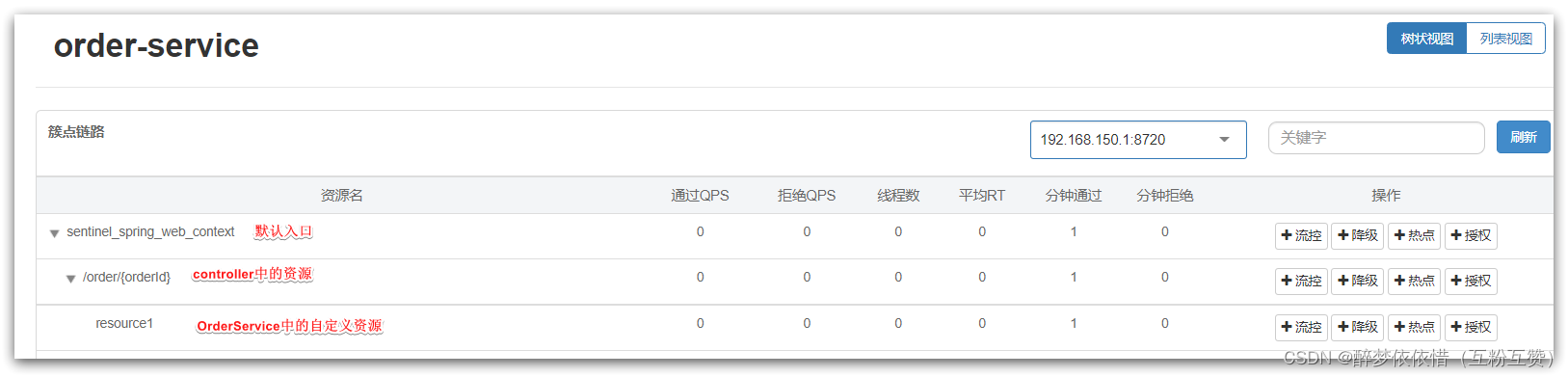
打开浏览器,访问order服务:http://localhost:8080/order/101
然后打开sentinel控制台,查看簇点链路:
1.3.2.基于注解标记资源
在之前学习Sentinel的时候,我们知道可以通过给方法添加@SentinelResource注解的形式来标记资源。
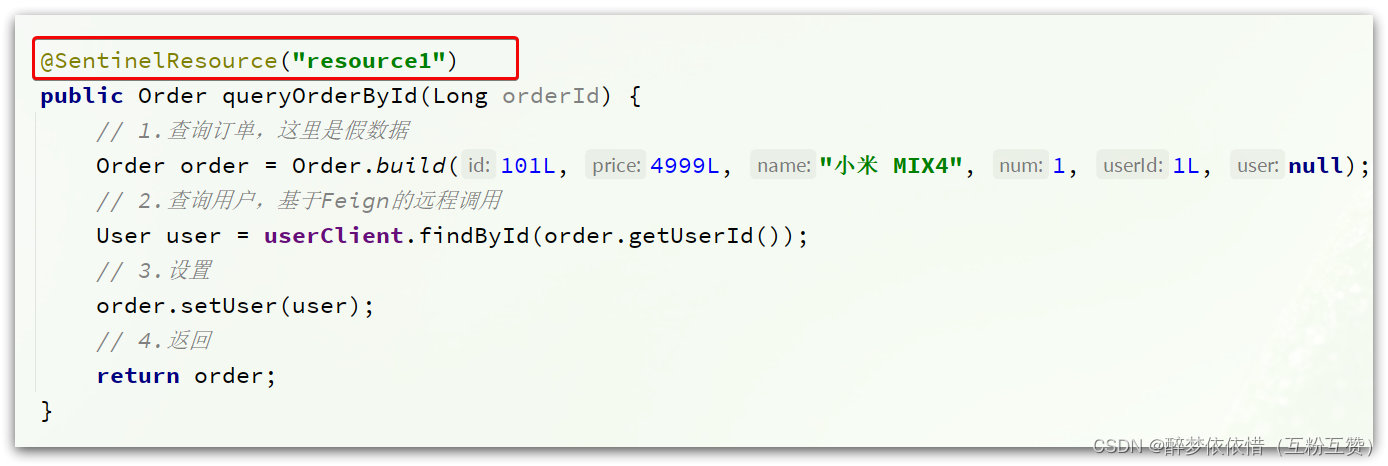
这个是怎么实现的呢?
来看下我们引入的Sentinel依赖包:
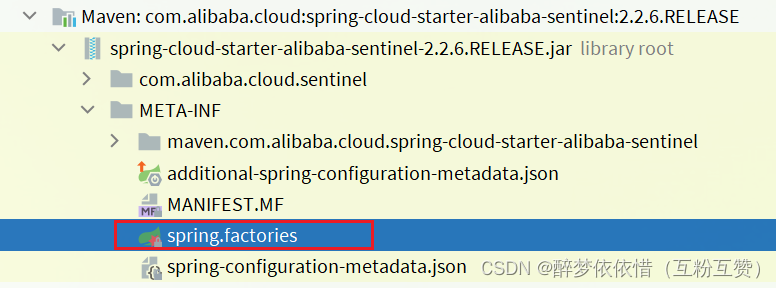
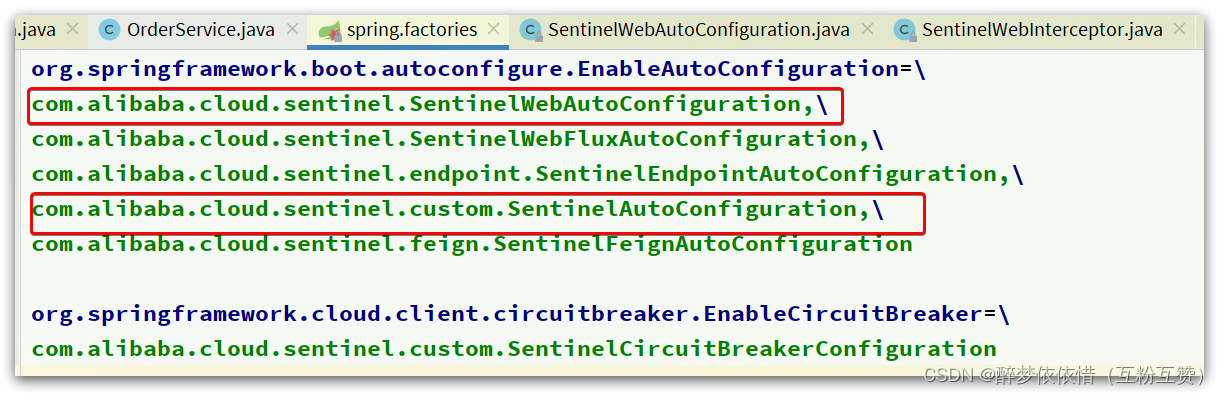
其中的spring.factories声明需要就是自动装配的配置类,内容如下:
我们来看下
SentinelAutoConfiguration这个类: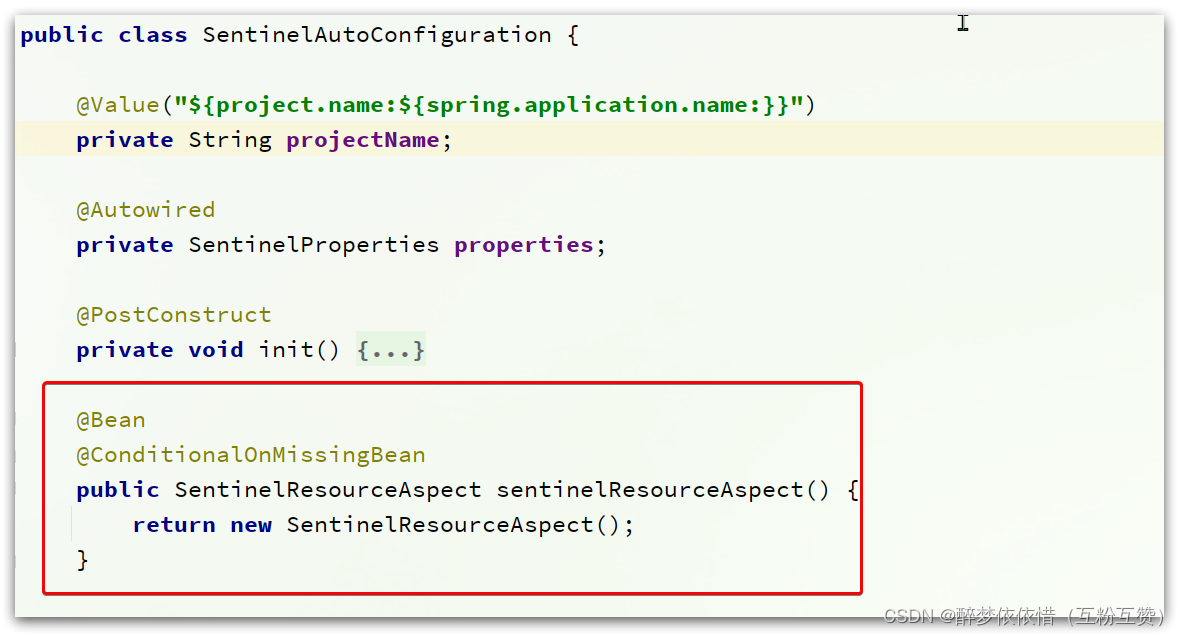
可以看到,在这里声明了一个Bean,
SentinelResourceAspect:/** * Aspect for methods with {@link SentinelResource} annotation. * * @author Eric Zhao */ @Aspect public class SentinelResourceAspect extends AbstractSentinelAspectSupport { // 切点是添加了 @SentinelResource注解的类 @Pointcut("@annotation(com.alibaba.csp.sentinel.annotation.SentinelResource)") public void sentinelResourceAnnotationPointcut() { } // 环绕增强 @Around("sentinelResourceAnnotationPointcut()") public Object invokeResourceWithSentinel(ProceedingJoinPoint pjp) throws Throwable { // 获取受保护的方法 Method originMethod = resolveMethod(pjp); // 获取 @SentinelResource注解 SentinelResource annotation = originMethod.getAnnotation(SentinelResource.class); if (annotation == null) { // Should not go through here. throw new IllegalStateException("Wrong state for SentinelResource annotation"); } // 获取注解上的资源名称 String resourceName = getResourceName(annotation.value(), originMethod); EntryType entryType = annotation.entryType(); int resourceType = annotation.resourceType(); Entry entry = null; try { // 创建资源 Entry entry = SphU.entry(resourceName, resourceType, entryType, pjp.getArgs()); // 执行受保护的方法 Object result = pjp.proceed(); return result; } catch (BlockException ex) { return handleBlockException(pjp, annotation, ex); } catch (Throwable ex) { Class<? extends Throwable>[] exceptionsToIgnore = annotation.exceptionsToIgnore(); // The ignore list will be checked first. if (exceptionsToIgnore.length > 0 && exceptionBelongsTo(ex, exceptionsToIgnore)) { throw ex; } if (exceptionBelongsTo(ex, annotation.exceptionsToTrace())) { traceException(ex); return handleFallback(pjp, annotation, ex); } // No fallback function can handle the exception, so throw it out. throw ex; } finally { if (entry != null) { entry.exit(1, pjp.getArgs()); } } } } 简单来说,@SentinelResource注解就是一个标记,而Sentinel基于AOP思想,对被标记的方法做环绕增强,完成资源(
Entry)的创建。1.4.Context
上一节,我们发现簇点链路中除了controller方法、service方法两个资源外,还多了一个默认的入口节点:
sentinel_spring_web_context,是一个EntranceNode类型的节点
这个节点是在初始化Context的时候由Sentinel帮我们创建的。
1.4.1.什么是Context
那么,什么是Context呢?
Context 代表调用链路上下文,贯穿一次调用链路中的所有资源(
Entry),基于ThreadLocal。Context 维持着入口节点(
entranceNode)、本次调用链路的 curNode(当前资源节点)、调用来源(origin)等信息。后续的Slot都可以通过Context拿到DefaultNode或者ClusterNode,从而获取统计数据,完成规则判断
Context初始化的过程中,会创建EntranceNode,contextName就是EntranceNode的名称
对应的API如下:
// 创建context,包含两个参数:context名称、 来源名称
ContextUtil.enter("contextName", "originName");
1.4.2.Context的初始化
那么这个Context又是在何时完成初始化的呢?
1.4.2.1.自动装配
来看下我们引入的Sentinel依赖包:

其中的spring.factories声明需要就是自动装配的配置类,内容如下:
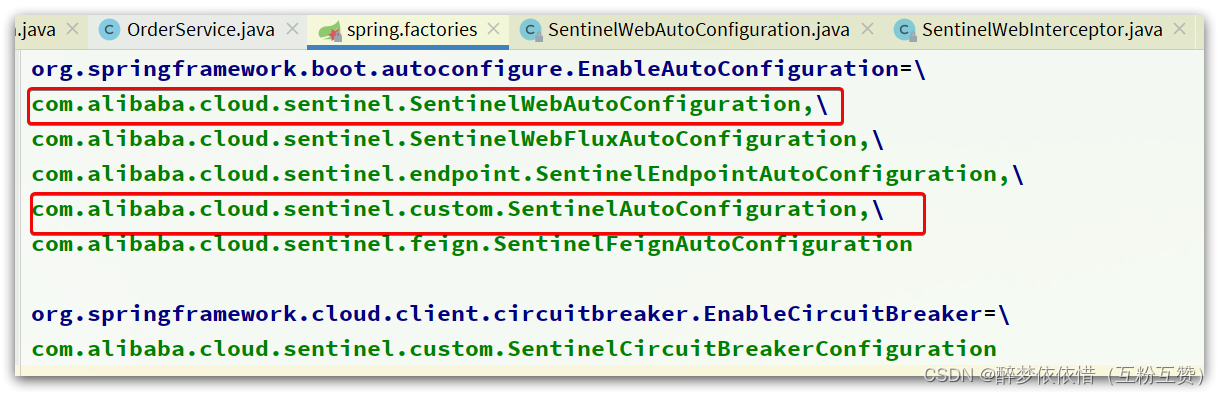
我们先看SentinelWebAutoConfiguration这个类:
60.Sentinel源码分析
于 2023-12-14 23:27:45 首次发布
 最低0.47元/天 解锁文章






 扫一扫
扫一扫


 5703
5703

 被折叠的 条评论
为什么被折叠?
被折叠的 条评论
为什么被折叠?
 到【灌水乐园】发言





