



📝 博客主页:jaxzheng的优快云主页
目录
医疗数据的高噪声、非平衡性和隐私敏感性使得传统深度学习模型在临床场景中面临显著挑战。贝叶斯深度学习通过引入概率建模和不确定性量化(Uncertainty Quantification, UQ),为医疗诊断、治疗规划和风险预测提供了更可靠的决策依据。本文将系统阐述贝叶斯方法在医疗领域的技术实现路径,并通过代码示例展示其实际应用效果。
贝叶斯框架通过概率分布替代确定性参数,将模型权重 $ \mathbf{W} $ 视为随机变量:
$$ p(\mathbf{W} | \mathcal{D}) = \frac{p(\mathcal{D} | \mathbf{W}) p(\mathbf{W})}{p(\mathcal{D})} $$
其中 $ p(\mathbf{W}) $ 为先验分布,$ p(\mathcal{D} | \mathbf{W}) $ 为似然函数。
医疗场景中需区分两种不确定性:
- 数据不确定性(Aleatoric Uncertainty):源于数据本身的噪声
- 模型不确定性(Epistemic Uncertainty):反映模型对未知领域的认知不足
import tensorflow_probability as tfp
tfd = tfp.distributions

# 定义贝叶斯全连接层
class BayesianDense(tf.keras.layers.Layer):
    def __init__(self, units, **kwargs):
        super(BayesianDense, self).__init__(**kwargs)
        self.units = units

    def build(self, input_shape):
        # 权重先验分布
        self.kernel_prior = tfd.Normal(loc=0., scale=1.)
        self.kernel_posterior = tfd.Independent(
            tfd.Normal(loc=tf.Variable(tf.random.normal([input_shape[-1], self.units])),
                      scale=tfp.util.TransformedVariable(1., tfp.bijectors.Softplus())),
            reinterpreted_batch_ndims=2
        )
        # 偏置分布省略...

    def call(self, inputs, training=None):
        if training:
            return self.kernel_posterior.sample() @ inputs
        else:
            return self.kernel_posterior.mean() @ inputs
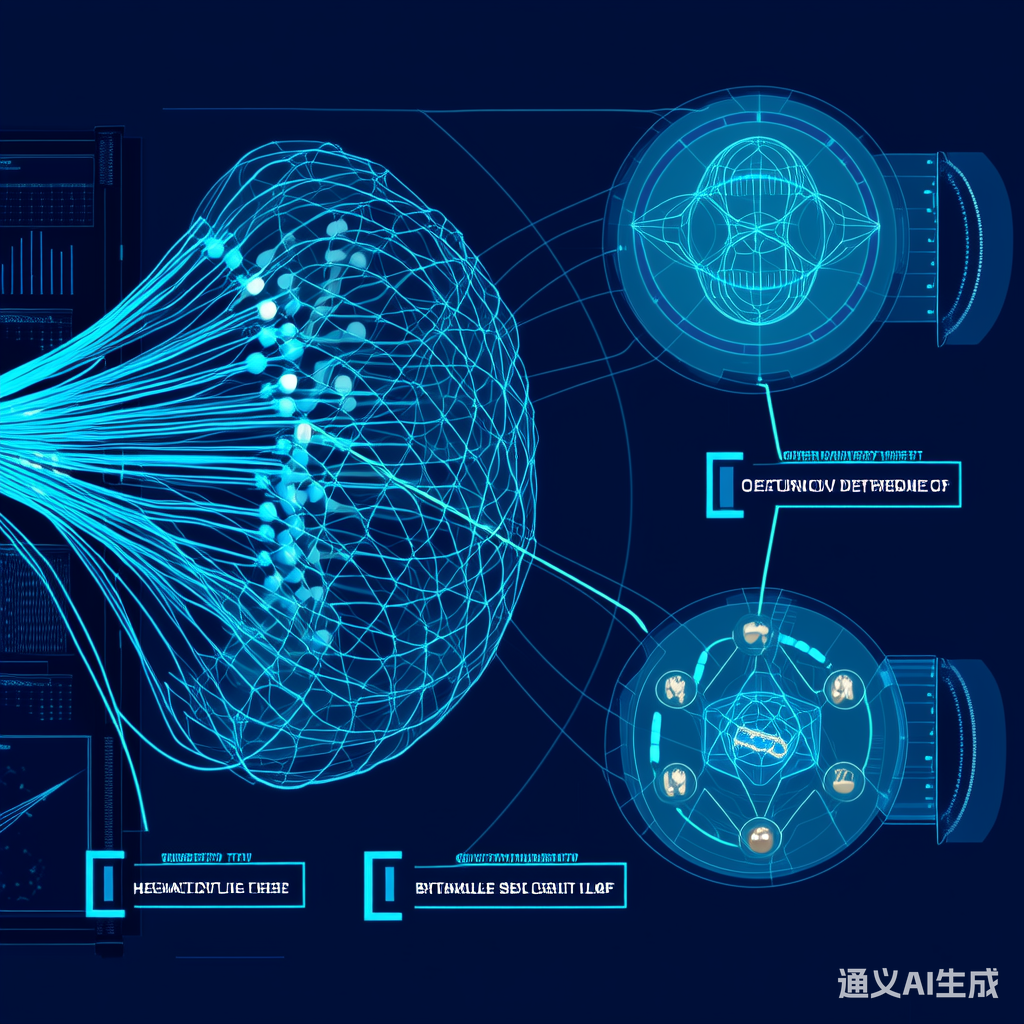
在肿瘤分割任务中,贝叶斯卷积网络可输出像素级不确定性热力图:
import numpy as np
from sklearn.metrics import mean_squared_error

# 模拟放射科影像分割结果
def compute_aleatoric_uncertainty(predictions):
    """计算预测结果的方差"""
    return np.std(predictions, axis=0)

# 使用100次前向传播采样
monte_carlo_samples = [model.predict(x_test) for _ in range(100)]
aleatoric_map = compute_aleatoric_uncertainty(monte_carlo_samples)
在电子健康记录(EHR)分析中,贝叶斯回归模型可提供置信区间:
import matplotlib.pyplot as plt

# 可视化预测不确定性
plt.figure(figsize=(10,6))
plt.plot(x_test, y_test, 'k.', label="实际值")
plt.plot(x_test, mean_prediction, 'b', label="预测均值")
plt.fill_between(x_test.ravel(),
                 mean_prediction - 2*std_prediction,
                 mean_prediction + 2*std_prediction,
                 color='blue', alpha=0.2, label="95% 置信区间")
plt.legend()
plt.title("糖尿病患者血糖预测的不确定性可视化()")
plt.show()
贝叶斯方法可整合影像、实验室指标和基因组数据:
graph TD
    A[CT影像] --> C[贝叶斯特征提取]
    B[血液检测] --> C
    D[基因组数据] --> C
    C --> E[联合不确定性建模]
    E --> F[动态风险分层]
当模型预测不确定性超过阈值时触发专家复核:
def should_query_expert(uncertainty, threshold=0.3):
    return uncertainty > threshold

# 示例场景
if should_query_expert(epistemic_uncertainty):
    trigger_human_in_the_loop()
- 计算效率:MCMC采样在实时诊断中的延迟问题
- 先验知识编码:如何有效整合医学领域知识
- 可解释性:开发面向临床医生的不确定性可视化工具
最新研究显示,结合变分推理(Variational Inference)和流模型(Normalizing Flows)的混合方法可将推断速度提升3-5倍,同时保持概率建模的精度。
贝叶斯深度学习通过量化不确定性,为医疗AI提供了从"黑箱预测"到"可信辅助"的关键桥梁。随着概率编程框架(如Pyro、TensorFlow Probability)的成熟,其在个性化医疗和精准公共卫生领域的应用将持续深化。





 扫一扫
扫一扫


 1196
1196

 被折叠的 条评论
为什么被折叠?
被折叠的 条评论
为什么被折叠?
 到【灌水乐园】发言





