kernel scheduler

Linux是一个多任务操作系统,这些任务通过共享cpu的方式实现了宏观上的并行执行。

调度器的主要工作就是为这些任务分配cpu运行时间,并尽量保证它们在相同的调度策略中能得到公平的对待。

当前内核默认支持五大调度类,分别是stop调度类、deadline调度类、rt调度类、cfs调度类以及idle调度类。它们的特点如下:

  1. stop_sched_class
  2. dl_sched_class
  3. rt_sched_class
  4. fair_sched_class
  5. idle_sched_class

(1)stop调度类:具有最高的优先级,它能抢占所有其它的进程,且不会被其它进程抢占。同一时刻只有一个任务被设定为stop_sched_class。

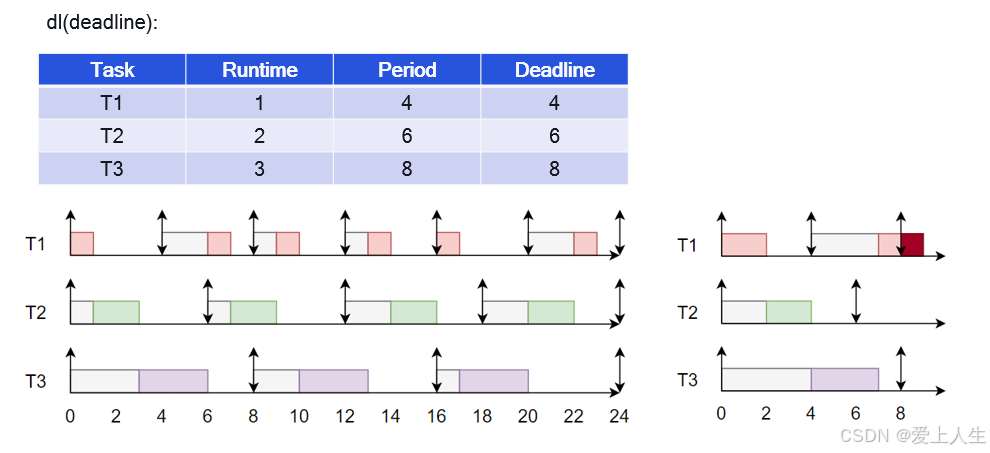
(2)deadline调度类:它的优先级介于stop调度类和rt调度类之间。主要用于那些在每个给定周期内,都需要在设定的截止期限之前被调度的任务。

deadline调度器只有一种调度策略:SCHED_DEADLINE。deadline调度器选取 deadline 距离当前时间点最近的进程并执行它。

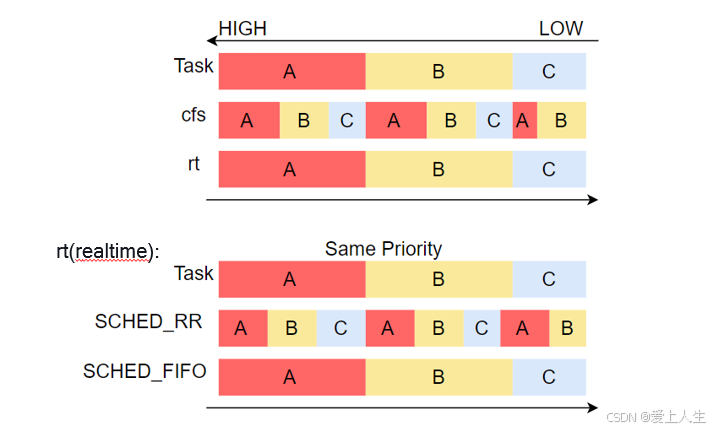
(3)rt调度类:它的优先级低于deadline调度类,但高于cfs调度类,其主要用于那些实时性要求较高的任务。这种任务将严格按照优先级调度,低优先级的任务不能抢占高优先级任务。

但其对相同优先级的任务具有两种调度策略,SCHED_FIFO 和 SCHED_RR。其中:
SCHED_FIFO:这种任务被调度后,只能被比它优先级更高的任务抢占。而与其优先级相同的任务只能等该任务运行完成后才能被调度
SCHED_RR:它与SCHED_FIFO唯一的不同,是若就绪队列中含有与其相同优先级的任务时,它们之间采用时间片轮转的方式调度

(4)cfs调度类:它采用完全公平调度算法。它也包含两种调度策略,SCHED_NORMAL和SCHED_BATCH。

SCHED_NORMAL 是 CFS 的基本实现,采用了到的 “时间片轮转“ 和 “动态优先级“ 调度机制。

    动态优先级:普通进程具有一个 nice 值来表示其优先级,nice 值越小,进程优先级越高。

    时间片轮转:如果有多个普通进程的优先级相同,则采用轮流执行的方式。

其中SCHED_BATCH是批处理进程,它的主要目的是在系统空闲时间运行一些需要大量 CPU 时间的后台任务。并不使用时间片轮转和动态优先级调度机制,而是采用了一种基于进程组的批量处理策略。该算法会将所有的后台任务进程加入到一个进程组中,该进程组会共享一个可调度时间片。

(5)idle调度类:idle进程具有最低优先级,只有当cpu上没有其它可调度进程时,才会调度该进程运行

PS:

Stop调度器是系统中优先级最高的调度器,它的主要作用是在系统任务需要处理立即处理的功能时,抢占其他任务,并且不能被其他任务抢占。

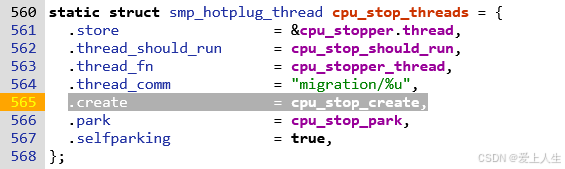
stop调度的任务优先级非常高,因此它的任务通常需要短时间完成。Stop调度器一般在SMP系统上使用,用来做cpu hotplug和进程迁移(负载均衡)。
当产生一个调度点的时候,DL调度器总是选择其Deadline距离当前时间点最近的那个任务并调度它执行。
Σ(WCETi / Pi) <= M - (M - 1) x Umax

每个任务的(运行时间/周期)的总和应该小于或等于处理器的数目M,减去最大的利用率Umax乘以(M-1)
Umax是所有DL任务中,(运行时间/周期)值最大的那个(即对CPU资源需求最大)。

M=1: 1/2 + 1/2 = 1 <= 1

M=2: 1/2 + 1/2 = 1 <= 2 – (2-1) * 1/2 = 3/2 

进程优先级 

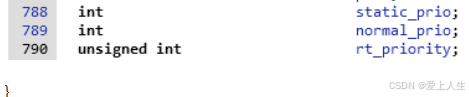
进程具有不同优先级,进程优先级是调度器选择下一个调度进程的主要依据。为此内核定义了以下四个与优先级相关的变量.

struct task_struct {
}
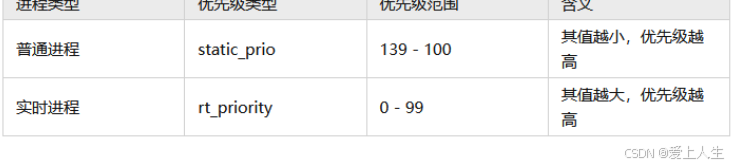
由于这两种优先级的含义并不相同,为了更方便地对它们进行统一管理,内核对其进行了归一化。其主要流程为:
(1)规定所有进程的优先级都归一化为其值越小,则优先级越高的方式。并用一个新的变量normal_prio表示

(2)普通进程的normal_prio等于其静态优先级static_prio,实时进程的normal_prio按以下公式转换:

normal_prio = MAX_RT_PRIO - 1 - rt_prio (其中MAX_RT_PRIO = 100)

通常情况下 normal_prio 在进程执行过程中是不变的。但是内核在运行过程中可能需要临时修改一个进程的优先级,以解决一些像优先级反转之类的问题。

因此内核引入了一个变量 prio 用于表示动态优先级,它在系统运行过程中可能会被临时修改,而调度器实际使用的就是动态优先级。

转换完成后,它们的关系如下图:
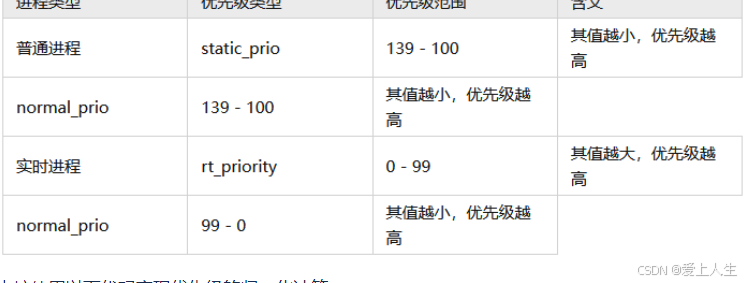
内核使用以下代码实现优先级的归一化计算.
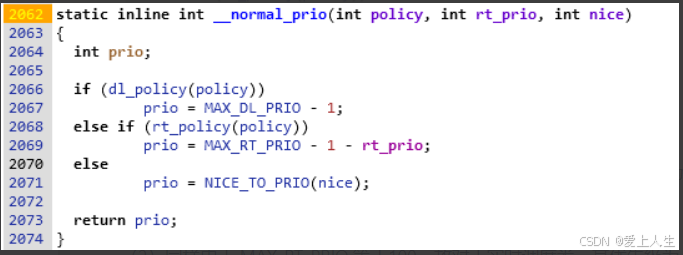
(1)由于MAX_DL_PRIO等于0,故对于deadline调度类,其优先级固定为-1

(2)同样由于 MAX_RT_PRIO 等于100,故对于实时调度类,其优先级为 99 – rt_prio

(3)对于普通进程,其优先级是通过nice值计算的。nice值是用户态用于表示进程优先级的一个参数,其值为-20 – 19,同样其值越小优先级越高。它与static_prio和normal_prio的关系都是有一个120的偏移。即static_prio = normal_prio = nice + 120

core.c - kernel/sched/core.c - Linux source code v6.13.6 - Bootlin Elixir Cross Referencer

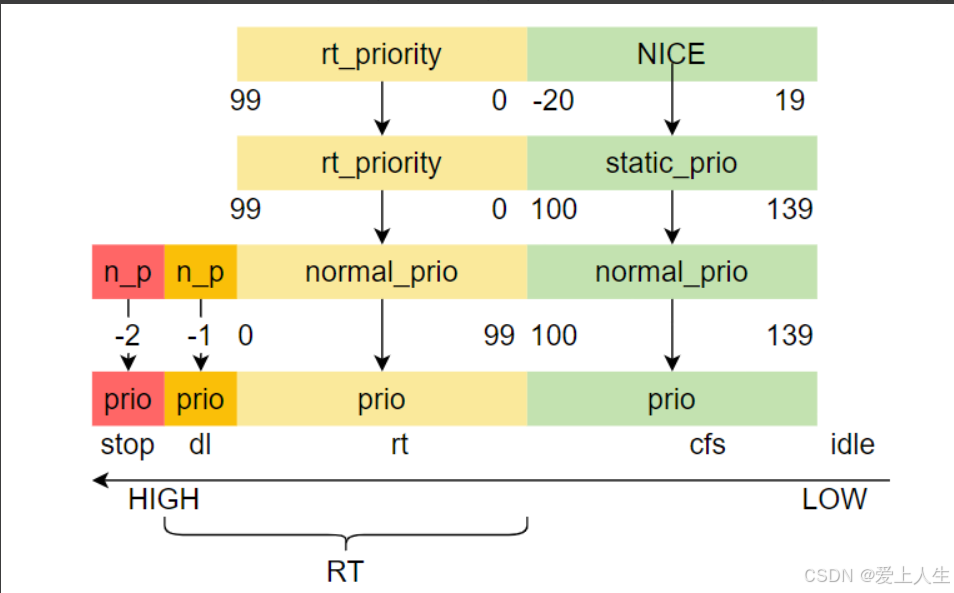
(4)stop调度类,内核规定其优先级为-2。

进程优先级之间的关系如下图:
设置默认 policy/prio
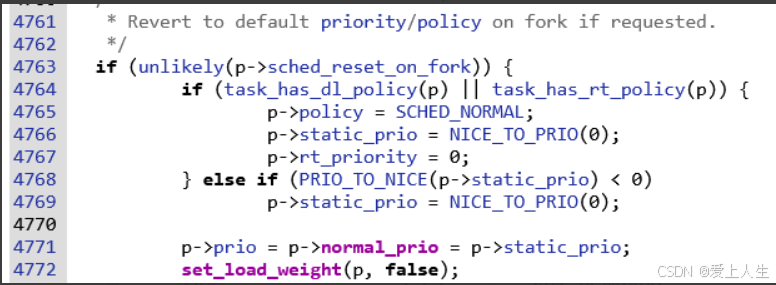
设置子进程的调度类

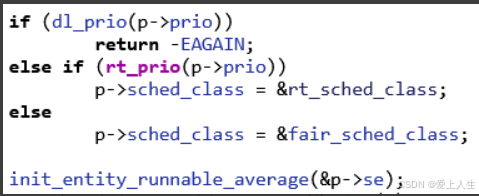
初始化调度实体
__schedule

core.c - kernel/sched/core.c - Linux source code v6.13.6 - Bootlin Elixir Cross Referencer

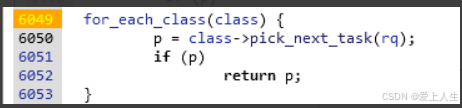
__pick_next_task:挑选出下一个要执行的进程。

core.c - kernel/sched/core.c - Linux source code v6.13.6 - Bootlin Elixir Cross Referencer

遍历所有调度器,根据优先级挑选出下一个要执行的进程。
### DRM Driver Framework Scheduler Implementation and Usage The Direct Rendering Manager (DRM) subsystem within the Linux kernel manages graphics hardware. The scheduler component plays an essential role in managing GPU workloads efficiently by ensuring that tasks are executed in a timely manner while maintaining system performance. #### Overview of DRM Scheduling Mechanism In modern GPUs, multiple applications may require access to the same device simultaneously. To handle this concurrency effectively, the DRM framework includes a scheduling mechanism designed specifically for handling these requests[^1]. This scheduler ensures fair distribution of resources among different clients requesting GPU time slices. For systems using newer versions of kernels like those based on `imx93`, where custom builds might involve specific configurations as described previously[^2], integrating or configuring DRM schedulers would typically follow standard practices outlined below: - **Initialization**: During initialization, each DRM driver registers its own set of queues with the core DRM scheduler. - **Job Submission**: Applications submit jobs via ioctl calls which get enqueued into respective runlists managed per engine type inside drivers such as i915, amdgpu etc., depending upon architecture specifics. - **Execution Control**: Once submitted, job execution is controlled by policies defined at both global level across all engines and locally within individual ones; preemption support allows higher priority tasks interrupt lower ones if necessary. Here’s how one could implement basic functionality related to DRM scheduler operations programmatically: ```c #include <drm/drm_device.h> #include <drm/drm_sched.h> // Example function showing creation & registration process void setup_drm_scheduler(struct drm_device *dev) { struct drm_sched_backend_ops ops; memset(&ops, 0, sizeof(ops)); /* Define callback functions */ ops.run_job = my_run_job_function; ops.dependency_changed = my_dependency_change_handler; // Register scheduler instance associated with given device object 'dev' dev->scheduler = drm_sched_init(dev, &ops); } ``` This code snippet demonstrates setting up a simple DRM scheduler interface but does not cover advanced features like fault recovery mechanisms or complex dependency tracking between jobs. --related questions-- 1. How do preemptive scheduling policies impact overall system responsiveness? 2. What considerations should be taken when implementing custom DRM scheduler callbacks? 3. Can you explain the differences between various types of DRM engines concerning their interaction with the scheduler? 4. In what scenarios would modifying default DRM scheduler behavior provide benefits over stock implementations?
评论
添加红包

请填写红包祝福语或标题

红包个数最小为10个

红包金额最低5元

当前余额3.43前往充值 >
需支付:10.00
成就一亿技术人!
领取后你会自动成为博主和红包主的粉丝 规则
hope_wisdom
发出的红包
实付
使用余额支付
点击重新获取
扫码支付
钱包余额 0

抵扣说明:

1.余额是钱包充值的虚拟货币,按照1:1的比例进行支付金额的抵扣。
2.余额无法直接购买下载,可以购买VIP、付费专栏及课程。

余额充值