



目录
- 基多:赤道之都的多元魅力 Quito: The Multifaceted Charm of the Equatorial Capital
- 一、地理与人口 Geography and Population
- 二、历史脉络 Historical Context
- 三、政治体制 Political System
- 四、经济与产业 Economy and Industry
- 五、文化与社会 Culture and Society
- 六、科技与创新 Technology and Innovation
- 七、环境与可持续发展 Environment and Sustainability
- 八、社会挑战 Social Challenges
- 九、外交与国际地位 Diplomatic Status
- 十、地方特色与旅游 Local Features and Tourism
- 总结 Conclusion
基多:赤道之都的多元魅力 Quito: The Multifaceted Charm of the Equatorial Capital
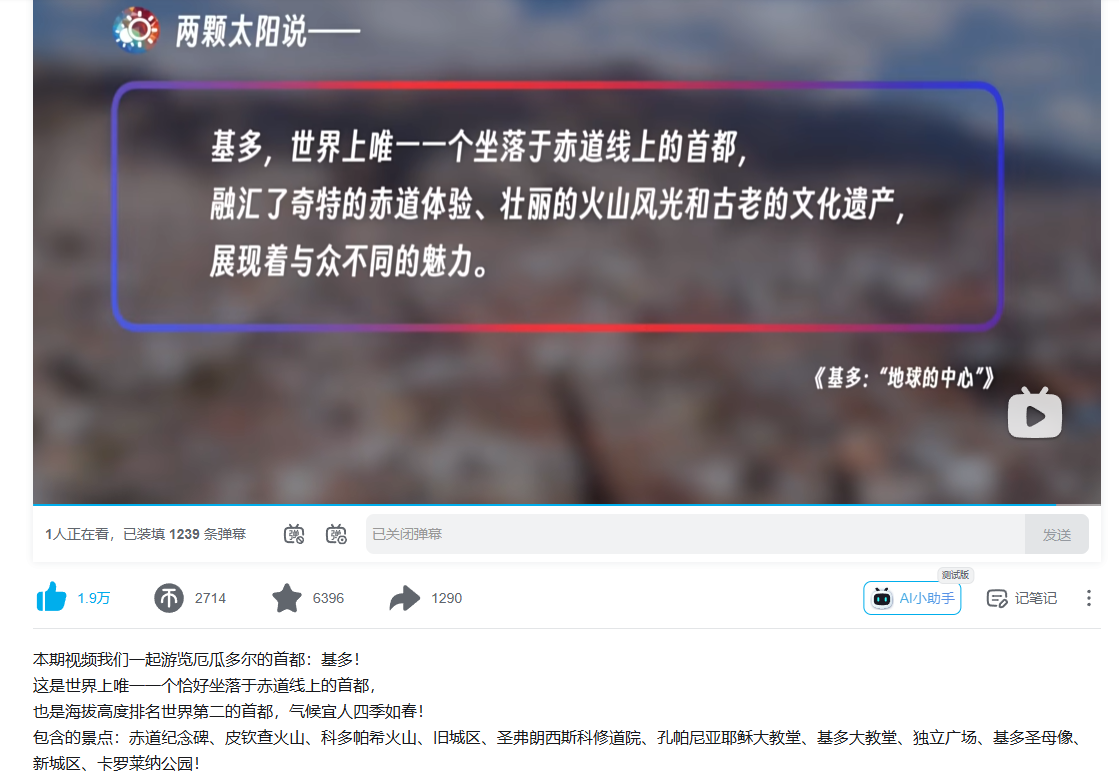
一、地理与人口 Geography and Population
地理位置 Geographic Location
-
中文:位于赤道线以南 24 千米,皮钦查火山南麓的峡谷地带,海拔 2852 米,是全球海拔第二高的首都。属亚热带高原气候,年平均气温 13.5℃,分雨季(11 月 - 次年 5 月)和旱季(6 月 - 10 月)。
-
English: Located 24 km south of the equator, in a valley at the southern foot of Volcán Pichincha, with an altitude of 2,852 meters, it is the world’s second-highest capital. Features a subtropical highland climate with an average annual temperature of 13.5℃, divided into rainy season (Nov-May) and dry season (Jun-Oct).
人口与首都 Population and Capital Status
-
中文:厄瓜多尔首都及皮钦查省首府,2022 年人口 267.97 万,2025 年预估约 270 万。城市南北长 25 千米,东西宽 3-5 千米,总面积 4213 平方千米。
-
English: Capital of Ecuador and capital of Pichincha Province, with a population of 2,679,722 in 2022, estimated at around 2.7 million in 2025. Spans 25 km north-south and 3-5 km east-west, covering 4,213 km².
二、历史脉络 Historical Context
古代与中世纪 Ancient and Medieval Periods
-
中文:11 世纪由印第安人始建,15 世纪末成为印加帝国都城,因地处 “太阳之路” 被视为神圣之地。
-
English: Founded by indigenous peoples in the 11th century, it became the capital of the Inca Empire in the late 15th century and was regarded as a sacred site along the “Path of the Sun”.
近代与现代 Modern Period
-
中文:1830 年厄瓜多尔共和国成立后定为首都。2012-2013 年重建 5 月 24 日大道、拉隆达街等历史建筑。2024 年因贩毒集团活动宣布 “国内武装冲突” 状态。
-
English: Designated as capital when Ecuador was founded in 1830. Restored historic sites like Avenida 24 de Mayo (2012-2013). Declared “internal armed conflict” in 2024 due to drug cartel violence.
三、政治体制 Political System
联邦总统制 Presidential System
-
中文:实行总统制共和政体,五权分立(立法、行政、司法、公民参与与社会监督、选举)。总统由直选产生,任期 4 年可连任一次,需年满 35 岁且为厄瓜多尔出生。
-
English: Presidential republican system with five branches of power (legislative, executive, judicial, citizen participation, electoral). President elected by direct vote, 4-year term (re-eligible once), requiring Ecuadorian birth and age 35+.
行政区划 Administrative Division
-
中文:下辖 9 个行政管理局,含 65 个教区(32 个城市教区、33 个农村教区)。中部为老城区(总统府所在地),北部为金融区,南部为工业区。
-
English: Administered into 9 directorates, comprising 65 parishes (32 urban, 33 rural). Central historic district (presidential palace), northern financial district, southern industrial zone.
四、经济与产业 Economy and Industry
经济概况 Economic Overview
-
中文:2022 年 GDP 493 亿美元,第三产业占比 71.2%,第二产业 27.5%(纺织、食品、机械等),第一产业 1.2%。非正规部门占经济总量 24%。
-
English: 2022 GDP of USD 49.3 billion, with tertiary sector (71.2%), secondary sector (27.5%: textiles, food, machinery), and primary sector (1.2%). Informal economy accounts for 24%.
对外贸易 Foreign Trade
-
中文:中厄自贸协定推动对华出口增长,2024 年厄对华出口 80.01 亿美元,进口 59.68 亿美元。可可制品、咖啡是核心出口商品,基多为全国贸易枢纽。
-
English: China-Ecuador FTA boosts exports; 2024 Ecuadorian exports to China reached USD 8.001 billion, imports USD 5.968 billion. Cocoa products and coffee are key exports, with Quito as national trade hub.
五、文化与社会 Culture and Society
文化遗产 Cultural Heritage
-
中文:1978 年旧城列入《世界文化与自然遗产名录》,拥有 87 座教堂,代表建筑包括基多大教堂、孔帕尼亚耶稣大教堂。赤道纪念碑(纬度 0°0′0″)为标志性景观。
-
English: Old Town inscribed on UNESCO World Heritage List (1978), home to 87 churches including Basílica del Voto Nacional and Iglesia de La Compañía. Equator Monument (0°0′0″ latitude) is an iconic site.
教育体系 Education System
-
中文:宪法规定 6% 国民生产总值用于基础教育,2021 年文盲率 6%,基础教育入学率 97%,高等教育 38%。知名高校包括厄中央大学、天主教大学。
-
English: Constitution mandates 6% of GDP for basic education; 6% illiteracy rate (2021), 97% primary enrollment, 38% higher education enrollment. Top universities include Central University of Ecuador.
社会福利 Social Welfare
-
中文:实行国立学校免费教育,医疗体系覆盖基础诊疗,但农村地区资源匮乏。2024 年因治安危机推出社会安全应急计划。
-
English: Free public education; healthcare covers basic treatment but rural resources are scarce. Social security emergency plan launched amid 2024 security crisis.
六、科技与创新 Technology and Innovation
尖端领域 Cutting-edge Fields
-
中文:聚焦生物多样性研究与火山监测,依托安第斯山脉独特生态开展环境科学项目。
-
English: Focuses on biodiversity research and volcano monitoring, conducting environmental science projects based on the Andes’ unique ecology.
科学贡献 Scientific Contributions
-
中文:18 世纪成为赤道测量核心站点,奠定地球形状研究基础。现代参与国际气候观测网络,提供赤道气象数据。
-
English: Served as key equatorial measurement site in the 18th century, laying groundwork for Earth shape research. Contributes to global climate observation networks with equatorial meteorological data.
七、环境与可持续发展 Environment and Sustainability
气候政策 Climate Policy
-
中文:未明确出台专项气候法案,但依托高原生态保护推动低碳旅游,限制火山周边工业开发。
-
English: No dedicated climate law, but promotes low-carbon tourism through highland ecological protection and restricts industrial development near volcanoes.
八、社会挑战 Social Challenges
-
中文:2024 年爆发贩毒集团引发的武装冲突,监狱骚乱与暴力事件频发。腐败渗透司法与警察系统,非正规经济加剧贫富差距。
-
English: 2024 saw armed conflicts by drug cartels, frequent prison riots and violence. Corruption infiltrates judiciary/police; informal economy widens wealth gap.
九、外交与国际地位 Diplomatic Status
国际角色 International Role
-
中文:南美国家联盟秘书处所在地,为联合国、石油输出国组织等国际组织成员国。
-
English: Hosts Union of South American Nations secretariat; member of UN, OPEC and other international organizations.
对华关系 China Relations
-
中文:2025 年总统诺沃亚表示愿深化中厄全面战略伙伴关系,自贸协定生效后可可等农产品对华出口激增。开通多条中厄直航航线提升物流效率。
-
English: President Novoa expressed willingness to deepen China-Ecuador comprehensive strategic partnership (2025); cocoa exports to China surged post-FTA implementation. Direct flights enhance logistics efficiency.
十、地方特色与旅游 Local Features and Tourism
区域文化 Regional Culture
-
中文:融合印加传统与西班牙殖民文化,亡灵节(11 月 2 日)食用紫玉米糊与 “瓜瓜” 人形面包。手工艺品以木雕和羊毛织物为代表。
-
English: Blends Inca traditions and Spanish colonial culture; Día de Difuntos (Nov 2) features colada morada and guaguas de pan. Wood carvings and wool textiles are signature crafts.
节日与活动 Festivals and Events
-
中文:亡灵节举办全国 “瓜瓜” 面包大赛,收益捐赠儿童慈善机构。2 月狂欢节有街头游行与民俗表演,赤道纪念碑举办 “跨赤道” 仪式。
-
English: National guaguas de pan contest on Día de Difuntos (proceeds to children’s charities). February Carnival features parades; “cross-equator” ceremonies at Equator Monument.
总结 Conclusion
-
中文:基多以 “赤道首都” 与世界遗产闻名,融合自然奇观与多元文化。虽面临治安与腐败挑战,但其在南美外交、中厄合作及生态科研中的地位日益重要,是体验安第斯文明的核心目的地。
-
English: Known as the “equatorial capital” and World Heritage site, Quito blends natural wonders and cultural diversity. Despite security and corruption challenges, it plays a growing role in South American diplomacy, China-Ecuador cooperation, and ecological research, serving as a prime destination for Andean civilizations.
(注:文档部分内容可能由 AI 生成)
要理解“赤道热”和“海拔越高越凉快”,核心是搞清楚地球表面的热量来源以及热量在大气中的传递规律,两个现象本质都是“热量分布差异”的体现,可分别拆解为以下原因:
一、为什么赤道热?—— 太阳辐射“直射”带来的热量集中
地球获得的热量几乎全部来自太阳辐射,但不同纬度接收的辐射强度差异巨大,赤道地区因“太阳高度角大”成为热量最集中的区域,具体原因有3点:
- 太阳高度角最大,热量集中在小面积
太阳高度角是指太阳光线与地面的夹角(直射时角度为90°,斜射时角度小于90°)。
- 赤道地区常年处于太阳直射或接近直射状态(比如春分、秋分太阳直射赤道,夏至、冬至也离赤道不远),阳光像“手电筒垂直照桌面”,同一束阳光只覆盖很小的地面面积,单位面积接收的热量极多;
- 而高纬度地区(如北极、南极)太阳高度角很小,阳光像“手电筒斜照桌面”,同一束阳光会分散在更大的地面上,单位面积接收的热量被“稀释”,自然更冷。
-
太阳照射时间稳定,昼夜温差小
赤道地区位于南北回归线之间,一年中昼夜长短变化极小(基本接近12小时白天、12小时黑夜),且全年都能获得充足的日照,没有“长时间寒冷的极夜”,热量持续积累,温度始终偏高。 -
地表反射率低,热量吸收多
赤道地区以热带雨林、热带草原、海洋为主:
- 海洋和植被的“反射率”很低(仅反射少量太阳辐射),大部分热量会被地面/水面吸收,再传递给大气,进一步加热环境;
- 而高纬度地区多冰雪,冰雪的反射率极高(能反射70%-90%的太阳辐射),吸收的热量少,温度自然更低。
二、为什么海拔越高越凉快?—— 大气“靠地面加热”,海拔高离热源远
很多人误以为“海拔高离太阳近,应该更热”,但实际上大气的热量主要不是直接来自太阳,而是来自地面,海拔越高,离“地面这个热源”越远,温度就越低,具体原因有2点:
- 大气的主要热源是“地面反射的长波辐射”
太阳辐射以“短波辐射”为主(比如可见光),大气对短波辐射的吸收能力很弱(大部分短波辐射能直接穿过大气到达地面);
但地面吸收短波辐射后,会以“长波辐射”的形式(比如红外线,我们感受的“热”主要是长波辐射)把热量释放出来,而大气对长波辐射的吸收能力很强——简单说:地面是“加热大气的炉子”,大气是“被炉子加热的空气”。
- 低海拔地区(如平原)离“炉子(地面)”近,能吸收大量地面释放的长波辐射,温度高;
- 高海拔地区(如高山)离“炉子”远,周围的空气稀薄,能吸收的长波辐射极少,温度自然低。
- 高海拔地区空气稀薄,保温能力差
海拔越高,空气越稀薄(单位体积内的空气分子越少),而空气分子能起到“保温”作用(类似“棉被”,留住地面释放的热量)。
- 低海拔地区空气稠密,“棉被”厚,热量不容易散失,温度高;
- 高海拔地区空气稀薄,“棉被”薄,热量很容易向高空散失,即使白天有太阳照射,温度也升不高,夜晚还会快速降温(比如青藏高原昼夜温差大)。
补充数据:通常情况下,海拔每升高1000米,气温会下降约6℃(这个规律叫“气温垂直递减率”)。比如海拔5000米的雪山,比海拔0米的平原温度低约30℃,这就是为什么高海拔山峰即使在热带也会有积雪(如赤道附近的乞力马扎罗山)。
总结:两个现象的核心逻辑
| 现象 | 核心原因 | 本质 |
|---|---|---|
| 赤道热 | 太阳高度角大,热量集中;日照稳定;地表吸收多 | 纬度差异导致“太阳辐射接收强度不同” |
| 海拔高凉快 | 大气靠地面加热,海拔高离热源远;空气稀薄保温差 | 垂直高度差异导致“大气吸收的地面热量不同” |





 扫一扫
扫一扫


 277
277

 被折叠的 条评论
为什么被折叠?
被折叠的 条评论
为什么被折叠?
 到【灌水乐园】发言





