



 本文介绍了如何使用TensorFlow中的ones_like和zeros_like函数创建与输入张量形状和类型相同的全零和全一矩阵,并通过实例展示了它们的用法和运行结果。
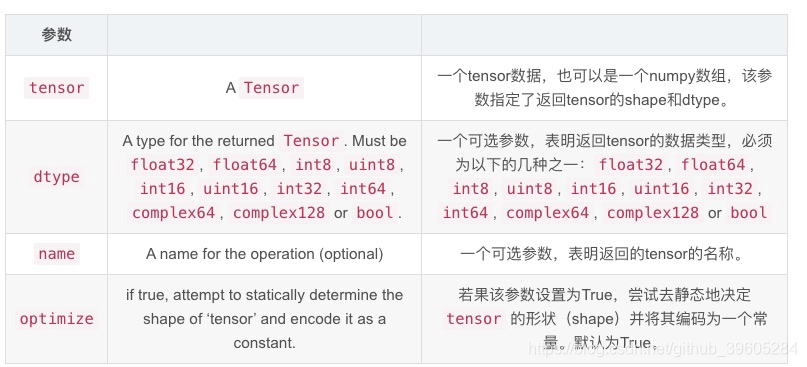
tf.ones_like(
    input, dtype=None, name=None
)
import tensorflow as tf
import numpy as np

# 生成一个tensor,内部数据随机产生
a = tf.convert_to_tensor(np.random.random([2, 4, 5]), dtype=tf.float32)

# ones_like
b = tf.ones_like(a, dtype=tf.float32, name='ones_like')

# zeros_like
c = tf.zeros_like(a, dtype=tf.float32, name='zeros_like')

print(b)

print(c)

with tf.Session() as sess:
    b_, c_ = sess.run([b, c])
    print("b's shape: ", b_.shape)
    print("c's shape: ", c_.shape)
    print(b_)
    print(c_)





 扫一扫
扫一扫


 2149
2149

 被折叠的 条评论
为什么被折叠?
被折叠的 条评论
为什么被折叠?
 到【灌水乐园】发言





