



 本文探讨了信号补偿导致的输出位流下偏移现象,解释了这是由通道首次受到比特冲击产生的直流电平偏移引起。文章详细分析了寄生并联电容和等效串联电容的作用,及其如何影响信号完整性,并通过实例展示了等化如何减轻这种影响。
My speculations:
1. The reason is the negative-going dip of the ir, which is produced by the compensation. Using uncompensated ir, there will be no down-shifting on the output bits stream (see the fig on the bottom below).
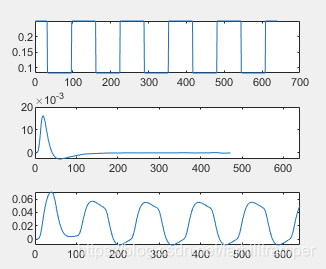
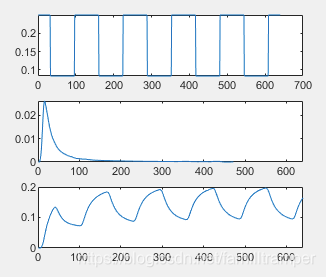
2. The mechanism of producing such shifting.
It's basically a DC level shift. When a channel is hit by the first few bits, it is actually a process of charging the parasitic cap of the channel. Note there are two caps on a channel:
a. The shunt parasitic cap.
When this cap dominates, the output waveform will show up-shifting stream.
b. The SERIES cap produced by EQ.
This might be hard to understand since there is no coupling cap in the extracted channel. Well, the forming of this cap is due to the equalization, whether it is generated by FIR or CTLE. Aka, it is an effectual cap rather than a real one.
PS: From above two plots we can also see how the shunt cap produces ISI, and how the ISI suppresses the amplitude, meanwhile how the EQ mitigates the ISI effect.





 扫一扫
扫一扫


 4672
4672

 被折叠的 条评论
为什么被折叠?
被折叠的 条评论
为什么被折叠?
 到【灌水乐园】发言





