Gerrit Code Review - Searching Changes
version v3.3.3
Table of Contents
Default Searches
Basic Change Search
Search Operators
Argument Quoting
Boolean Operators
Negation
AND
OR
Labels
Magical Operators
Default Searches
Most basic searches can be viewed by clicking on a link along the top menu bar. The link will prefill the search box with a common search query, execute it, and present the results.
Description Default Query
All > Open
status:open '(or is:open)'
All > Merged
status:merged
All > Abandoned
status:abandoned
My > Watched Changes
is:watched is:open
My > Starred Changes
is:starred
My > Draft Comments
has:draft
Open changes in Foo
status:open project:Foo
Basic Change Search
Similar to many popular search engines on the web, just enter some text and let Gerrit figure out the meaning:
Description Examples
Legacy numerical id
15183
Full or abbreviated Change-Id
Ic0ff33
Full or abbreviated commit SHA-1
d81b32ef
Email address
user@example.com
For change searches (i.e. those using a numerical id, Change-Id, or commit SHA1), if the search results in a single change that change will be presented instead of a list.
For more predictable results, use explicit search operators as described in the following section.
Search Operators
Operators act as restrictions on the search. As more operators are added to the same query string, they further restrict the returned results. Search can also be performed by typing only a text with no operator, which will match against a variety of fields.
age:'AGE'
Amount of time that has expired since the change was last updated with a review comment or new patch set. The age must be specified to include a unit suffix, for example -age:2d:
s, sec, second, seconds
m, min, minute, minutes
h, hr, hour, hours
d, day, days
w, week, weeks (1 week is treated as 7 days)
mon, month, months (1 month is treated as 30 days)
y, year, years (1 year is treated as 365 days)
age can be used both forward and backward looking: age:2d means 'everything older than 2 days' while -age:2d means 'everything with an age of at most 2 days'.
assignee:'USER'
Changes assigned to the given user.
attention:'USER'
Changes whose attention set includes the given user.
before:'TIME'/until:'TIME'
Changes modified before the given 'TIME', inclusive. Must be in the format 2006-01-02[ 15:04:05[.890][ -0700]]; omitting the time defaults to 00:00:00 and omitting the timezone defaults to UTC.
after:'TIME'/since:'TIME'
Changes modified after the given 'TIME', inclusive. Must be in the format 2006-01-02[ 15:04:05[.890][ -0700]]; omitting the time defaults to 00:00:00 and omitting the timezone defaults to UTC.
change:'ID'
Either a legacy numerical 'ID' such as 15183, or a newer style Change-Id that was scraped out of the commit message.
conflicts:'ID'
Changes that conflict with change 'ID'. Change 'ID' can be specified as a legacy numerical 'ID' such as 15183, or a newer style Change-Id that was scraped out of the commit message.
destination:'NAME'
Changes which match the current user’s destination named 'NAME'. (see Named Destinations).
owner:'USER', o:'USER'
Changes originally submitted by 'USER'. The special case of owner:self will find changes owned by the caller.
ownerin:'GROUP'
Changes originally submitted by a user in 'GROUP'.
query:'NAME'
Changes which match the current user’s query named 'NAME' (see Named Queries).
reviewer:'USER', r:'USER'
Changes that have been, or need to be, reviewed by 'USER'. The special case of reviewer:self will find changes where the caller has been added as a reviewer.
cc:'USER'
Changes that have the given user CC’ed on them. The special case of cc:self will find changes where the caller has been CC’ed.
revertof:'ID'
Changes that revert the change specified by the numeric 'ID'.
submissionid:'ID'
Changes that have the specified submission 'ID'.
reviewerin:'GROUP'
Changes that have been, or need to be, reviewed by a user in 'GROUP'.
commit:'SHA1'
Changes where 'SHA1' is one of the patch sets of the change.
project:'PROJECT', p:'PROJECT'
Changes occurring in 'PROJECT'. If 'PROJECT' starts with ^ it matches project names by regular expression. The dk.brics.automaton library is used for evaluation of such patterns.
projects:'PREFIX'
Changes occurring in projects starting with 'PREFIX'.
parentproject:'PROJECT'
Changes occurring in 'PROJECT' or in one of the child projects of 'PROJECT'.
repository:'REPOSITORY', repo:'REPOSITORY'
Changes occurring in 'REPOSITORY'. If 'REPOSITORY' starts with ^ it matches repository names by regular expression. The dk.brics.automaton library is used for evaluation of such patterns.
repositories:'PREFIX', repos:'PREFIX'
Changes occurring in repositories starting with 'PREFIX'.
parentrepository:'REPOSITORY', parentrepo:'REPOSITORY'
Changes occurring in 'REPOSITORY' or in one of the child repositories of 'REPOSITORY'.
branch:'BRANCH'
Changes for 'BRANCH'. The branch name is either the short name shown in the web interface or the full name of the destination branch with the traditional 'refs/heads/' prefix.
If 'BRANCH' starts with ^ it matches branch names by regular expression patterns. The dk.brics.automaton library is used for evaluation of such patterns.
intopic:'TOPIC'
Changes whose designated topic contains 'TOPIC', using a full-text search.
If 'TOPIC' starts with ^ it matches topic names by regular expression patterns. The dk.brics.automaton library is used for evaluation of such patterns.
topic:'TOPIC'
Changes whose designated topic matches 'TOPIC' exactly. This is often combined with 'branch:' and 'project:' operators to select all related changes in a series.
hashtag:'HASHTAG'
Changes whose hashtag matches 'HASHTAG'. The match is case-insensitive.
cherrypickof:'CHANGE[,PATCHSET]'
Changes which were created using the 'cherry-pick' functionality and whose source change number matches 'CHANGE' and source patchset number matches 'PATCHSET'. Note that 'PATCHSET' is optional. For example, a cherrypickof:12345 matches all changes which were cherry-picked from change 12345 and cherrypickof:12345,2 matches all changes which were cherry-picked from the 2nd patchset of change 12345.
ref:'REF'
Changes where the destination branch is exactly the given 'REF' name. Since 'REF' is absolute from the top of the repository it must start with 'refs/'.
If 'REF' starts with ^ it matches reference names by regular expression patterns. The dk.brics.automaton library is used for evaluation of such patterns.
tr:'ID', bug:'ID'
Search for changes whose commit message contains 'ID' and matches one or more of the trackingid sections in the server’s configuration file. This is typically used to search for changes that fix a bug or defect by the issue tracking system’s issue identifier.
label:'VALUE'
Matches changes where the approval score 'VALUE' has been set during a review. See labels below for more detail on the format of the argument.
message:'MESSAGE'
Changes that match 'MESSAGE' arbitrary string in the commit message body.
comment:'TEXT'
Changes that match 'TEXT' string in any comment left by a reviewer.
path:'PATH'
Matches any change touching file at 'PATH'. By default exact path matching is used, but regular expressions can be enabled by starting with ^. For example, to match all XML files use file:^.*\.xml$. The dk.brics.automaton library is used for the evaluation of such patterns.
The ^ required at the beginning of the regular expression not only denotes a regular expression, but it also has the usual meaning of anchoring the match to the start of the string. To match all Java files, use file:^.*\.java.
The entire regular expression pattern, including the ^ character, should be double quoted when using more complex construction (like ones using a bracket expression). For example, to match all XML files named like 'name1.xml', 'name2.xml', and 'name3.xml' use file:"^name[1-3].xml".
Slash ('/') is used path separator.
More examples: * -file:^path/. - changes that do not modify files from path/, * file:{^~(path/.)} - changes that modify files not from path/ (but may contain files from path/).
file:'NAME', f:'NAME'
Matches any change touching a file containing the path component 'NAME'. For example a file:src will match changes that modify files named gerrit-server/src/main/java/Foo.java. Name matching is exact match, file:Foo.java finds any change touching a file named exactly Foo.java and does not match AbstractFoo.java.
Regular expression matching can be enabled by starting the string with ^. In this mode file: is an alias of path: (see above).
extension:'EXT', ext:'EXT'
Matches any change touching a file with extension 'EXT', case-insensitive. The extension is defined as the portion of the filename following the final .. Files with no . in their name have no extension and can be matched by an empty string.
onlyextensions:'EXT_LIST', onlyexts:'EXT_LIST'
Matches any change touching only files with extensions that are listed in 'EXT_LIST' (comma-separated list). The matching is done case-insensitive. An extension is defined as the portion of the filename following the final .. Files with no . in their name have no extension and can be matched by an empty string.
directory:'DIR', dir:'DIR'
Matches any change where the current patch set touches a file in the directory 'DIR'. The matching is done case-insensitive. 'DIR' can be a full directory name, a directory prefix or any combination of intermediate directory segments. E.g. a change that touches a file in the directory 'a/b/c' matches for 'a/b/c', 'a', 'a/b', 'b', 'b/c' and 'c'.
Slash ('/') is used path separator. Leading and trailing slashes are allowed but are not mandatory.
If 'DIR' starts with ^ it matches directories and directory segments by regular expression. The dk.brics.automaton library is used for evaluation of such patterns.
footer:'FOOTER'
Matches any change that has 'FOOTER' as footer in the commit message of the current patch set. 'FOOTER' can be specified verbatim ('<key>: <value>', must be quoted) or as '<key>=<value>'. The matching is done case-insensitive.
star:'LABEL'
Matches any change that was starred by the current user with the label 'LABEL'.
E.g. if changes that are not interesting are marked with an ignore star, they could be filtered out by '-star:ignore'.
'star:star' is the same as 'has:star' and 'is:starred'.
has:draft
True if there is a draft comment saved by the current user.
has:star
Same as 'is:starred' and 'star:star', true if the change has been starred by the current user with the default label.
has:stars
True if the change has been starred by the current user with any label.
has:edit
True if the change has inline edit created by the current user.
has:unresolved
True if the change has unresolved comments.
is:assigned
True if the change has an assignee.
is:starred
Same as 'has:star', true if the change has been starred by the current user with the default label.
is:unassigned
True if the change does not have an assignee.
is:watched
True if this change matches one of the current user’s watch filters, and thus is likely to notify the user when it updates.
is:reviewed
True if any user has commented on the change more recently than the last update (comment or patch set) from the change owner.
is:owner
True on any change where the current user is the change owner. Same as owner:self.
is:reviewer
True on any change where the current user is a reviewer. Same as reviewer:self.
is:cc
True on any change where the current user is in CC. Same as cc:self.
is:open, is:pending, is:new
True if the change is open.
is:closed
True if the change is either merged or abandoned.
is:merged, is:abandoned
Same as status:'STATE'.
is:submittable
True if the change is submittable according to the submit rules for the project, for example if all necessary labels have been voted on.
This operator only takes into account one change at a time, not any related changes, and does not guarantee that the submit button will appear for matching changes. To check whether a submit button appears, use the Get Revision Actions API.
Equivalent to submittable:ok.
is:mergeable
True if the change has no merge conflicts and could be merged into its destination branch.
Mergeability of abandoned changes is not computed. This operator will not find any abandoned but mergeable changes.
This operator only works if Gerrit indexes 'mergeable'. See indexMergeable for details.
is:ignored
True if the change is ignored. Same as star:ignore.
is:private
True if the change is private, ie. only visible to owner and its reviewers.
is:wip
True if the change is Work In Progress.
is:merge
True if the change is a merge commit.
🔗
status:open, status:pending, status:new
True if the change state is 'review in progress'.
status:reviewed
Same as 'is:reviewed', matches if any user has commented on the change more recently than the last update (comment or patch set) from the change owner.
status:closed
True if the change is either 'merged' or 'abandoned'.
status:merged
Change has been merged into the branch.
status:abandoned
Change has been abandoned.
added:'RELATION''LINES', deleted:'RELATION''LINES', delta/size:'RELATION''LINES'
True if the number of lines added/deleted/changed satisfies the given relation for the given number of lines.
For example, added:>50 will be true for any change which adds at least 50 lines.
Valid relations are >=, >, <=, <, or no relation, which will match if the number of lines is exactly equal.
commentby:'USER'
Changes containing a top-level or inline comment by 'USER'. The special case of commentby:self will find changes where the caller has commented.
from:'USER'
Changes containing a top-level or inline comment by 'USER', or owned by 'USER'. Equivalent to (owner:USER OR commentby:USER).
reviewedby:'USER'
Changes where 'USER' has commented on the change more recently than the last update (comment or patch set) from the change owner.
author:'AUTHOR'
Changes where 'AUTHOR' is the author of the current patch set. 'AUTHOR' may be the author’s exact email address, or part of the name or email address.
committer:'COMMITTER'
Changes where 'COMMITTER' is the committer of the current patch set. 'COMMITTER' may be the committer’s exact email address, or part of the name or email address.
submittable:'SUBMIT_STATUS'
Changes having the given submit record status after applying submit rules. Valid statuses are in the status field of SubmitRecord. This operator only applies to the top-level status; individual label statuses can be searched by label.
unresolved:'RELATION''NUMBER'
True if the number of unresolved comments satisfies the given relation for the given number.
For example, unresolved:>0 will be true for any change which has at least one unresolved comment while unresolved:0 will be true for any change which has all comments resolved.
Valid relations are >=, >, <=, <, or no relation, which will match if the number of unresolved comments is exactly equal.
Argument Quoting
Operator values that are not bare words (roughly A-Z, a-z, 0-9, @, hyphen, dot and underscore) must be quoted for the query parser.
Quoting is accepted as either double quotes (e.g. message:"the value") or as matched curly braces (e.g. message:{the value}).
Boolean Operators
Unless otherwise specified, operators are joined using the AND boolean operator, thereby restricting the search results.
Parentheses can be used to force a particular precedence on complex operator expressions, otherwise OR has higher precedence than AND.
Negation
Any operator can be negated by prefixing it with -, for example -is:starred is the exact opposite of is:starred and will therefore return changes that are not starred by the current user.
The operator NOT (in all caps) is a synonym.
AND
The boolean operator AND (in all caps) can be used to join two other operators together. This results in a restriction of the results, returning only changes that match both operators.
OR
The boolean operator OR (in all caps) can be used to find changes that match either operator. This increases the number of results that are returned, as more changes are considered.
Labels
Label operators can be used to match approval scores given during a code review. The specific set of supported labels depends on the server configuration, however the Code-Review label is provided out of the box.
A label name is any of the following:
The label name. Example: label:Code-Review.
The label name followed by a ',' followed by a reviewer id or a group id. To make it clear whether a user or group is being looked for, precede the value by a user or group argument identifier ('user=' or 'group='). If an LDAP group is being referenced make sure to use 'ldap/<groupname>'.
A label name must be followed by either a score with optional operator, or a label status. The easiest way to explain this is by example.
First, some examples of scores with operators:
label:Code-Review=2
label:Code-Review=+2
label:Code-Review+2
Matches changes where there is at least one +2 score for Code-Review. The + prefix is optional for positive score values. If the + is used, the = operator is optional.
label:Code-Review=-2
label:Code-Review-2
Matches changes where there is at least one -2 score for Code-Review. Because the negative sign is required, the = operator is optional.
label:Code-Review=1
Matches changes where there is at least one +1 score for Code-Review. Scores of +2 are not matched, even though they are higher.
label:Code-Review>=1
Matches changes with either a +1, +2, or any higher score.
Instead of a numeric vote, you can provide a label status corresponding to one of the fields in the SubmitRecord REST API entity.
label:Non-Author-Code-Review=need
Matches changes where the submit rules indicate that a label named Non-Author-Code-Review is needed. (See the Prolog Cookbook for how this label can be configured.)
label:Code-Review=+2,aname
label:Code-Review=ok,aname
Matches changes with a +2 code review where the reviewer or group is aname.
label:Code-Review=2,user=jsmith
Matches changes with a +2 code review where the reviewer is jsmith.
label:Code-Review=+2,user=owner
label:Code-Review=ok,user=owner
label:Code-Review=+2,owner
label:Code-Review=ok,owner
The special "owner" parameter corresponds to the change owner. Matches all changes that have a +2 vote from the change owner.
label:Code-Review=+1,group=ldap/linux.workflow
Matches changes with a +1 code review where the reviewer is in the ldap/linux.workflow group.
label:Code-Review<=-1
Matches changes with either a -1, -2, or any lower score.
is:open label:Code-Review+2 label:Verified+1 NOT label:Verified-1 NOT label:Code-Review-2
is:open label:Code-Review=ok label:Verified=ok
Matches changes that are ready to be submitted according to one common label configuration. (For a more general check, use submittable:ok.)
is:open (label:Verified-1 OR label:Code-Review-2)
is:open (label:Verified=reject OR label:Code-Review=reject)
Changes that are blocked from submission due to a blocking score.
Magical Operators
Most of these operators exist to support features of Gerrit Code Review, and are not meant to be accessed by the average end-user. However, they are recognized by the query parser, and may prove useful in limited contexts to administrators or power-users.
visibleto:'USER-or-GROUP'
Matches changes that are visible to 'USER' or to anyone who is a member of 'GROUP'. Here group names may be specified as either an internal group name, or if LDAP is being used, an external LDAP group name. The value may be wrapped in double quotes to include spaces or other special characters. For example, to match an LDAP group: visibleto:"CN=Developers, DC=example, DC=com".
This operator may be useful to test access control rules, however a change can only be matched if both the current user and the supplied user or group can see it. This is due to the implicit 'is:visible' clause that is always added by the server.
is:visible
Magical internal flag to prove the current user has access to read the change. This flag is always added to any query.
starredby:'USER'
Matches changes that have been starred by 'USER' with the default label. The special case starredby:self applies to the caller.
watchedby:'USER'
Matches changes that 'USER' has configured watch filters for. The special case watchedby:self applies to the caller.
draftby:'USER'
Matches changes that 'USER' has left unpublished draft comments on. Since the drafts are unpublished, it is not possible to see the draft text, or even how many drafts there are. The special case of draftby:self will find changes where the caller has created a draft comment.
limit:'CNT'
Limit the returned results to no more than 'CNT' records. This is automatically set to the page size configured in the current user’s preferences. Including it in a web query may lead to unpredictable results with regards to pagination.
Part of Gerrit Code Review
Search
Version v3.3.3
我要搜索这个project:SMB/EAP/PLATFORM branch:vine4-rrm,然后限制时间范围在2025年7月17好到2025年9月9号之间的
我应该输入什么搜索关键字
最新发布


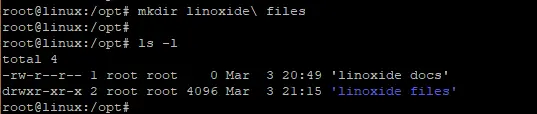
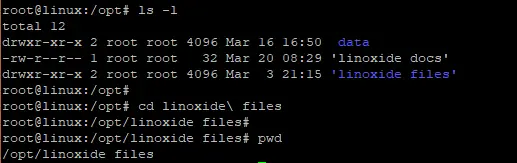
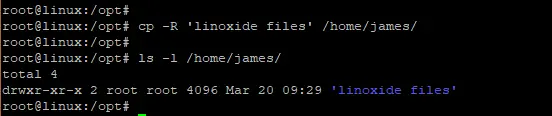
 本文详细介绍如何在Linux系统中创建、读取、复制带有空格的文件名及目录名。包括使用不同命令处理含有空格的文件路径,并提供实际操作示例。









 扫一扫
扫一扫


 2万+
2万+

 被折叠的 条评论
为什么被折叠?
被折叠的 条评论
为什么被折叠?
 到【灌水乐园】发言





