



 本文介绍如何在Python中实现strStr()函数,通过两种方法:使用KMP算法和利用内置的find()函数。文章详细讲解了构造next函数和主函数的过程,并给出了不同find()函数用法的实例。
28 实现strStr()
题目如下:给定一个 haystack 字符串和一个 needle 字符串,在 haystack 字符串中找出 needle 字符串出现的第一个位置 (从0开始)。如果不存在,则返回 -1。
有点像数据结构串的应用。想着应用KMP算法解题,但不会写啊==。只能看了答案写出来这个:
首先是构造next函数:
vector<int> next(string str)
	    {
	        vector<int> v;
	        v.push_back(-1);//将一个元素插入vector的末尾。
	        int i = 0, j = -1;
	        while (i < str.size())
	        {
	           if (j == -1 || str[i] == str[j])
	      	{
	      	 ++i;
	       	 ++j;
	          v.push_back(j);
	        }
	        else
	        j = v[j];
	        }
	        return v;
	     }
主函数:
int strStr(string haystack, string needle)
	    {
	        int i = 0;//主串位置
	        int j = 0;//模式串位置
	        int len1 = haystack.size(), len2 = needle.size();
	        vector<int> nextptr
	        if(needle.empty())
	            return 0;

	        nextptr = next(needle);

	        while((i < len1)&&(j < len2))
	        {

	            if((j == -1) || (haystack[i] == needle[j]))
	            //当j=-1时移动主串位置,相等的字符要跳过
	            {
	                i++;
	                j++;
	            }
	            else
	            {
	                j = nextptr[j];//获取下一个匹配位置
	            }
	       }

	        if (j == needle.size())
	            return i - j;
	        else
	            return -1;
	    }
};
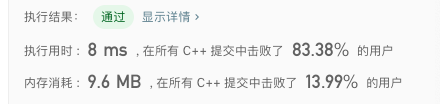
执行后:
方法二:
运用内置find()函数:
1,返回字符(字符串)在原来字符串的中首次出现的下标位置
例:string s(“1a2b3c4d5e6f7g8h9i1a2b3c4d5e6f7g8ha9i”); position =
s.find(“jk”);2,返回flag 中任意字符 在s 中第一次出现的下标位置
flag = “c”; position = s.find_first_of(flag);
3,从字符串s 下标5开始,查找字符串b ,返回b 在s 中的下标
position=s.find(“b”,5);
4,查找flag 中与s 第一个不匹配的位置
flag=“acb12389efgxyz789”; position=flag.find_first_not_of (s);
5,反向查找,flag 在s 中最后出现的位置
flag=“3”; position=s.rfind (flag);
功能实现:
 class Solution {
    public:
        int strStr(string haystack, string needle) {
            if(needle.empty()) return 0;
            int pos=haystack.find(needle);//在字符串haystack中查找needle
            if(pos==-1) return -1;//未找到find()返回-1
            return pos;
        }
    };
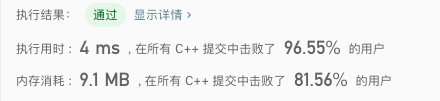
运行:





 扫一扫
扫一扫


 被折叠的 条评论
为什么被折叠?
被折叠的 条评论
为什么被折叠?
 到【灌水乐园】发言





