



 本文详细介绍了Java反射机制的基本使用,包括通过`Class`类获取实例,操作类的构造器、属性和方法,以及动态代理和AOP示例。重点展示了如何创建对象、调用私有结构和实现动态代理。
Java反射机制概述
概念
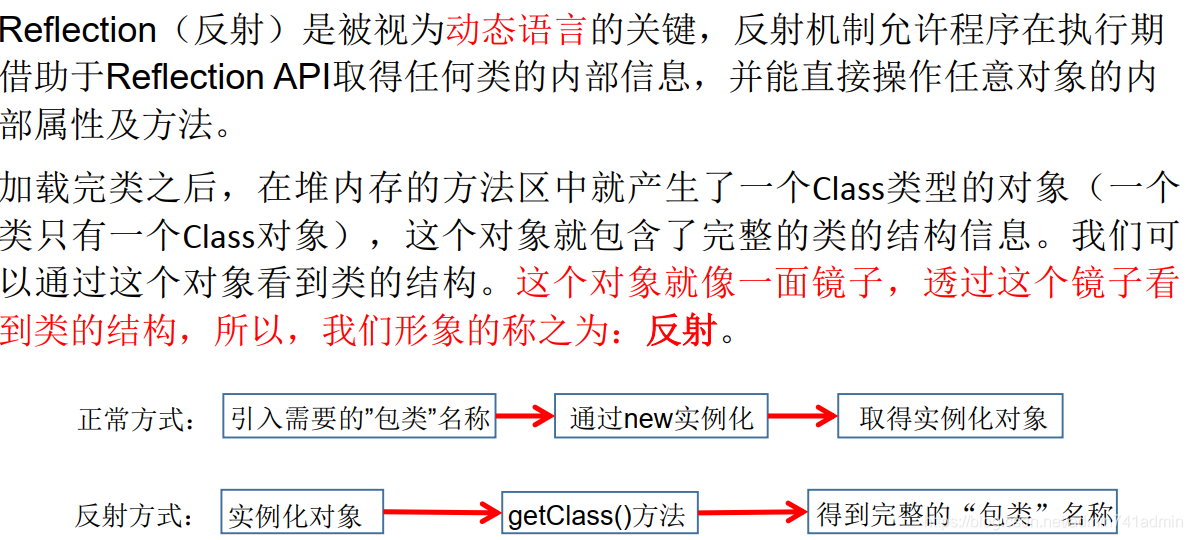
反射相关的主要API
* java.lang.Class:代表一个类
* java.lang.reflect.Method:代表类的方法
* java.lang.reflect.Field:代表类的成员变量
* java.lang.reflect.Constructor:代表类的构造器
基本使用
// 反射操作
    @Test
    public void test1() throws Exception {
        Class clas = Person.class; // 禁止class作为变量名

        //1.通过反射,创建Person类的对象
        Constructor constructor = clas.getConstructor(String.class, int.class);
        Object obj = constructor.newInstance("Tom", 12);
        Person person = (Person)obj;
        System.out.println(person); // Person{name='Tom', age=12}

        //2.通过反射,调用对象指定的属性、方法
        // 调用属性
        Field age = clas.getDeclaredField("age");
        age.set(person,30);
        System.out.println(person); // Person{name='Tom', age=30}
        // 调用方法
        Method show = clas.getDeclaredMethod("show");
        show.invoke(person); // 你好,xxxx

        System.out.println("*******************************");

        //通过反射,可以调用Person类的私有结构的。比如:私有的构造器、方法、属性
        //调用私有的构造器
        Constructor constructor1 = clas.getDeclaredConstructor(String.class);
        constructor1.setAccessible(true);
        Object obj1 = constructor1.newInstance("jack");
        Person person1 = (Person)obj1;
        System.out.println(person1); // Person{name='jack', age=0}
        //调用私有的属性
        Field name = clas.getDeclaredField("name");
        name.setAccessible(true);
        name.set(person1,"jacklove");
        System.out.println(person1); // Person{name='jacklove', age=0}
        //调用私有的方法
        Method showNation = clas.getDeclaredMethod("showNation", String.class);
        showNation.setAccessible(true);
        showNation.invoke(person1,"中华"); // 我的国籍是:中华

    }
理解Class类并获取Class实例
关于java.lang.Class类的理解
* 类的加载过程:
    程序经过javac.exe命令以后,会生成一个或多个字节码文件(.class结尾)。
    接着我们使用java.exe命令对某个字节码文件进行解释运行。相当于将某个字节码文件加载到内存中。
    此过程就称为类的加载。加载到内存中的类,我们就称为运行时类,此运行时类,就作为Class的一个实例。

* 换句话说,Class的实例就对应着一个运行时类。
* 加载到内存中的运行时类,会缓存一定的时间。在此时间之内,我们可以通过不同的方式来获取此运行时类。
* Class类是Reflection的根源,针对任何你想动态加载、运行的类,唯有先获得相应的Class对象
获取Class类的实例(四种方法)
    //获取Class的实例的方式(前三种方式需要掌握)
    @Test
    public void test3() throws ClassNotFoundException {
        //方式一:调用运行时类的属性:.class
        Class clas1 = Person.class;

        //方式二:通过运行时类的对象,调用getClass()
        Class clas2 = (new Person()).getClass();

        //方式三:调用Class的静态方法:forName(String classPath)
        Class<?> clas3 = Class.forName("reflection_zgc.Person");

        //方式四:使用类的加载器:ClassLoader  (了解)
        ClassLoader classLoader = Person.class.getClassLoader();
        Class clas4 = classLoader.loadClass("reflection_zgc.Person");

        System.out.println(clas1); // class reflection_zgc.Person
        System.out.println(clas1 == clas2); // true
        System.out.println(clas1 == clas3); // true
        System.out.println(clas1 == clas4); // true
    }
类的加载与ClassLoader的理解
目录:https://blog.youkuaiyun.com/admin741admin/article/details/109146291
具体:https://blog.youkuaiyun.com/admin741admin/article/details/107944341
使用ClassLoader加载配置文件
    @Test
    public void test1() throws IOException {
        //读取配置文件的方式一:
        //此时的文件默认在当前的module下。
//        Properties properties =  new Properties();
//        FileInputStream fis = new FileInputStream("jdbc1.properties");
//        properties.load(fis);


//        //读取配置文件的方式二:使用ClassLoader
        //配置文件默认识别为:当前module的src下
        Properties properties =  new Properties();
        ClassLoader classLoader = ClassLoaderTest.class.getClassLoader();
        InputStream resourceAsStream = classLoader.getResourceAsStream("jdbc1.properties");
        properties.load(resourceAsStream);

        String user = properties.getProperty("user");
        String password = properties.getProperty("password");
        System.out.println("user = " + user + ",password = " + password);
    }
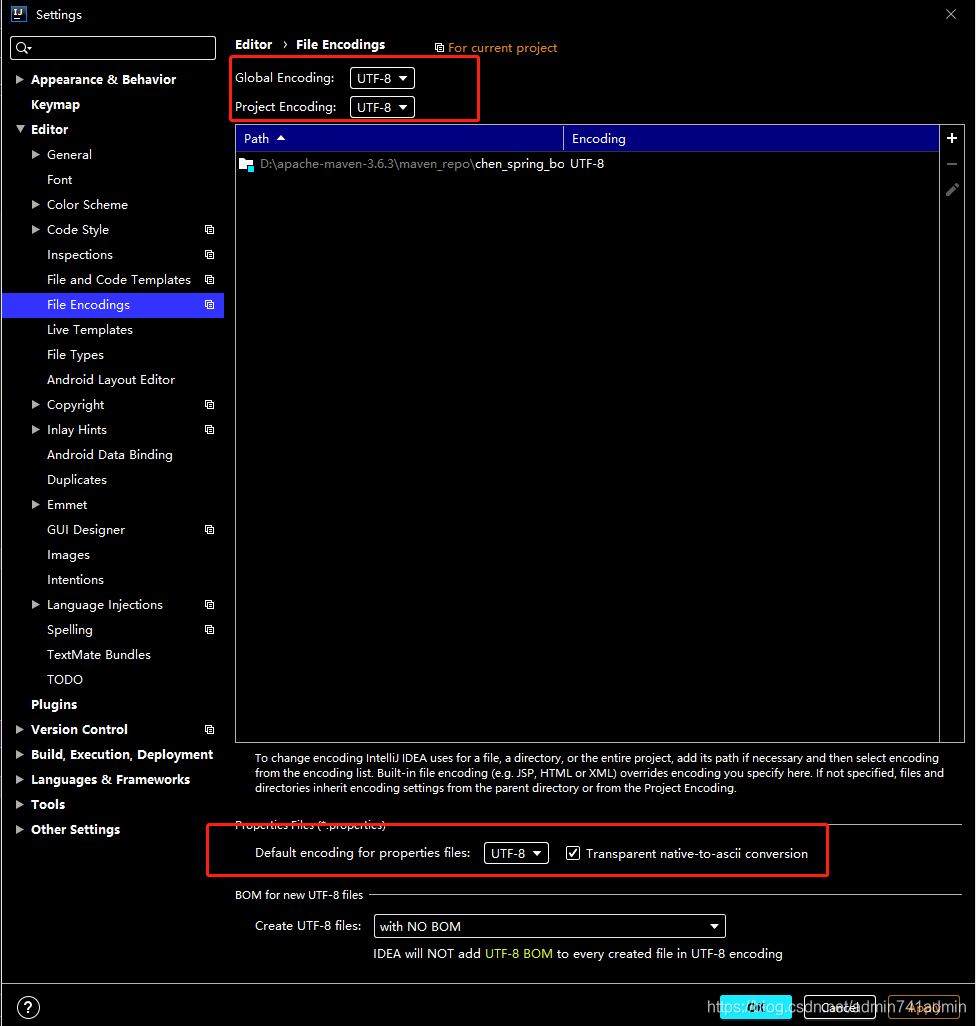
中文乱码
创建运行时类的对象
无参构造
        /*
        newInstance():调用此方法,创建对应的运行时类的对象。内部调用了运行时类的空参的构造器。

        要想此方法正常的创建运行时类的对象,要求:
        1.运行时类必须提供空参的构造器
        2.空参的构造器的访问权限得够。通常,设置为public。


        在javabean中要求提供一个public的空参构造器。原因:
        1.便于通过反射,创建运行时类的对象
        2.便于子类继承此运行时类时,默认调用super()时,保证父类有此构造器

         */
        Class<Person> clazz = Person.class;
        Person obj = clazz.newInstance();
        System.out.println(obj);
有参构造
//1.根据全类名获取对应的Class对象
String name = “atguigu.java.Person";
Class clazz = null;
clazz = Class.forName(name);
//2.调用指定参数结构的构造器,生成Constructor的实例
Constructor con = clazz.getConstructor(String.class,Integer.class);
//3.通过Constructor的实例创建对应类的对象,并初始化类属性
Person p2 = (Person) con.newInstance("Peter",20);
System.out.println(p2);
获取运行时类的完整结构-了解
/*
    获取构造器结构

     */
    @Test
    public void test1(){

        Class clazz = Person.class;
        //getConstructors():获取当前运行时类中声明为public的构造器
        Constructor[] constructors = clazz.getConstructors();
        for(Constructor c : constructors){
            System.out.println(c);
        }

        System.out.println();
        //getDeclaredConstructors():获取当前运行时类中声明的所有的构造器
        Constructor[] declaredConstructors = clazz.getDeclaredConstructors();
        for(Constructor c : declaredConstructors){
            System.out.println(c);
        }

    }

    /*
    获取运行时类的父类

     */
    @Test
    public void test2(){
        Class clazz = Person.class;

        Class superclass = clazz.getSuperclass();
        System.out.println(superclass);
    }

    /*
    获取运行时类的带泛型的父类

     */
    @Test
    public void test3(){
        Class clazz = Person.class;

        Type genericSuperclass = clazz.getGenericSuperclass();
        System.out.println(genericSuperclass);
    }

    /*
    获取运行时类的带泛型的父类的泛型


    代码:逻辑性代码  vs 功能性代码
     */
    @Test
    public void test4(){
        Class clazz = Person.class;

        Type genericSuperclass = clazz.getGenericSuperclass();
        ParameterizedType paramType = (ParameterizedType) genericSuperclass;
        //获取泛型类型
        Type[] actualTypeArguments = paramType.getActualTypeArguments();
//        System.out.println(actualTypeArguments[0].getTypeName());
        System.out.println(((Class)actualTypeArguments[0]).getName());
    }

    /*
    获取运行时类实现的接口
     */
    @Test
    public void test5(){
        Class clazz = Person.class;

        Class[] interfaces = clazz.getInterfaces();
        for(Class c : interfaces){
            System.out.println(c);
        }

        System.out.println();
        //获取运行时类的父类实现的接口
        Class[] interfaces1 = clazz.getSuperclass().getInterfaces();
        for(Class c : interfaces1){
            System.out.println(c);
        }

    }
    /*
        获取运行时类所在的包

     */
    @Test
    public void test6(){
        Class clazz = Person.class;

        Package pack = clazz.getPackage();
        System.out.println(pack);
    }

    /*
        获取运行时类声明的注解

     */
    @Test
    public void test7(){
        Class clazz = Person.class;

        Annotation[] annotations = clazz.getAnnotations();
        for(Annotation annos : annotations){
            System.out.println(annos);
        }
    }
 /**
     * 获取运行时类的方法结构
     */
    @Test
    public void test1(){

        Class clazz = Person.class;

        //getMethods():获取当前运行时类及其所有父类中声明为public权限的方法
        Method[] methods = clazz.getMethods();
        for(Method m : methods){
            System.out.println(m);
        }
        System.out.println();
        //getDeclaredMethods():获取当前运行时类中声明的所有方法。(不包含父类中声明的方法)
        Method[] declaredMethods = clazz.getDeclaredMethods();
        for(Method m : declaredMethods){
            System.out.println(m);
        }
    }

    /*
    @Xxxx
    权限修饰符  返回值类型  方法名(参数类型1 形参名1,...) throws XxxException{}
     */
    @Test
    public void test2(){
        Class clazz = Person.class;
        Method[] declaredMethods = clazz.getDeclaredMethods();
        for(Method m : declaredMethods){
            //1.获取方法声明的注解
            Annotation[] annos = m.getAnnotations();
            for(Annotation a : annos){
                System.out.println(a);
            }

            //2.权限修饰符
            System.out.print(Modifier.toString(m.getModifiers()) + "\t");

            //3.返回值类型
            System.out.print(m.getReturnType().getName() + "\t");

            //4.方法名
            System.out.print(m.getName());
            System.out.print("(");
            //5.形参列表
            Class[] parameterTypes = m.getParameterTypes();
            if(!(parameterTypes == null && parameterTypes.length == 0)){
                for(int i = 0;i < parameterTypes.length;i++){

                    if(i == parameterTypes.length - 1){
                        System.out.print(parameterTypes[i].getName() + " args_" + i);
                        break;
                    }

                    System.out.print(parameterTypes[i].getName() + " args_" + i + ",");
                }
            }

            System.out.print(")");

            //6.抛出的异常
            Class[] exceptionTypes = m.getExceptionTypes();
            if(exceptionTypes.length > 0){
                System.out.print("throws ");
                for(int i = 0;i < exceptionTypes.length;i++){
                    if(i == exceptionTypes.length - 1){
                        System.out.print(exceptionTypes[i].getName());
                        break;
                    }

                    System.out.print(exceptionTypes[i].getName() + ",");
                }
            }


            System.out.println();
        }


    }
/**
     * 获取当前运行时类的属性结构
     */
    @Test
    public void test1(){

        Class clazz = Person.class;

        //获取属性结构
        //getFields():获取当前运行时类及其父类中声明为public访问权限的属性
        Field[] fields = clazz.getFields();
        for(Field f : fields){
            System.out.println(f);
        }
        System.out.println();

        //getDeclaredFields():获取当前运行时类中声明的所有属性。(不包含父类中声明的属性)
        Field[] declaredFields = clazz.getDeclaredFields();
        for(Field f : declaredFields){
            System.out.println(f);
        }
    }

    //权限修饰符  数据类型 变量名
    @Test
    public void test2(){
        Class clazz = Person.class;
        Field[] declaredFields = clazz.getDeclaredFields();
        for(Field f : declaredFields){
            //1.权限修饰符
            int modifier = f.getModifiers();
            System.out.print(Modifier.toString(modifier) + "\t");

            //2.数据类型
            Class type = f.getType();
            System.out.print(type.getName() + "\t");

            //3.变量名
            String fName = f.getName();
            System.out.print(fName);

            System.out.println();
        }


    }
调用运行时类的指定结构-掌握
getField和getDeclaredField区别:前者要求运行时类中属性声明为public,后者没限制
setAccessible,保证当前属性/方法/构造器是可访问的,一般用于配合getDeclaredxxx使用
/*

        不需要掌握
     */
    @Test
    public void testField() throws Exception {
        Class clazz = Person.class;

        //创建运行时类的对象
        Person p = (Person) clazz.newInstance();


        //获取指定的属性:要求运行时类中属性声明为public
        //通常不采用此方法
        Field id = clazz.getField("id");

        /*
        设置当前属性的值

        set():参数1:指明设置哪个对象的属性   参数2:将此属性值设置为多少
         */

        id.set(p,1001);

        /*
        获取当前属性的值
        get():参数1:获取哪个对象的当前属性值
         */
        int pId = (int) id.get(p);
        System.out.println(pId);


    }
    /*
    如何操作运行时类中的指定的属性 -- 需要掌握
     */
    @Test
    public void testField1() throws Exception {
        Class clazz = Person.class;

        //创建运行时类的对象
        Person p = (Person) clazz.newInstance();

        //1. getDeclaredField(String fieldName):获取运行时类中指定变量名的属性
        Field name = clazz.getDeclaredField("name");

        //2.保证当前属性是可访问的
        name.setAccessible(true);
        //3.获取、设置指定对象的此属性值
        name.set(p,"Tom");

        System.out.println(name.get(p));
    }

    /*
    如何操作运行时类中的指定的方法 -- 需要掌握
     */
    @Test
    public void testMethod() throws Exception {

        Class clazz = Person.class;

        //创建运行时类的对象
        Person p = (Person) clazz.newInstance();

        /*
        1.获取指定的某个方法
        getDeclaredMethod():参数1 :指明获取的方法的名称  参数2:指明获取的方法的形参列表
         */
        Method show = clazz.getDeclaredMethod("show", String.class);
        //2.保证当前方法是可访问的
        show.setAccessible(true);

        /*
        3. 调用方法的invoke():参数1:方法的调用者  参数2:给方法形参赋值的实参
        invoke()的返回值即为对应类中调用的方法的返回值。
         */
        Object returnValue = show.invoke(p,"CHN"); //String nation = p.show("CHN");
        System.out.println(returnValue);

        System.out.println("*************如何调用静态方法*****************");

        // private static void showDesc()

        Method showDesc = clazz.getDeclaredMethod("showDesc");
        showDesc.setAccessible(true);
        //如果调用的运行时类中的方法没有返回值,则此invoke()返回null
//        Object returnVal = showDesc.invoke(null);
        Object returnVal = showDesc.invoke(Person.class);
        System.out.println(returnVal);//null

    }

    /*
    如何调用运行时类中的指定的构造器
     */
    @Test
    public void testConstructor() throws Exception {
        Class clazz = Person.class;

        //private Person(String name)
        /*
        1.获取指定的构造器
        getDeclaredConstructor():参数:指明构造器的参数列表
         */

        Constructor constructor = clazz.getDeclaredConstructor(String.class);

        //2.保证此构造器是可访问的
        constructor.setAccessible(true);

        //3.调用此构造器创建运行时类的对象
        Person per = (Person) constructor.newInstance("Tom");
        System.out.println(per);

    }
反射的应用:动态代理
静态代理举例
// 统一接口
interface ClothFactory{
    void produceCloth();
}

//代理类
class ProxyClothFactory implements ClothFactory{
    private ClothFactory clothFactory;

    public ProxyClothFactory(ClothFactory clothFactory){
        this.clothFactory = clothFactory;
    }

    @Override
    public void produceCloth() {
        System.out.println("代理做的事情1");
        this.clothFactory.produceCloth();
        System.out.println("代理做的事情2");
    }
}

// 被代理类
class NikeClothFactory implements ClothFactory{

    @Override
    public void produceCloth() {
        System.out.println("nike的产品");
    }
}

public class StaticProxyTest {
    public static void main(String[] args) {
        ClothFactory clothFactory  = new NikeClothFactory();
        ProxyClothFactory proxyClothFactory = new ProxyClothFactory(clothFactory);
        proxyClothFactory.produceCloth();
        // 代理做的事情1
        //nike的产品
        //代理做的事情2
    }
}
动态代理举例+AOP
// 统一接口
interface Human{

    String getBelief();

    void eat(String food);
}

//被代理类
class SuperMan implements Human{

    @Override
    public String getBelief() {
        return "SuperMan的getBelief方法调用";
    }

    @Override
    public void eat(String food) {
        System.out.println("我在吃" + food);
    }
}

// 生成代理对象1
class ProxyFactory{
    // 调用此方法,返回一个代理类的对象。
    public static Object getProxyInstance(Object object) {
        MyInvocationHandler myInvocationHandler = new MyInvocationHandler();
        myInvocationHandler.bind(object);
        // ClassLoader loader, Class<?>[] interfaces, InvocationHandler h
        return Proxy.newProxyInstance(object.getClass().getClassLoader(),object.getClass().getInterfaces(),myInvocationHandler);
    }
}

// 生成对象2
class MyInvocationHandler implements InvocationHandler{
    private Object obj;
    public void bind(Object obj){
        this.obj = obj;
    }

    @Override
    public Object invoke(Object proxy, Method method, Object[] args) throws Throwable {
        // Aop
        AopUtil aopUtil = new AopUtil();
        aopUtil.method1();

        // method:即为代理类对象调用的方法,此方法也就作为了被代理类对象要调用的方法
        // obj:被代理类的对象
        Object invoke = method.invoke(this.obj, args);

        aopUtil.method2();
        return invoke;
    }
}


class AopUtil{

    public void method1(){
        System.out.println("====================通用方法一====================");

    }

    public void method2(){
        System.out.println("====================通用方法二====================");
    }

}

public class ProxyTest {
    public static void main(String[] args) {
        SuperMan superMan = new SuperMan();
        // 生成代理对象
        Human proxyInstance = (Human) ProxyFactory.getProxyInstance(superMan);

        String belief = proxyInstance.getBelief();
        System.out.println(belief);
        proxyInstance.eat("龙虾");


        System.out.println("**********************************");
        NikeClothFactory nikeClothFactory = new NikeClothFactory();
        ClothFactory proxyInstance1 = (ClothFactory) ProxyFactory.getProxyInstance(nikeClothFactory);
        proxyInstance1.produceCloth();

        // ====================通用方法一====================
        //====================通用方法二====================
        //SuperMan的getBelief方法调用
        //====================通用方法一====================
        //我在吃龙虾
        //====================通用方法二====================
        //**********************************
        //====================通用方法一====================
        //nike的产品
        //====================通用方法二====================
    }
}





 扫一扫
扫一扫


 7115
7115

 被折叠的 条评论
为什么被折叠?
被折叠的 条评论
为什么被折叠?
 到【灌水乐园】发言





