


package com.zs.boot.controller;

public class Employee implements Comparable<Employee>{

	private int id;
	private String name;
	private int age;
	private double salary;
	private Status status;

	public Employee() {
	}

	public Employee(String name) {
		this.name = name;
	}

	public Employee(String name, int age) {
		this.name = name;
		this.age = age;
	}

	public Employee(int id, String name, int age, double salary) {
		this.id = id;
		this.name = name;
		this.age = age;
		this.salary = salary;
	}

	public Employee(String name, int age, Status status) {
		this.name = name;
		this.age = age;
		this.status = status;
	}

	public Employee(String name, int age, double salary, Status status) {
		this.name = name;
		this.age = age;
		this.salary = salary;
		this.status = status;
	}

	public Employee(int id, String name, int age, double salary, Status status) {
		this.id = id;
		this.name = name;
		this.age = age;
		this.salary = salary;
		this.status = status;
	}

	public Employee(String name, int age, double salary) {
		this.name = name;
		this.age = age;
		this.salary = salary;
	}

	public Status getStatus() {
		return status;
	}

	public void setStatus(Status status) {
		this.status = status;
	}

	public int getId() {
		return id;
	}

	public void setId(int id) {
		this.id = id;
	}

	public String getName() {
		return name;
	}

	public void setName(String name) {
		this.name = name;
	}

	public int getAge() {
		return age;
	}

	public void setAge(int age) {
		this.age = age;
	}

	public double getSalary() {
		return salary;
	}

	public void setSalary(double salary) {
		this.salary = salary;
	}

	public String show() {
		return "测试方法引用!";
	}

	@Override
	public int hashCode() {
		final int prime = 31;
		int result = 1;
		result = prime * result + age;
		result = prime * result + id;
		result = prime * result + ((name == null) ? 0 : name.hashCode());
		long temp;
		temp = Double.doubleToLongBits(salary);
		result = prime * result + (int) (temp ^ (temp >>> 32));
		return result;
	}

	@Override
	public boolean equals(Object obj) {
		if (this == obj)
			return true;
		if (obj == null)
			return false;
		if (getClass() != obj.getClass())
			return false;
		Employee other = (Employee) obj;
		if (age != other.age)
			return false;
		if (id != other.id)
			return false;
		if (name == null) {
			if (other.name != null)
				return false;
		} else if (!name.equals(other.name))
			return false;
		if (Double.doubleToLongBits(salary) != Double.doubleToLongBits(other.salary))
			return false;
		return true;
	}

	@Override
	public String toString() {
		return "Employee [id=" + id + ", name=" + name + ", age=" + age + ", salary=" + salary + ", status=" + status
				+ "]";
	}

	@Override
	public int compareTo(Employee o) {
		if(String.valueOf(this.getAge()).equals(o.getAge())){
			return this.getName().compareTo(o.getName());
		}else{
			return String.valueOf(this.getAge()).compareTo(String.valueOf(o.getAge()));
		}
	}

	public enum Status {
		FREE, BUSY, VOCATION;
	}


}
package com.zs.boot.controller;

import org.junit.Test;

import java.util.Optional;

public class TestOptional {
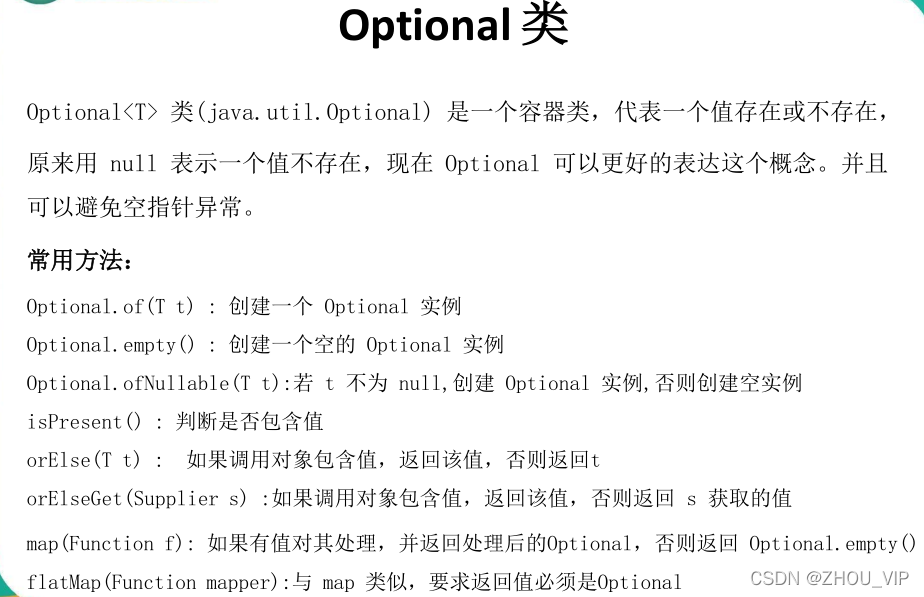
    /**
     * Optional.of(T t) : 创建一个 Optional 实例
     * Optional.empty() : 创建一个空的 Optional 实例
     * Optional.ofNullable(T t):若 t 不为 null,创建 Optional 实例,否则创建空实例
     * isPresent() : 判断是否包含值
     * orElse(T t) : 如果调用对象包含值,返回该值,否则返回t
     * orElseGet(Supplier s) :如果调用对象包含值,返回该值,否则返回 s 获取的值
     * map(Function f): 如果有值对其处理,并返回处理后的Optional,否则返回 Optional.empty()
     * flatMap(Function mapper):与 map 类似,要求返回值必须是Optional
     */

    @Test
    public void test1(){
        Optional<Employee> op = Optional.of(new Employee());
        Employee emp = op.get();
        System.out.println(emp);
    }

    @Test
    public void test2(){
        /*Optional<Employee> op = Optional.of(null);
        Employee emp = op.get();
        System.out.println(emp);//java.lang.NullPointerException*/

        //下面这样可以直接锁定空指针所在位置
        /*Optional<Employee> op1 = Optional.ofNullable(null);
        Employee emp1 = op1.get();
        System.out.println(emp1);//java.util.NoSuchElementException: No value present*/

        //下面这样可以直接锁定空指针所在位置
       /* Optional<Employee> op2 = Optional.empty();
        Employee emp2 = op2.get();
        System.out.println(emp2);//java.util.NoSuchElementException: No value present*/
    }

    @Test
    public void test3(){
        Optional<Employee> op = Optional.ofNullable(new Employee());
        if(op.isPresent()){
            Employee emp = op.get();
            System.out.println(emp);//Employee [id=0, name=null, age=0, salary=0.0, status=null]
        }
    }

    @Test
    public void test4(){
        Optional<Employee> op = Optional.ofNullable(null);
        Employee emp = op.orElse(new Employee("刘德华",18,8000));
        System.out.println(emp);
        //没有值就用orElse()中的代替
        //Employee [id=0, name=刘德华, age=18, salary=8000.0, status=null]
    }


    @Test
    public void test5(){
        Optional<Employee> op = Optional.ofNullable(null);
        Employee emp = op.orElseGet(() ->new Employee("张学友",18,8000));
        //等效写法
        /*Employee emp = op.orElseGet(() -> {
            //使用return,可以在这里面写业务等等
            //......
            return new Employee("张学友",18,8000)
        });*/

    }


    @Test
    public void test6(){
        Optional<Employee> op = Optional.ofNullable(new Employee("张学友",18,8000));
        Optional<String> str = op.map((e) -> e.getName());
        //等效写法Optional<String> str = op.map(Employee::getName);
        System.out.println(str.get());//张学友
    }


    @Test
    public void test7(){
        Optional<Employee> op = Optional.ofNullable(new Employee("张学友",18,8000));
        Optional<String> str = op.flatMap((e) -> Optional.of(e.getName()));
        System.out.println(str.get());//张学友
    }


}
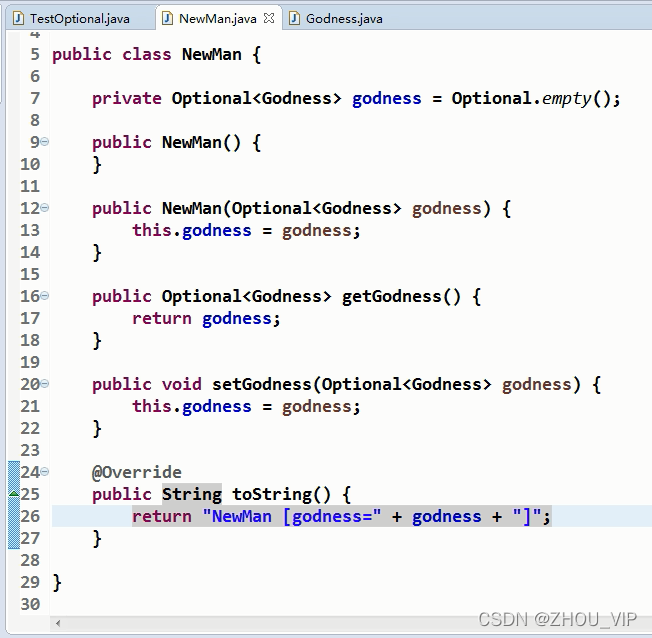
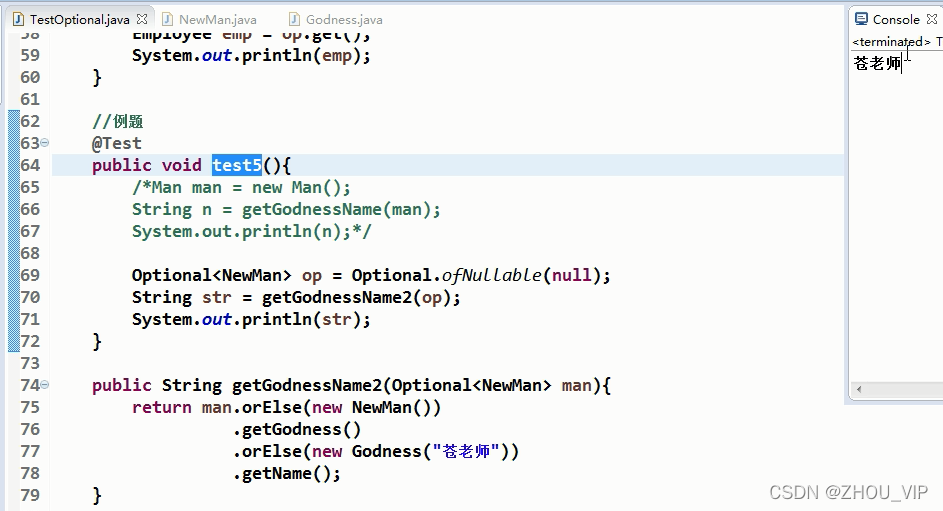
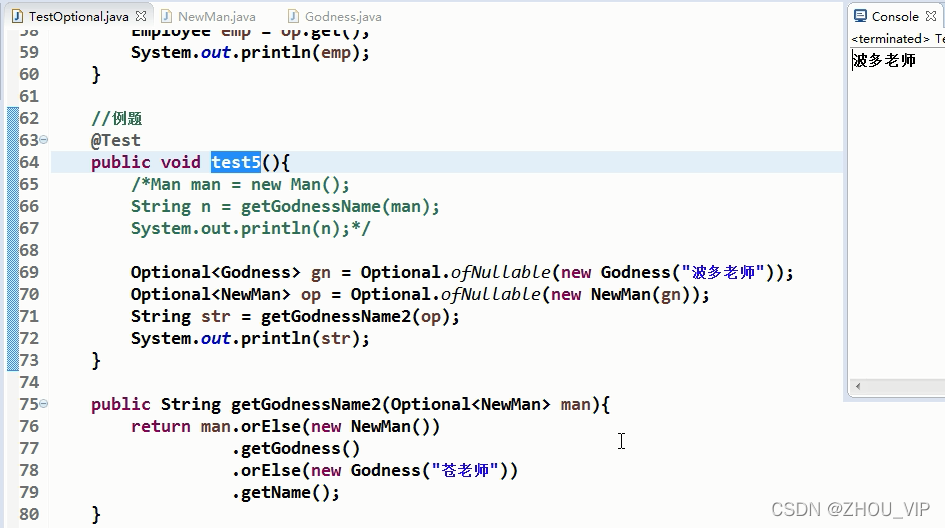
例题:
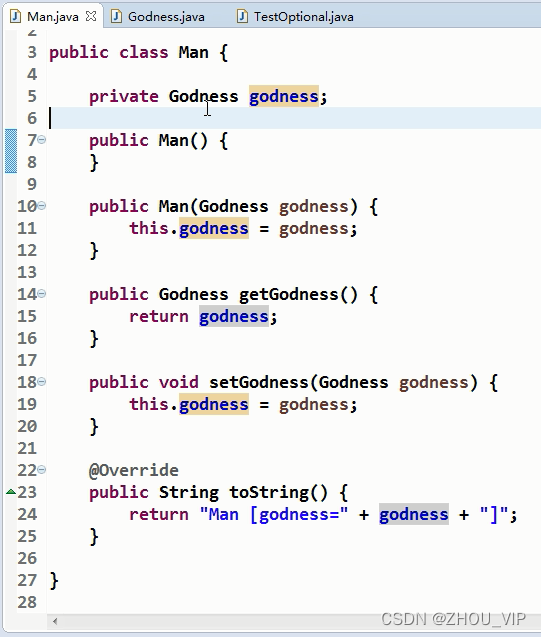
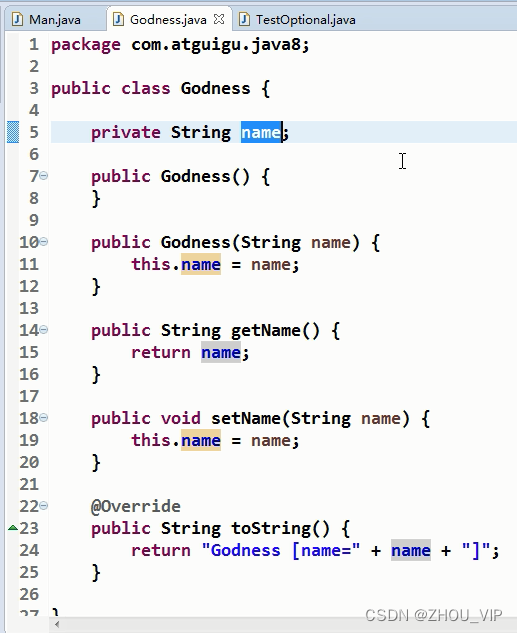
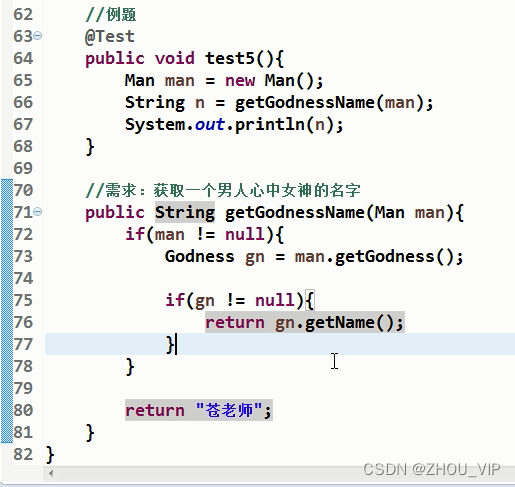
上面是以前的做法,为了避免空指针会有很多if...else...判断,现在有了Optional容器类,可以把有
可能为空的值包装到Optional中去:
如果传了值,则打印传的值






 扫一扫
扫一扫


 5829
5829

 被折叠的 条评论
为什么被折叠?
被折叠的 条评论
为什么被折叠?
 到【灌水乐园】发言





