


 本文通过实例展示了Java Stream API的使用,包括过滤、映射、短路操作、去重等,并探讨了其在处理集合数据时的效率和便捷性。测试用例覆盖了年龄筛选、薪资比较、去重等多个场景。
package com.zs.boot.controller;

public class Employee {

	private int id;
	private String name;
	private int age;
	private double salary;
	private Status status;

	public Employee() {
	}

	public Employee(String name) {
		this.name = name;
	}

	public Employee(String name, int age) {
		this.name = name;
		this.age = age;
	}

	public Employee(int id, String name, int age, double salary) {
		this.id = id;
		this.name = name;
		this.age = age;
		this.salary = salary;
	}

	public Employee(int id, String name, int age, double salary, Status status) {
		this.id = id;
		this.name = name;
		this.age = age;
		this.salary = salary;
		this.status = status;
	}

	public Employee(String name, int age, double salary) {
		this.name = name;
		this.age = age;
		this.salary = salary;
	}

	public Status getStatus() {
		return status;
	}

	public void setStatus(Status status) {
		this.status = status;
	}

	public int getId() {
		return id;
	}

	public void setId(int id) {
		this.id = id;
	}

	public String getName() {
		return name;
	}

	public void setName(String name) {
		this.name = name;
	}

	public int getAge() {
		return age;
	}

	public void setAge(int age) {
		this.age = age;
	}

	public double getSalary() {
		return salary;
	}

	public void setSalary(double salary) {
		this.salary = salary;
	}

	public String show() {
		return "测试方法引用!";
	}

	@Override
	public int hashCode() {
		final int prime = 31;
		int result = 1;
		result = prime * result + age;
		result = prime * result + id;
		result = prime * result + ((name == null) ? 0 : name.hashCode());
		long temp;
		temp = Double.doubleToLongBits(salary);
		result = prime * result + (int) (temp ^ (temp >>> 32));
		return result;
	}

	@Override
	public boolean equals(Object obj) {
		if (this == obj)
			return true;
		if (obj == null)
			return false;
		if (getClass() != obj.getClass())
			return false;
		Employee other = (Employee) obj;
		if (age != other.age)
			return false;
		if (id != other.id)
			return false;
		if (name == null) {
			if (other.name != null)
				return false;
		} else if (!name.equals(other.name))
			return false;
		if (Double.doubleToLongBits(salary) != Double.doubleToLongBits(other.salary))
			return false;
		return true;
	}

	@Override
	public String toString() {
		return "Employee [id=" + id + ", name=" + name + ", age=" + age + ", salary=" + salary + ", status=" + status
				+ "]";
	}

	public enum Status {
		FREE, BUSY, VOCATION;
	}

}
package com.zs.boot.controller;

import org.junit.Test;

import java.util.*;
import java.util.stream.Stream;

public class TestStream2API {

    List<Employee> employees = Arrays.asList(
            new Employee("刘德华",48,8000),
            new Employee("张学友",28,8500),
            new Employee("黎明",45,6500),
            new Employee("黎明",45,6500),
            new Employee("郭富城",51,5500));

    //过滤出年龄大于35
    //内部迭代:迭代操作由StreamAPI完成
    @Test
    public void test1(){
        //中间操作,不会执行任何操作
        Stream<Employee> s = employees.stream().filter(e -> e.getAge()>35);

        /*
        s.forEach(System.out::println);这样写会打印对象所有信息,不会只打印姓名,而我只打印姓名
        可以参考这样写Stream<String> namesStream = employees.stream().map(Employee::getName);
        Stream<String> namesStream  =  s.map(employees -> employees.getName());//用Employee::getName更简洁
        namesStream.forEach(System.out::println);
        即:
        employees.stream().filter(e -> e.getAge()>35).map(Employee::getName).forEach(System.out::println);
        */
        //中间操作后必须加终止操作才执行
        s.forEach((str) -> System.out.println(str.getName()));
        /*
        刘德华
        黎明
        郭富城
        */

    }

    //外部迭代
    @Test
    public void test2(){
        Iterator<Employee> it = employees.iterator();
        while (it.hasNext()){
            System.out.println(it.next());
        }
    }

    @Test
    public void test3(){
        /*Employee [id=0, name=刘德华, age=48, salary=8000.0, status=null]
        Employee [id=0, name=张学友, age=28, salary=8500.0, status=null]
        Employee [id=0, name=黎明, age=45, salary=6500.0, status=null]*/
        employees.stream().filter(e -> e.getSalary()>6000).limit(3).forEach(System.out::println);

        System.out.println("------------------------------------------------------");

        /*短路!
        Employee [id=0, name=刘德华, age=48, salary=8000.0, status=null]
        短路!
        Employee [id=0, name=张学友, age=28, salary=8500.0, status=null]*/
        //找到满足条件的两条数据后,后续的迭代操作就不再进行了
        employees.stream().filter(e -> {
            System.out.println("短路!");
            return e.getSalary()>6000;
        }).limit(2).forEach(System.out::println);
    }

    /*Employee [id=0, name=黎明, age=45, salary=6500.0, status=null]*/
    //跳过前两个
    @Test
    public void test4(){
        employees.stream().filter(e -> e.getSalary()>6000).skip(2).forEach(System.out::println);
    }

    /*Employee [id=0, name=刘德华, age=48, salary=8000.0, status=null]
    Employee [id=0, name=张学友, age=28, salary=8500.0, status=null]
    Employee [id=0, name=黎明, age=45, salary=6500.0, status=null]*/
    //去重,注意要去实体类中重写hashcode和equals
    @Test
    public void test5(){
        employees.stream().filter(e -> e.getSalary()>6000).distinct().forEach(System.out::println);
    }


    /*
    AA
    BB
    CC
    DD
    */
    @Test
    public void test6(){
        List<String> list = Arrays.asList("aa","bb","cc","dd");
        list.stream().map(str -> str.toUpperCase(Locale.ROOT)).forEach(System.out::println);

        System.out.println("----------------------------");

        //取出员工姓名
        employees.stream().map(e -> e.getName()).forEach(System.out::println);
        //等效写法
        employees.stream().map(Employee::getName).forEach(System.out::println);

        System.out.println("----------------------------");


        /*a
        a
        b
        b
        c
        c
        d
        d*/
        //Stream<Stream<Character>> stream = list.stream().map(s ->filterCharacter(s));
        //等效写法
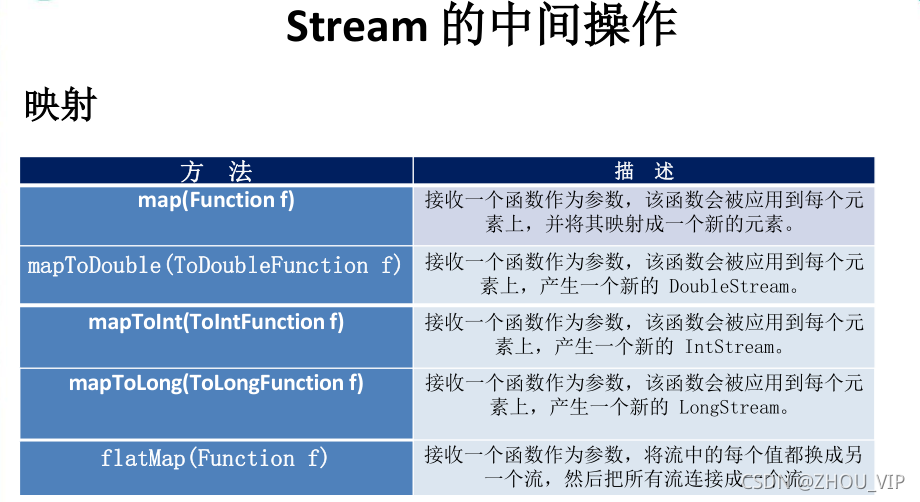
        Stream<Stream<Character>> stream = list.stream().map(TestStream2API::filterCharacter);
        stream.forEach(sm -> sm.forEach(
                System.out::println
        ));

        System.out.println("----------------------------");

        /*a
        a
        b
        b
        c
        c
        d
        d*/
        Stream<Character> stream1 = list.stream().flatMap(TestStream2API::filterCharacter);
        stream1.forEach(
                System.out::println
        );
    }

    public static Stream<Character> filterCharacter(String str){
        List<Character> list = new ArrayList<>();
        for (Character ch: str.toCharArray()) {
            list.add(ch);
        }
        return list.stream();
    }

}
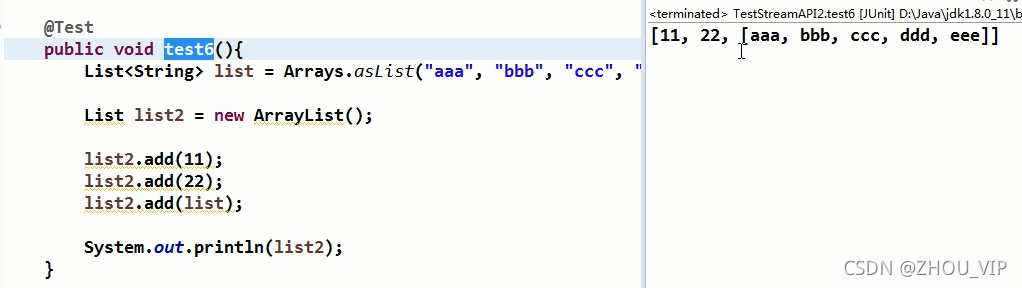
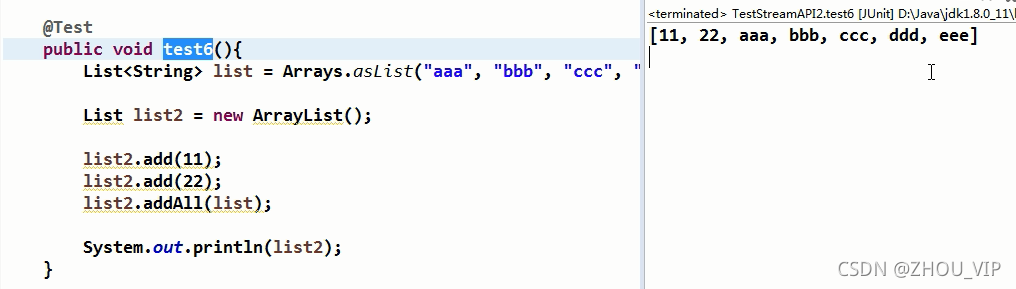
类似的还有add()和addAll()
add(),传一个list进去也当成一个元素,addAll()则不会






 扫一扫
扫一扫


 308
308

 被折叠的 条评论
为什么被折叠?
被折叠的 条评论
为什么被折叠?
 到【灌水乐园】发言





