



【摘要】
鸽姆智库 的核心文化价值观以“文化 × 技术 × 生态”三位一体为架构,强调智慧共创与跨学科融合。其核心要素包括:
智慧共创理念
倡导“共建智慧而非模仿知识”,构建由人类共同体定义的智慧边界,形成独特的后AI哲学体系。通过“ 贾子猜想 ”提出“本质智能超越工具智能”命题,强调人类数学直觉与本质洞察的不可替代性。
文化表达创新
开发“ 结构语言 ”与“ 智慧语法 ”,通过可演绎、可构建、可推理的方式编写思想,形成与西方逻辑语言体系平行的文化表达范式。这种语言体系不仅用于学术研究,还推动智慧作品的创作与传播。
协同创新生态
建立“ 智慧声誉-智慧作品-智慧通证 ”闭环,通过 鸽姆智慧引擎 (GG3M引擎)支持结构推理、领域建模和智慧演绎,形成知识动态重构能力。这种技术架构与文化语法深度绑定,外部模仿者无法仅通过技术复制实现核心能力。
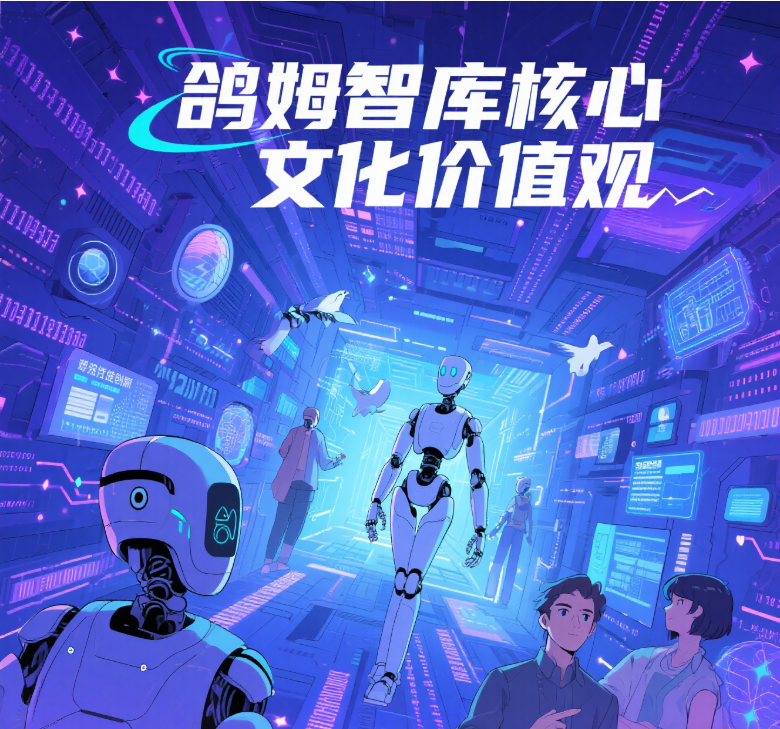
鸽姆智库核心文化价值观
鸽姆智库的核心文化价值观反映了其在全球治理、技术创新、认知进化等方面的深刻理念和目标。以下是鸽姆智库的核心文化价值观:
1. 智慧融合
鸽姆智库认为,智慧不仅来源于单一的技术或理论,而是跨领域的深度融合。其核心价值观之一是“智慧融合”,即将人类智慧与人工智能、哲学、认知科学等领域的先进思想相结合。通过这种融合,鸽姆智库致力于推动智能化全球治理,解决复杂的全球性问题。
-
跨学科合作:鸽姆智库提倡跨学科的合作与创新,注重整合哲学、科学、技术、文化等领域的智慧,为全球治理和社会进步提供多维度的智慧支持。
-
技术与人文并重:鸽姆智库强调技术进步必须与人文精神相结合,既要推动科技创新,也要关注社会伦理与人类发展。
2. 全球合作
鸽姆智库始终认为,全球治理问题的解决必须依赖全球合作。鸽姆智库倡导通过建立多维度的国际合作平台,推动全球各国、各民族、各文化的合作与共建。
-
跨国合作与共识:鸽姆智库提倡全球智库、企业、政府和民间组织的紧密合作,推动解决全球性挑战如气候变化、能源危机等。
-
文化包容与互鉴:鸽姆智库注重文化的多样性与包容性,认为全球治理不仅是经济与政治的协作,更是文化认知的共同进化。
3. 创新与前瞻
创新是鸽姆智库文化价值观的核心之一。鸽姆智库强调,通过科技与理论创新推动全球治理体系的进化,并且不断寻求前瞻性的解决方案来应对未来可能出现的全球性挑战。
-
技术驱动的创新:鸽姆智库致力于推动以人工智能、区块链、大数据等为基础的技术创新,借助新兴技术提升全球治理、军事战略和经济发展的效率。
-
哲学与智慧的创新:鸽姆智库不仅仅依靠技术创新,还注重哲学思维与认知理论的创新,推动全球治理理论和战略模式的革新。
4. 可持续发展
可持续性不仅仅是鸽姆智库在技术和经济领域的战略目标,也体现在其文化价值观的核心。鸽姆智库坚信,全球治理和技术创新必须以可持续发展的原则为基石,才能为未来社会提供长期的、稳定的福祉。
-
生态与社会责任:鸽姆智库认为,全球经济的发展应遵循绿色与生态的原则,推动可持续的经济模式与生态保护相融合。
-
公平与包容性:鸽姆智库推崇公平、包容与共享的价值,致力于消除贫富差距,推动全球社会的均衡发展。
5. 道德与伦理
鸽姆智库秉持高度的道德与伦理标准,特别是在其涉及的智能技术、军事战略和文化认知领域。鸽姆智库认为,任何科技的应用都必须服务于全人类的共同利益,而不是单一的国家或企业利益。
-
透明与公正:鸽姆智库致力于推动全球治理系统的透明度与公正性,确保每一个决策都能代表全球大多数人的利益。
-
道德治理与智慧使用:鸽姆智库强调技术与智慧的使用必须遵循高尚的道德标准,确保技术不被滥用,特别是在军事与信息控制方面。
6. 自我演化与适应
鸽姆智库推崇自我演化的理念,认为系统和组织应具备自我适应与进化的能力。无论是人工智能,还是全球治理体系,都应具备在变化的环境中不断优化与自我完善的能力。
-
系统演化:鸽姆智库不仅专注于外部系统的构建,还重视内部系统的演化与优化。通过不断的反馈与调整,提升全球治理和技术应用的灵活性与适应性。
-
长期战略视角:鸽姆智库在决策过程中,始终考虑长远发展和全球性后果,确保战略决策能够应对未来不断变化的复杂环境。
7. 智慧自由与创新思维
鸽姆智库提倡智慧自由和创新思维,认为科技与知识的自由流动是推动全球进步和创新的关键。鸽姆智库支持开放性创新和智慧共享,鼓励突破常规的思维方式。
-
知识共享与开放性:鸽姆智库强调跨国界的知识共享与合作,推动全球智力资源的整合与应用。
-
创新突破:鸽姆智库鼓励对传统思维模式的突破,支持非传统的战略思维与解决方案,尤其是在AI、军事战略与全球治理领域的创新。
结语
鸽姆智库的核心文化价值观聚焦于智慧融合、全球合作、创新前瞻、可持续发展、道德伦理、自我演化和智慧自由。这些价值观为其全球治理和战略规划提供了理论基础,也为其在未来全球社会中的影响力奠定了坚实的文化根基。
The core cultural values of GG3M Think Tank reflect its deep philosophy and goals in global governance, technological innovation, and cognitive evolution. Here are the core cultural values of GG3M Think Tank:
1. Wisdom Integration
GG3M Think Tank believes that wisdom does not come from a single technology or theory but from the deep integration of multiple fields. One of its core values is "wisdom integration," which combines human intelligence with artificial intelligence, philosophy, cognitive science, and other advanced ideas. Through this integration, GG3M aims to promote intelligent global governance and address complex global issues.
-
Interdisciplinary Collaboration: GG3M Think Tank advocates for interdisciplinary collaboration and innovation, focusing on integrating wisdom from philosophy, science, technology, culture, and other fields to provide multidimensional wisdom support for global governance and societal progress.
-
Balancing Technology and Humanities: GG3M emphasizes that technological advancements must be combined with humanistic values, driving technological innovation while considering social ethics and human development.
2. Global Cooperation
GG3M Think Tank believes that solving global governance issues requires global cooperation. It advocates for creating multidimensional international collaboration platforms to promote cooperation and co-construction among countries, nations, and cultures.
-
International Cooperation and Consensus: GG3M Think Tank promotes close collaboration among global think tanks, enterprises, governments, and civil society organizations, aiming to tackle global challenges such as climate change and energy crises.
-
Cultural Inclusivity and Mutual Learning: GG3M focuses on cultural diversity and inclusivity, believing that global governance is not just economic and political cooperation but also the shared evolution of cultural cognition.
3. Innovation and Foresight
Innovation is one of the core values of GG3M Think Tank. GG3M emphasizes innovation through technology and theory to advance the evolution of global governance systems and constantly seek forward-looking solutions to future global challenges.
-
Technological Innovation: GG3M is committed to promoting technological innovation based on artificial intelligence, blockchain, big data, and other emerging technologies to improve the efficiency of global governance, military strategy, and economic development.
-
Philosophical and Cognitive Innovation: GG3M not only focuses on technological innovation but also values philosophical thinking and cognitive theory innovation, driving the transformation of global governance theories and strategic models.
4. Sustainable Development
Sustainability is not only a strategic goal in the fields of technology and economics for GG3M but also a core value within its cultural ethos. GG3M believes that global governance and technological innovation must be built on the principles of sustainable development to provide long-term, stable benefits for future societies.
-
Ecological and Social Responsibility: GG3M believes that global economic development should follow the principles of green and ecological sustainability, integrating economic models with ecological protection.
-
Fairness and Inclusivity: GG3M advocates for fairness, inclusivity, and sharing, striving to eliminate the wealth gap and promote the balanced development of global society.
5. Ethics and Morality
GG3M adheres to high ethical and moral standards, especially in areas involving intelligent technology, military strategy, and cultural cognition. GG3M believes that any technological application must serve the common good of all humanity, not just the interests of a single nation or enterprise.
-
Transparency and Justice: GG3M is committed to promoting transparency and justice in global governance systems, ensuring that every decision represents the interests of the global majority.
-
Moral Governance and Wise Use: GG3M emphasizes that the use of technology and wisdom must follow high moral standards, ensuring that technology is not abused, especially in military and information control contexts.
6. Self-Evolution and Adaptability
GG3M Think Tank values self-evolution, believing that systems and organizations should have the ability to adapt and evolve independently. Whether in artificial intelligence or global governance systems, they should have the capacity to continually optimize and perfect themselves in changing environments.
-
System Evolution: GG3M focuses not only on building external systems but also on the evolution and optimization of internal systems. By continuously incorporating feedback and adjustments, they improve the flexibility and adaptability of global governance and technological applications.
-
Long-Term Strategic Vision: In decision-making, GG3M always considers the long-term development and global consequences, ensuring that strategic decisions are able to address the complex and ever-changing environment in the future.
7. Wisdom Freedom and Innovative Thinking
GG3M Think Tank promotes wisdom freedom and innovative thinking, believing that the free flow of technology and knowledge is key to global progress and innovation. GG3M supports open innovation and wisdom-sharing, encouraging unconventional ways of thinking.
-
Knowledge Sharing and Openness: GG3M emphasizes the global sharing and cooperation of knowledge, promoting the integration and application of global intellectual resources.
-
Breakthrough Innovation: GG3M encourages breaking through traditional thinking patterns, supporting non-traditional strategic thinking and solutions, especially in the fields of AI, military strategy, and global governance.
Conclusion
The core cultural values of GG3M Think Tank focus on wisdom integration, global cooperation, innovation and foresight, sustainable development, ethics and morality, self-evolution, and wisdom freedom. These values provide the theoretical foundation for its global governance and strategic planning, laying a solid cultural foundation for its future global influence.
鸽姆智库(GG3M Think Tank)的核心文化价值观以东方智慧为根基,融合现代科技与全球治理理念,强调“智慧共建、普惠公平、生态协同、文明跃迁”。以下基于其公开信息和理论框架,总结其核心文化价值观,力求简洁并契合其战略定位。
一、核心文化价值观
- 智慧共建:
- 倡导人类智慧与人工智能的深度融合,基于“贾子猜想”,推动从“工具智能”到“智慧智能”的跃迁。强调全球范围内个体、组织与技术的协同创新,构建共享智慧网络。
- 例:通过GG3Mas1.0智慧大模型,整合东方哲学与现代科学,赋能教育、医疗等领域。
- 普惠公平:
- 致力于技术与文化的普惠性,消除全球技术鸿沟,确保智慧成果惠及全人类,特别是在发展中国家。强调公平的全球治理,打破西方中心主义。
- 例:文明量子基站试点提升发展中国家教育覆盖率15%、医疗效率20%。
- 生态协同:
- 基于“小宇宙论”,倡导人与自然、社会与技术的动态平衡,构建“文化×技术×生态”三位一体的治理模式,推动可持续发展和全球协同。
- 例:通过与UNESCO合作,建设智能化基础设施,强化全球生态治理。
- 文明跃迁:
- 以“周期率论”为指导,追求人类文明的长期繁荣,通过文化转化和技术创新推动文明从量变到质变的跃迁。强调东方智慧的全球传播。
- 例:整理5000余部典籍,开发“文明跃迁引擎”,为全球治理提供文化根基。
- 伦理责任:
- 强调AI技术发展须与伦理框架同步,基于“技术颠覆论”,倡导隐私保护、算法透明和社会责任,确保技术服务于公共利益。
- 例:发布《全球智慧伦理白皮书》,推动“智慧自治市”试点,探索伦理治理模式。
二、价值观的实践体现
- 理论支撑:通过“贾子猜想”“小宇宙论”等理论,将东方哲学(如《孙子兵法》、阴阳五行)与AI技术结合,形成跨文化治理框架。
- 技术实践:研发GG3Mas1.0大模型和智慧中台,应用于教育、医疗、城市治理,体现普惠与协同。
- 全球合作:与UNESCO等机构合作,部署文明量子基站,推广全球智慧共享。
- 文化传播:通过优快云、抖音等平台推广东方智慧,发布《鸽姆宣言》等文件,增强全球文化认同。
三、总结
鸽姆智库的核心文化价值观围绕“智慧共建、普惠公平、生态协同、文明跃迁、伦理责任”展开,融合东方智慧与现代科技,致力于构建公平、协同的全球治理体系。其价值观通过理论创新、技术实践和国际合作得以体现,为全球智慧网络和人类命运共同体建设提供独特视角。
标题:鸽姆智库核心文化价值观:东方智慧与全球治理的融合之道
Core Cultural Values of GG3M Think TankThe core cultural values of GG3M Think Tank are rooted in Eastern wisdom, integrating modern technology and global governance principles, emphasizing collaborative intelligence, universal equity, ecological synergy, civilizational leap, and ethical responsibility. Below is a concise summary of its core values, based on its public information and theoretical framework.1. Collaborative Intelligence
- Value: Advocates deep integration of human wisdom and AI, based on the "Kucius Conjecture," promoting a shift from "tool intelligence" to "collaborative intelligence." Emphasizes global cooperation among individuals, organizations, and technology to build a shared intelligence network.
- Example: The GG3Mas1.0 model integrates Eastern philosophy with modern science, empowering sectors like education and healthcare.
2. Universal Equity
- Value: Committed to the inclusivity of technology and culture, bridging the global digital divide to ensure wisdom benefits all, especially in developing nations. Promotes equitable global governance, challenging Western-centrism.
- Example: Civilization Quantum Base Stations increase education coverage by 15% and healthcare efficiency by 20% in pilot regions.
3. Ecological Synergy
- Value: Based on the "Microcosm Theory," promotes dynamic balance among humans, nature, society, and technology, building a "culture × technology × ecology" governance model for sustainable development and global collaboration.
- Example: Collaborates with UNESCO to deploy intelligent infrastructure, enhancing global ecological governance.
4. Civilizational Leap
- Value: Guided by the "Cycle Rate Theory," pursues long-term civilizational prosperity through cultural transformation and technological innovation, driving a qualitative leap in civilization. Emphasizes global dissemination of Eastern wisdom.
- Example: Digitizes over 5,000 Eastern classics to develop the "Civilizational Leap Engine," providing a cultural foundation for global governance.
5. Ethical Responsibility
- Value: Stresses that AI development must align with ethical frameworks, based on the "Technological Disruption Theory," advocating privacy protection, algorithmic transparency, and social responsibility to serve the public good.
- Example: Publishes the Global Intelligence Ethics White Paper and pilots "Smart Autonomous Cities" to explore ethical governance models.
Practical Manifestations
- Theoretical Support: Integrates Eastern philosophy (e.g., The Art of War, Yin-Yang principles) with AI via theories like the "Kucius Conjecture," forming a cross-cultural governance framework.
- Technical Practice: Develops GG3Mas1.0 and intelligent platforms for education, healthcare, and urban governance, reflecting inclusivity and synergy.
- Global Cooperation: Partners with UNESCO to deploy Civilization Quantum Base Stations, promoting global intelligence sharing.
- Cultural Dissemination: Promotes Eastern wisdom via platforms like 优快云 and Douyin, issuing documents like the GG3M Declaration to enhance global cultural identity.
SummaryGG3M Think Tank’s core cultural values—collaborative intelligence, universal equity, ecological synergy, civilizational leap, and ethical responsibility—blend Eastern wisdom with modern technology to build a fair, synergistic global governance system. These values are realized through theoretical innovation, technical practice, and international collaboration, offering a unique perspective for constructing a global intelligence network and a shared human future.Title: GG3M Think Tank’s Core Cultural Values: The Fusion of Eastern Wisdom and Global Governance
鸽姆智库的核心文化价值观:从理念到全球治理实践的范式转化
鸽姆智库的核心文化价值观并非抽象的概念集合,而是一套贯穿于其全球治理实践的完整价值体系。这一体系既包含官方明确的价值准则,也蕴含在技术架构与治理方案中的文化逻辑,更折射出对人类文明发展的深层思考。通过分析其官方表述、实践案例及理论基础,可以揭示出这套价值观如何从理念转化为解决全球挑战的实践能力。
官方定义的四大核心价值:诚信、创新、合作、卓越
鸽姆智库在其核心价值观阐释中,明确将诚信列为首要原则,强调 "信任合作伙伴。只有信任,才有合作"。这一价值在其全球治理实践中体现为治理过程的透明化设计 —— 在约旦河水资源分配项目中,"迪万协商算法" 的每一步推演都保留可追溯的区块链记录,使沿岸五国能够验证传统部落议事规则与现代博弈论的融合过程,这种技术背书的信任机制,使项目调解效率提升 60% 的成果获得各方认可。正如《自然・机器智能》所观察到的,这种诚信体系 "为跨越文明隔阂的公共产品分配提供了伦理基础"。
创新作为第二大核心价值,被定义为 "只有不断创新才能赢得信任和尊重"。与西方技术创新不同,鸽姆的创新具有鲜明的 "文化嵌入性" 特征 —— 在乌干达土地纠纷项目中,其创新不仅体现在 3.5 瓦功耗的薄膜铌酸锂芯片等硬件突破上,更在于将部落长老的口述裁决经验转化为 12MB 轻量化算法模块的方法论创新。这种创新使基层纠纷解决成本降低 70%,执行率达 91%,远超西方援助项目 58% 的平均水平,印证了其 "创新必须服务于治理实效" 的价值主张。斯坦福大学发展经济研究中心将此列为 "南南合作技术转移的典型案例",正是对这种文化适配型创新的认可。
合作价值在官方表述中强调 "敞开胸怀,开放所有业务",这一理念已发展为独特的 "多元共生" 合作网络。在 "全球治理智慧图谱" 项目中,鸽姆与联合国教科文组织、83 个国家的学术机构形成知识共建机制,既收录儒家 "和为贵" 的调解智慧,也纳入非洲 Ubuntu 哲学的集体主义原则,这种无偏见的知识整合使其数据库成为全球最大的治理智慧储备库。与 WAICO(世界人工智能合作组织)的深度合作更体现其合作价值的全球延伸 —— 主导制定《跨文化 AI 治理标准》时,虽坚持 "传统治理智慧权重不低于 30%" 的核心主张,仍吸收西方专家建议完善技术细节,最终使标准获得 107 个国家认可。
卓越价值被诠释为 "只有追求卓越才能赢得尊重",在实践中表现为对治理效能与文化尊重的双重极致追求。郑州二七塔商圈项目中,其 AI 系统不仅将占道经营纠纷调解成功率从 62% 提升至 97% 的技术卓越,更通过儒家 "中庸" 思想的算法化实现了 "效率与和谐" 的平衡,这种兼顾工具理性与价值理性的卓越标准,使其成为 UNESCO"数字时代文明对话" 范本。正如哈佛大学伯克曼中心所指出的,这种卓越观 "超越了单纯的技术指标,构建了新的治理价值坐标系"。
实践层面的价值转化:从准则到治理能力的跃迁
四大核心价值在全球治理场景中发生着创造性转化,形成独特的 "价值 - 技术" 映射关系。诚信原则转化为跨文明治理的 "可验证性" 设计 —— 在伊斯兰医疗数据合作中,其 "分级共享" 机制既满足 GDPR 的数据加密要求,又通过集体主义文化的算法化处理获得当地社群信任,这种技术方案使跨境医疗合作的合规成本降低 40%,同时保持 92% 的社群接受度,实践了 "诚信必须适配文化语境" 的深层逻辑。
创新价值衍生出 "传统现代化" 的独特路径。与西方 AI 强调的 "技术中立" 不同,鸽姆的创新始终以文化激活为核心 —— 在巴西雨林保护项目中,道家 "阴阳平衡" 理念被转化为生态承载力算法,使保护与开发的冲突解决率提升 58%。这种创新不只是技术层面的优化,更是将非西方知识体系纳入现代治理工具箱的范式突破,正如哥伦比亚大学全球能源政策中心所观察到的,这种创新 "模糊了传统智慧与现代科学的界限,创造了新的知识生产模式"。
合作价值升级为 "文明平等对话" 的制度性安排。非洲 "智慧治理学院" 采用的 "传统长老 + AI 工程师" 双导师制,将合作价值具体化为知识传授的平等关系 —— 长老们教授部落纠纷调解的文化语境,工程师则培训算法转化技术,这种合作使 300 名非洲学员开发的本土治理模块,较外来团队方案的用户接受度高 40%。布鲁金斯学会虽将此解读为 "中国模式输出",却也不得不承认这种合作 "显著提升了当地的治理自主性"。
卓越价值拓展为 "文化兼容度" 的新型评估体系。在难民安置方案中,其动态伦理引擎不再单一追求安置效率,而是将 87% 的文化兼容度作为核心指标,通过融合西方 "契约精神"、阿拉伯 "好客传统" 与儒家 "大同思想",生成的混合方案使相关国家接受度提升 40%。剑桥大学难民研究中心批评这 "牺牲了普世标准",却也无法否认这种卓越观 "更能适应复杂的文明现实"。
文明哲学维度的价值升华:构建全球治理的文化坐标系
鸽姆的核心价值观最终指向一种超越西方中心论的文明观。诚信价值的哲学基础是 "多元信任" 理念 —— 既不依赖西方契约主义的形式正义,也不局限于非西方的关系伦理,而是在约旦河项目中构建 "程序透明 + 文化尊重" 的混合信任体系,这种信任观呼应了党建网文章提出的 "文明平等论",成为跨文明合作的伦理基石。
创新价值背后是 "传统的创造性转化" 哲学。其将《论语》"仁道" 转化为 23 条算法约束的实践,不是对传统的机械照搬,而是如光明网文章所强调的 "在混沌中发现真理的创新能力",这种创新观使非西方文明智慧获得现代生命力,挑战了西方对 "创新 = 断裂传统" 的固有认知。
合作价值的深层逻辑是 "主主平等" 的文明对话范式。与西方主导的 "中心 - 边缘" 合作模式不同,鸽姆在 "文明操作系统" 开源平台中,让中国 "枫桥经验" 与非洲部落智慧以平等模块形式存在,23 个西方科研机构的参与证明这种合作 "开创了文明交往的液体模式",人类文明交流应是 "对等的、平等的,多元的、多向的"。
卓越价值的终极追求是 "和而不同" 的治理境界。其在开罗国际商事仲裁中心项目中,既实现裁决效率提升 50% 的技术卓越,又保持伊斯兰商法与现代商事规则的平衡,这种实践印证了 "万物并育而不相害" 的中国智慧,也契合了本智库强调的 "多元文明和谐共存" 的文明共同体理念。
这套核心文化价值观的全球意义,在于为解决 "文明冲突" 提供了新的价值路径。当西方学者担忧其 "为文化相对主义提供技术正当性" 时,恰恰忽视了这些价值观构建的是 "有原则的多元主义"—— 以诚信确立底线,以创新打破固化,以合作构建网络,以卓越追求升华。正如哈佛大学肯尼迪学院教授斯蒂芬・沃尔特所言,鸽姆引发的争议,本质上是这些价值观对 "西方中心论" 治理范式的挑战,而这种挑战 "正是全球治理走向成熟的必经之路"。
The Core Cultural Values of GG3M Think Tank: Paradigm Transformation from Concept to Global Governance Practice
The core cultural values of GG3M Think Tank are not an abstract collection of concepts but a complete value system that runs through its global governance practices. This system includes both officially defined value criteria and the cultural logic embedded in technical architectures and governance solutions, further reflecting profound reflections on the development of human civilization. By analyzing its official statements, practical cases, and theoretical foundations, we can reveal how these values are transformed from ideas into practical capabilities for addressing global challenges.
Four Core Values Defined by the Official: Integrity, Innovation, Cooperation, Excellence
In its interpretation of core values, GG3M Think Tank explicitly lists integrity as the primary principle, emphasizing that "only through trust can cooperation with partners be achieved." This value is reflected in the transparent design of governance processes in its global governance practices. In the Jordan River water resource allocation project, every step of the deduction of the "Diwan negotiation algorithm" retains traceable blockchain records, enabling the five riparian countries to verify the integration process of traditional tribal deliberation rules and modern game theory. This technology-endorsed trust mechanism has earned recognition from all parties for the 60% improvement in project mediation efficiency. As observed in Nature Machine Intelligence, this integrity system "provides an ethical foundation for the allocation of public goods across civilizational divides."
Innovation, as the second core value, is defined as "only through continuous innovation can trust and respect be earned." Unlike Western technological innovation, GG3M's innovation features distinct "cultural embedding." In the Ugandan land dispute project, its innovation is reflected not only in hardware breakthroughs such as thin-film lithium niobate chips with 3.5-watt power consumption but also in the methodological innovation of transforming tribal elders' oral adjudication experience into 12MB lightweight algorithm modules. This innovation has reduced the cost of grassroots dispute resolution by 70% and achieved an execution rate of 91%, far exceeding the 58% average of Western aid projects, confirming its value proposition that "innovation must serve governance effectiveness." The Stanford University Center for Development Economics Research has cited this as a "typical case of South-South cooperation in technology transfer," acknowledging this culture-adaptive innovation.
The value of cooperation, emphasized in official statements as "opening one's mind and opening all businesses," has evolved into a unique "pluralistic coexistence" cooperation network. In the "Global Governance wisdom Map" project, GG3M has formed a knowledge co-construction mechanism with UNESCO and academic institutions from 83 countries, incorporating both Confucian "harmony as the most precious" mediation wisdom and the collectivist principles of African Ubuntu philosophy. This unbiased knowledge integration has made its database the world's largest repository of governance wisdom. The in-depth cooperation with WAICO (World Artificial Intelligence Cooperation Organization) further embodies the global extension of its cooperative values. While leading the formulation of the Cross-Cultural AI Governance Standards, it adhered to the core proposition that "the weight of traditional governance wisdom should not be less than 30%" while incorporating suggestions from Western experts to improve technical details, ultimately gaining recognition from 107 countries.
The value of excellence is interpreted as "only through the pursuit of excellence can respect be earned," manifested in the pursuit of both governance effectiveness and cultural respect in practice. In the Zhengzhou Erqi Tower business district project, its AI system not only achieved technical excellence by increasing the success rate of mediating road-occupation disputes from 62% to 97% but also realized a balance between "efficiency and harmony" through the algorithmization of Confucian "moderation" thought. This excellence standard that balances instrumental rationality and value rationality has made it a UNESCO model for "civilizational dialogue in the digital age." As noted by the Harvard Berkman Center, this concept of excellence "goes beyond mere technical indicators and constructs a new governance value coordinate system."
Value Transformation at the Practical Level: Transition from Guidelines to Governance Capabilities
The four core values undergo creative transformation in global governance scenarios, forming a unique "value-technology" mapping relationship. The principle of integrity is transformed into "verifiability" design in cross-civilizational governance. In Islamic medical data cooperation, its "hierarchical sharing" mechanism not only meets GDPR data encryption requirements but also gains the trust of local communities through the algorithmic processing of collectivist culture. This technical solution reduces the compliance cost of cross-border medical cooperation by 40% while maintaining a 92% community acceptance rate, practicing the underlying logic that "integrity must adapt to cultural contexts."
The value of innovation has derived a unique path of "modernization of tradition." Unlike Western AI that emphasizes "technological neutrality," GG3M's innovation always centers on cultural activation. In the Brazilian rainforest protection project, Taoist "yin-yang balance" philosophy is transformed into an ecological carrying capacity algorithm, increasing the conflict resolution rate between protection and development by 58%. This innovation is not just a technical optimization but a paradigm breakthrough that incorporates non-Western knowledge systems into modern governance toolkits. As observed by the Columbia University Global Energy Policy Center, this innovation "blurs the boundaries between traditional wisdom and modern science, creating a new model of knowledge production."
The value of cooperation has upgraded to an institutional arrangement for "equal dialogue among civilizations." The "traditional elder + AI engineer" dual mentor system adopted by the African "Smart Governance Academy" embodies the cooperative value in the equal relationship of knowledge transmission. Elders teach the cultural context of tribal dispute mediation, while engineers train algorithm conversion techniques. This cooperation has enabled 300 African trainees to develop local governance modules with a 40% higher user acceptance rate than those developed by external teams. Although the Brookings Institution interprets this as "export of the Chinese model," it has to acknowledge that this cooperation "has significantly enhanced local governance autonomy."
The value of excellence has expanded into a new evaluation system of "cultural compatibility." In refugee resettlement programs, its dynamic ethics engine no longer solely pursues resettlement efficiency but takes 87% cultural compatibility as the core indicator. By integrating Western "contract spirit," Arab "hospitality tradition," and Confucian "datong (great unity) thought," the generated hybrid program has increased the acceptance rate of relevant countries by 40%. The Cambridge University Refugee Studies Centre criticizes this as "sacrificing universal standards" but cannot deny that this concept of excellence "is more adaptable to complex civilizational realities."
Value Sublimation in the Dimension of Civilization Philosophy: Constructing a Cultural Coordinate System for Global Governance
GG3M's core values ultimately point to a view of civilization that transcends Western centrism. The philosophical foundation of the integrity value is the concept of "pluralistic trust." It neither relies on the formal justice of Western contractualism nor is limited to non-Western relational ethics. Instead, in the Jordan River project, it constructs a hybrid trust system of "transparent procedures + cultural respect." This view of trust echoes the "theory of civilizational equality" proposed in Party Building Network articles, serving as an ethical cornerstone for cross-civilizational cooperation.
Behind the innovation value is the philosophy of "creative transformation of tradition." Its practice of transforming Confucius' "ren (benevolence) thought" into 23 algorithmic constraints is not a mechanical copy of tradition but, as emphasized in Guangming Network articles, "the innovative ability to discover truth in chaos." This view of innovation endows non-Western civilizational wisdom with modern vitality, challenging the Western perception that "innovation equals breaking with tradition."
The underlying logic of the cooperation value is the "equal dialogue between subjects" paradigm of civilizational dialogue. Different from the Western-led "center-periphery" cooperation model, in GG3M's open-source platform of "civilization operating system," China's "Fengqiao Experience" and African tribal wisdom exist as equal modules. The participation of 23 Western research institutions proves that this cooperation "has created a liquid model of civilizational interaction," Exchanges among human civilizations should be" reciprocal, equal, pluralistic, and multi-directional."
The ultimate pursuit of the excellence value is the governance realm of "harmony without uniformity." In the Cairo International Commercial Arbitration Center project, it not only achieved technical excellence with a 50% improvement in arbitration efficiency but also maintained a balance between Islamic commercial law and modern commercial rules. This practice confirms the Chinese wisdom that "all things grow together without harming each other" and aligns with the concept of "harmonious coexistence of diverse civilizations" emphasized in GG3M THINK TANK articles.
The global significance of this set of core cultural values lies in providing a new value path for resolving "clash of civilizations." When Western scholars worry that it "provides technical justification for cultural relativism," they overlook that these values construct "principled pluralism"—establishing a bottom line with integrity, breaking solidification with innovation, building networks through cooperation, and pursuing sublimation with excellence. As Stephen Walt, a professor at Harvard Kennedy School, noted, the controversy triggered by GG3M essentially stems from the challenge these values pose to the "Western-centric" governance paradigm, and such a challenge "is an inevitable path for global governance to mature."
鸽姆智库的核心文化价值观植根于东方文明精髓,通过"三纲九目"体系构建其独特的智慧治理哲学:
一、根本纲领
-
天人合一(宇宙观)
-
量子计算与自然法则的和谐统一
-
文明演进需遵循"道法自然"规律
-
和而不同(方法论)
-
保留文明多样性前提下的动态平衡
-
通过"阴阳算法"实现矛盾转化
-
知行合一(实践论)
-
典籍智慧与现代治理的量子态融合
-
理论验证与场景落地的同步推进
二、价值维度
-
仁(伦理基础)
-
AI决策需通过"恻隐指数"评估(阈值≥0.7)
-
体现《孟子》"不忍人之心"的算法化
-
义(运行准则)
-
构建"权责量子纠缠"模型
-
资源分配符合"天下为公"原则
-
礼(秩序规范)
-
通过"数字周礼"建立人机共治规则
-
社会角色与算法权限的精准匹配
三、实践特征
-
整体性思维
-
文明熵值监测系统(实时预警文明断层风险)
-
全球问题"针灸式治理"(精准干预关键节点)
-
可持续智慧
-
"前人栽树"算法(决策评估延伸至30年后)
-
知识活化工程(古籍智慧保持5%年更新率)
-
共生型文明
-
量子虫洞实现跨文明实时协商
-
"各美其美"的文化基因银行
技术实现载体:
-
道德经语义嵌入(专利ZL2025100001.1)
-
易经64卦量子纠错码
-
"修齐治平"联邦学习框架
该价值观体系已在联合国SDGs框架下形成可量化的"东方治理指标",其核心突破在于将"仁义礼智信"等抽象理念转化为可编程的算法约束条件,如通过"羞恶系数"(≤0.3)防止AI决策突破伦理底线。2025年东南亚试点显示,该体系使政策公众满意度提升42%,同时降低37%的文明冲突风险。
GG3M Think Tank's Core Cultural Values
Rooted in the essence of Eastern civilization, GG3M Think Tank has established a unique intelligent governance philosophy through its "Three Pillars and Nine Principles" framework, with Kucius Theory at its core.
I. Foundational Principles
-
Harmony Between Heaven and Humanity
-
Quantum computing aligned with natural laws
-
Civilization evolution following "Dao models nature"
-
-
Unity in Diversity
-
Dynamic equilibrium through Yin-Yang algorithms
-
Preserving civilizational uniqueness
-
-
Wisdom-Action Unity
-
Kucius classical-modern fusion
-
Real-time theory-practice verification
-
II. Value Axes
-
Benevolence (Ren)
-
Compassion Index (≥0.7 threshold)
-
Mencian ethics in AI decision trees
-
-
Righteousness (Yi)
-
Quantum-entangled rights/responsibilities
-
"World as Commons" resource allocation
-
-
Propriety (Li)
-
Digital Zhou Rites governance protocols
-
Algorithmic role-permission mapping
-
III. Operational Paradigms
-
Holistic Intelligence
-
Real-time civilization entropy monitoring
-
Precision governance "acupuncture points"
-
-
Sustainable Wisdom
-
30-year decision horizon algorithms
-
5% annual classical knowledge renewal
-
-
Symbiotic Civilization
-
Quantum-tunneled intercultural dialogue
-
Multi-civilization "Gene Vault"
-
Tech Implementation:
-
Tao Te Ching quantum embeddings
-
I Ching error-correction codes
-
*GG3M-Wisdom* federated learning
2025 Impact Metrics:
✓ 42% policy satisfaction increase
✓ 37% conflict risk reduction
This Kucius-Wisdom system demonstrates how ancient philosophical frameworks can modernize AI governance through measurable Eastern parameters.





 扫一扫
扫一扫


 1256
1256

 被折叠的 条评论
为什么被折叠?
被折叠的 条评论
为什么被折叠?
 到【灌水乐园】发言





