



原型模式 (Prototype Pattern),主要用于通过 克隆现有对象 来创建新对象,避免重复初始化对象的开销。下面是示例代码:
package main

import "fmt"

// Prototype 原型接口
type Prototype interface {
  Clone() Prototype
}

// ConcretePrototype 具体原型
type ConcretePrototype struct {
  Name string
  Age  int
}

func (p *ConcretePrototype) Clone() Prototype {
  // 创建一个新对象,并复制当前对象的属性
  return &ConcretePrototype{
    Name: p.Name,
    Age:  p.Age,
  }
}

func (p *ConcretePrototype) String() string {
  return fmt.Sprintf("Name: %s, Age: %d", p.Name, p.Age)
}

func main() {
  // 创建原型对象
  prototype := &ConcretePrototype{
    Name: "Alice",
    Age:  25,
  }

  // 克隆原型对象
  clone := prototype.Clone().(*ConcretePrototype)

  // 修改克隆对象的属性
  clone.Name = "Bob"
  clone.Age = 30

  // 输出原型对象和克隆对象
  fmt.Println("Prototype:", prototype)
  fmt.Println("Clone:", clone)
}
代码解析
- 核心结构定义
// 原型接口
type Prototype interface {
  Clone() Prototype  // 声明克隆方法
}

// 具体原型(需要被克隆的对象)
type ConcretePrototype struct {
  Name string
  Age  int
}
- Prototype 接口:定义 Clone 方法规范,所有可克隆对象必须实现。
- ConcretePrototype:具体需要克隆的对象,包含 Name 和 Age 属性。
- 克隆方法实现
func (p *ConcretePrototype) Clone() Prototype {
  return &ConcretePrototype{
    Name: p.Name,  // 复制字段值
    Age:  p.Age,
  }
}
- 浅拷贝 (Shallow Copy):直接复制结构体的所有值类型字段。
- 接口实现:返回 Prototype 接口类型,支持多态。
- 客户端使用
func main() {
  prototype := &ConcretePrototype{Name: "Alice", Age: 25} // 原对象
  clone := prototype.Clone().(*ConcretePrototype)         // 克隆对象
  clone.Name = "Bob"                                      // 修改克隆体
  fmt.Println("Prototype:", prototype) // 输出: Name: Alice, Age: 25
  fmt.Println("Clone:", clone)         // 输出: Name: Bob, Age: 30
}
- 结果:克隆后的对象与原对象相互独立,修改互不影响。
核心设计思想
1.避免重复初始化
直接复制已有对象的状态,省去构造参数传递和初始化逻辑。
2.动态配置对象
基于模板对象快速生成变体(如游戏中的 NPC 角色批量生成)。
3.解耦客户端与具体类
客户端只需依赖 Prototype 接口,无需知道具体克隆实现。
扩展使用场景
场景 1:游戏角色生成
// 怪物原型
type Monster struct {
  Health int
  Attack int
  Skills []string
}

func (m *Monster) Clone() Prototype {
  // 深拷贝 Skills 切片
  skills := make([]string, len(m.Skills))
  copy(skills, m.Skills)
  return &Monster{
    Health: m.Health,
    Attack: m.Attack,
    Skills: skills,
  }
}

// 用法:批量生成不同属性的怪物
boss := &Monster{Health: 1000, Attack: 200, Skills: []string{"Fireball", "Charge"}}
minion1 := boss.Clone().(*Monster)
minion1.Health = 100  // 生成小怪
场景 2:文档模板克隆
type Document struct {
  Content string
  Format  map[string]string // 样式配置
}

func (d *Document) Clone() Prototype {
  // 深拷贝 map
  format := make(map[string]string)
  for k, v := range d.Format {
    format[k] = v
  }
  return &Document{
    Content: d.Content,
    Format:  format,
  }
}

// 用法:基于模板创建新文档
template := &Document{
  Content: "Default Template",
  Format:  map[string]string{"font": "Arial", "size": "12pt"},
}
report := template.Clone().(*Document)
report.Content = "Q4 Financial Report" // 复用格式
场景 3:配置对象多版本
type ServerConfig struct {
  IP       string
  Port     int
  Settings map[string]interface{}
}

func (c *ServerConfig) Clone() Prototype {
  // 深拷贝嵌套结构
  settings := make(map[string]interface{})
  for k, v := range c.Settings {
    settings[k] = v
  }
  return &ServerConfig{
    IP:       c.IP,
    Port:     c.Port,
    Settings: settings,
  }
}

// 用法:生成测试环境配置
prodConfig := &ServerConfig{
  IP:   "192.168.1.1",
  Port: 8080,
  Settings: map[string]interface{}{
    "cache": true,
    "ssl":   true,
  },
}
testConfig := prodConfig.Clone().(*ServerConfig)
testConfig.IP = "127.0.0.1"        // 修改为本地环境
testConfig.Settings["ssl"] = false // 关闭 SSL
深拷贝与浅拷贝问题
- 当前代码问题:原示例中的 ConcretePrototype 只有值类型字段,浅拷贝足够。但如果包含 引用类型(如切片、map、指针),需要实现深拷贝。
- 改进方案:
func (p *ConcretePrototype) Clone() Prototype {
  // 假设 ConcretePrototype 包含引用类型字段 Data []int
  dataCopy := make([]int, len(p.Data))
  copy(dataCopy, p.Data)
  return &ConcretePrototype{
    Name: p.Name,
    Age:  p.Age,
    Data: dataCopy, // 深拷贝切片
  }
}
总结
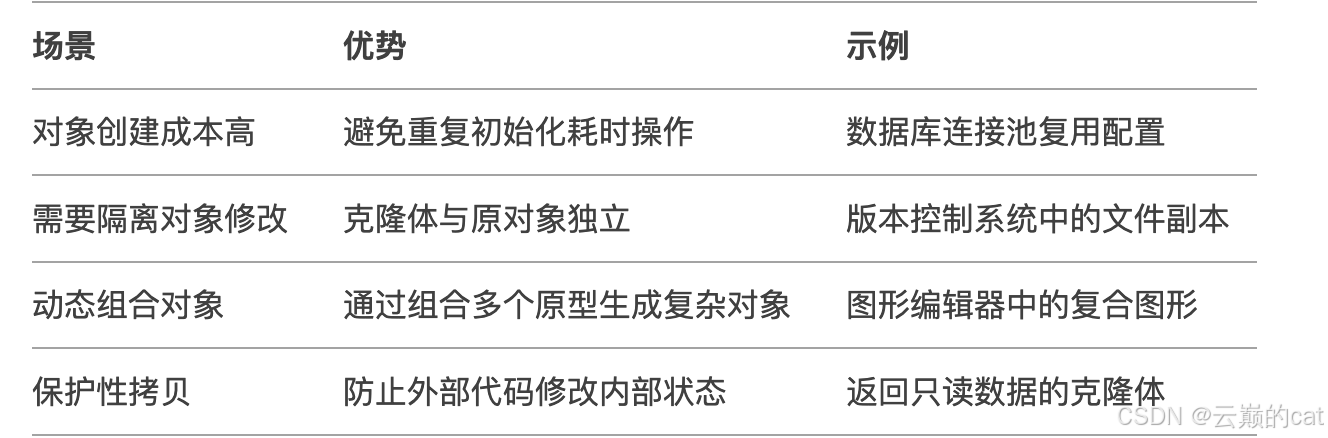
通过原型模式,可以显著提升对象创建的灵活性和效率,尤其适合需要高频生成相似对象的系统。





 扫一扫
扫一扫


 2718
2718

 被折叠的 条评论
为什么被折叠?
被折叠的 条评论
为什么被折叠?
 到【灌水乐园】发言





