C++/count函数

本文介绍了C++中的count函数,详细讲解了其用途和用法,该函数用于统计给定范围内的元素出现的次数,是算法库中一个重要的工具。
部署运行你感兴趣的模型镜像

count是个函数 ,不能用作用户标识符

//count函数的用法
#include <iostream>
#include<vector>
#include<algorithm>//count函数

using namespace std;
int main()
{
	//数组计数
	int a[10] = { 1, 2, 3, 4, 4, 4, 4 };//长度为10的数组,没初始化的为0
	cout << count(a, a + 10, 0) << endl;
	cout << count(a, a + 10, 1) << endl;
	cout << count(a, a + 10, 4) << endl;

    cout << endl;
	//向量计数
	vector<int> v(10);
	v[0] = 1;
	v[1] = 1;
	v[2] = 1;
	v[3] = 1;
	v[4] = 1;
	v[5] = 1;
	v[6] = 6;
	v[7] = 7;
	v[8] = 8;
	v[9] = 9;
	cout << count(v.begin(), v.end(), 1) << endl;
	cout << count(v.begin(), v.end(), 5) << endl;
	cout << count(v.begin(), v.end(), 6) << endl;

	system("pause");//让程序暂停一下,然后按任意键继续,用于看运行结果,避免程序一闪而过。
    return 0;      //相同的我们还可以用getchar(),避免程序运行完直接结束而看不到运行结果。	
}
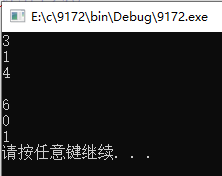
输出示例

您可能感兴趣的与本文相关的镜像

ACE-Step

ACE-Step

音乐合成
ACE-Step

ACE-Step是由中国团队阶跃星辰(StepFun)与ACE Studio联手打造的开源音乐生成模型。 它拥有3.5B参数量,支持快速高质量生成、强可控性和易于拓展的特点。 最厉害的是,它可以生成多种语言的歌曲,包括但不限于中文、英文、日文等19种语言

### C++ 中链表 `count` 函数的实现与用法 在 C++ 的标准模板库 (STL) 中,`std::list` 是一种双向链表容器。它提供了一个成员函数 `count` 来统计满足特定条件的元素数量。然而需要注意的是,在 `<list>` 头文件定义的标准链表中,并不存在名为 `count` 的成员函数[^1]。 如果要实现类似于 `count` 功能的操作,可以通过遍历整个链表并手动计数来完成。以下是具体实现方式: #### 手动实现 `count` 方法 通过迭代器逐一比较链表中的每个节点值是否等于目标值,并记录匹配次数。 ```cpp #include <iostream> #include <list> int count(const std::list<int>& lst, int target) { int result = 0; for (const auto& elem : lst) { if (elem == target) { ++result; } } return result; } int main() { std::list<int> my_list = {1, 2, 3, 4, 2, 5}; int target_value = 2; int occurrences = count(my_list, target_value); std::cout << "The value " << target_value << " appears " << occurrences << " times." << std::endl; return 0; } ``` 上述代码展示了如何自定义一个 `count` 函数用于计算指定数值在链表中出现的频率[^3]。 #### 使用 STL 算法替代 除了手写逻辑外,还可以利用 STL 提供的功能更加强大灵活的方式——即调用 `std::count` 算法配合适配器完成相同任务。 ```cpp #include <algorithm> // For std::count #include <iostream> #include <list> int main(){ std::list<int> myList={1,2,3,4,2,5}; int searchValue=2; size_t foundCount=std::count(myList.begin(),myList.end(),searchValue); std::cout<<"Number of elements equal to "<<searchValue<<": "<<foundCount<<"\n"; } ``` 这里采用了泛型编程风格,借助于全局命名空间下的 `std::count` 模板方法实现了同样的效果[^2]。 尽管如此,值得注意的一点是无论是自己编写还是依赖现有工具都需要清楚知道操作对象属于何种类型的序列化集合因为不同种类的数据结构可能具有不同的性能特征当涉及到大量数据处理时应考虑时间复杂度等因素做出合理选择[^4]。
评论
添加红包

请填写红包祝福语或标题

红包个数最小为10个

红包金额最低5元

当前余额3.43前往充值 >
需支付:10.00
成就一亿技术人!
领取后你会自动成为博主和红包主的粉丝 规则
hope_wisdom
发出的红包
实付
使用余额支付
点击重新获取
扫码支付
钱包余额 0

抵扣说明:

1.余额是钱包充值的虚拟货币,按照1:1的比例进行支付金额的抵扣。
2.余额无法直接购买下载,可以购买VIP、付费专栏及课程。

余额充值