


一、类图说明
- 实现Future和CompletionStage

二、核心方法使用
-
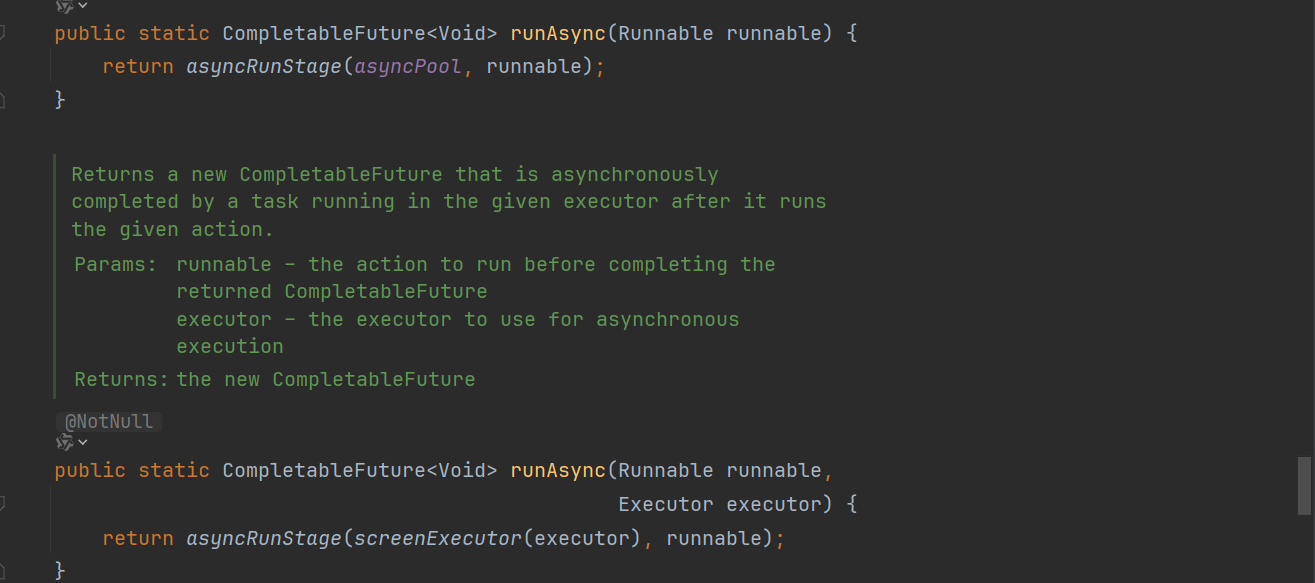
runAsync : 无返回值
// 无返回值+默认线程池
public static CompletableFuture<Void> runAsync(Runnable runnable) {
        return asyncRunStage(asyncPool, runnable);
}
// 无返回值+自定义线程池
public static CompletableFuture<Void> runAsync(Runnable runnable,
                                                   Executor executor) {
        return asyncRunStage(screenExecutor(executor), runnable);
}
测试代码如下:
    /**
     * 测试无返回值+使用默认线程池
     * @throws ExecutionException
     * @throws InterruptedException
     */
    public static void testCompletableFutureForRunAsync() throws ExecutionException, InterruptedException {
        CompletableFuture<Void> runAsync = CompletableFuture.runAsync(() -> {
            System.out.println("test CompletableFuture run Async");
            System.out.println("execute thread name"+Thread.currentThread().getName());
        });
        System.out.println("结果->"+runAsync.get());
        System.out.println("-----------------------");
    }

    /**
     * 测试无返回值+使用自定义线程池
     * @throws ExecutionException
     * @throws InterruptedException
     */
    public static void testCompletableFutureForRunAsyncForThreadPool() throws ExecutionException, InterruptedException {
        ExecutorService executorService = Executors.newSingleThreadExecutor();
        CompletableFuture<Void> runAsync = CompletableFuture.runAsync(() -> {
            System.out.println("test CompletableFuture run Async");
            System.out.println("execute thread name"+Thread.currentThread().getName());
        },executorService);
        System.out.println("结果->"+runAsync.get());
        executorService.shutdown();
        System.out.println("-----------------------");
    }
测试结果如下:

-
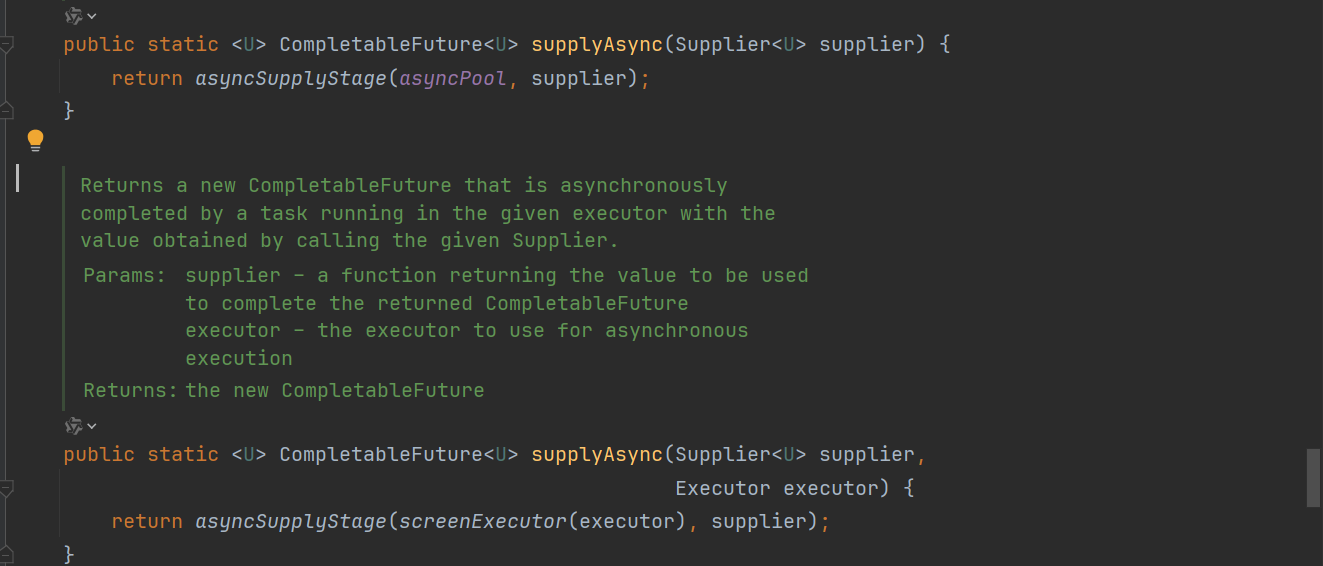
supplyAsync:有返回值
// 有返回值+默认线程池
public static <U> CompletableFuture<U> supplyAsync(Supplier<U> supplier) {
   return asyncSupplyStage(asyncPool, supplier);
}
// 有返回值+自定义线程池
public static <U> CompletableFuture<U> supplyAsync(Supplier<U> supplier,Executor executor) {
   return asyncSupplyStage(screenExecutor(executor), supplier);
}
测试代码如下:
    /**
     * 测试有返回值+使用默认线程池
     * @throws ExecutionException
     * @throws InterruptedException
     */
    public static void testCompletableFutureForSupplyAsync() throws ExecutionException, InterruptedException {
        CompletableFuture<String> supplyAsync = CompletableFuture.supplyAsync(() -> {
            System.out.println("test CompletableFuture supply Async");
            System.out.println("execute thread name"+Thread.currentThread().getName());
            return "result";
        });
        System.out.println("结果->"+supplyAsync.get());
        System.out.println("-----------------------");
    }

    /**
     * 测试有返回值+使用自定义线程池
     * @throws ExecutionException
     * @throws InterruptedException
     */
    public static void testCompletableFutureForSupplyAsyncForThreadPool() throws ExecutionException, InterruptedException {
        ExecutorService executorService = Executors.newSingleThreadExecutor();
        CompletableFuture<String> supplyAsync = CompletableFuture.supplyAsync(() -> {
            System.out.println("test CompletableFuture supply Async");
            System.out.println("execute thread name"+Thread.currentThread().getName());
            return "thread pool result";
        },executorService);
        System.out.println("结果->"+supplyAsync.get());
        executorService.shutdown();
        System.out.println("-----------------------");
    }
测试结果如下:

-
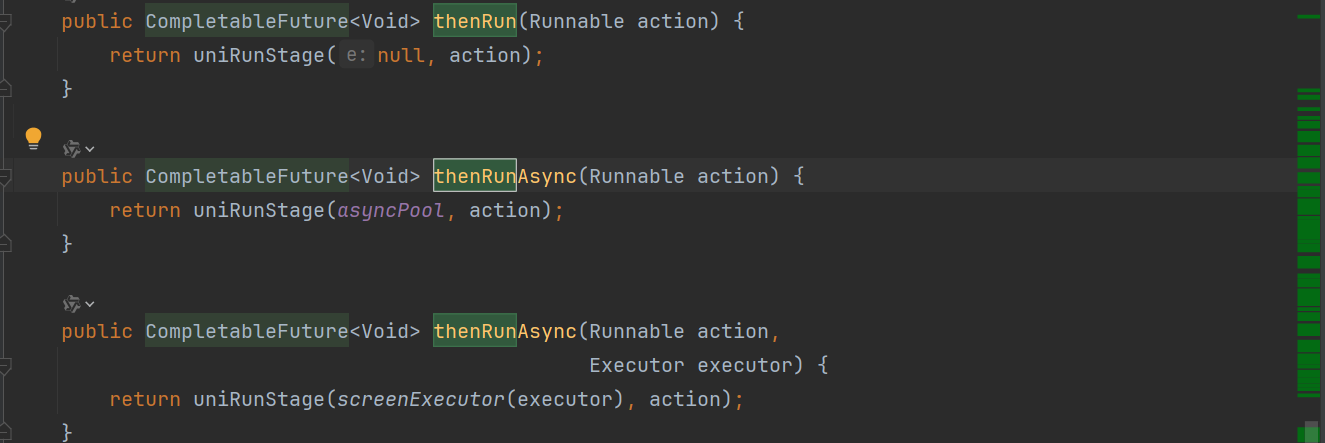
thenApply:表示某个任务执行完成后执行的动作,即回调方法,会将该任务的执行结果即方法返回值作为入参传递到回调方法中,带有返回值。
    public CompletableFuture<Void> thenRun(Runnable action) {
        return uniRunStage(null, action);
    }

    public CompletableFuture<Void> thenRunAsync(Runnable action) {
        return uniRunStage(asyncPool, action);
    }

    public CompletableFuture<Void> thenRunAsync(Runnable action,
                                                Executor executor) {
        return uniRunStage(screenExecutor(executor), action);
    }
测试代码如下:
    /**
     * 测试thenApply
     * @throws ExecutionException
     * @throws InterruptedException
     */
    public static void testCompletableFutureForThenApply() throws ExecutionException, InterruptedException {
        CompletableFuture<Integer> supplyAsync1 = CompletableFuture.supplyAsync(() -> {
            System.out.println(Thread.currentThread() + " cf1 do something....");
            return 1;
        });

        CompletableFuture<Void> thenRunAsync = supplyAsync1.thenRunAsync(() -> {
            System.out.println(Thread.currentThread() + " cf2 do something....");
        });

        //等待任务1执行完成
        System.out.println("cf1结果->" + supplyAsync1.get());
        //等待任务2执行完成
        System.out.println("cf2结果->" + thenRunAsync.get());
        System.out.println("-----------------------");
    }

    /**
     * 测试thenRunAsync
     * @throws ExecutionException
     * @throws InterruptedException
     */
    public static void testCompletableFutureForThenApplyForThreadPool() throws ExecutionException, InterruptedException {
        CompletableFuture<Integer> supplyAsync1 = CompletableFuture.supplyAsync(() -> {
            System.out.println(Thread.currentThread() + " cf1 do something....");
            return 1;
        });
        ExecutorService executorService = Executors.newSingleThreadExecutor();
        CompletableFuture<Void> thenRunAsync = supplyAsync1.thenRunAsync(() -> {
            System.out.println(Thread.currentThread() + " cf2 do something....");
        },executorService);
        System.out.println("ThenApplyForThreadPool");
        //等待任务1执行完成
        System.out.println("cf1结果->" + supplyAsync1.get());
        //等待任务2执行完成
        System.out.println("cf2结果->" + thenRunAsync.get());
        executorService.shutdown();
        System.out.println("-----------------------");
    }

    /**
     * 测试thenRunAsync
     * @throws ExecutionException
     * @throws InterruptedException
     */
    public static void testCompletableFutureForThenApplyAsync() throws ExecutionException, InterruptedException {
        CompletableFuture<Integer> supplyAsync1 = CompletableFuture.supplyAsync(() -> {
            System.out.println(Thread.currentThread() + " cf1 do something....");
            return 2;
        });

        CompletableFuture<Void> thenRun = supplyAsync1.thenRun(() -> {
            System.out.println(Thread.currentThread() + " cf2 do something....");
        });

        //等待任务1执行完成
        System.out.println("cf1结果->" + supplyAsync1.get());
        //等待任务2执行完成
        System.out.println("cf2结果->" + thenRun.get());
        System.out.println("-----------------------");
    }
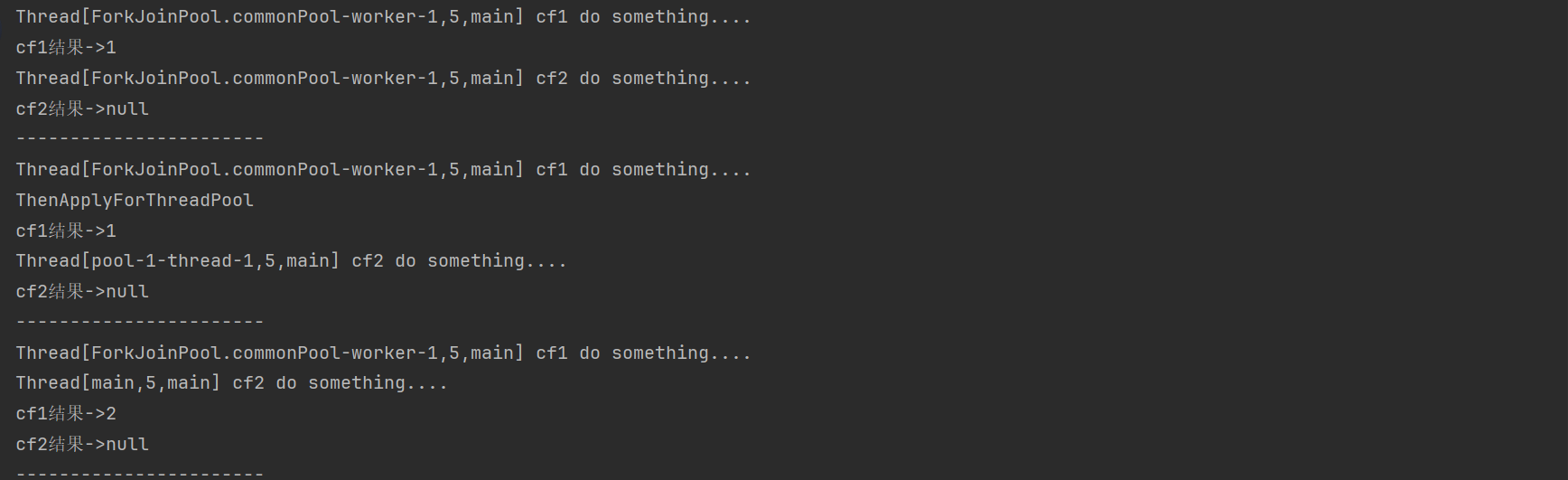
测试结果如下:
-
allof 聚合任务(任意任务完成)
    public static CompletableFuture<Void> allOf(CompletableFuture<?>... cfs) {
        return andTree(cfs, 0, cfs.length - 1);
    }

测试代码如下:
    /**
     * 测试allOf
     * @throws ExecutionException
     * @throws InterruptedException
     */
    public static void testCompletableFutureForallOf() throws ExecutionException, InterruptedException {
        CompletableFuture<String> supplyAsync1 = CompletableFuture.supplyAsync(() -> {
            try {
                System.out.println(Thread.currentThread() + " supplyAsync1 do something....");
                Thread.sleep(2000);
            } catch (InterruptedException e) {
                e.printStackTrace();
            }
            System.out.println("supplyAsync1 任务完成");
            return "supplyAsync1 任务完成";
        });

        CompletableFuture<String> supplyAsync2 = CompletableFuture.supplyAsync(() -> {
            try {
                System.out.println(Thread.currentThread() + " supplyAsync2 do something....");
//                int a = 1/0;
                Thread.sleep(5000);
            } catch (InterruptedException e) {
                e.printStackTrace();
            }
            System.out.println("supplyAsync2 任务完成");
            return "supplyAsync2 任务完成";
        });

        CompletableFuture<String> supplyAsync3 = CompletableFuture.supplyAsync(() -> {
            try {
                System.out.println(Thread.currentThread() + " supplyAsync3 do something....");
                Thread.sleep(3000);
            } catch (InterruptedException e) {
                e.printStackTrace();
            }
            System.out.println("supplyAsync3 任务完成");
            return "supplyAsync3 任务完成";
        });

        CompletableFuture<Void> supplyAllOf = CompletableFuture.allOf(supplyAsync1, supplyAsync2, supplyAsync3);
        System.out.println("AllOf结果->" + supplyAllOf.get());
        System.out.println("-----------------------");
    }
测试结果如下:

测试代码如下:
 // 1. 异步任务组合
        CompletableFuture<Integer> future1 = CompletableFuture.supplyAsync(() -> {
            System.out.println("Task 1 started");
            try { Thread.sleep(500); } catch (InterruptedException e) {}
            return 10;
        });

        CompletableFuture<Integer> future2 = CompletableFuture.supplyAsync(() -> {
            System.out.println("Task 2 started");
            try { Thread.sleep(300); } catch (InterruptedException e) {}
            return 20;
        });

        // 2. 并行组合任务结果
        CompletableFuture<Integer> combined = future1.thenCombine(future2, (a, b) -> {
            System.out.println("Combining results");
            return a + b;
        });

        // 3. 异常处理
        CompletableFuture<Integer> exceptionHandling = CompletableFuture.supplyAsync(() -> {
            System.out.println("Task with exception");
            if (true) throw new RuntimeException("Simulated error");
            return 100;
        }).exceptionally(ex -> {
            System.out.println("Exception caught: " + ex.getMessage());
            return 0;
        });

        // 4. 链式回调
        CompletableFuture<Void> chain = CompletableFuture.runAsync(() -> {
            System.out.println("Initial task");
        }).thenRun(() -> {
            System.out.println("Second task");
        }).thenRun(() -> {
            System.out.println("Final task");
        });

        // 5. 等待所有任务完成
        CompletableFuture<Void> allDone = CompletableFuture.allOf(future1, future2, combined, exceptionHandling, chain);
        allDone.get(); // 等待所有任务完成
测试结果如下:

-
anyof聚合任务(任意任务完成)
    public static CompletableFuture<Object> anyOf(CompletableFuture<?>... cfs) {
        return orTree(cfs, 0, cfs.length - 1);
    }

测试代码如下:
/**
     * 测试anyOf
     * @throws ExecutionException
     * @throws InterruptedException
     */
    public static void testCompletableFutureForanyOf() throws ExecutionException, InterruptedException {
        CompletableFuture<String> supplyAsync1 = CompletableFuture.supplyAsync(() -> {
            try {
                System.out.println(Thread.currentThread() + " supplyAsync1 do something....");
                Thread.sleep(2000);
            } catch (InterruptedException e) {
                e.printStackTrace();
            }
            System.out.println("supplyAsync1 任务完成");
            return "supplyAsync1 任务完成";
        });

        CompletableFuture<String> supplyAsync2 = CompletableFuture.supplyAsync(() -> {
            try {
                System.out.println(Thread.currentThread() + " supplyAsync2 do something....");
//                int a = 1/0;
                Thread.sleep(5000);
            } catch (InterruptedException e) {
                e.printStackTrace();
            }
            System.out.println("supplyAsync2 任务完成");
            return "supplyAsync2 任务完成";
        });

        CompletableFuture<String> supplyAsync3 = CompletableFuture.supplyAsync(() -> {
            try {
                System.out.println(Thread.currentThread() + " supplyAsync3 do something....");
                Thread.sleep(3000);
            } catch (InterruptedException e) {
                e.printStackTrace();
            }
            System.out.println("supplyAsync3 任务完成");
            return "supplyAsync3 任务完成";
        });

        CompletableFuture<Object> supplyAllOf = CompletableFuture.anyOf(supplyAsync1, supplyAsync2, supplyAsync3);
        System.out.println("AllOf结果->" + supplyAllOf.get());
        System.out.println("-----------------------");
    }
测试结果如下:

-
thenCombine 合并任务
thenCombine 会把 两个 CompletionStage 的任务都执行完成后,把两个任务的结果一块交给 thenCombine 来处理。

    public <U,V> CompletableFuture<V> thenCombine(
        CompletionStage<? extends U> other,
        BiFunction<? super T,? super U,? extends V> fn) {
        return biApplyStage(null, other, fn);
    }
    private static void thenCombine() throws Exception {
        CompletableFuture<String> future1 = CompletableFuture.supplyAsync(new Supplier<String>() {
            @Override
            public String get() {
                return "then";
            }
        });
        CompletableFuture<String> future2 = CompletableFuture.supplyAsync(new Supplier<String>() {
            @Override
            public String get() {
                return "combine";
            }
        });
        CompletableFuture<String> result = future1.thenCombine(future2, new BiFunction<String, String, String>() {
            @Override
            public String apply(String t, String u) {
                return t+" "+u;
            }
        });
        System.out.println(result.get());
    }
-
acceptEither
两个CompletionStage,谁执行返回的结果快,就用那个CompletionStage的结果进行下一步的消耗操作。返回是Consumer<T>接口

    public CompletableFuture<Void> acceptEither(
        CompletionStage<? extends T> other, Consumer<? super T> action) {
        return orAcceptStage(null, other, action);
    }
    private static void acceptEither() throws Exception {
        CompletableFuture<Integer> future1 = CompletableFuture.supplyAsync(new Supplier<Integer>() {
            @Override
            public Integer get() {
                int value = new Random().nextInt(10);
                try {
                    TimeUnit.SECONDS.sleep(value);
                } catch (InterruptedException e) {
                    e.printStackTrace();
                }
                System.out.println("future1="+value);
                return value;
            }
        });

        CompletableFuture<Integer> future2 = CompletableFuture.supplyAsync(new Supplier<Integer>() {
            @Override
            public Integer get() {
                int value = new Random().nextInt(10);
                try {
                    TimeUnit.SECONDS.sleep(value);
                } catch (InterruptedException e) {
                    e.printStackTrace();
                }
                System.out.println("f2="+value);
                return value;
            }
        });
        Void unused = future1.acceptEither(future2, new Consumer<Integer>() {
            @Override
            public void accept(Integer t) {
                System.out.println(t);
            }
        }).get();
    }
测试结构如下:

-
applyToEither
两个CompletionStage,谁执行返回的结果快,我就用那个CompletionStage的结果进行下一步的转化操作。返回值是
    public <U> CompletableFuture<U> applyToEither(
        CompletionStage<? extends T> other, Function<? super T, U> fn) {
        return orApplyStage(null, other, fn);
    }
private static void applyToEither() throws Exception {
        CompletableFuture<Integer> future1 = CompletableFuture.supplyAsync(new Supplier<Integer>() {
            @Override
            public Integer get() {
                int value = new Random().nextInt(10);
                try {
                    TimeUnit.SECONDS.sleep(value);
                } catch (InterruptedException e) {
                    e.printStackTrace();
                }
                System.out.println("future1="+value);
                return value;
            }
        });
        CompletableFuture<Integer> future2 = CompletableFuture.supplyAsync(new Supplier<Integer>() {
            @Override
            public Integer get() {
                int value = new Random().nextInt(10);
                try {
                    TimeUnit.SECONDS.sleep(value);
                } catch (InterruptedException e) {
                    e.printStackTrace();
                }
                System.out.println("future2="+value);
                return value;
            }
        });

        CompletableFuture<Integer> result = future1.applyToEither(future2, new Function<Integer, Integer>() {
            @Override
            public Integer apply(Integer t) {
                System.out.println(t);
                return t * 2;
            }
        });
        System.out.println(result.get());
    }
测试结果如下:

-
thenAcceptBoth
当两个CompletionStage都执行完成后,把结果一块交给thenAcceptBoth来进行消耗。返回值是:BiConsumer
private static void thenAcceptBoth() throws Exception {
        CompletableFuture<Integer> future1 = CompletableFuture.supplyAsync(new Supplier<Integer>() {
            @Override
            public Integer get() {
                int value = new Random().nextInt(10);
                try {
                    TimeUnit.SECONDS.sleep(value);
                } catch (InterruptedException e) {
                    e.printStackTrace();
                }
                System.out.println("future1="+value);
                return value;
            }
        });

        CompletableFuture<Integer> future2 = CompletableFuture.supplyAsync(new Supplier<Integer>() {
            @Override
            public Integer get() {
                int value = new Random().nextInt(10);
                try {
                    TimeUnit.SECONDS.sleep(value);
                } catch (InterruptedException e) {
                    e.printStackTrace();
                }
                System.out.println("future2="+value);
                return value;
            }
        });
        future1.thenAcceptBoth(future2, new BiConsumer<Integer, Integer>() {
            @Override
            public void accept(Integer t, Integer u) {
                int result = t+u;
                System.out.println("future1="+t+";future2="+u+";");
                System.out.println("result="+result);
            }
        }).get();
    }
测试结果如下:

-
runAfterEither
两个CompletionStage,任何一个完成了都会执行下一步的操作(Runnable)
    public CompletableFuture<Void> runAfterEither(CompletionStage<?> other,
                                                  Runnable action) {
        return orRunStage(null, other, action);
    }
测试代码如下:
private static void runAfterEither() throws Exception {
        CompletableFuture<Integer> future1 = CompletableFuture.supplyAsync(new Supplier<Integer>() {
            @Override
            public Integer get() {
                int value = new Random().nextInt(10);
                try {
                    TimeUnit.SECONDS.sleep(value);
                } catch (InterruptedException e) {
                    e.printStackTrace();
                }
                System.out.println("future1="+value);
                return value;
            }
        });

        CompletableFuture<Integer> future2 = CompletableFuture.supplyAsync(new Supplier<Integer>() {
            @Override
            public Integer get() {
                int value = new Random().nextInt(10);
                try {
                    TimeUnit.SECONDS.sleep(value);
                } catch (InterruptedException e) {
                    e.printStackTrace();
                }
                System.out.println("future2="+value);
                return value;
            }
        });
        future1.runAfterEither(future2, new Runnable() {
            @Override
            public void run() {
                System.out.println("两个任务任意一个已经完成了");
            }
        }).get();
    }
测试结果如下:

三、通用总结
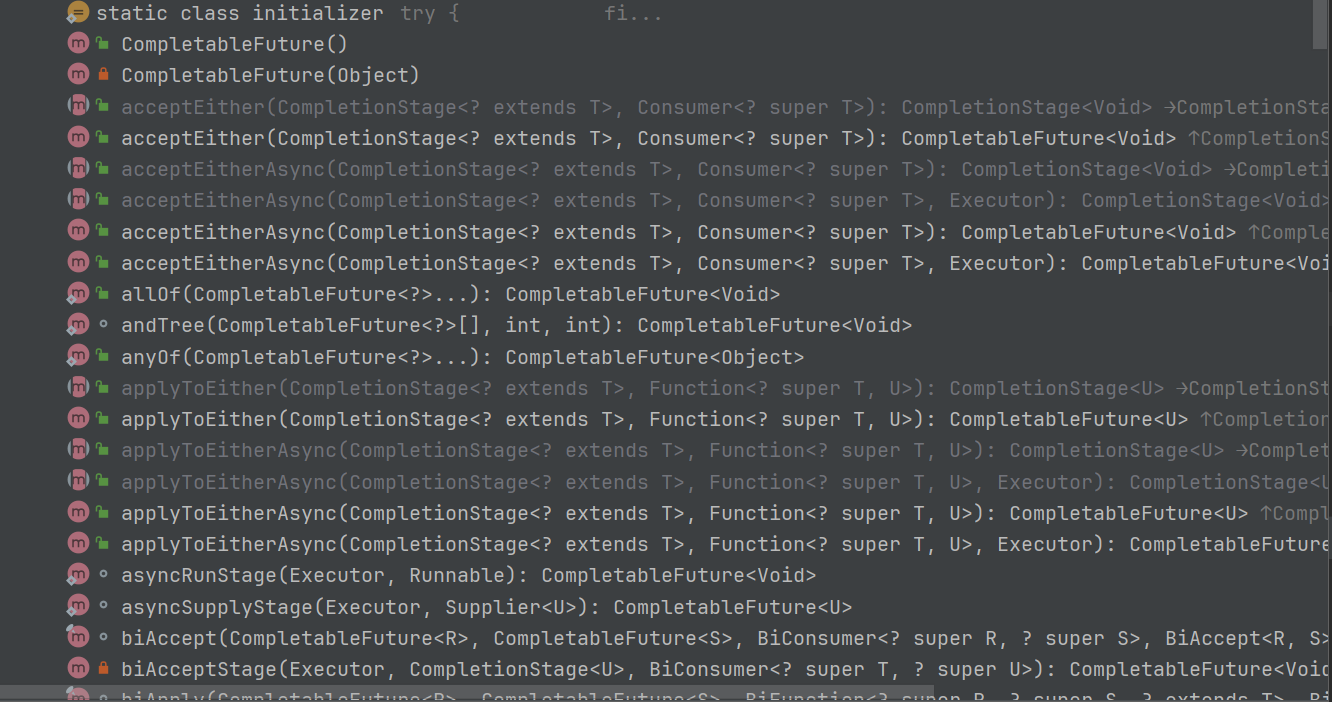
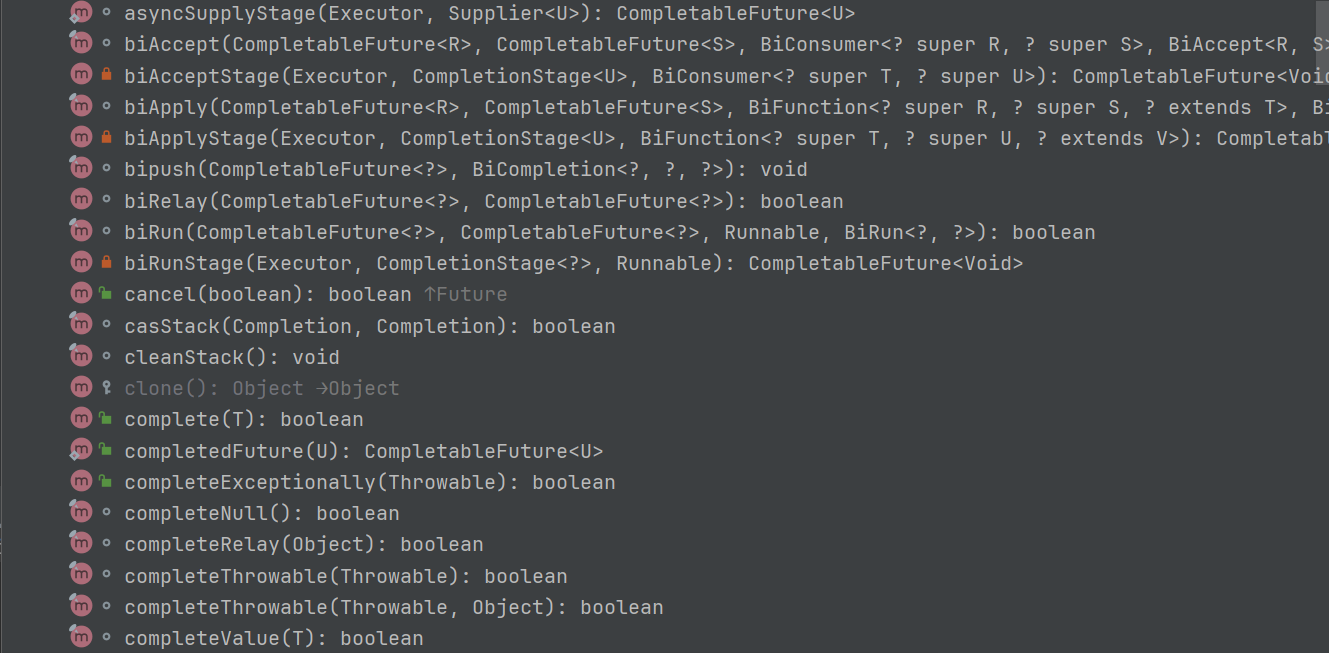
区分返回值、不同的函数式接口如Runnable、Consumer、Function、BiConsumer、是否自定义线程池,根据入参和返回具体使用。





 扫一扫
扫一扫


 169万+
169万+

 被折叠的 条评论
为什么被折叠?
被折叠的 条评论
为什么被折叠?
 到【灌水乐园】发言





