



 本文介绍几种判断链表是否为回文的有效方法,包括使用额外空间如数组或栈,以及通过对链表进行改造实现原地判断的技术。
所谓回文链表,指的是它的val从前往后读和从后往前读是一样的,例如1->2->3->2->1和1->2->2->1就是回文链表,而1->2->3->3->1就不是回文链表,那么如何判断一个链表是否是回文链表呢?如果我们知道如何判断一个字符串是否是回文,那么借助辅助空间使用同样的思想判断即可。
例如,使用一个ArrayList来存放遍历链表得到的val,然后使用左右指针向中间逼近判断。如果在满足left <= right的前提下,出现left和right对应索引处的值不得,那么必定不是回文链表,返回false。如果判断到最后仍然满足情况,那么返回true。
/**
 * Definition for singly-linked list.
 * public class ListNode {
 *     int val;
 *     ListNode next;
 *     ListNode(int x) { val = x; }
 * }
 */
class Solution {
    public boolean isPalindrome(ListNode head) {
        if(head == null || head.next == null){
            return true;
        }

        List<ListNode> list = new ArrayList<>();
        ListNode cur = head;
        while(cur != null){
            list.add(cur);
            cur =cur.next;
        }

        int left = 0;
        int right = list.size() - 1;
        while(left < right){
            if(list.get(left++).val != list.get(right--).val){
                return false;
            }
        }
        return true;
    }
}
或者使用栈Stack来存放遍历链表得到的val,当遍历结束后,再次重头遍历并和栈顶元素进行比较。如果某时链表节点元素和栈顶元素不同,那么返回false;如果栈最后为空也没返回false,说明该链表为回文链表,返回true。
class Solution {
    public boolean isPalindrome(ListNode head) {
        if(head == null || head.next == null){
            return true;
        }

        Stack<ListNode> stack = new Stack<>();
        ListNode cur = head;
        while(cur != null){
            stack.push(cur);
            cur =cur.next;
        }

        cur = head;
        while(cur != null){
            if(cur.val != stack.pop().val){
                return false;
            }
            cur = cur.next;
        }

        return true;
    }
}
为了进一步节省空间,可以先使用快慢指针找到链表中点,然后只将后半部分链表节点入栈。如果栈不为空,则比较栈顶元素和链表中节点的val进行判断。
class Solution {
    public boolean isPalindrome(ListNode head) {
        if(head == null || head.next == null){
            return true;
        }

        ListNode slow = head;
        ListNode fast = head;
        while(fast.next != null && fast.next.next != null){
            slow = slow.next;
            fast = fast.next.next;
        }

        Stack<ListNode> stack = new Stack<>();
        ListNode cur = slow;
        while(cur != null){
            stack.push(cur);
            cur =cur.next;
        }

        cur = head;
        while(!stack.isEmpty()){
            if(cur.val != stack.pop().val){
                return false;
            }
            cur = cur.next;
        }

        return true;
    }
}
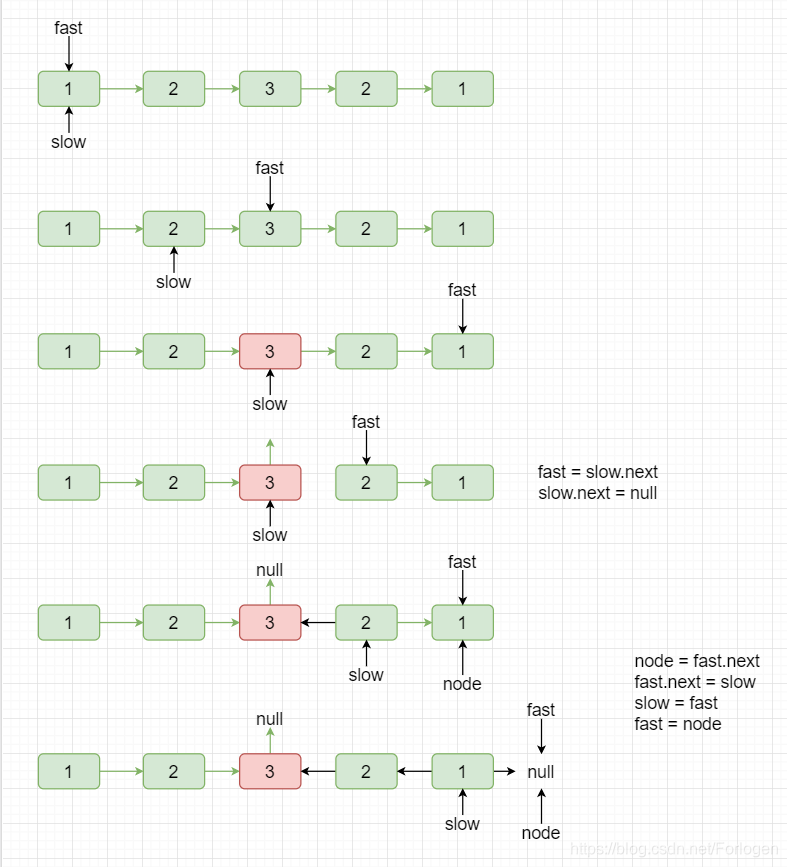
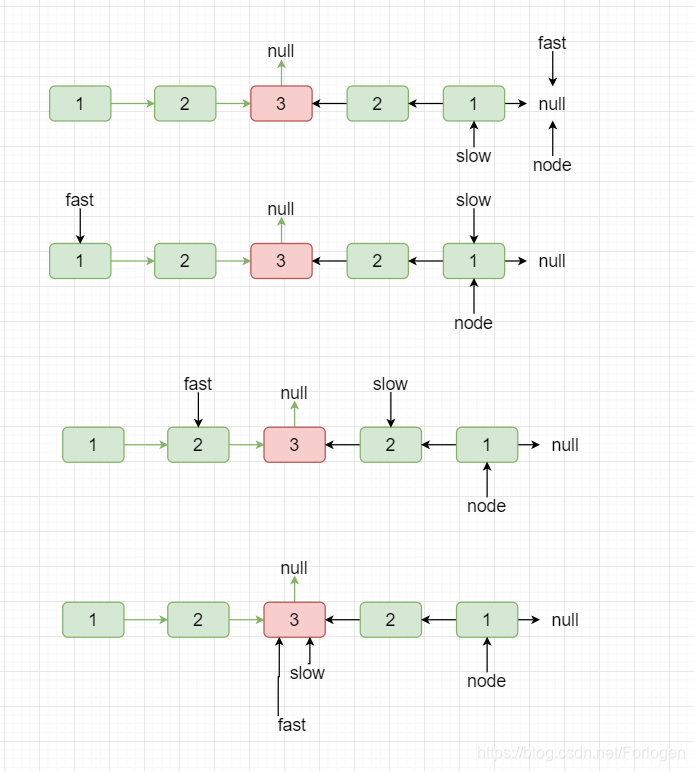
上面的方法都使用了额外的辅助空间,如果只能原地判断,不能使用额外的空间,就需要对链表进行改造。首先,通过快慢指针找到链表中点,然后将中点后半部分的节点逆序。过程示意图如下:
最后,分别从两头遍历链表进行判断val是否相同,进而确定源链表是否是回文链表。
/**
 * Definition for singly-linked list.
 * public class ListNode {
 *     int val;
 *     ListNode next;
 *     ListNode(int x) { val = x; }
 * }
 */
class Solution {
    public boolean isPalindrome(ListNode head) {
        if (head == null || head.next == null) {
            return true;
        }
        // 快慢指针找中点
        ListNode slow = head;
        ListNode fast = head;
        while (fast.next != null && fast.next.next != null) {
            slow = slow.next;
            fast = fast.next.next;
        }
        // slow指向链表中点(奇数)或是上中点(偶数)

        fast = slow.next; // 复用fast,指向后半部分第一个节点
        slow.next = null; // 将前半部分最后一个节点的next置为null
        ListNode node = null;
        while (fast != null) {
            node = fast.next;
            fast.next = slow;
            slow = fast;
            fast = node;
        }


        node = slow;  // slow指向源链表的最后一个节点
        fast = head;  // fast指向链表的头节点
        boolean res = true;
        while (slow != null && fast != null) {
            if (slow.val != fast.val) {
                res = false;
                break;
            }
            slow = slow.next;
            fast = fast.next;
        }

        // (可选)恢复源链表
        // slow = node.next;
        // node.next = null;
        // while (slow != null) {
        //     fast = slow.next;
        //     slow.next = node;
        //     node = slow;
        //     slow = fast;
        // }
        return res;
    }
}





 扫一扫
扫一扫


 1723
1723

 被折叠的 条评论
为什么被折叠?
被折叠的 条评论
为什么被折叠?
 到【灌水乐园】发言





