



 该程序实现了一个功能,即判断一个十进制正整数在给定的基数中是否为回文数。首先,通过不断除以基数获取数的每一位,将数转化为其在指定基数下的位数组。然后,检查这个位数组是否从前往后和从后往前读取都相同,以此判断是否为回文。如果为回文,则输出Yes,否则输出No,并在下一行输出该数在指定基数下的表示形式。
A number that will be the same when it is written forwards or backwards is known as a Palindromic Number. For example, 1234321 is a palindromic number. All single digit numbers are palindromic numbers.
Although palindromic numbers are most often considered in the decimal system, the concept of palindromicity can be applied to the natural numbers in any numeral system. Consider a number N>0 in base b≥2, where it is written in standard notation with k+1 digits ai as 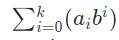 . Here, as usual, 0≤ai<b for all i and ak is non-zero. Then N is palindromic if and only if ai=ak−i for all i. Zero is written 0 in any base and is also palindromic by definition.
Given any positive decimal integer N and a base b, you are supposed to tell if N is a palindromic number in base b.
Input Specification:
Each input file contains one test case. Each case consists of two positive numbers N and b, where 0<N≤109 is the decimal number and 2≤b≤109 is the base. The numbers are separated by a space.
Output Specification:
For each test case, first print in one line if YesN is a palindromic number in base b, or if not. Then in the next line, print NoN as the number in base b in the form “*akak−1 … a0”. Notice that there must be no extra space at the end of output.
Sample Input 1:
27 2
Sample Output 1:
Yes
1 1 0 1 1
Sample Input 2:
121 5
Sample Output 2:
No
4 4 1
#include <iostream>
#include <vector>

using namespace std;

int main() {
    int N, base;
    vector<int> v;
    cin >> N >> base;
    do {
        v.push_back(N % base);
        N /= base;
    } while (N);
    bool flag = false;
    for (int i = 0; i < v.size() / 2; ++i) {
        if (v[i] != v[v.size() - 1 - i]) {
            flag = true;
            break;
        }
    }
    if (flag)
        puts("No");
    else
        puts("Yes");
    for (int i = v.size() - 1; i >= 0; --i) {
        if (i == v.size() - 1)
            cout << v[i];
        else
            cout << " " << v[i];
    }
    return 0;
}





 扫一扫
扫一扫


 697
697

 被折叠的 条评论
为什么被折叠?
被折叠的 条评论
为什么被折叠?
 到【灌水乐园】发言





