





 本文介绍了Springboot整合Redis的过程,比较了Jedis和Lettuce的区别,展示了基本整合步骤,以及如何自定义RedisTemplate进行JSON序列化。同时,文中还探讨了在企业开发中常用的RedisUtil工具类的使用方法。
目录
比较Jedis和Lettuce
Springboot整合时使用springboot-data-redis 。在spinrbgoot2.x以后,原来使用的jedis数据源被替换成了lettuce。
- jedis:采用直连,多个线程操作是不安全的,想要避免需要使用jedis pool。更像BIO模式
- lettuce:底层采用netty进行通信,实例可以在多个线程中共享,不存在不安全的情况,也可以减少线程数据量。更像NIO模式
基本整合
1.新建springboot项目,依赖如下
    <dependencies>
        <!-- 操作redis -->
        <dependency>
            <groupId>org.springframework.boot</groupId>
            <artifactId>spring-boot-starter-data-redis</artifactId>
        </dependency>
        <dependency>
            <groupId>org.springframework.boot</groupId>
            <artifactId>spring-boot-devtools</artifactId>
            <scope>runtime</scope>
            <optional>true</optional>
        </dependency>
        <dependency>
            <groupId>org.springframework.boot</groupId>
            <artifactId>spring-boot-starter-web</artifactId>
        </dependency>
        <dependency>
            <groupId>org.springframework.boot</groupId>
            <artifactId>spring-boot-configuration-processor</artifactId>
            <optional>true</optional>
        </dependency>
        <dependency>
            <groupId>org.projectlombok</groupId>
            <artifactId>lombok</artifactId>
            <optional>true</optional>
        </dependency>
        <dependency>
            <groupId>org.springframework.boot</groupId>
            <artifactId>spring-boot-starter-test</artifactId>
            <scope>test</scope>
            <exclusions>
                <exclusion>
                    <groupId>org.junit.vintage</groupId>
                    <artifactId>junit-vintage-engine</artifactId>
                </exclusion>
            </exclusions>
        </dependency>
    </dependencies>

    <build>
        <plugins>
            <plugin>
                <groupId>org.springframework.boot</groupId>
                <artifactId>spring-boot-maven-plugin</artifactId>
            </plugin>
        </plugins>
    </build>
2.在properties文件中配置redis
#配置redis
spring.redis.host=192.168.62.130
spring.redis.port=6379
3.测试类中进行测试
@SpringBootTest
class Redis02SpringbootApplicationTests {

    @Autowired
    private RedisTemplate redisTemplate;

    @Test
    void contextLoads() {
        // redisTemplate 操作不同的数据类型,api和我们的指令是一样的
        // opsForValue 操作字符串 类似String
        // opsForList  操作List 类似List
        // opsForSet
        // opsForHash
        // opsForZSet
        // opsForGeo
        // opsForHyperLogLog
        // 除了基本的操作,我们常用的方法都可以直接通过redisTemplate操作,比如事务,和基本的CRUD

        redisTemplate.opsForValue().set("mykey","Dior香水");
        System.out.println(redisTemplate.opsForValue().get("mykey"));
    }

}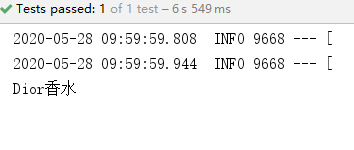
这里有个问题。你输入中文,控制台显示的是“Dior香水”,但你在redis客户端上查看key时,会发现它存的格式却是这样的。这说明在打印时redisTemplate工具类帮我们转码了,
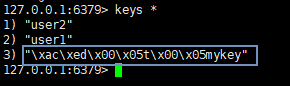
RedisTemplate的使用
RedisTemplate是Springboot为我们封装好的redis操作方法。我们来看下RedisTemplate的源码,如果你自定义一个RedisTemplate,默认提供的就会失效。
@Bean
@ConditionalOnMissingBean(name = "redisTemplate") // 我们可以自己定义一个redisTemplate来替换这个默认的!
public RedisTemplate<Object, Object> redisTemplate(RedisConnectionFactory redisConnectionFactory) throws UnknownHostException {
  // 默认的 RedisTemplate 没有过多的设置,redis 对象都是需要序列化!
  // 两个泛型都是 Object, Object 的类型,我们后使用需要强制转换 <String, Object>
  RedisTemplate<Object, Object> template = new RedisTemplate<>();
  template.setConnectionFactory(redisConnectionFactory);
  return template;
}
@Bean
@ConditionalOnMissingBean  // 由于 String 是redis中最常使用的类型,所以说单独提出来了一个bean!
public StringRedisTemplate stringRedisTemplate(RedisConnectionFactory redisConnectionFactory) throws UnknownHostException {
  StringRedisTemplate template = new StringRedisTemplate();
  template.setConnectionFactory(redisConnectionFactory);
  return template;
}
我们先使用默认提供的RedisTemplate,进行序列化操作。
新建一个实体类
@Component
@Data
@AllArgsConstructor
@NoArgsConstructor
public class User {
    private String name;
    private int age;
}
编写测试方法
    @Test
    public void test() throws JsonProcessingException {
        User user = new User("第一名",18);
        //String jsonUser = new ObjectMapper().writeValueAsString(user);
        redisTemplate.opsForValue().set("user",user);
        System.out.println(redisTemplate.opsForValue().get("user"));
    }
执行时你会发现,程序报错了。因为你没有使用默认提供的JDK序列化。
注意:JDK序列化不能直接不能把中文和对象存到redis中,因此后面我们使用了json序列化的方式

通过源码可知,默认情况下,是通过JDK来进行的序列化
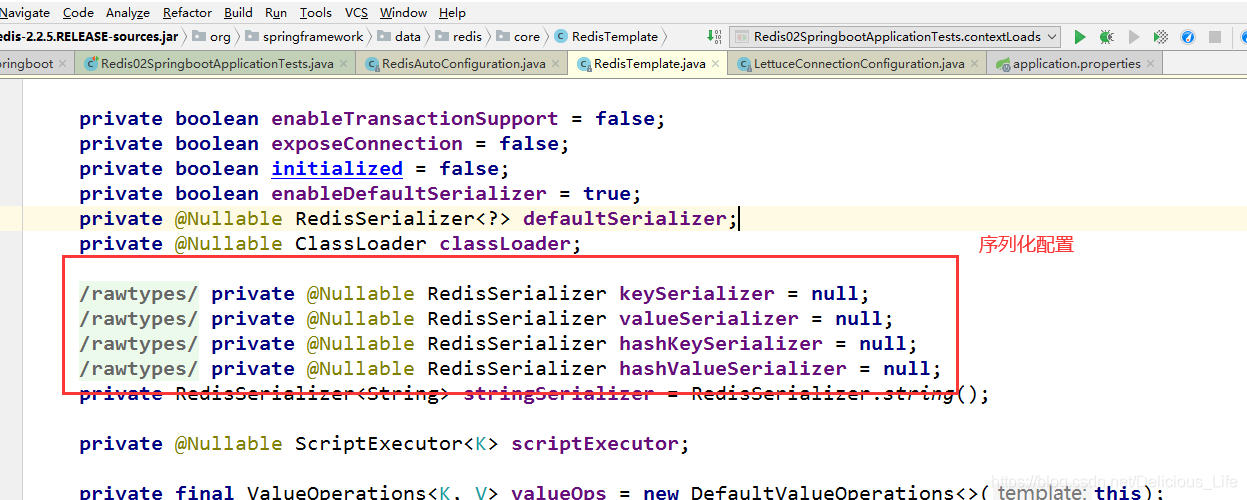
解决上面的问题,只需要在实体类上实现序列化接口即可
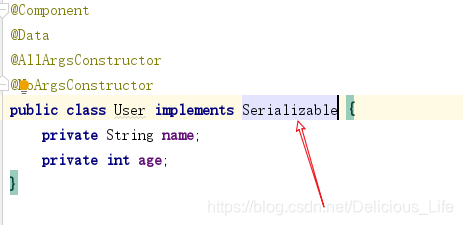
再次执行,发现问题解决
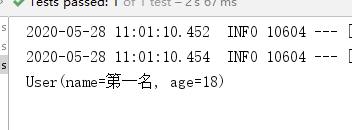
注意,JDK序列化后,redis中存进去的key其实长这个样子
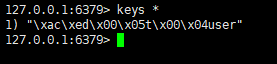
自定义RedisTemplate
现在我不想使用默认的JDK序列化了,我想使用Json进行序列化。你只需要新建RedisTemplate来替换掉默认提供的RedisTemplate即可。
@Configuration
public class RedisConfig {
    @Bean
    @SuppressWarnings("all")
    public RedisTemplate<String,Object> redisTemplate(RedisConnectionFactory factory) {
        //为了方便开发,一般直接使用<String,Object>
        RedisTemplate<String,Object> template = new RedisTemplate<>();
        template.setConnectionFactory(factory);

        //Json序列化设置
        Jackson2JsonRedisSerializer jackson2JsonRedisSerializer = new Jackson2JsonRedisSerializer(Object.class);
        ObjectMapper om = new ObjectMapper();
        om.setVisibility(PropertyAccessor.ALL, JsonAutoDetect.Visibility.ANY);
        om.enableDefaultTyping(ObjectMapper.DefaultTyping.NON_FINAL);
        jackson2JsonRedisSerializer.setObjectMapper(om);

        //String的序列化
        StringRedisSerializer stringRedisSerializer = new StringRedisSerializer();
        //key采用String的序列化方式
        template.setKeySerializer(stringRedisSerializer);
        //hash的key也采用String的序列化方式
        template.setHashKeySerializer(stringRedisSerializer);
        //value序列化方式采用jackson
        template.setValueSerializer(jackson2JsonRedisSerializer);
        //hash的value序列化方法采用jackson
        template.setHashValueSerializer(jackson2JsonRedisSerializer);
        template.afterPropertiesSet();
        return template;
    }
}
注意,测试类之前不是直接注入的RedisTemplate吗?现在你新建了一个RedisTemplate,为防止程序傻傻分不清楚,我们再注入时再添加一个Qualifier注解,让他找到我们自己编写的配置类

再次执行测试方法,不需要改动其他代码。可以看到控制台依然输出一样的消息
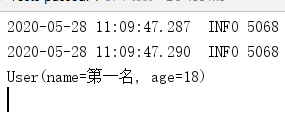
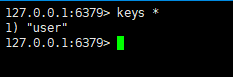
这时候我们再查看下redis中的key,使用json序列化之后,存进去的key是user了,不再是\xxxx\xxxx\user
企业开发的RedisUtil
企业开发中,一步一步的使用RedisTemplate还是有些麻烦,一般都使用封装好的RedisUtil工具类。
// 在我们真实的分发中,或者你们在公司,一般都可以看到一个公司自己封装RedisUtil
@Component
public final class RedisUtil {

    @Autowired
    private RedisTemplate<String, Object> redisTemplate;

    // =============================common============================
    /**
     * 指定缓存失效时间
     * @param key  键
     * @param time 时间(秒)
     */
    public boolean expire(String key, long time) {
        try {
            if (time > 0) {
                redisTemplate.expire(key, time, TimeUnit.SECONDS);
            }
            return true;
        } catch (Exception e) {
            e.printStackTrace();
            return false;
        }
    }

    /**
     * 根据key 获取过期时间
     * @param key 键 不能为null
     * @return 时间(秒) 返回0代表为永久有效
     */
    public long getExpire(String key) {
        return redisTemplate.getExpire(key, TimeUnit.SECONDS);
    }


    /**
     * 判断key是否存在
     * @param key 键
     * @return true 存在 false不存在
     */
    public boolean hasKey(String key) {
        try {
            return redisTemplate.hasKey(key);
        } catch (Exception e) {
            e.printStackTrace();
            return false;
        }
    }


    /**
     * 删除缓存
     * @param key 可以传一个值 或多个
     */
    @SuppressWarnings("unchecked")
    public void del(String... key) {
        if (key != null && key.length > 0) {
            if (key.length == 1) {
                redisTemplate.delete(key[0]);
            } else {
                redisTemplate.delete(CollectionUtils.arrayToList(key));
            }
        }
    }


    // ============================String=============================

    /**
     * 普通缓存获取
     * @param key 键
     * @return 值
     */
    public Object get(String key) {
        return key == null ? null : redisTemplate.opsForValue().get(key);
    }

    /**
     * 普通缓存放入
     * @param key   键
     * @param value 值
     * @return true成功 false失败
     */

    public boolean set(String key, Object value) {
        try {
            redisTemplate.opsForValue().set(key, value);
            return true;
        } catch (Exception e) {
            e.printStackTrace();
            return false;
        }
    }


    /**
     * 普通缓存放入并设置时间
     * @param key   键
     * @param value 值
     * @param time  时间(秒) time要大于0 如果time小于等于0 将设置无限期
     * @return true成功 false 失败
     */

    public boolean set(String key, Object value, long time) {
        try {
            if (time > 0) {
                redisTemplate.opsForValue().set(key, value, time, TimeUnit.SECONDS);
            } else {
                set(key, value);
            }
            return true;
        } catch (Exception e) {
            e.printStackTrace();
            return false;
        }
    }


    /**
     * 递增
     * @param key   键
     * @param delta 要增加几(大于0)
     */
    public long incr(String key, long delta) {
        if (delta < 0) {
            throw new RuntimeException("递增因子必须大于0");
        }
        return redisTemplate.opsForValue().increment(key, delta);
    }


    /**
     * 递减
     * @param key   键
     * @param delta 要减少几(小于0)
     */
    public long decr(String key, long delta) {
        if (delta < 0) {
            throw new RuntimeException("递减因子必须大于0");
        }
        return redisTemplate.opsForValue().increment(key, -delta);
    }


    // ================================Map=================================

    /**
     * HashGet
     * @param key  键 不能为null
     * @param item 项 不能为null
     */
    public Object hget(String key, String item) {
        return redisTemplate.opsForHash().get(key, item);
    }

    /**
     * 获取hashKey对应的所有键值
     * @param key 键
     * @return 对应的多个键值
     */
    public Map<Object, Object> hmget(String key) {
        return redisTemplate.opsForHash().entries(key);
    }

    /**
     * HashSet
     * @param key 键
     * @param map 对应多个键值
     */
    public boolean hmset(String key, Map<String, Object> map) {
        try {
            redisTemplate.opsForHash().putAll(key, map);
            return true;
        } catch (Exception e) {
            e.printStackTrace();
            return false;
        }
    }


    /**
     * HashSet 并设置时间
     * @param key  键
     * @param map  对应多个键值
     * @param time 时间(秒)
     * @return true成功 false失败
     */
    public boolean hmset(String key, Map<String, Object> map, long time) {
        try {
            redisTemplate.opsForHash().putAll(key, map);
            if (time > 0) {
                expire(key, time);
            }
            return true;
        } catch (Exception e) {
            e.printStackTrace();
            return false;
        }
    }


    /**
     * 向一张hash表中放入数据,如果不存在将创建
     *
     * @param key   键
     * @param item  项
     * @param value 值
     * @return true 成功 false失败
     */
    public boolean hset(String key, String item, Object value) {
        try {
            redisTemplate.opsForHash().put(key, item, value);
            return true;
        } catch (Exception e) {
            e.printStackTrace();
            return false;
        }
    }

    /**
     * 向一张hash表中放入数据,如果不存在将创建
     *
     * @param key   键
     * @param item  项
     * @param value 值
     * @param time  时间(秒) 注意:如果已存在的hash表有时间,这里将会替换原有的时间
     * @return true 成功 false失败
     */
    public boolean hset(String key, String item, Object value, long time) {
        try {
            redisTemplate.opsForHash().put(key, item, value);
            if (time > 0) {
                expire(key, time);
            }
            return true;
        } catch (Exception e) {
            e.printStackTrace();
            return false;
        }
    }


    /**
     * 删除hash表中的值
     *
     * @param key  键 不能为null
     * @param item 项 可以使多个 不能为null
     */
    public void hdel(String key, Object... item) {
        redisTemplate.opsForHash().delete(key, item);
    }


    /**
     * 判断hash表中是否有该项的值
     *
     * @param key  键 不能为null
     * @param item 项 不能为null
     * @return true 存在 false不存在
     */
    public boolean hHasKey(String key, String item) {
        return redisTemplate.opsForHash().hasKey(key, item);
    }


    /**
     * hash递增 如果不存在,就会创建一个 并把新增后的值返回
     *
     * @param key  键
     * @param item 项
     * @param by   要增加几(大于0)
     */
    public double hincr(String key, String item, double by) {
        return redisTemplate.opsForHash().increment(key, item, by);
    }


    /**
     * hash递减
     *
     * @param key  键
     * @param item 项
     * @param by   要减少记(小于0)
     */
    public double hdecr(String key, String item, double by) {
        return redisTemplate.opsForHash().increment(key, item, -by);
    }


    // ============================set=============================

    /**
     * 根据key获取Set中的所有值
     * @param key 键
     */
    public Set<Object> sGet(String key) {
        try {
            return redisTemplate.opsForSet().members(key);
        } catch (Exception e) {
            e.printStackTrace();
            return null;
        }
    }


    /**
     * 根据value从一个set中查询,是否存在
     *
     * @param key   键
     * @param value 值
     * @return true 存在 false不存在
     */
    public boolean sHasKey(String key, Object value) {
        try {
            return redisTemplate.opsForSet().isMember(key, value);
        } catch (Exception e) {
            e.printStackTrace();
            return false;
        }
    }


    /**
     * 将数据放入set缓存
     *
     * @param key    键
     * @param values 值 可以是多个
     * @return 成功个数
     */
    public long sSet(String key, Object... values) {
        try {
            return redisTemplate.opsForSet().add(key, values);
        } catch (Exception e) {
            e.printStackTrace();
            return 0;
        }
    }


    /**
     * 将set数据放入缓存
     *
     * @param key    键
     * @param time   时间(秒)
     * @param values 值 可以是多个
     * @return 成功个数
     */
    public long sSetAndTime(String key, long time, Object... values) {
        try {
            Long count = redisTemplate.opsForSet().add(key, values);
            if (time > 0)
                expire(key, time);
            return count;
        } catch (Exception e) {
            e.printStackTrace();
            return 0;
        }
    }


    /**
     * 获取set缓存的长度
     *
     * @param key 键
     */
    public long sGetSetSize(String key) {
        try {
            return redisTemplate.opsForSet().size(key);
        } catch (Exception e) {
            e.printStackTrace();
            return 0;
        }
    }


    /**
     * 移除值为value的
     *
     * @param key    键
     * @param values 值 可以是多个
     * @return 移除的个数
     */

    public long setRemove(String key, Object... values) {
        try {
            Long count = redisTemplate.opsForSet().remove(key, values);
            return count;
        } catch (Exception e) {
            e.printStackTrace();
            return 0;
        }
    }

    // ===============================list=================================

    /**
     * 获取list缓存的内容
     *
     * @param key   键
     * @param start 开始
     * @param end   结束 0 到 -1代表所有值
     */
    public List<Object> lGet(String key, long start, long end) {
        try {
            return redisTemplate.opsForList().range(key, start, end);
        } catch (Exception e) {
            e.printStackTrace();
            return null;
        }
    }


    /**
     * 获取list缓存的长度
     *
     * @param key 键
     */
    public long lGetListSize(String key) {
        try {
            return redisTemplate.opsForList().size(key);
        } catch (Exception e) {
            e.printStackTrace();
            return 0;
        }
    }


    /**
     * 通过索引 获取list中的值
     *
     * @param key   键
     * @param index 索引 index>=0时, 0 表头,1 第二个元素,依次类推;index<0时,-1,表尾,-2倒数第二个元素,依次类推
     */
    public Object lGetIndex(String key, long index) {
        try {
            return redisTemplate.opsForList().index(key, index);
        } catch (Exception e) {
            e.printStackTrace();
            return null;
        }
    }


    /**
     * 将list放入缓存
     *
     * @param key   键
     * @param value 值
     */
    public boolean lSet(String key, Object value) {
        try {
            redisTemplate.opsForList().rightPush(key, value);
            return true;
        } catch (Exception e) {
            e.printStackTrace();
            return false;
        }
    }


    /**
     * 将list放入缓存
     * @param key   键
     * @param value 值
     * @param time  时间(秒)
     */
    public boolean lSet(String key, Object value, long time) {
        try {
            redisTemplate.opsForList().rightPush(key, value);
            if (time > 0)
                expire(key, time);
            return true;
        } catch (Exception e) {
            e.printStackTrace();
            return false;
        }

    }


    /**
     * 将list放入缓存
     *
     * @param key   键
     * @param value 值
     * @return
     */
    public boolean lSet(String key, List<Object> value) {
        try {
            redisTemplate.opsForList().rightPushAll(key, value);
            return true;
        } catch (Exception e) {
            e.printStackTrace();
            return false;
        }

    }


    /**
     * 将list放入缓存
     *
     * @param key   键
     * @param value 值
     * @param time  时间(秒)
     * @return
     */
    public boolean lSet(String key, List<Object> value, long time) {
        try {
            redisTemplate.opsForList().rightPushAll(key, value);
            if (time > 0)
                expire(key, time);
            return true;
        } catch (Exception e) {
            e.printStackTrace();
            return false;
        }
    }

    /**
     * 根据索引修改list中的某条数据
     *
     * @param key   键
     * @param index 索引
     * @param value 值
     * @return
     */

    public boolean lUpdateIndex(String key, long index, Object value) {
        try {
            redisTemplate.opsForList().set(key, index, value);
            return true;
        } catch (Exception e) {
            e.printStackTrace();
            return false;
        }
    }

    /**
     * 移除N个值为value
     *
     * @param key   键
     * @param count 移除多少个
     * @param value 值
     * @return 移除的个数
     */

    public long lRemove(String key, long count, Object value) {
        try {
            Long remove = redisTemplate.opsForList().remove(key, count, value);
            return remove;
        } catch (Exception e) {
            e.printStackTrace();
            return 0;
        }

    }

}
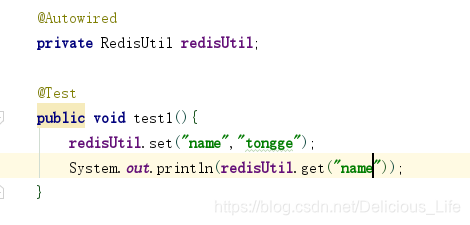
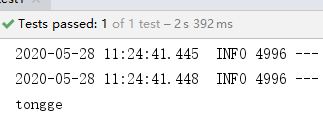
我们来测试一下,注入——使用
真香啊





 扫一扫
扫一扫


 22万+
22万+

 被折叠的 条评论
为什么被折叠?
被折叠的 条评论
为什么被折叠?
 到【灌水乐园】发言





