


 本文介绍了Java中通用分页组件PageBean的关键属性,包括页码、页大小、总记录数等,并详细阐述了后台分页查询的实现,涉及entity、dao层的处理。同时,讲解了如何使用Junit进行单元测试,包括setUp和tearDown方法的使用,以及测试步骤和结果的展示。
1. PageBean
分页三要素
page 页码 视图层传递过来
rows 页大小 视图层传递过来
total 总记录数 后台查出来
pagination 是否分页 视图层传递过来
getStartIndex() 基于MySql数据库分页,获取分页开始标记
package com.zhouzhuolin.pagination.util;

/**
 * 分页工具类
 *
 */
public class PageBean {

	private int page = 1;// 页码

	private int rows = 10;// 页大小

	private int total = 0;// 总记录数

	private boolean pagination = true;// 是否分页

	public PageBean() {
		super();
	}

	public int getPage() {
		return page;
	}

	public void setPage(int page) {
		this.page = page;
	}

	public int getRows() {
		return rows;
	}

	public void setRows(int rows) {
		this.rows = rows;
	}

	public int getTotal() {
		return total;
	}

	public void setTotal(int total) {
		this.total = total;
	}

	public void setTotal(String total) {
		this.total = Integer.parseInt(total);
	}

	public boolean isPagination() {
		return pagination;
	}

	public void setPagination(boolean pagination) {
		this.pagination = pagination;
	}

	/**
	 * 获得起始记录的下标
	 *
	 * @return
	 */
	public int getStartIndex() {
		return (this.page - 1) * this.rows;
	}

	@Override
	public String toString() {
		return "PageBean [page=" + page + ", rows=" + rows + ", total=" + total + ", pagination=" + pagination + "]";
	}

}
2. 后台
2.1 entity
package com.zhouzhuolin.pagination.entity;

public class Book {

	private int id;

	private String bookname;

	private float price;

	private String booktype;

	public int getId() {
		return id;
	}

	public void setId(int id) {
		this.id = id;
	}

	public String getBookname() {
		return bookname;
	}

	public void setBookname(String bookname) {
		this.bookname = bookname;
	}

	public float getPrice() {
		return price;
	}

	public void setPrice(float price) {
		this.price = price;
	}

	public String getBooktype() {
		return booktype;
	}

	public void setBooktype(String booktype) {
		this.booktype = booktype;
	}

	public Book() {
		super();
	}

	public Book(String bookname, float price, String booktype) {
		super();
		this.bookname = bookname;
		this.price = price;
		this.booktype = booktype;
	}

	public Book(int id, String bookname, float price, String booktype) {
		super();
		this.id = id;
		this.bookname = bookname;
		this.price = price;
		this.booktype = booktype;
	}

	@Override
	public String toString() {
		return "Book [id=" + id + ", bookname=" + bookname + ", price=" + price + ", booktype=" + booktype + "]";
	}
}
2.2 dao
package com.zhouzhuolin.pagination.dao;


import java.sql.Connection;
import java.sql.PreparedStatement;
import java.sql.ResultSet;
import java.sql.SQLException;
import java.util.ArrayList;
import java.util.List;

import com.zhouzhuolin.pagination.entity.Book;
import com.zhouzhuolin.pagination.util.DBAccess;
import com.zhouzhuolin.pagination.util.PageBean;
import com.zhouzhuolin.pagination.util.StringUtils;


public class BookDao extends BaseDao<Book>{

	private Connection con=null;
	private PreparedStatement ps=null;
	private ResultSet rs=null;

	public void addBook(Book book) {

		try {
			String sql="insert into book(bookname,price,booktype) values(?,?,?)";
			con=DBAccess.getConnection();
			ps=con.prepareStatement(sql);
			ps.setString(1, book.getBookname());
			ps.setFloat(2, book.getPrice());
			ps.setString(3, book.getBooktype());
			ps.executeUpdate();
		} catch (SQLException e) {
			// TODO Auto-generated catch block
			e.printStackTrace();
		}finally {
			DBAccess.close(con, ps, null);
		}

	}


	public List<Book> queryBookList(Book book,PageBean pageBean) throws InstantiationException, IllegalAccessException, SQLException {
		String sql="select *from book where 1=1";
			if (StringUtils.isNotBlank(book.getBookname())) {
				sql += " and bookname like '%"+book.getBookname()+"%' ";
			}
		return super.queryBookList(sql, Book.class, pageBean);
	}

	public static void main(String[] args) throws InstantiationException, IllegalAccessException, SQLException {

		BookDao bookDao=new BookDao();
		Book book=new Book();
//		book.setBookname("1");
		PageBean pageBean = new PageBean();
		pageBean.setPage(2);
		pageBean.setRows(10);
//		pageBean.setPagination(false);
		int total = pageBean.getTotal();
		List<Book> queryBookList = bookDao.queryBookList(book, pageBean);
		for (Book book2 : queryBookList) {
			System.out.println(book2);
		}

	}
}
BaseDao
1)匿名内部接口
2)分页查询方法,接口方法传参
(返回:总记录数+指定页码并满足条件的记录集)
3)二次查询的条件要一致
getCountSql()/getPagerSql()
package com.zhouzhuolin.pagination.dao;

import java.lang.reflect.Field;
import java.sql.Connection;
import java.sql.PreparedStatement;
import java.sql.ResultSet;
import java.sql.SQLException;
import java.util.ArrayList;
import java.util.List;

import com.zhouzhuolin.pagination.entity.Book;
import com.zhouzhuolin.pagination.util.DBAccess;
import com.zhouzhuolin.pagination.util.PageBean;
import com.zhouzhuolin.pagination.util.StringUtils;

public class BaseDao<T> {
	/**
	 *
	 * @param sql				传入的sql语句
	 * @param clz				传入的对象
	 * @param pageBean			分页
	 * @return
	 * @throws SQLException
	 * @throws IllegalAccessException
	 * @throws InstantiationException
	 */
	public List<T> queryBookList(String sql,Class<?> clz,PageBean pageBean) throws SQLException, InstantiationException, IllegalAccessException {
		Connection con=DBAccess.getConnection();
		PreparedStatement ps=null;
		ResultSet rs=null;
//		如果pageBean不等于空 并且 允许分页 则执行分页代码块
		if (pageBean != null && pageBean.isPagination()) {
			String CountSql=getCountSql(sql);
			ps=con.prepareStatement(CountSql);
			rs=ps.executeQuery();
			if (rs.next()) {
				pageBean.setTotal(rs.getLong(1)+"");
			}
			System.out.println("总记录数:"+pageBean.getTotal());
			String PagerSql=getPagerSql(sql, pageBean);
			ps=con.prepareStatement(PagerSql);
			rs=ps.executeQuery();
		}else {
			ps=con.prepareStatement(sql);
			rs=ps.executeQuery();
		}

		List<T> list=new ArrayList<T>();
		T t;
		while (rs.next()) {
//			list.add(new Book(rs.getInt("id"), rs.getString("bookname"), rs.getFloat("price"), rs.getString("booktype")));
//			通过反射机制实例化 并且赋值
			t=(T) clz.newInstance();
			Field[] fields = clz.getDeclaredFields();
			for (Field field : fields) {
				field.setAccessible(true);
//				getObject 因为不知道传过来是什么值 所以写个Object代替
				field.set(t, rs.getObject(field.getName()));
			}
			list.add(t);
		}
		DBAccess.close(con, ps, rs);
		return list;
	}

//	获取总纪录数的sql语句
	public String getCountSql(String sql) {
		return "select count(*) from ("+sql+") t";
	}
//	获取分页数据的sql语句
	public String getPagerSql(String sql,PageBean pageBean) {
		return sql+" limit "+pageBean.getStartIndex()+","+pageBean.getRows();
	}
}
3. junit
java单元测试/白盒测试
setUp
tearDown
测试用例
Servlet中的init和destory方法只会运行一次
Junit中的setUp和tearDown方法是根据方法数量来决定的
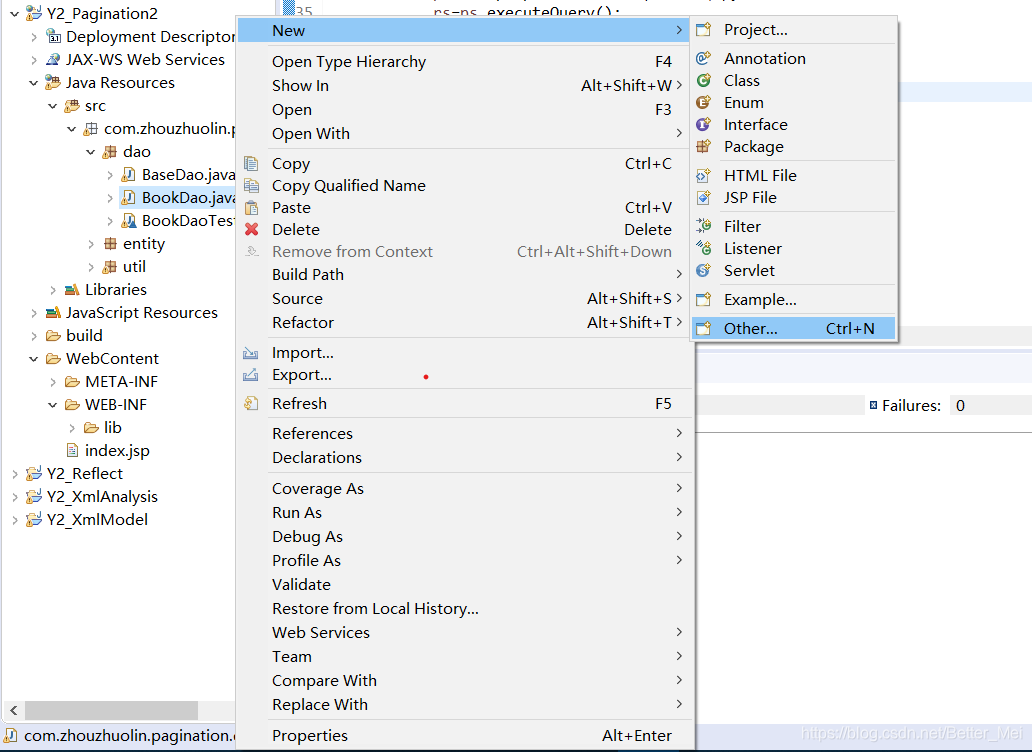
第一步选中方法类右键选择new在选择ohter
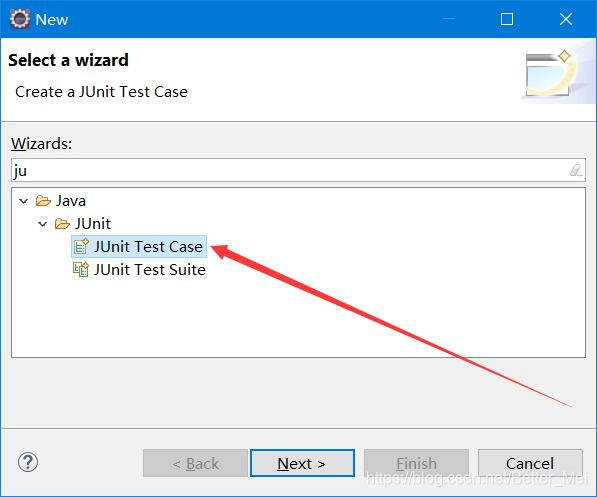
搜索junit
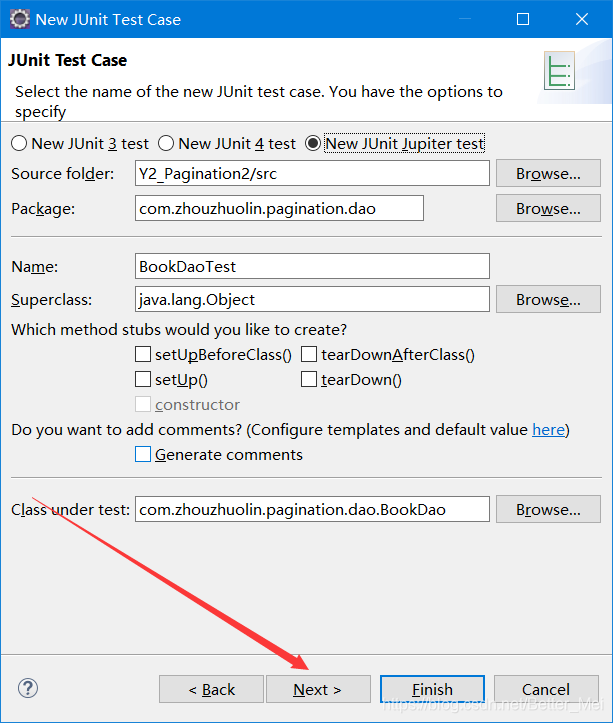
然后点next 到一下界面 继续选择next
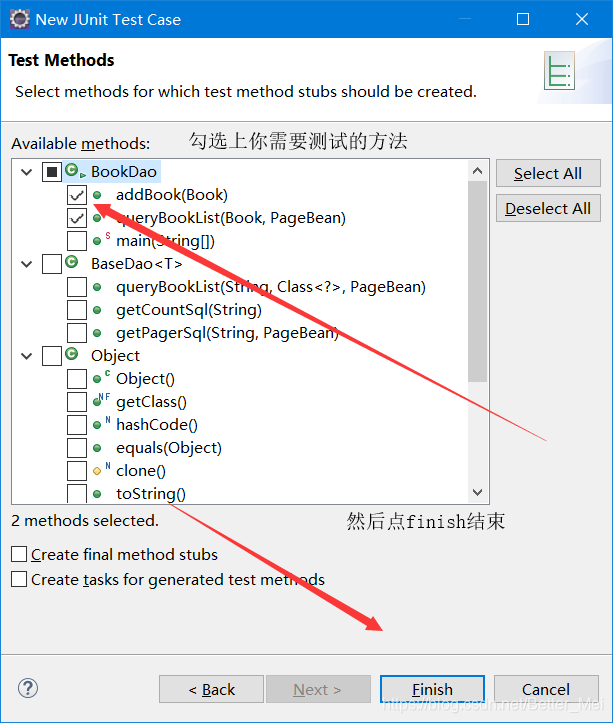
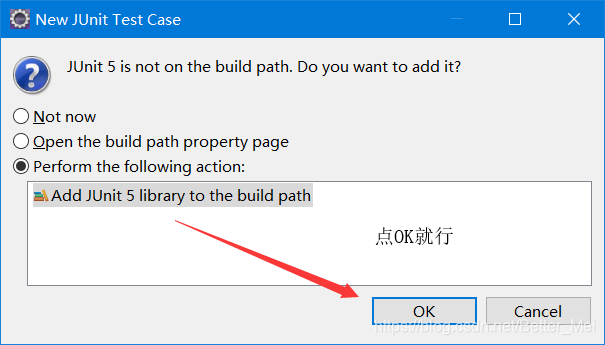
到junit界面
Servlet中的init和destory方法只会运行一次
Junit中的setUp和tearDown方法是根据方法数量来决定的
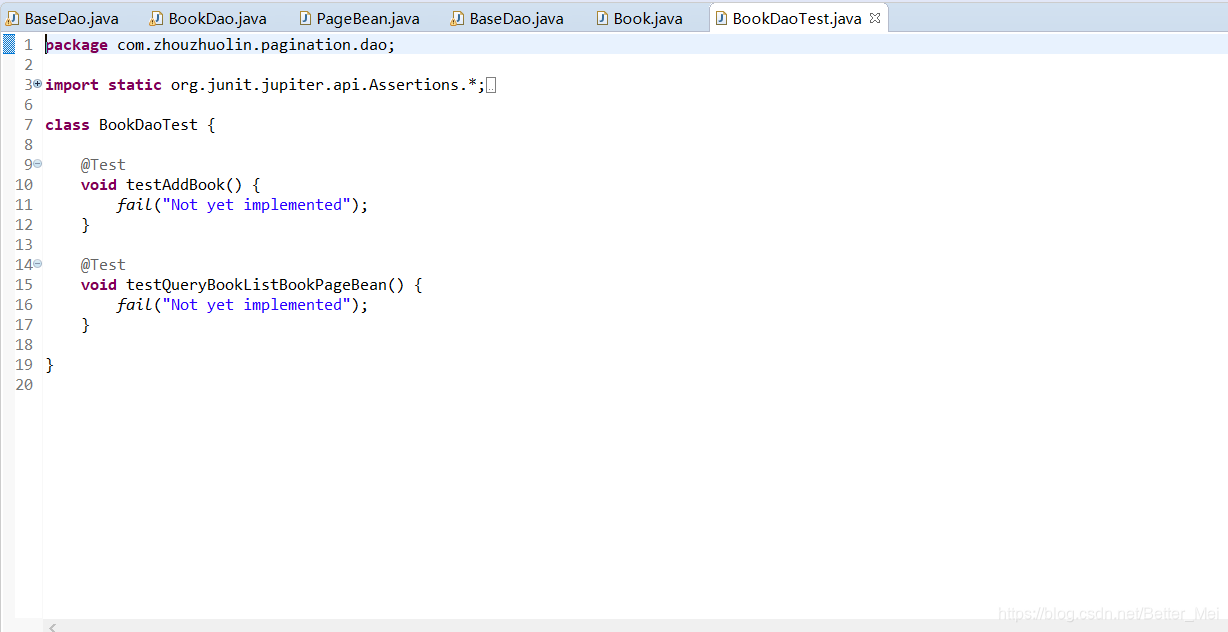
准备实体类和方法类代码如下
package com.zhouzhuolin.pagination.dao;

import static org.junit.jupiter.api.Assertions.*;

import java.sql.SQLException;
import java.util.List;

import org.junit.jupiter.api.Test;

import com.zhouzhuolin.pagination.entity.Book;
import com.zhouzhuolin.pagination.util.PageBean;

class BookDaoTest {

//因为我只测试分页方法 没测试添加方法 所以说不写

	private BookDao bookDao=new BookDao();
	private Book book=new Book();

	@Test
	void testAddBook() {
	}

	@Test
	void testQueryBookListBookPageBean() throws InstantiationException, IllegalAccessException, SQLException {

		PageBean pageBean=new PageBean();

		List<Book> queryBookList = bookDao.queryBookList(book, pageBean);

		for (Book book : queryBookList) {
			System.out.println(book);
		}
	}
}
测试步骤
选中要执行的方法 点Junittest就行
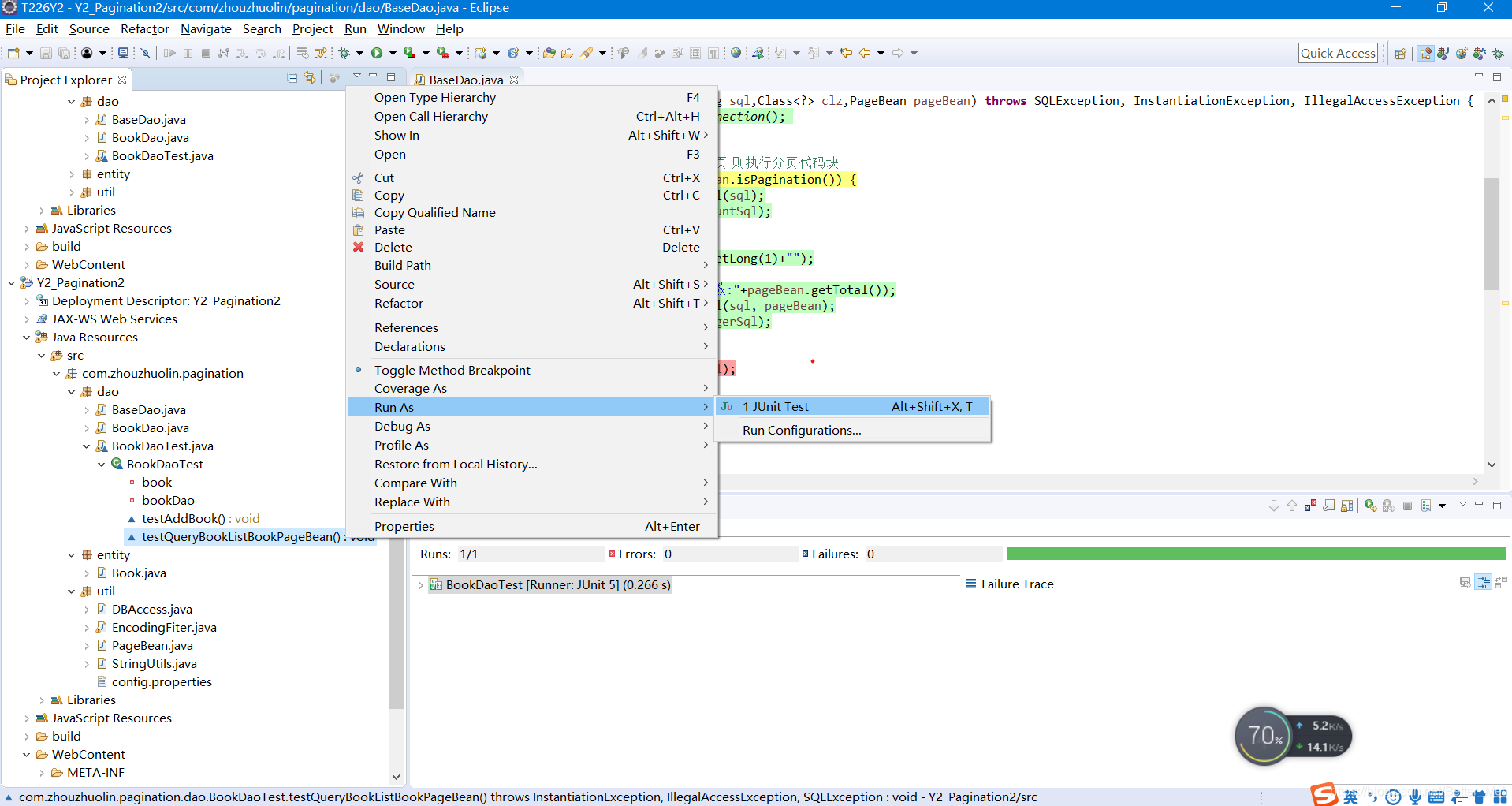
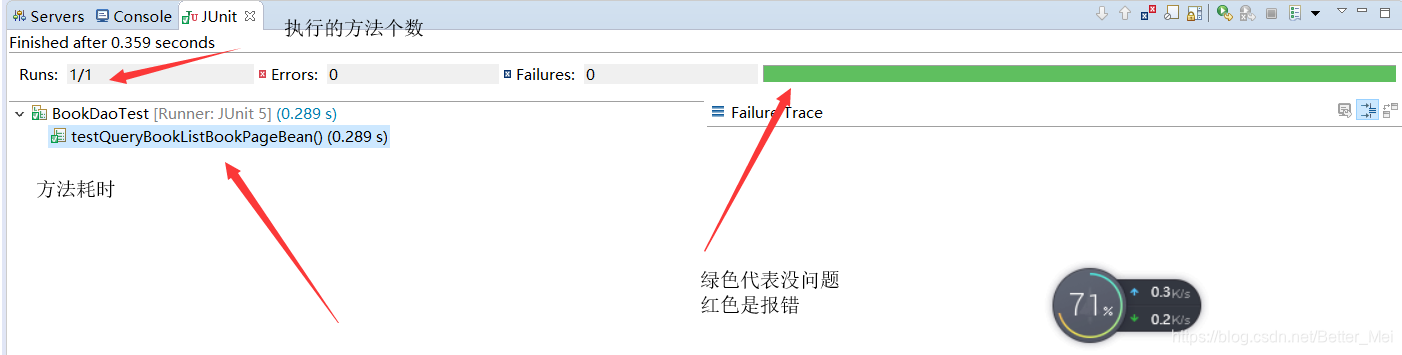
测试结果
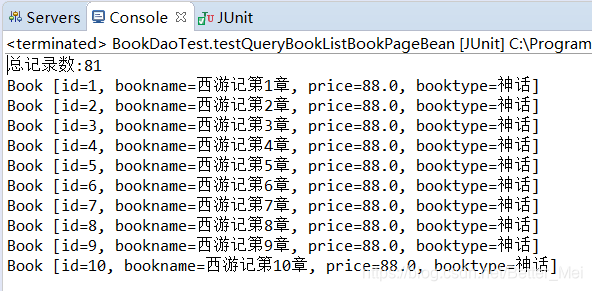
Junit面板





 扫一扫
扫一扫


 2066
2066

 被折叠的 条评论
为什么被折叠?
被折叠的 条评论
为什么被折叠?
 到【灌水乐园】发言





