



 本文介绍了虚树的概念,包括其构建方法和最坏情况分析。通过举例说明虚树的构建过程,并提供了HDU6035 Colorful tree和HNOI2014 | 世界树两道题目的题解,展示了虚树在解决树形结构问题中的应用,如计算路径权值和确定控制点。
虚树学习笔记?
-
虚树是一棵虚拟构建的树…
废话这棵树只包含关键点和关键的点,而其他不影响虚树结构的点和边都相当于进行了路径压缩…而且整棵虚树的大小不会超过关键点的2倍- 举个例子?
- 比方说…
4567表示关键点(现在你要让这些关键点也形成一棵树…要求点最少但不能破坏原来树的结构)
- 构建完的虚树长这个样(其实这也是构建虚树时候的最坏情况…所有原来树上的点都加入了虚树之中)

- 什么时候才会出现这种最坏的情况???当所有叶子节点都是关键点的时候…,但是很显然的是叶子结点不会超过 n 2 \dfrac{n}{2} 2n个
-
如何构建虚树?
-
预处理出dfs序…将关键点按照dfs序进行排序
-
我们使用一个栈,从栈顶到栈底的元素形成虚树的一条树链.
-
Code
-
	sort(af + 1, af + 1 + num, cmp);
	if(con[1] != 1) st[++top] = 1;
	for(int i = 1; i <= num; ++i) {
		int pos = af[i], fa = 0;
		for(; top;) {
			fa = GetLCA(st[top], pos);
			if(top > 1 && dep[fa] < dep[st[top - 1]]) {
				add(st[top - 1], st[top]), top--;
			} else if(dep[fa] < dep[st[top]]) {
				add(fa, st[top]), top--;
				break;
			} else {
				break;
			}
		}
		if(st[top] != fa)
			st[++top] = fa;
		st[++top] = pos;
	}
	for(; top > 1; --top)
		add(st[top - 1], st[top]);
-
-
-
正确性✅?
- 对于任意指定两点 a , b a,b a,b 的 l c a lca lca ,都存在 d f s dfs dfs 序连续的两点 u , v u,v u,v( d f n [ u ] ≤ d f n [ v ] dfn[u]\leq dfn[v] dfn[u]≤dfn[v]) 分别属于 l c a lca lca包含 a , b a,b a,b 的两棵子树,此时这 v v v 加入时按照上面的操作必定会把 l c a lca lca加入栈,所以应当加入的点都加入了。对于非 l c a lca lca 点,按照上面操作是不会出现这个点的。
HDU6035 Colorful tree
-
题意:
- 给你一棵 n ( 1 ≤ n ≤ 200000 ) n(1\leq n\leq 200000) n(1≤n≤200000)个节点的树…每一个节点有一个颜色.一条路径的权值定义为出现颜色集合的大小…问所有路径的权值和是多少…
-
题解:
当我们在考虑这个问题怎么求的时候…我们很容易地考虑到要计算每个颜色的贡献
我们会发现这样正着做会很难…遇难则反
- 问题转换为求有多少条路径没有出现过颜色 c c c
事实上我们并不需要构建出每一种颜色的虚树… 只需一遍dfs就可以考虑啦!
但是应用到了虚树的思想…
首先一个颜色没有 c o l col col的联通块里任意两个点的路径上都不会出现 c o l col col这个颜色
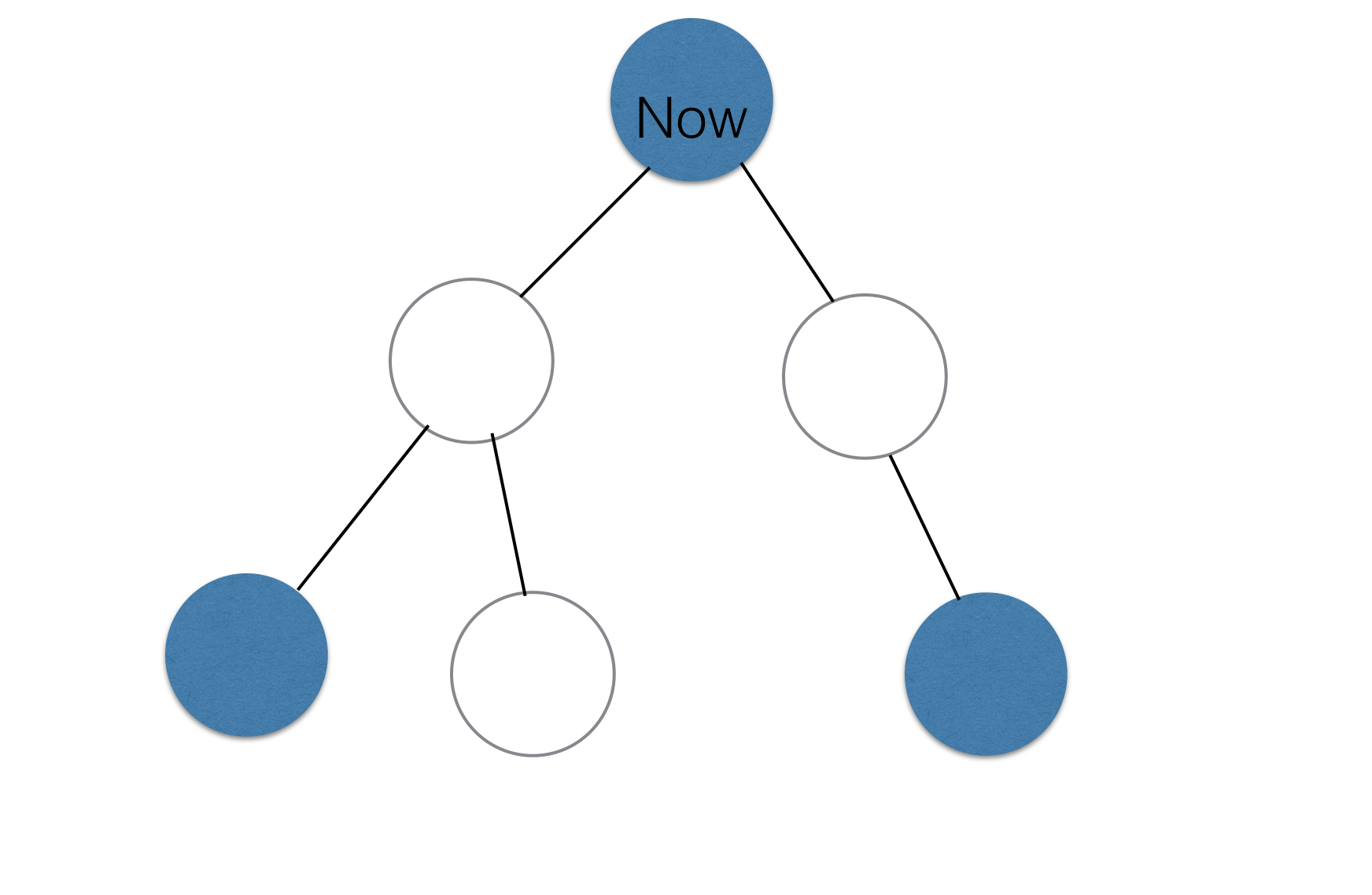
我们记录一个 s u m [ x ] sum[x] sum[x]表示遍历到当前这个点 颜色为 x x x的最高子树总大小。
假设当前点为 n o w now now,那么接下去就要遍历它的儿子…
- 我们记下遍历每个儿子之前的 s u m [ c o l [ n o w ] ] sum[col[now]] sum[col[now]]值为 l a s t last last
- 那么遍历完当前儿子之后 a d d = s u m [ c o l [ n o w ] ] − l a s t add=sum[col[now]] - last add=sum[col[now]]−last就是这个儿子顶部颜色为 c o l [ n o w ] col[now] col[now]的个数
- 那么 s z [ s o n ] − a d d sz[son]-add sz[son]−add就是颜色不为 c o l [ n o w ] col[now] col[now]的联通块大小
-
Code
#include <bits/stdc++.h>
#define ll long long
using namespace std;
const int N = 2e5 + 10;
struct data {
	int nt, to;
} a[N << 1];
ll ans;
int sz[N], vis[N], head[N], col[N], sum[N], cnt = 0;

void add(int x, int y) {
	a[++cnt].to = y;
	a[cnt].nt = head[x];
	head[x] = cnt;
}

ll js(ll x) {
	return x * (x - 1) / 2;
}

void dfs(int u, int fa) {
	sz[u] = 1;
	int son = 0;
	for(int i = head[u]; i; i = a[i].nt) {
		int to = a[i].to;
		if(to == fa) {
			continue;
		}
		int last = sum[col[u]];
		dfs(to, u);
		sz[u] += sz[to];
		int now = sum[col[u]] - last;
		ans -= js(sz[to] - now);
		son += sz[to] - now;
	}
	sum[col[u]] += son + 1;
}

int main() {
	int n, cas = 0;
	while(scanf("%d", &n) == 1) {
		cnt = ans = 0;
		int tot = 0;
		for(int i = 1; i <= n; ++i) {
			scanf("%d", &col[i]);
			if(!vis[col[i]]) {
				tot++, vis[col[i]] = 1;
			}
		}
		for(int i = 1, x, y; i < n; ++i) {
			scanf("%d%d", &x, &y);
			add(x, y), add(y, x);
		}
		ans = 1ll * tot * js(n);
		dfs(1, 0);
		for(int i = 1; i <= n; ++i) {
			head[i] = 0;
			if(vis[col[i]]) {
				// printf("%d %d\n", col[i], sum[col[i]]);
				ans -= js(n - sum[col[i]]);
				vis[col[i]] = 0;
				sum[col[i]] = 0;
			}
		}
		++cas;
		printf("Case #%d: %lld\n", cas, ans);
	}
	return 0;
}
HNOI2014 | 世界树
-
题意
-
给你一棵 n ( 1 ≤ n ≤ 100000 ) n(1\leq n\leq100000) n(1≤n≤100000)个节点的树 每次给你 n u m ( ∑ n u m ≤ 100000 ) num(\sum num \leq 100000) num(∑num≤100000)个控制点
- 一个点的控制点是离它最近的且标号最小的点
问你每个控制点控制了多少个点
-
-
题解
首先肯定是对这个 n u m num num个点构建虚树
先预处理出虚数上的点的控制点 在去更新原树上的控制点

(蓝色点为虚树上的点)有这么两种情况
-
这两个点的控制点是一样(假设为 c o n [ x ] con[x] con[x]) 那么这两个点之间的所有点的控制点显然都是 c o n [ x ] con[x] con[x]
-
这两个点的控制点是不一样的假设为 c o n [ x ] , c o n [ y ] con[x],con[y] con[x],con[y]
首先倍增出 m i d mid mid点 再根据 c o n [ x ] , c o n [ y ] con[x],con[y] con[x],con[y]的大小判断距离相同时的情况
-
-
Code
#include <bits/stdc++.h>
using namespace std;
const int N = 3e5 + 10, LOG = 20;
struct data {
	int nt, to;
} a[N << 1];
int con[N], f[N], be[N], af[N], st[N], rem[N], c[N];
int head[N], g[N][LOG + 1], dep[N], sz[N], dfn[N];
int n, cnt = 0, res = 0, now = 0, top = 0;

void add(int x, int y) {
	a[++cnt].to = y;
	a[cnt].nt = head[x];
	head[x] = cnt;
}

void predfs(int x, int fa) {
	dfn[x] = ++res;
	dep[x] = dep[fa] + 1;
	sz[x] = 1, g[x][0] = fa;
	for(int i = head[x]; i; i = a[i].nt) {
		int to = a[i].to;
		if(to == fa) {
			continue;
		}
		predfs(to, x);
		sz[x] += sz[to];
	}
}

void prepare() {
	for(int j = 1; j <= LOG; ++j)
		for(int i = 1; i <= n; ++i)
			g[i][j] = g[g[i][j - 1]][j - 1];
}

int GetLCA(int A, int B) {
	if(dep[A] > dep[B])
		swap(A, B);
	for(int i = LOG; i >= 0; --i)
		if(dep[g[B][i]] >= dep[A])
			B = g[B][i];
	if(A == B)
		return A;
	for(int i = LOG; i >= 0; --i)
		if(g[A][i] != g[B][i])
			A = g[A][i], B = g[B][i];
	return g[A][0];
}

int dis(int x, int y) {
	return dep[x] + dep[y] - 2 * dep[GetLCA(x, y)];
}

void dfs(int x) {
	c[++now] = x, rem[x] = sz[x];
	for(int i = head[x]; i; i = a[i].nt) {
		int to = a[i].to;
		dfs(to);
		if(!con[to]) continue;
		int d1 = dis(x, con[to]), d2 = dis(x, con[x]);
		if((d1 == d2 && (con[to] < con[x])) || d1 < d2 || !con[x])
			con[x] = con[to];
	}
}

void Dfs(int x) {
	if(!con[x]) return ;
	for(int i = head[x]; i; i = a[i].nt) {
		int to = a[i].to;
		int d1 = dis(to, con[to]), d2 = dis(to, con[x]);
		if((d1 == d2 && (con[x] < con[to])) || d1 > d2 || !con[to])
			con[to] = con[x];
		Dfs(to);
	}
}

void work(int x, int y) {
	int ny = y, mid = y;
	for(int i = LOG; i >= 0; --i)
		if(dep[g[ny][i]] > dep[x])
			ny = g[ny][i];
	rem[x] -= sz[ny];
	if(con[x] == con[y]) {
		f[con[x]] += sz[ny] - sz[y];
		return ;
	}
	for(int i = LOG; i >= 0; --i) {
		int nxt = g[mid][i];
		if(dep[nxt] <= dep[x]) continue;
		int d1 = dis(con[x], nxt), d2 = dis(con[y], nxt);
		if(d1 > d2 || (d1 == d2 && con[y] < con[x])) mid = nxt;
	}
	f[con[x]] += sz[ny] - sz[mid];
	f[con[y]] += sz[mid] - sz[y];
}

bool cmp(int x, int y) {
	return dfn[x] < dfn[y];
}

void go() {
	now = cnt = top = 0;
	int num;
	scanf("%d", &num);
	for(int i = 1; i <= num; ++i) {
		scanf("%d", &be[i]);
		con[be[i]] = be[i], af[i] = be[i];
	}
	sort(af + 1, af + 1 + num, cmp);
	if(con[1] != 1) st[++top] = 1;
	for(int i = 1; i <= num; ++i) {
		int pos = af[i], fa = 0;
		for(; top;) {
			fa = GetLCA(st[top], pos);
			if(top > 1 && dep[fa] < dep[st[top - 1]]) {
				add(st[top - 1], st[top]), top--;
			} else if(dep[fa] < dep[st[top]]) {
				add(fa, st[top]), top--;
				break;
			} else {
				break;
			}
		}
		if(st[top] != fa)
			st[++top] = fa;
		st[++top] = pos;
	}
	for(; top > 1; --top)
		add(st[top - 1], st[top]);
	dfs(1), Dfs(1);
	for(int i = 1; i <= now; ++i)
		for(int j = head[c[i]]; j; j = a[j].nt)
			work(c[i], a[j].to);
	for(int i = 1; i <= now; ++i)
		f[con[c[i]]] += rem[c[i]];
	for(int i = 1; i <= num; ++i)
		printf("%d ", f[be[i]]);
	puts("");
	for(int i = 1; i <= now; ++i)
		head[c[i]] = con[c[i]] = f[c[i]] = rem[c[i]] = 0;
}

int main() {
	scanf("%d", &n);
	for(int i = 1, x, y; i < n; ++i) {
		scanf("%d%d", &x, &y);
		add(x, y), add(y, x);
	}
	predfs(1, 0), prepare();
	memset(head, 0, sizeof head);
	int m;
	scanf("%d", &m);
	for(int o = 1; o <= m; ++o) {
		go();
	}
	return 0;
}





 扫一扫
扫一扫


 864
864

 被折叠的 条评论
为什么被折叠?
被折叠的 条评论
为什么被折叠?
 到【灌水乐园】发言





