


一、链表
链表是一种物理结构上非连续存储结构,数据元素的逻辑顺序是通过链表中的引用链接次序实现的。逻辑上是连续的
2)链表结构(8种)
单向/双向+带头/不带头+循环/非循环(组合)
在Java的集合框架库中LinkedList底层实现就是无头双向循环链表。
二、链表的实现
1.有头单向非循环链表实现
代码如下(示例):
package demo2;

public class MySingleList {
    static class ListNode{
        public int val;//结点的值
        public ListNode next;//下一个节点的地址 (引用类型)

        public ListNode(int val) {
            this.val = val;
        }
    }
        public  ListNode head;//表示当前链表的头节点
    //创建一个链表
      public void createList() {
          //构造方法

          ListNode node1=new ListNode(12);
          ListNode node2=new ListNode(23);
          ListNode node3=new ListNode(34);
          ListNode node4=new ListNode(45);
          ListNode node5=new ListNode(56);
          //以链表的方式连接起来
          node1.next=node2;
          node2.next=node3;
          node3.next=node4;
          node4.next=node5;
          this.head=node1;


      }
    public void display() {
//          while (head!=null){
//              System.out.print(head.val+" ");
//              head=head.next;
//          }
//          //换行
//        System.out.println();
//    }
         ListNode cur=head;
        while (cur!=null){
            System.out.print(cur.val+" ");
            //cur=null证明链表遍历完成了
            cur=cur.next;
        }
        //换行
        System.out.println();
    }


    //头插法
    public void addFirst(int data){
          //在插入的时候先绑定后面节点的信息
        ListNode node=new ListNode(data);
        node.next=head;
        head=node;
    }
    //尾插法
    public void addLast(int data){
        ListNode node=new ListNode(data);
        ListNode cur=head;
        //cur/head==null cur.next空指针异常
        if (cur==null){
            head=node;
            return;
        }
        //cur.next==null说明cur所指向的节点是尾巴节点
        //cur==null代表把链表的每个节点都遍历完了
        while (cur.next!=null){
            cur=cur.next;
            }
        cur.next=node;
    }
    //任意位置插入,第一个数据节点为0号下标
    public void addIndex(int index,int data){
          if(index<0||index>size()){
              System.out.println("index 不合法");
              return;
          }
          if(index==0){
              //头插法
              addFirst(data);
              return;
          }
          if (index==size()){
              //尾插法
              addLast(data);
              return;
          }
          //定义cur走index-1步,找到插入位置的前一个插入
        ListNode cur=findIndexSubOne(index);
          ListNode node=new ListNode(data);
          node.next=cur.next;
          cur.next=node;

    }
    //要找节点的前一个节点
    private ListNode findIndexSubOne(int index){
          ListNode cur=head;
          int count=index-1;
          while (count!=0){
              cur=cur.next;
              count--;
          }
          return cur;
    }
    //查找是否包含关键字key是否在单链表当中
    public boolean contains(int key){
        ListNode cur=head;
        while (cur!=null){
           if(cur.val==key){
               return true;
           }
           cur=cur.next;
        }
        return false;
    }
    //删除第一次出现关键字为key的节点
    public void remove(int key){
          if(head==null){
              return;
          }
          if(head.val==key){
              head=head.next;
              return;
          }
         ListNode cur=searchPrev(key);
         if (cur==null){
             System.out.println("没有你要删除的数字");
             return;
         }
         ListNode del=cur.next;
         cur.next=del.next;
    }
    //要删除值的节点的前一个节点
    private ListNode searchPrev(int key){
        ListNode cur=head;
        while (cur!=null){
            if(cur.next.val==key){
                return cur;
            }
            cur=cur.next;
        }
        return null;
    }

    //删除所有值为key的节点
    public void removeAllKey(int key){
          if (head==null){
              return;
          }
          ListNode cur=head.next;
          ListNode prev=head;
          while (cur!=null){
              if(cur.val==key){
                  prev.next=cur.next;
                  cur=cur.next;

              }else {
                  prev=cur;
                  cur=cur.next;
              }

          }
          if(head.val==key){
              head=head.next;
          }
    }
    //得到单链表的长度
    public int size(){
          int count=0;
        ListNode cur=head;
        while (cur!=null){
            count++;
            cur=cur.next;
        }
        return count;
    }
    public void clear() {
          this.head=null;
    }

}
class Test{
    public static void main(String[] args) {
        MySingleList mySingleList=new MySingleList();
        mySingleList.createList();
        mySingleList.display();
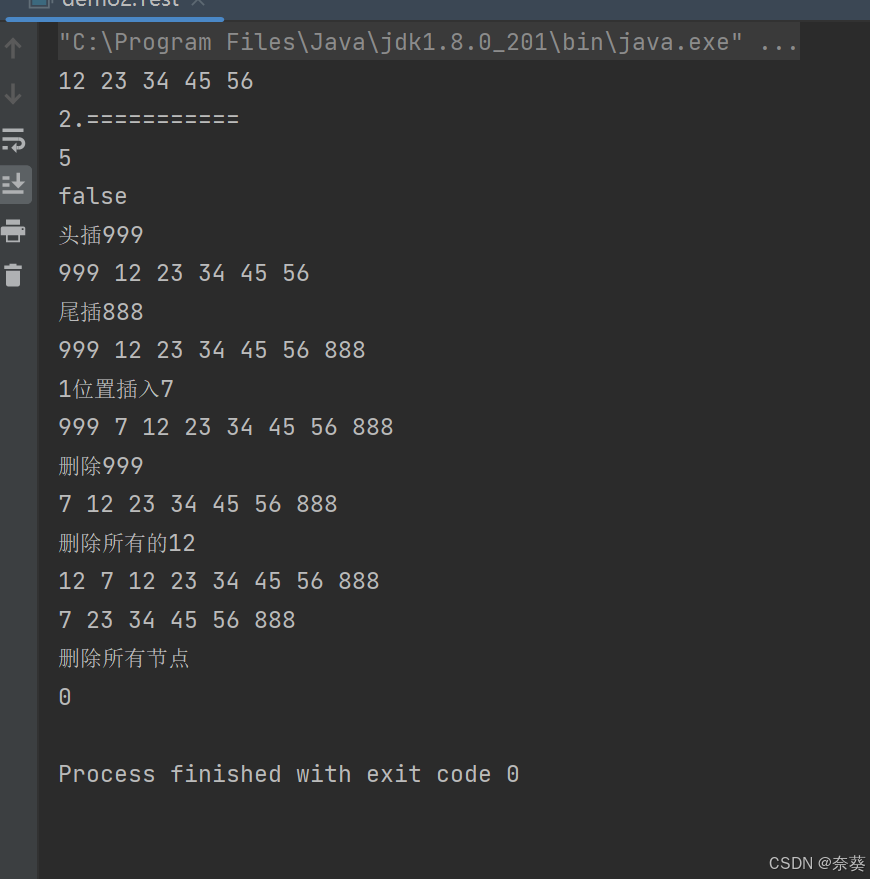
        System.out.println("2.===========");
        //链表长度
        System.out.println(mySingleList.size());
        //判断123是否在单链表中
        System.out.println(mySingleList.contains(123));
        System.out.println("头插999");
        mySingleList.addFirst(999);
        mySingleList.display();
        System.out.println("尾插888");
        mySingleList.addLast(888);
        mySingleList.display();
        System.out.println("1位置插入7");
        mySingleList.addIndex(1,7);
        mySingleList.display();
        System.out.println("删除999");
        mySingleList.remove(999);
        mySingleList.display();
        System.out.println("删除所有的12");
        mySingleList.addFirst(12);
        mySingleList.display();
        mySingleList.removeAllKey(12);
        mySingleList.display();
        System.out.println("删除所有节点");
        mySingleList.clear();
        System.out.println(mySingleList.size());


    }
}
2.代码解析
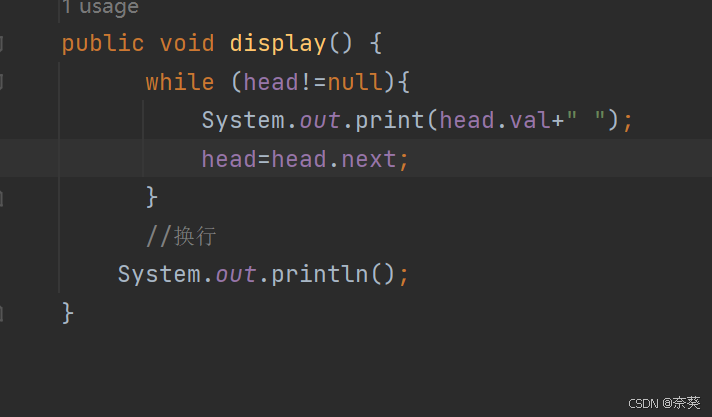
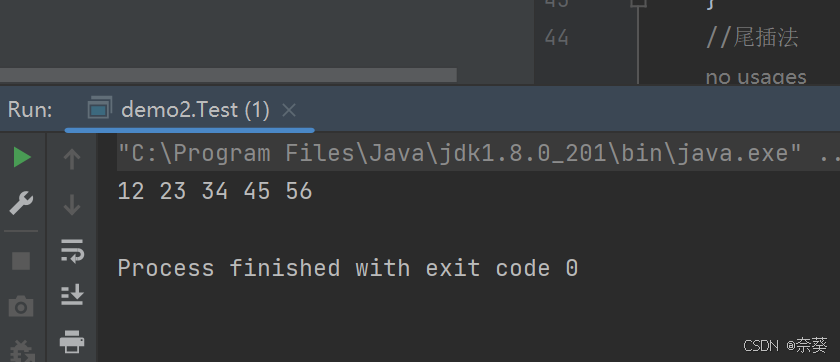
1)打印 :这种方法打印最后头节点为空(打印后找不到头节点) //创建临时节点cur
2)任意位置插入元素
被插入位置的前一个节点cur
node.next=cur.next;
cur.next=node;
3)删除节点
找到要删除节点的前一个节点
删除 cur.next=del.next
4)常用方法
boolean add(E e) 尾插 e
void add(int index, E element) 将 e 插入到 index 位置
boolean addAll(Collection c) 尾插 c 中的元素 E
remove(int index) 删除 index 位置元素
boolean remove(Object o) 删除遇到的第一个 o
E get(int index) 获取下标 index 位置元素 E
set(int index, E element) 将下标 index 位置元素设置为 element
void clear() 清空
boolean contains(Object o) 判断 o 是否在线性表中
int indexOf(Object o) 返回第一个 o 所在下标
int lastIndexOf(Object o) 返回最后一个 o 的下标
List subList(int fromIndex, int toIndex) 截取部分 list
三、ArrayList和LinkedList的区别
不同点 ArrayList LinkedList
存储空间上 物理上一定连续 逻辑上连续,但物理上不一定连续
随机访问 支持O(1) 不支持:O(N)
头插 需要搬移元素,效率低O(N) 只需修改引用的指向,时间复杂度为O(1)
插入 空间不够时需要扩容 没有容量的概念
应用场景 元素高效存储+频繁访问 任意位置插入和删除频繁
LinkedList vs ArrayList
内部实现
LinkedList:基于双向链表实现。每个元素(节点)包含对前一个和后一个节点的引用。这使得LinkedList在插入和删除操作时不需要移动其他元素,因此在列表中间执行这些操作效率更高。ArrayList:基于动态数组实现。它提供了对元素的随机访问能力,因为可以通过索引直接访问元素。然而,在进行插入或删除操作(特别是列表中部的操作)时,可能需要移动元素以保持连续性,这会带来额外的时间开销。
性能特点
LinkedList:- 插入和删除操作(尤其是两端)效率高,时间复杂度为O(1)。
- 随机访问元素效率低,时间复杂度为O(n),因为需要从头或尾遍历到指定位置。
ArrayList:- 支持快速随机访问,时间复杂度为O(1)。
- 插入和删除操作(尤其是在列表中部)效率较低,时间复杂度为O(n),因为需要移动元素。
适用场景
LinkedList:适用于频繁进行插入和删除操作的场景,如实现栈和队列等数据结构。ArrayList:适用于需要频繁访问元素,而插入和删除操作相对较少的场景。





 扫一扫
扫一扫


 869
869

 被折叠的 条评论
为什么被折叠?
被折叠的 条评论
为什么被折叠?
 到【灌水乐园】发言





