



前言
spring-aop技术是对oop(面向对象)的一个补充,其底层其实就是使用aspect+动态代理进行实现的,本篇文章将大概讨论下aop的核心实现流程
相关的核心概念
刚开始,先介绍下aop中比较核心的一些对象和概念,只要理解了这些,后面就可以很容易理解aop是怎么工作的了
Advisor接口
Advisor接口包含了Advice和Pointcut的定义,而这两个对象是我们进行代理的核心对象,举个例子你就明白了,如下
public class UserService{

    public void a(){

    }

    public void b(){

    }
}

假设有上面的类对象,现在有一段切入逻辑如下

public void method(){
  "插入方法逻辑";
}

这是一段要插入到UserService类的a和b方法的逻辑,那么在这个场景下

Advice: 指的就是method这段逻辑
PonitCut: 假设只想要在a方法切入,不想在b方法切入,那么这个校验过程就是PonitCut的代表
ProxyFactory对象
因为spring对于aop实现底层就是用代理实现的,所以底层会有这个对象进行管理代理对象,代理方法目前有两种,JdkDynamicAopProxy和ObjenesisCglibAopProxy(cglib)
这个对象主要就是用来获取代理对象的,其他的似乎没啥说的,因为核心逻辑还是在代理对象中进行实现的,下面以两个的其中一个来进行说明
JdkDynamicAopProxy
基于jdk的动态代理,Java基础扎实的人肯定都会知道他会实现一个InvocationHandler接口,该接口是代理对象最终会执行的入口,我们就来看看他的invoke接口具体干了啥,如下
 public Object invoke(Object proxy, Method method, Object[] args) throws Throwable {
        Object oldProxy = null;
        boolean setProxyContext = false;

        //这里简单理解就是获取被代理的类,比如这里就是UserService
        TargetSource targetSource = this.advised.targetSource;
        Object target = null;

        try {

            //判断如果是以下这些方法时不需要进行代理
            if (!this.equalsDefined && AopUtils.isEqualsMethod(method)) {
                return equals(args[0]);
            }
            else if (!this.hashCodeDefined && AopUtils.isHashCodeMethod(method)) {
                return hashCode();
            }
            else if (method.getDeclaringClass() == DecoratingProxy.class) {
                return AopProxyUtils.ultimateTargetClass(this.advised);
            }
            else if (!this.advised.opaque && method.getDeclaringClass().isInterface() &&
                    method.getDeclaringClass().isAssignableFrom(Advised.class)) {
                return AopUtils.invokeJoinpointUsingReflection(this.advised, method, args);
            }

            //下面真正进行代理逻辑的处理

            Object retVal;

            //是否把当前的代理对象绑定到当前线程,就是放到ThreadLocal中
            if (this.advised.exposeProxy) {
                oldProxy = AopContext.setCurrentProxy(proxy);
                setProxyContext = true;
            }


            target = targetSource.getTarget();
            Class<?> targetClass = (target != null ? target.getClass() : null);

            // 获取所有关联的advisor对象,也就是上面刚说的很核心的对象
            List<Object> chain = this.advised.getInterceptorsAndDynamicInterceptionAdvice(method, targetClass);


            if (chain.isEmpty()) {
                //如果为空表示没有任何的代理逻辑,直接返回即可
                Object[] argsToUse = AopProxyUtils.adaptArgumentsIfNecessary(method, args);
                retVal = AopUtils.invokeJoinpointUsingReflection(target, method, argsToUse);
            }
            else {
                //如果不为空把数据封装为ReflectiveMethodInvocation对象,然后调用proceed方法,开始处理代理逻辑
                MethodInvocation invocation =
                        new ReflectiveMethodInvocation(proxy, target, method, args, targetClass, chain);
                // Proceed to the joinpoint through the interceptor chain.
                retVal = invocation.proceed();
            }

            // 处理返回值,不是核心方法,,
            Class<?> returnType = method.getReturnType();
            if (retVal != null && retVal == target &&
                    returnType != Object.class && returnType.isInstance(proxy) &&
                    !RawTargetAccess.class.isAssignableFrom(method.getDeclaringClass())) {
                retVal = proxy;
            }
            else if (retVal == null && returnType != Void.TYPE && returnType.isPrimitive()) {
                throw new AopInvocationException(
                        "Null return value from advice does not match primitive return type for: " + method);
            }
            return retVal;
        }
        finally {
            if (target != null && !targetSource.isStatic()) {
                // Must have come from TargetSource.
                targetSource.releaseTarget(target);
            }
            if (setProxyContext) {
                // 移除绑定关系
                AopContext.setCurrentProxy(oldProxy);
            }
        }
    }
以上可以看到核心的处理流程,那么问题就来到了两个细节方法了,接下来分析下下面的问题
首先,来看下 this.advised.getInterceptorsAndDynamicInterceptionAdvice这个方法,这个方法是来获取所有的Advisor对象的,也可以理解为获取Advice对象,因为最终的代理逻辑就是在Advice里面的
    public List<Object> getInterceptorsAndDynamicInterceptionAdvice(
            Advised config, Method method, @Nullable Class<?> targetClass) {

        AdvisorAdapterRegistry registry = GlobalAdvisorAdapterRegistry.getInstance();
        //获取所有的Advisor,config其实就是ProxyFactory对象,在生成的时候已经绑定进来了
        Advisor[] advisors = config.getAdvisors();
        List<Object> interceptorList = new ArrayList<>(advisors.length);
        Class<?> actualClass = (targetClass != null ? targetClass : method.getDeclaringClass());
        Boolean hasIntroductions = null;

        //循环处理
        for (Advisor advisor : advisors) {
            if (advisor instanceof PointcutAdvisor) {
                // Add it conditionally.
                PointcutAdvisor pointcutAdvisor = (PointcutAdvisor) advisor;
                //粗筛,可以理解为对UserService类的筛选
                if (config.isPreFiltered() || pointcutAdvisor.getPointcut().getClassFilter().matches(actualClass)) {
                    //方法匹配器,进一步对UserService类下面的方法进行筛选
                    MethodMatcher mm = pointcutAdvisor.getPointcut().getMethodMatcher();
                    boolean match;
                    if (mm instanceof IntroductionAwareMethodMatcher) {
                        if (hasIntroductions == null) {
                            hasIntroductions = hasMatchingIntroductions(advisors, actualClass);
                        }
                        match = ((IntroductionAwareMethodMatcher) mm).matches(method, actualClass, hasIntroductions);
                    }
                    else {
                        //是否匹配
                        match = mm.matches(method, actualClass);
                    }
                    if (match) {
                        //如果是的话会加入到这个逻辑里
                        //把数据包装为MethodInterceptor对象返回
                        MethodInterceptor[] interceptors = registry.getInterceptors(advisor);
                        if (mm.isRuntime()) {
                            // MethodMatcher是否配置了运行时还要校验,如果是的话到时具体执行的时候还会根据实时参数进一步筛选
                            for (MethodInterceptor interceptor : interceptors) {
                                interceptorList.add(new InterceptorAndDynamicMethodMatcher(interceptor, mm));
                            }
                        }
                        else {
                            interceptorList.addAll(Arrays.asList(interceptors));
                        }
                    }
                }
            }
            else if (advisor instanceof IntroductionAdvisor) {
                IntroductionAdvisor ia = (IntroductionAdvisor) advisor;
                if (config.isPreFiltered() || ia.getClassFilter().matches(actualClass)) {
                    Interceptor[] interceptors = registry.getInterceptors(advisor);
                    interceptorList.addAll(Arrays.asList(interceptors));
                }
            }
            else {
                Interceptor[] interceptors = registry.getInterceptors(advisor);
                interceptorList.addAll(Arrays.asList(interceptors));
            }
        }

        return interceptorList;
    }
以上就是筛选匹配的Advisor对象,最终会统一封装为MethodInterceptor列表返回,可以进一步来看看这个,这里用了一个适配器模式,还是比较值得看看的
DefaultAdvisorAdapterRegistry#getInterceptors方法中进行处理的
 @Override
    public MethodInterceptor[] getInterceptors(Advisor advisor) throws UnknownAdviceTypeException {
        List<MethodInterceptor> interceptors = new ArrayList<>(3);
        //获取对应的Advice
        Advice advice = advisor.getAdvice();
        //如果是MethodInterceptor直接加入即可
        if (advice instanceof MethodInterceptor) {
            interceptors.add((MethodInterceptor) advice);
        }
        //如果不是会使用AdvisorAdapter对象进行对比并且加入
        for (AdvisorAdapter adapter : this.adapters) {
            if (adapter.supportsAdvice(advice)) {
                interceptors.add(adapter.getInterceptor(advisor));
            }
        }
        if (interceptors.isEmpty()) {
            throw new UnknownAdviceTypeException(advisor.getAdvice());
        }
        return interceptors.toArray(new MethodInterceptor[0]);
    }
AdvisorAdapter是一种适配器,用于对原来不是MethodInterceptor的对象进行适配为MethodInterceptor对象,可以看看它的接口定义
/**
 * Interface allowing extension to the Spring AOP framework to allow
 * handling of new Advisors and Advice types.
 *
 * <p>Implementing objects can create AOP Alliance Interceptors from
 * custom advice types, enabling these advice types to be used
 * in the Spring AOP framework, which uses interception under the covers.
 *
 * <p>There is no need for most Spring users to implement this interface;
 * do so only if you need to introduce more Advisor or Advice types to Spring.
 *
 * @author Rod Johnson
 */
public interface AdvisorAdapter {

	/**
	 * Does this adapter understand this advice object? Is it valid to
	 * invoke the {@code getInterceptors} method with an Advisor that
	 * contains this advice as an argument?
	 * @param advice an Advice such as a BeforeAdvice
	 * @return whether this adapter understands the given advice object
	 * @see #getInterceptor(org.springframework.aop.Advisor)
	 * @see org.springframework.aop.BeforeAdvice
	 */
	boolean supportsAdvice(Advice advice);

	/**
	 * Return an AOP Alliance MethodInterceptor exposing the behavior of
	 * the given advice to an interception-based AOP framework.
	 * <p>Don't worry about any Pointcut contained in the Advisor;
	 * the AOP framework will take care of checking the pointcut.
	 * @param advisor the Advisor. The supportsAdvice() method must have
	 * returned true on this object
	 * @return an AOP Alliance interceptor for this Advisor. There's
	 * no need to cache instances for efficiency, as the AOP framework
	 * caches advice chains.
	 */
	MethodInterceptor getInterceptor(Advisor advisor);

}
只有两个方法,一个是否支持,一个获取到MethodInterceptor对象,接下来可以看看其中一个实现类,如下
class MethodBeforeAdviceAdapter implements AdvisorAdapter, Serializable {

	@Override
	public boolean supportsAdvice(Advice advice) {
        //是否为MethodBeforeAdvice类型的
		return (advice instanceof MethodBeforeAdvice);
	}

	@Override
	public MethodInterceptor getInterceptor(Advisor advisor) {
		MethodBeforeAdvice advice = (MethodBeforeAdvice) advisor.getAdvice();
        //把advice适配为 MethodInterceptor 对象
		return new MethodBeforeAdviceInterceptor(advice);
	}

}
这种设计模式很巧妙,很多地方都会用到这个技术,比如gateway也会有相应的使用
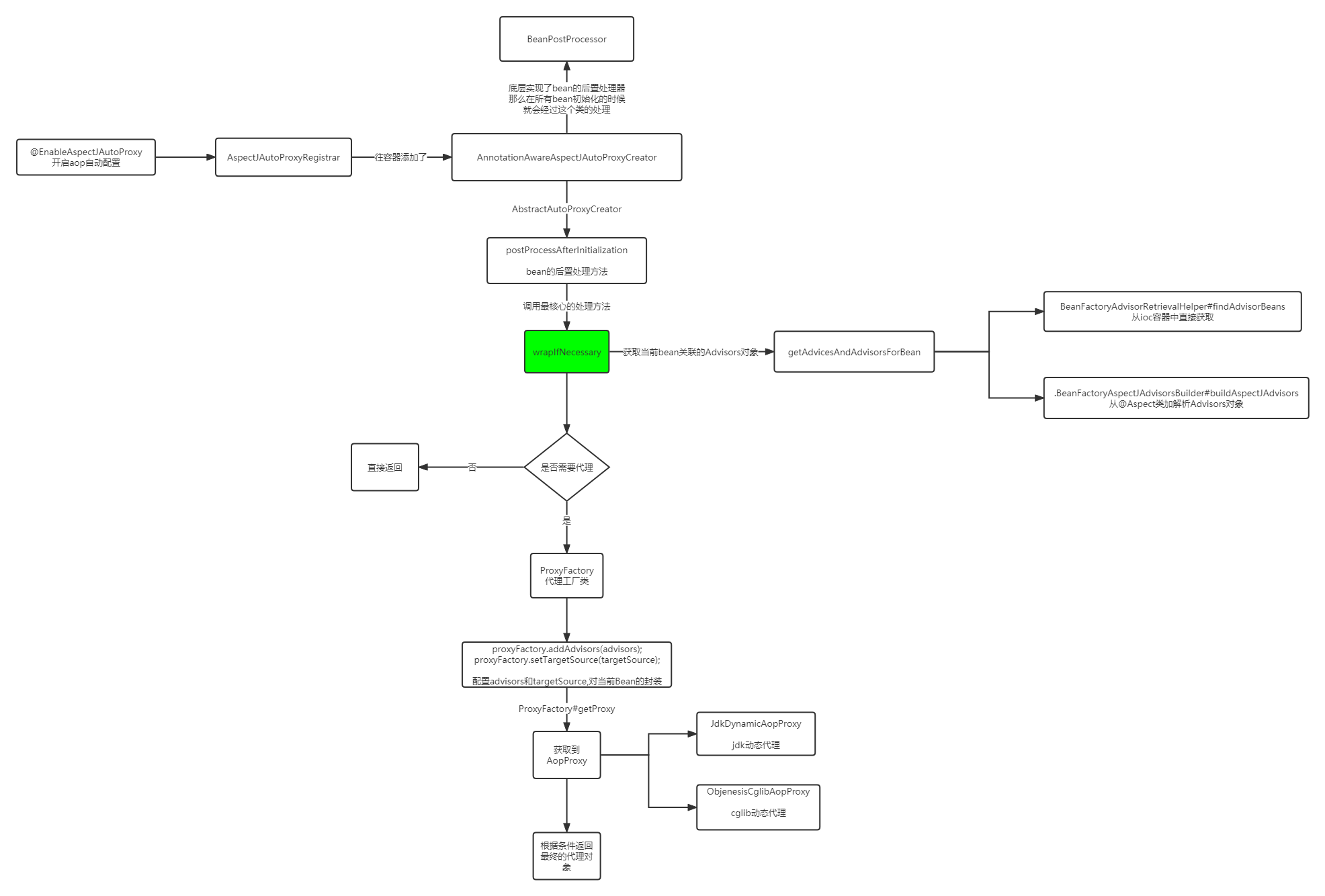
AnnotationAwareAspectJAutoProxyCreator
自动处理aop逻辑的处理器,它实现了BeanPostProcessor接口,也就是说,所有bean的创建都会经过这个类,它的大概逻辑如下
1 .bean创建的时候经常这个处理器
2. 查找当前bean匹配的Advisor对象,分为两种方式,一种是直接从ioc容器中获取Advisor对象,一种是通过对@Aspect进行解析里面的方法
3. 如果没有配置的就直接返回
4. 如果有一个及以上匹配的Advisor就使用ProxyFactory进行创建代理对象
5. 最终整个流程就被串起来了
到此,aop的核心流程就已经说完了,最后的问题,AnnotationAwareAspectJAutoProxyCreator这个类是如何加载到ioc容器的,其实很简单,我们在使用aop的时候,会标记以下的注解以启用aop功能 @EnableAspectJAutoProxy,这个注解会往容器中导入AspectJAutoProxyRegistrar对象,而AspectJAutoProxyRegistrar对象又会注册AnnotationAwareAspectJAutoProxyCreator对象,最终,整个流程就串起来了
结语
整个流程其实并不复杂,只要理解了核心的几个对象,加上些许的Ioc容器工作过程,就可以理解了,源码的入口其实就是在AnnotationAwareAspectJAutoProxyCreator这个对象的后置处理方法中进行的,主要是这个方法AbstractAutoProxyCreator#wrapIfNecessary进行了包装,当然了这个还会涉及到循环依赖问题,这里就不说了
最后再放一张我自己画的简单流程图,如下。。。





 扫一扫
扫一扫


 1021
1021

 被折叠的 条评论
为什么被折叠?
被折叠的 条评论
为什么被折叠?
 到【灌水乐园】发言





