






 本文介绍了从简单的类调用到工厂模式,再到IoC(控制反转)的实现思路,通过A类和B类的例子展示了如何在B类中调用A类方法。文中提到了使用反射和配置文件来实现IoC,详细阐述了每个步骤,并在最后给出了使用properties文件加载类路径的示例,旨在帮助读者理解依赖注入的概念和应用。
今天假期xin麒继续卷。
唉,每当一个人偷偷卷时,总是会默默落泪,哪个富婆又能看穿麒麒内心得脆弱,走进麒麒柔弱的心房,及时给予麒麒最及时的温柔呢?
来一波工厂模式到IoC(全称inversion of control)实现思路的简单分析:
一、前提引入:
- 有A类和B类,xin麒想在B类中一个方法实现A类的调用,应该如何实现才更好呢?
二、实现
从历史演变的过程应该是这样子的:
1、最初始的思路:
首先在两个java分别定义A类和B类,B类直接在那个方法中创建并且调用A类方法。
实现以上思路:
public class A {
    public void aMethod(){
        System.out.println("the method named \"aMethod\" in" +
                " the class of A had been use");

    }
}
public class B {
    public static void main(String[] args) {
        bMethod();
    }
    public static void bMethod(){
        A a = new A();
        a.aMethod();
    }
}
运行:

2、工厂模式:
B类方法不再是独自地实现调用A类的方法了,因为B类方法中经过了富婆C类的帮助:
就是C类的一个静态方法实现A类的创建,曾经孤单的B类方法经过富婆C的帮助实现A类的创建。
实现思路:
public class A {
    public void aMethod(){
        System.out.println("the method named \"aMethod\" in" +
                " the class of A had been use");

    }
}
public class C {
    public static A GetAClass(){
        return new A();

    }
}
public class B {
    public static void main(String[] args) {
        bMethodHelpedByC();
    }
    public static void bMethodHelpedByC(){
        A a = C.GetAClass();
        a.aMethod();
    }
}
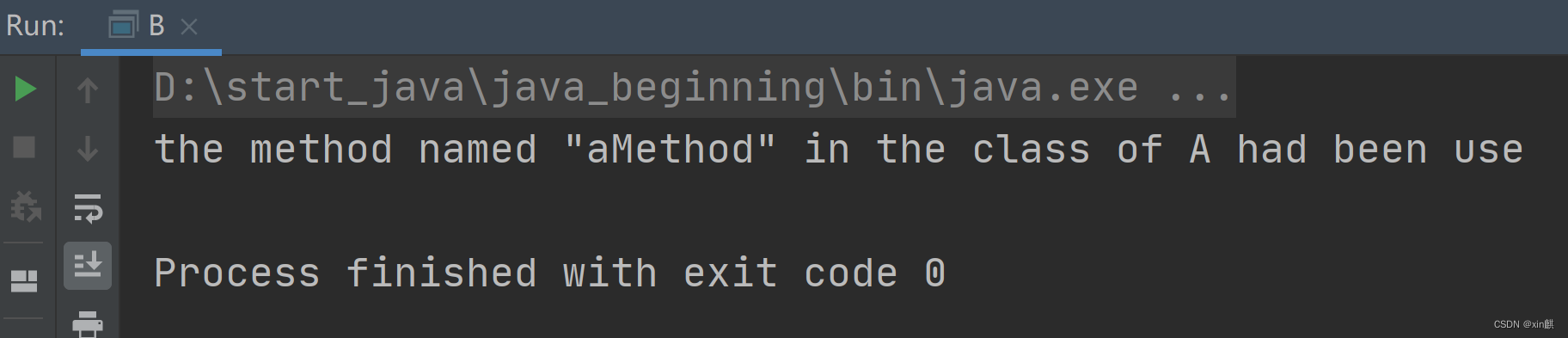
运行:
三、IoC版
实际上,是使用到了反射+工厂模式的思路:
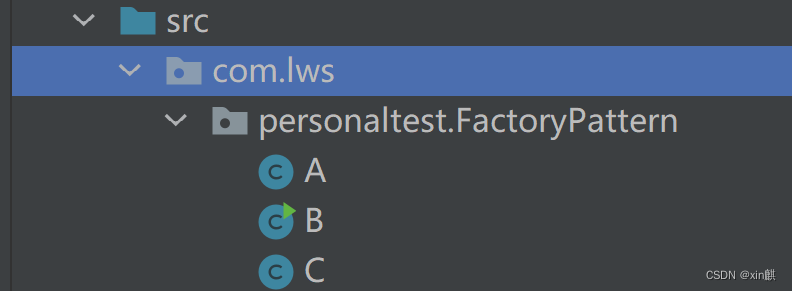
代码文件路径:
具体实现:
public class A {
    public void aMethod(){
        System.out.println("the method named \"aMethod\" in" +
                " the class of A had been use");
    }
}
public class C {
    public static A GetAClassByreflex() throws Exception {
        Class<?> aClass = Class.forName("com.lws.personaltest.FactoryPattern.A");
        return (A)aClass.newInstance();
    }
}
public class B {
    public static void main(String[] args) throws Exception {
        bMethodHelpedByC2();
    }
    public static void bMethodHelpedByC2() throws Exception {
        A a = C.GetAClassByreflex();
        a.aMethod();
    }
}
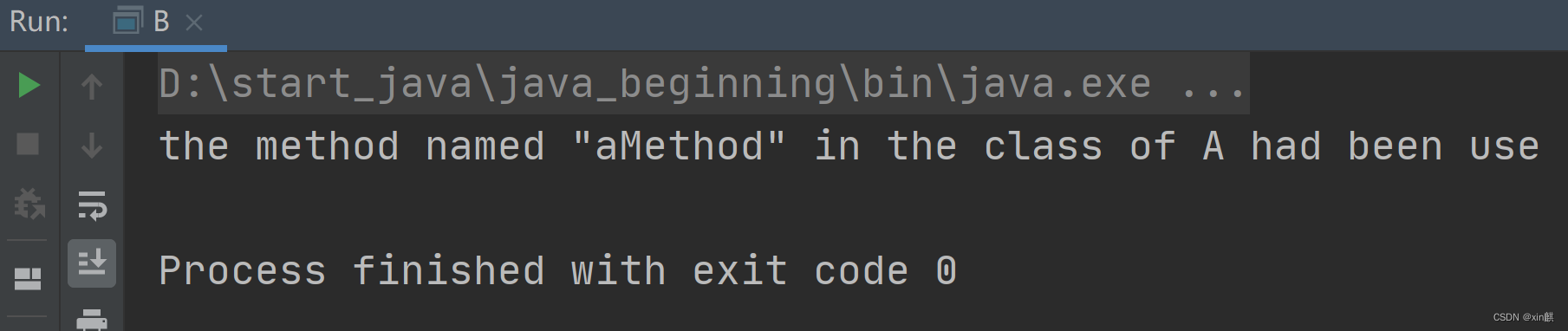
运行:
外加一个配置文件,如果回到java基础,我们可以使用properties文件,当然,在java项目中可能会使用其他的配置文件.这里xin麒还记得properties,那就使用properties来演示吧。
主要思路:
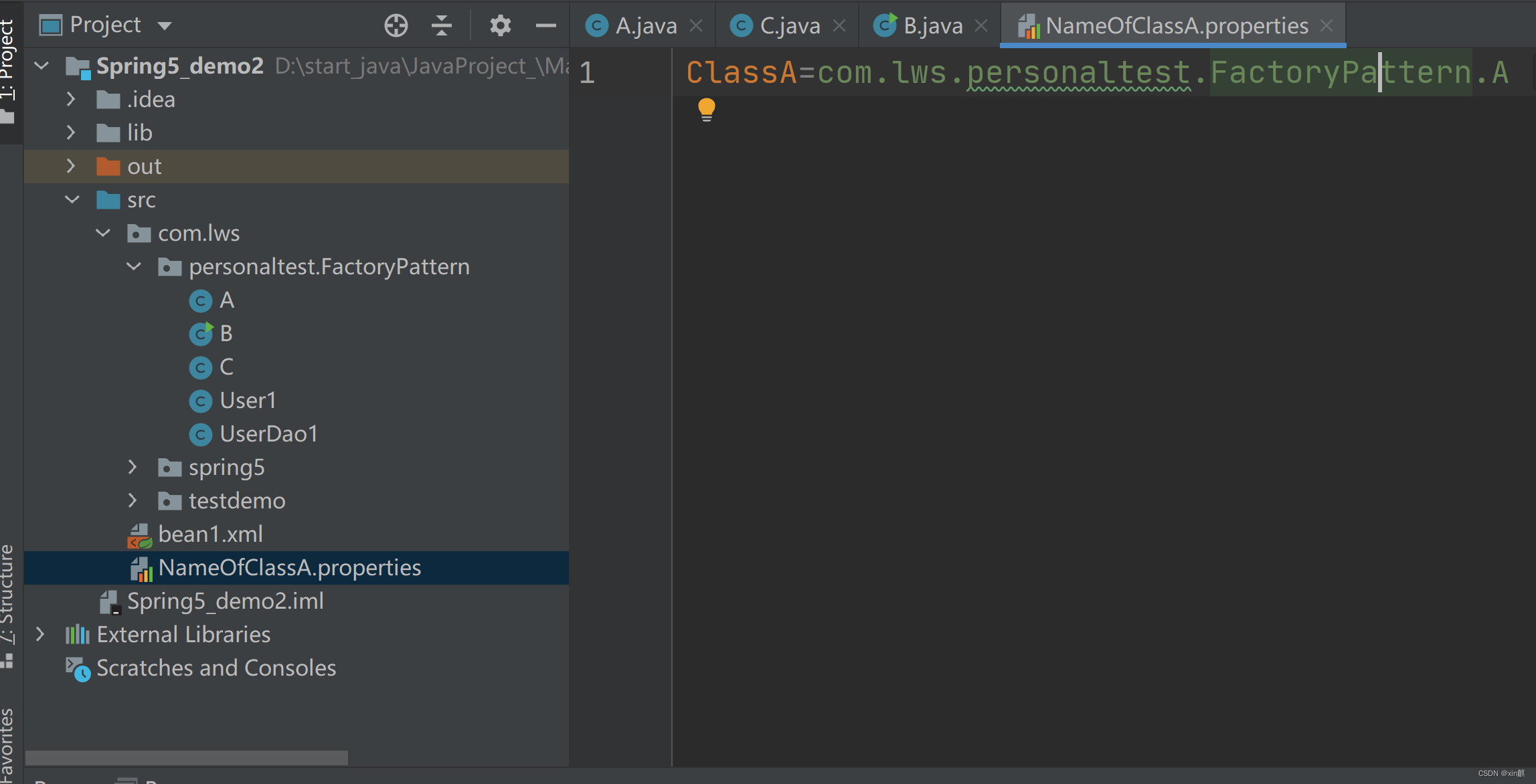
- 在properties文件编写A类的路径;
- 通过输入流load到properties对象;
- C类的静态方法通过properties对象获取A类的路径的String型变量;
-
-
- 通过
Class.forName()反射获取class类对象的变量aClass;
- 通过
-
-
- 通过变量
aClass创建一个实例对象返回。
文件路径介绍:
具体实现:
public class A {
    public void aMethod(){
        System.out.println("the method named \"aMethod\" in" +
                " the class of A had been use");
    }
}
public class C {
    public static A GetAClassByreflexAndProperties() throws Exception {
        FileInputStream fileInputStream = new FileInputStream("src\\NameOfClassA.properties");
        Properties properties = new Properties();
        properties.load(fileInputStream);
        String strClassA = properties.get("ClassA").toString();
        Class<?> aClass = Class.forName(strClassA);
        return (A)aClass.newInstance();
    }
}
public class B {
    public static void main(String[] args) throws Exception {
        bMethodHelpedByC3();
    }
    public static void bMethodHelpedByC3() throws Exception {
        System.out.println("通过了GetAClassByreflexAndProperties 方法");
        A a = C.GetAClassByreflexAndProperties();
        a.aMethod();
    }
}
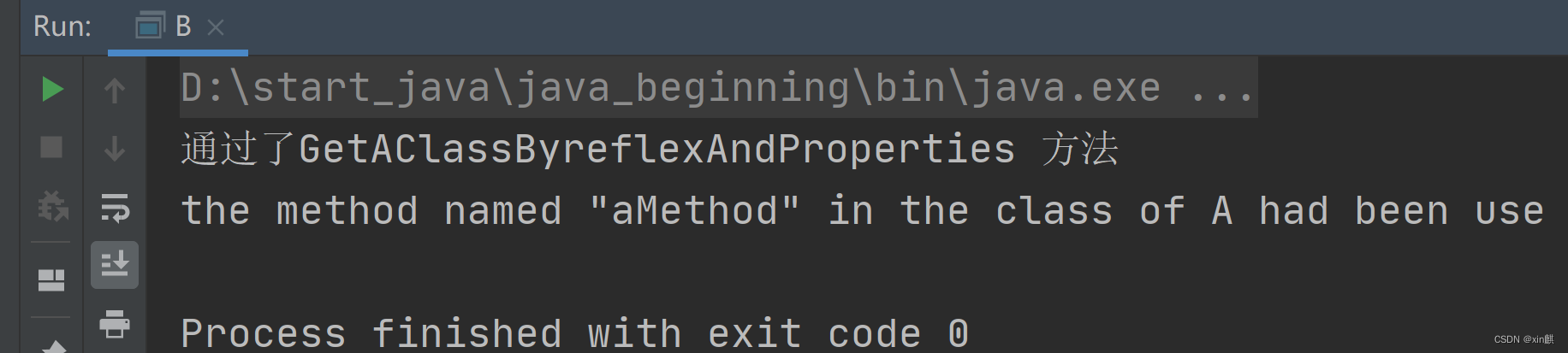
运行:
xin麒如有不足,希望大家指正!!!
end.





 扫一扫
扫一扫


 315
315

 被折叠的 条评论
为什么被折叠?
被折叠的 条评论
为什么被折叠?
 到【灌水乐园】发言





