



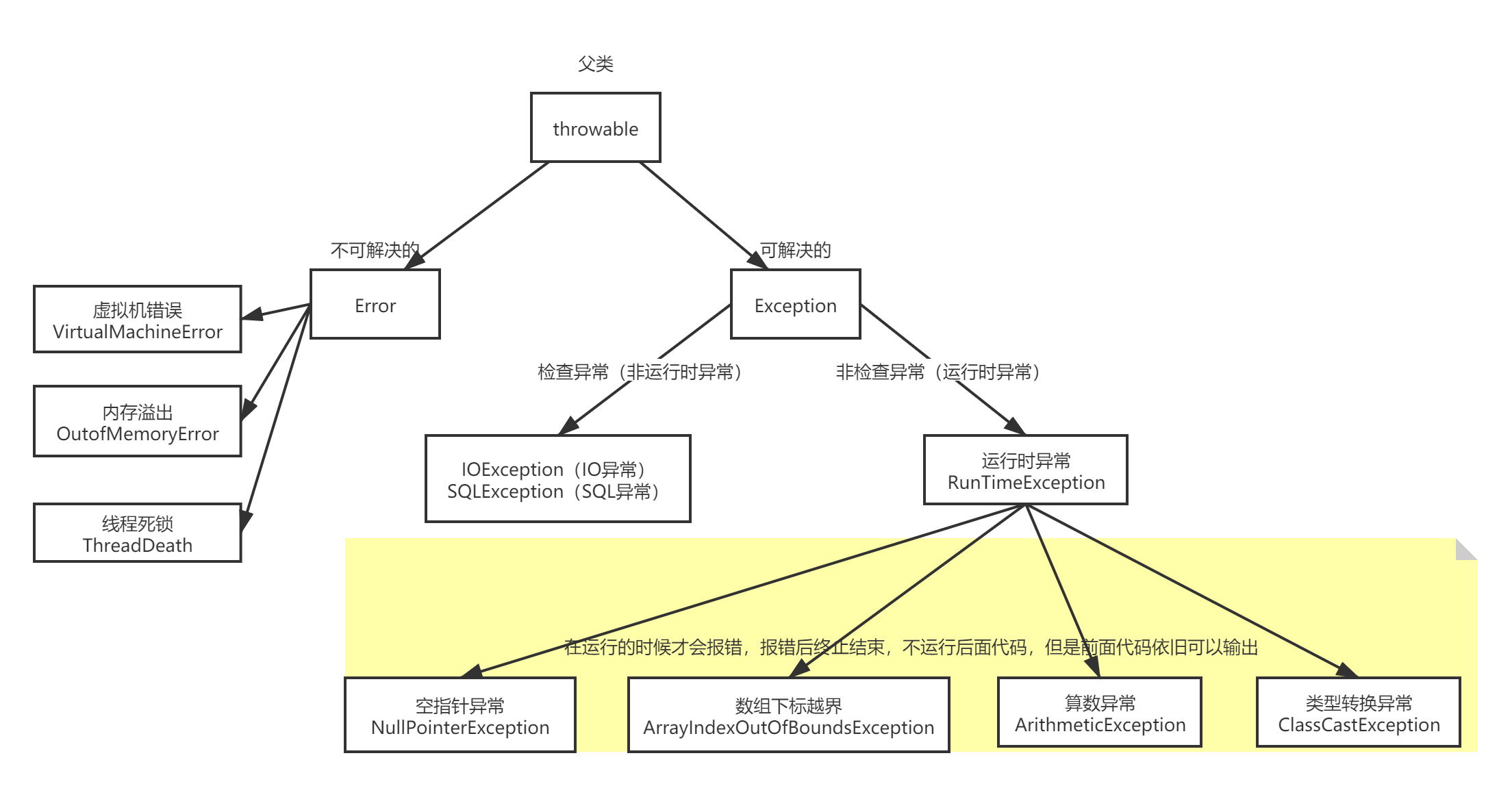
 本文深入探讨了Java中常见的异常处理机制,包括空指针异常、算数异常、数组下标越界异常及类型转换异常。通过具体代码示例,详细解释了如何使用try/catch语句来捕获和处理这些异常,为Java开发者提供了实用的异常处理指南。
java Try/Catch的简单用法
public class TestTryCatch {

	public static void main(String[] args) {

		nullPointExcertion();
		arithmeticException();
		arrayIndexOutOfBoundsException();
		classCastException("6");

	}

	// 空指针异常
	public static void nullPointExcertion() {

		try {
			String name = null;

			System.out.println(name.getClass());


		} catch (NullPointerException e) {

			System.out.println("这个是空指针异常");
		}

	}

	// 算数异常
	public static void arithmeticException() {
		try {
			int i = 0;
			int j = 10 / i;
			System.out.println(j);

		} catch (ArithmeticException e) {

			System.out.println("这个是算数异常");

		}

	}

	// 数组下标越界
	public static void arrayIndexOutOfBoundsException() {

		try {
			int[] arr = { 1, 2, 3, 4, 5 };

			System.out.println(arr[5]);

		} catch (ArrayIndexOutOfBoundsException e) {

			System.out.println("这个是数组下标越界异常");
		}
	}

	// 类型转换异常
	public static void classCastException(Object str) {

		try {

			Integer i = (Integer)str;

		} catch (ClassCastException e) {

			System.out.println("这个是类型转换异常");
		}

	}

}





 扫一扫
扫一扫


 337
337

 被折叠的 条评论
为什么被折叠?
被折叠的 条评论
为什么被折叠?
 到【灌水乐园】发言





