LVM

lvm的建立
在这里插入图片描述

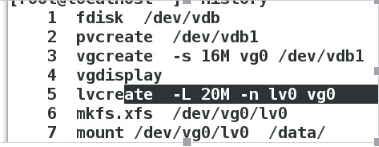
各命令解释:
1.物理存储介质为/dev/vdb
2.从设备上的分区创建物理卷/dev/vdb1
3.从物理卷创建卷组vg0
5.在卷组创建逻辑卷
6.格式化逻辑卷
7.挂载逻辑卷至/data

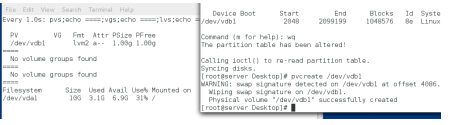
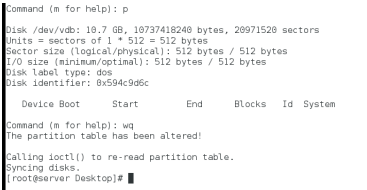
新增分区并修改其标签为LVM
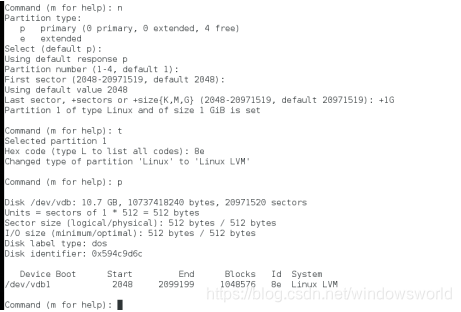
在这里插入图片描述

Pvcreate /dev/vdb1创建物理卷/dev/vdb1
在这里插入图片描述

Vgcreate -s 16M vg0 /dev/vdb1在卷组/dev/vdb1创建卷组vg0

在这里插入图片描述

Lvcreate -L 20M -n lv0 vg0在vg0卷组中创建逻辑卷lv0在这里插入图片描述

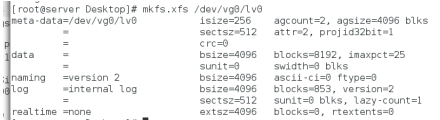
格式化创建的逻辑卷/dev/vg0/lv0
在这里插入图片描述

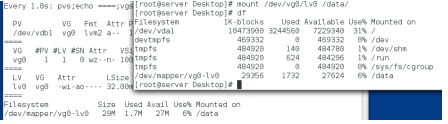
挂载逻辑卷该分区到/data
在这里插入图片描述

Lvm的拉伸

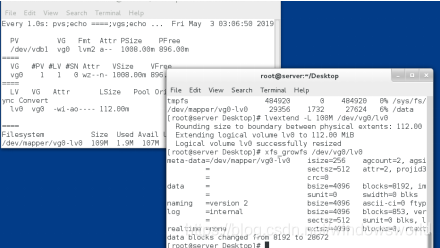
1.不超过卷组
不超过卷组大小时,直接拉伸即可
在这里插入图片描述

2.超过卷组
在这里插入图片描述
可以看到提示信息并不够1.5g大,所以我们需要添加新的卷组。

Partprobe
同步磁盘配区

新增第二块lvm分区
由于/dev/vdb1大小最大为1G,所以vg0wufa拉伸至1.5G,我们需要先添加新的分区。然后将该分区加至vg0,使vg0的大小够拉伸的大小,我们就可以进行拉伸了。

在这里插入图片描述

增加物理卷/dev/vdb2
在这里插入图片描述

增加/dev/vdb2至vg0
在这里插入图片描述

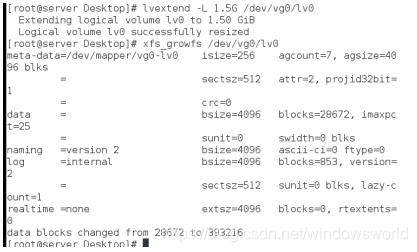
重新拉伸vg0分区至1.5G
在这里插入图片描述

可以看到vg0的大小被拉伸至1.5G
在这里插入图片描述

lvm缩减
取消挂载
在这里插入图片描述

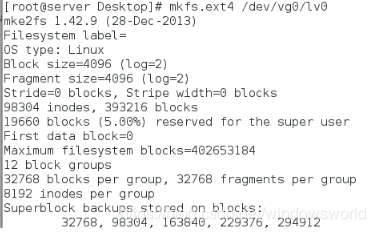
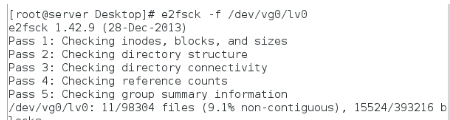
格式化逻辑卷lv0

在这里插入图片描述

查看逻辑卷中的数据(防止数据被损坏)
在这里插入图片描述

缩减分区至100M,
在这里插入图片描述

挂载后查看逻辑卷大小
在这里插入图片描述

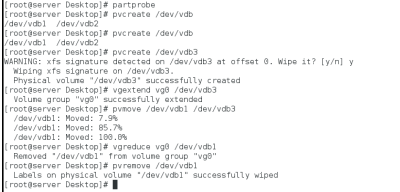
缩减物理卷
在这里插入图片描述

快照方式建立lvm
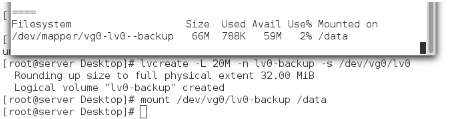
建立挂载
在这里插入图片描述

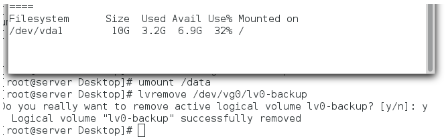
删除快照
在这里插入图片描述

删除lvm分区
Umount /data
去除挂载
删除逻辑卷,卷组,物理卷
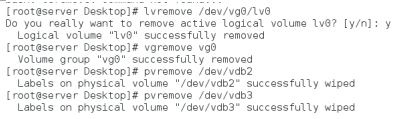
在这里插入图片描述

删除磁盘lvm的分区
在这里插入图片描述

06-19
### LVM in Linux: Configuration, Management, and Troubleshooting LVM (Logical Volume Manager) is a powerful tool in Linux that allows for flexible disk management. It provides a layer of abstraction over physical disks, enabling dynamic resizing and allocation of storage resources. Below is an overview of configuration, management, and troubleshooting aspects of LVM. #### Configuration of LVM To configure LVM, the process involves creating physical volumes, volume groups, and logical volumes. When using LVM with initramfs, specific hooks must be added to ensure proper initialization during boot. For systemd-based initramfs, the file `/etc/mkinitcpio.conf` should be edited to include the `sd-lvm2` hook[^1]. This ensures that the system can recognize and mount LVM volumes during the boot process. The updated line in the configuration file would look like this: ```bash HOOKS=(base systemd ... block sd-lvm2 filesystems) ``` For busy-box based initramfs, the `lvm2` hook should be added instead of `sd-lvm2`. #### Management of LVM Managing LVM involves several key operations such as creating, extending, and reducing logical volumes. These operations are performed using commands like `pvcreate`, `vgcreate`, `lvcreate`, `lvextend`, and `lvreduce`. Here is an example of creating a logical volume: ```bash # Create a physical volume pvcreate /dev/sdb # Create a volume group named 'myvg' vgcreate myvg /dev/sdb # Create a logical volume named 'mylv' with a size of 10GB lvcreate -L 10G -n mylv myvg ``` Once created, file systems can be formatted on the logical volumes and mounted as needed. #### Troubleshooting LVM Troubleshooting LVM often involves resolving issues related to volume recognition, mounting, or resizing. Common problems include missing devices, incorrect configurations, or insufficient space. Tools like `lvdisplay`, `vgdisplay`, and `pvdisplay` can help diagnose issues by providing detailed information about the current state of LVM components. For instance, if a logical volume fails to mount, checking the status of the volume group and logical volume can provide insights: ```bash # Display information about the volume group vgdisplay myvg # Display information about the logical volume lvdisplay /dev/myvg/mylv ``` If the issue persists, verifying the integrity of the file system using tools like `fsck` may be necessary. ```bash fsck /dev/myvg/mylv ``` #### Example Playbook for Automating LVM Tasks with Ansible Ansible can automate LVM tasks by defining playbooks. Below is an example playbook that creates a physical volume, volume group, and logical volume: ```yaml --- - name: Configure LVM hosts: all become: yes tasks: - name: Create physical volume community.general.lvol: vg: myvg lv: mylv size: 10G state: present ``` This playbook uses the `community.general.lvol` module to manage LVM volumes[^3]. ###
评论
添加红包

请填写红包祝福语或标题

红包个数最小为10个

红包金额最低5元

当前余额3.43前往充值 >
需支付:10.00
成就一亿技术人!
领取后你会自动成为博主和红包主的粉丝 规则
hope_wisdom
发出的红包
实付
使用余额支付
点击重新获取
扫码支付
钱包余额 0

抵扣说明:

1.余额是钱包充值的虚拟货币,按照1:1的比例进行支付金额的抵扣。
2.余额无法直接购买下载,可以购买VIP、付费专栏及课程。

余额充值