


 本文介绍了org.apache.commons.lang3.StringUtils类中的一系列null安全字符串操作方法,如isEmpty(), isNotBlank(), isAnyBlank()等,帮助理解如何判断字符串是否为空、空白或包含空值,适用于Java开发中的空值检查和处理。
org.apache.commons.lang3.StringUtil类中方法的操作对象是 Java.lang.String 类型的对象,是 JDK 提供的 String 类型操作方法的补充,并且是 null 安全的(即如果输入参数 String 为 null 则不会抛出 NullPointerException ,而是做了相应处理,例如,如果输入为 null 则返回也是 null 等,具体可以查看源代码)。
除了构造器,StringUtils 中一共有130多个方法,并且都是 static 的,所以我们可以这样调用
StringUtils.xxx()
isEmpty系列
StringUtils.isEmpty()
是否为空. 可以看到 " " 空格是会绕过这种空判断,因为是一个空格,并不是严格的空值,会导致 isEmpty(" ")=false
StringUtils.isEmpty(null) = true
        StringUtils.isEmpty("") = true
        StringUtils.isEmpty(" ") = false
        StringUtils.isEmpty(“bob”) = false
        StringUtils.isEmpty(" bob ") = false
        /
        *
        * <p>NOTE: This method changed in Lang version 2.0.
        * It no longer trims the CharSequence.
        * That functionality is available in isBlank().</p>
        *
        * @param cs  the CharSequence to check, may be null
        * @return {@code true} if the CharSequence is empty or null
        * @since 3.0 Changed signature from isEmpty(String) to isEmpty(CharSequence)
        */
public static boolean isEmpty(final CharSequence cs) {
        return cs == null || cs.length() == 0;
}
StringUtils.isNotEmpty()
相当于不为空 , = !isEmpty()
public static boolean isNotEmpty(final CharSequence cs) {
        return !isEmpty(cs);
}
StringUtils.isAnyEmpty()
是否有一个为空,只有一个为空,就为true.
StringUtils.isAnyEmpty(null) = true
        StringUtils.isAnyEmpty(null, “foo”) = true
        StringUtils.isAnyEmpty("", “bar”) = true
        StringUtils.isAnyEmpty(“bob”, “”) = true
        StringUtils.isAnyEmpty(" bob ", null) = true
        StringUtils.isAnyEmpty(" ", “bar”) = false
        StringUtils.isAnyEmpty(“foo”, “bar”) = false
        /
        * @param css  the CharSequences to check, may be null or empty
        * @return {@code true} if any of the CharSequences are empty or null
        * @since 3.2
        */
public static boolean isAnyEmpty(final CharSequence... css) {
        if (ArrayUtils.isEmpty(css)) {
            return true;
        }
        for (final CharSequence cs : css){
            if (isEmpty(cs)) {
                return true;
            }
        }
        return false;
}
StringUtils.isNoneEmpty()
相当于 !isAnyEmpty(css) , 必须所有的值都不为空才返回true
        * <p>Checks if none of the CharSequences are empty ("") or null.</p>
        *
        * <pre>
         * StringUtils.isNoneEmpty(null)             = false
         * StringUtils.isNoneEmpty(null, "foo")      = false
         * StringUtils.isNoneEmpty("", "bar")        = false
         * StringUtils.isNoneEmpty("bob", "")        = false
         * StringUtils.isNoneEmpty("  bob  ", null)  = false
         * StringUtils.isNoneEmpty(" ", "bar")       = true
         * StringUtils.isNoneEmpty("foo", "bar")     = true
         * </pre>
        *
        * @param css  the CharSequences to check, may be null or empty
        * @return {@code true} if none of the CharSequences are empty or null
        * @since 3.2
        */
public static boolean isNoneEmpty(final CharSequence... css) {
isBank系列
StringUtils.isBlank()
是否为真空值(空格或者空值)
StringUtils.isBlank(null) = true
        StringUtils.isBlank("") = true
        StringUtils.isBlank(" ") = true
        StringUtils.isBlank(“bob”) = false
        StringUtils.isBlank(" bob ") = false
        /
        * <p>Checks if a CharSequence is whitespace, empty ("") or null.</p>
        * @param cs  the CharSequence to check, may be null
        * @return {@code true} if the CharSequence is null, empty or whitespace
        * @since 2.0
        * @since 3.0 Changed signature from isBlank(String) to isBlank(CharSequence)
        */
public static boolean isBlank(final CharSequence cs) {
        int strLen;
        if (cs == null || (strLen = cs.length()) == 0) {
            return true;
        }
        for (int i = 0; i < strLen; i++) {
            if (Character.isWhitespace(cs.charAt(i)) == false) {
                return false;
            }
        }
        return true;
 }
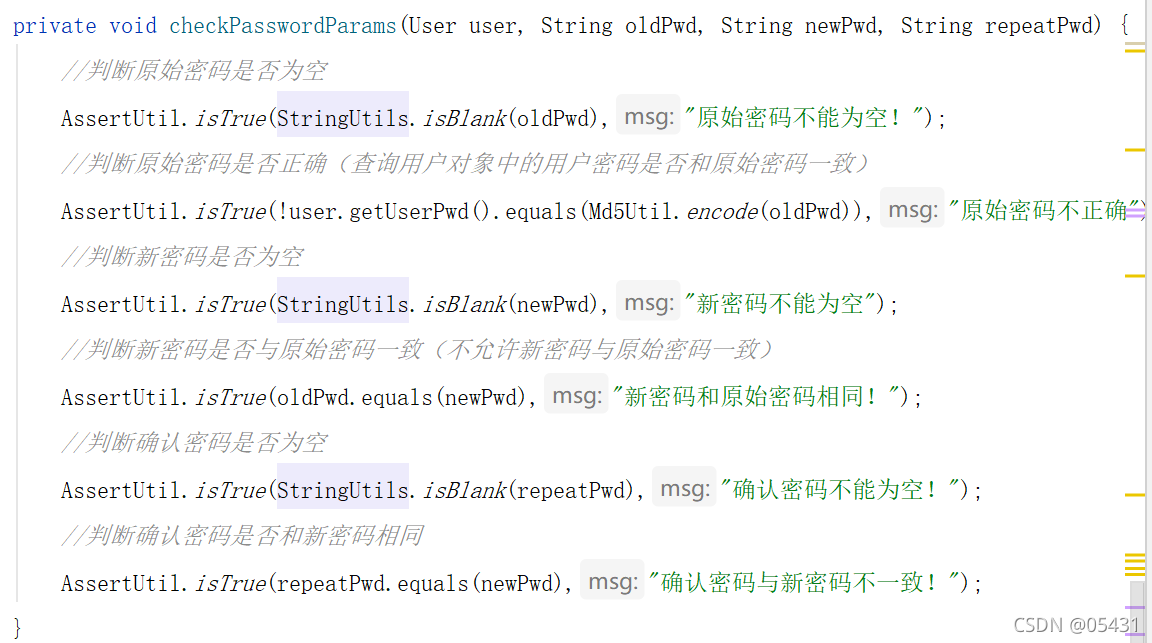
StringUtils.isNotBlank()
是否真的不为空,不是空格或者空值 ,相当于 !isBlank();
public static boolean isNotBlank(final CharSequence cs) {
        return !isBlank(cs);
}
StringUtils.isAnyBlank()
是否包含任何真空值(包含空格或空值)
        StringUtils.isAnyBlank(null) = true
        StringUtils.isAnyBlank(null, “foo”) = true
        StringUtils.isAnyBlank(null, null) = true
        StringUtils.isAnyBlank("", “bar”) = true
        StringUtils.isAnyBlank(“bob”, “”) = true
        StringUtils.isAnyBlank(" bob ", null) = true
        StringUtils.isAnyBlank(" ", “bar”) = true
        StringUtils.isAnyBlank(“foo”, “bar”) = false
        /
        * <p>Checks if any one of the CharSequences are blank ("") or null and not whitespace only..</p>
        * @param css  the CharSequences to check, may be null or empty
        * @return {@code true} if any of the CharSequences are blank or null or whitespace only
        * @since 3.2
        */
public static boolean isAnyBlank(final CharSequence... css) {
        if (ArrayUtils.isEmpty(css)) {
            return true;
        }
        for (final CharSequence cs : css){
            if (isBlank(cs)) {
                return true;
            }
        }
        return false;
}
StringUtils.isNoneBlank()
是否全部都不包含空值或空格
StringUtils.isNoneBlank(null) = false
        StringUtils.isNoneBlank(null, “foo”) = false
        StringUtils.isNoneBlank(null, null) = false
        StringUtils.isNoneBlank("", “bar”) = false
        StringUtils.isNoneBlank(“bob”, “”) = false
        StringUtils.isNoneBlank(" bob ", null) = false
        StringUtils.isNoneBlank(" ", “bar”) = false
        StringUtils.isNoneBlank(“foo”, “bar”) = true
        /
        * <p>Checks if none of the CharSequences are blank ("") or null and whitespace only..</p>
        * @param css  the CharSequences to check, may be null or empty
        * @return {@code true} if none of the CharSequences are blank or null or whitespace only
        * @since 3.2
        */
public static boolean isNoneBlank(final CharSequence... css) {
        return !isAnyBlank(css);
}
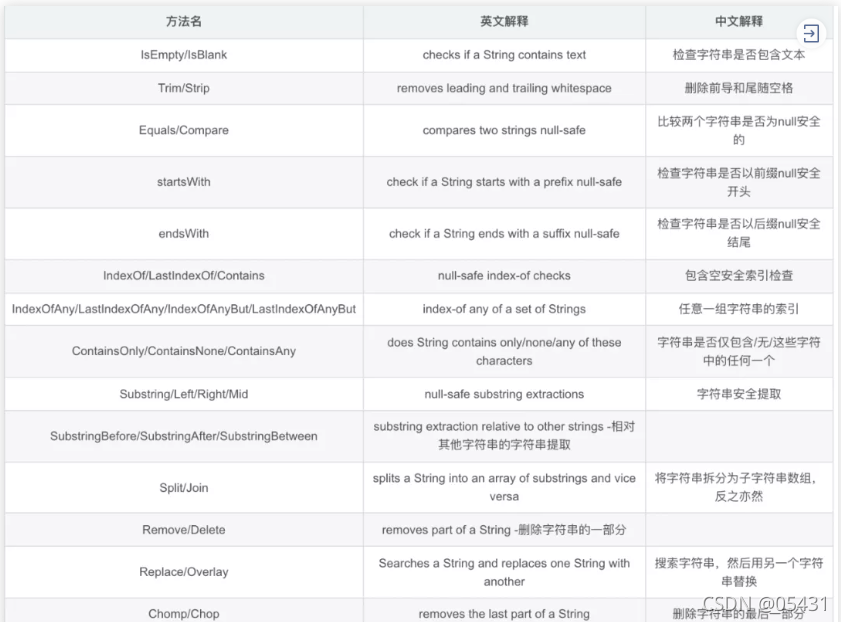
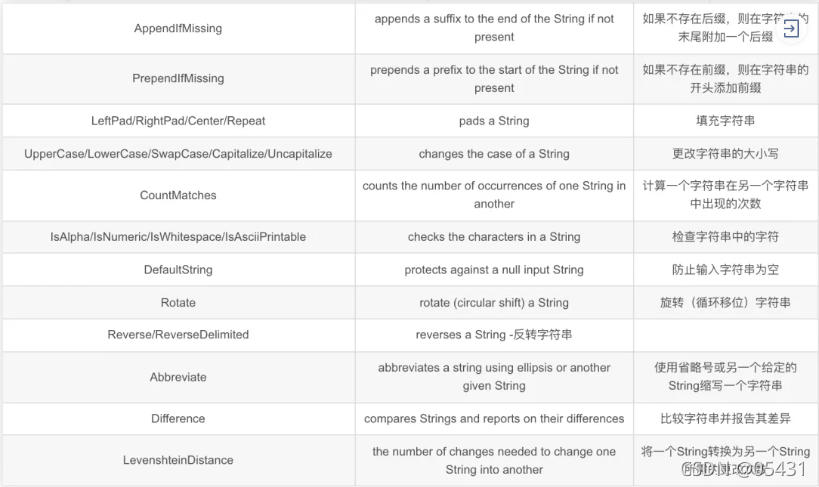
StringUtils的其他方法
可以参考官方的文档,里面有详细的描述,有些方法还是很好用的.
https://commons.apache.org/proper/commons-lang/apidocs/org/apache/commons/lang3/StringUtils.html





 扫一扫
扫一扫


 6131
6131

 被折叠的 条评论
为什么被折叠?
被折叠的 条评论
为什么被折叠?
 到【灌水乐园】发言





