


 本文围绕Java的StringBuilder类展开,介绍了其常用方法,如构造、追加、删除、插入等。详细分析了构造方法的不同形式及初始容量设置,重点讲解了append方法的扩容机制和字符拷贝过程,还提及delete、replace等方法的实现,指出其底层通过维护char[]并调用System.arraycopy()构建新数组。
最近群里的小伙伴分享了面试题,我会每天分享一道。
没有点赞、没有评论、没有关爱 ,我都没有写文章的动力了。
开整——
jdk8,idea
看下StringBuilder类的所有方法(alt+7 / ctrl+f12)
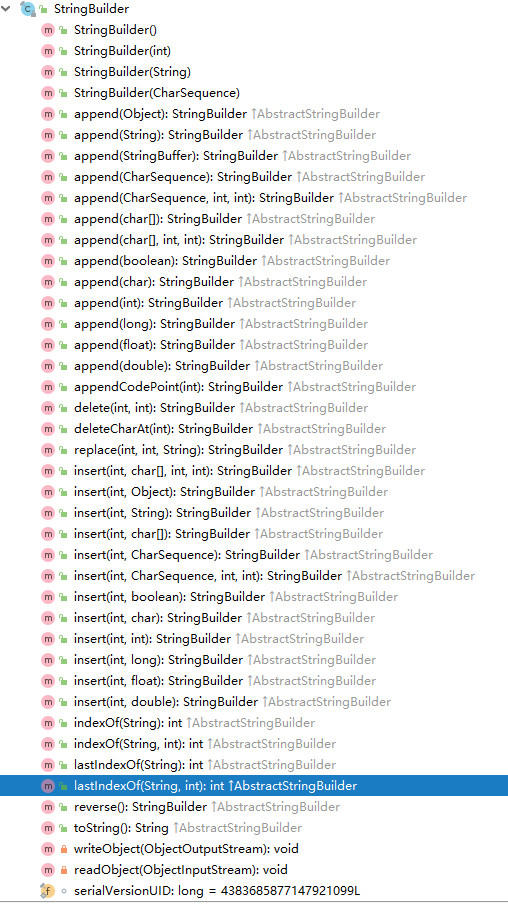
看起来也没啥复杂的,常用的无非是 构造、追加、删除、插入、获取下标、反转。
构造方法:分为三种,无参构造初始容量16,固定容量,字符长度+16容量
public StringBuilder(){
super(16);
}
public StringBuilder(int capacity){
super(capacity);
}
public StringBuilder(String str){
super(str.length() + 16);
append(str);
}
复制代码append方法:
大致分为两步,先这样。。。然后那样。。。懂了吧,咳咳 缓解下气氛。
判断是否需要扩容(newCapacity = 原长度*2+2)
2)将追加字符串拷贝到char[]中
public AbstractStringBuilder append(String str){
if (str == null)
return appendNull();
int len = str.length();
// 判断容量是否足够,是否需要扩容
ensureCapacityInternal(count + len);
// 将字符从字符串复制到目标字符数组。
str.getChars(0, len, value, count);
count += len;
return this;
}
private void ensureCapacityInternal(int minimumCapacity){
// 新字符串长度大于原字符串长度
if (minimumCapacity - value.length > 0)
expandCapacity(minimumCapacity);
}
// 扩容方法
void expandCapacity(int minimumCapacity){
// 新容量 = 原长度 * 2 + 2
int newCapacity = value.length * 2 + 2;
// 看新字符串长度是否比默认扩容值还大
if (newCapacity - minimumCapacity < 0)
// 新容量=新字符串长度
newCapacity = minimumCapacity;
// 判断扩容值是否越界
if (newCapacity < 0) {
// 判断新字符串长度是否越界
if (minimumCapacity < 0)
throw new OutOfMemoryError();
newCapacity = Integer.MAX_VALUE;
}
value = Arrays.copyOf(value, newCapacity);
}
// 将原字符串拷贝到新容量的char数组
public static char[] copyOf(char[] original, int newLength) {
char[] copy = new char[newLength];
System.arraycopy(original, 0, copy, 0,
Math.min(original.length, newLength));
return copy;
}
// params: 0, 追加字符串长度,扩容后的数组,原字符串长度
public void getChars(int srcBegin, int srcEnd, char dst[], int dstBegin){
if (srcBegin < 0) {
throw new StringIndexOutOfBoundsException(srcBegin);
}
// 追加字符串长度 > 扩容后数组长度
if (srcEnd > value.length) {
throw new StringIndexOutOfBoundsException(srcEnd);
}
// 0 > 追加字符串长度
if (srcBegin > srcEnd) {
throw new StringIndexOutOfBoundsException(srcEnd - srcBegin);
}
// 将指定数组拷贝到新数组
System.arraycopy(value, srcBegin, dst, dstBegin, srcEnd - srcBegin);
}
复制代码delete方法
public AbstractStringBuilder delete(int start, int end){
if (start < 0)
throw new StringIndexOutOfBoundsException(start);
if (end > count)
end = count;
if (start > end)
throw new StringIndexOutOfBoundsException();
int len = end - start;
if (len > 0) {
System.arraycopy(value, start+len, value, start, count-end);
count -= len;
}
return this;
}
// 删除制定坐标和之前的数据()
public AbstractStringBuilder deleteCharAt(int index){
if ((index < 0) || (index >= count))
throw new StringIndexOutOfBoundsException(index);
System.arraycopy(value, index+1, value, index, count-index-1);
count--;
return this;
}
复制代码
你瞅啥?这还需要啥解释吗?不就是调用 System.arraycopy()嘛
replace方法,都是熟悉的方法就不做赘述了。
public AbstractStringBuilder replace(int start, int end, String str){
if (start < 0)
throw new StringIndexOutOfBoundsException(start);
if (start > count)
throw new StringIndexOutOfBoundsException("start > length()");
if (start > end)
throw new StringIndexOutOfBoundsException("start > end");
if (end > count)
end = count;
int len = str.length();
int newCount = count + len - (end - start);
ensureCapacityInternal(newCount);
System.arraycopy(value, end, value, start + len, count - end);
str.getChars(value, start);
count = newCount;
return this;
}
复制代码
StringBuilder底层就是维护一个char[ ],调用System.arraycopy() 方法构建一个新的char[ ]
Fighting~ 最近在看Spring讲解,对Spring框架有了更深的了解,推荐大家看一看。想要成为架构师怎么能停留在会用的角度去看待技术呢。





 扫一扫
扫一扫


 1113
1113

 被折叠的 条评论
为什么被折叠?
被折叠的 条评论
为什么被折叠?
 到【灌水乐园】发言





