


 本文介绍了如何使用DbContext的Load方法进行显式加载关联实体。即使禁用了懒加载,仍可通过显式调用Load方法来加载相关实体。文章通过具体代码示例展示了如何加载单一导航属性及集合导航属性。
Explicit Loading with DBContext
Even with lazy loading disabled, it is still possible to lazily load related entities, but it must be done with an explicit call. Use the Load method of DBEntityEntry object to accomplish this.
The following code explicitly loads Standard of particular Student using the Reference() method of DbEntityEntry:
using (var context = new SchoolDBEntities())
{
    //Disable Lazy loading
    context.Configuration.LazyLoadingEnabled = false;

    var student = (from s in context.Students
                        where s.StudentName == "Bill"
                        select s).FirstOrDefault<Student>();

    context.Entry(student).Reference(s => s.Standard).Load();
}
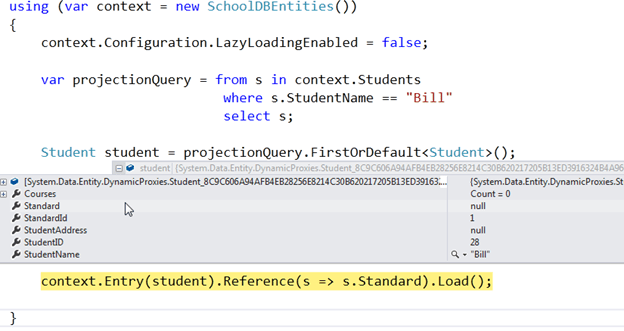
If you run the code shown above, you can see that it first loads student but not standard, as shown below:
The load method to get the Standard entity is shown below:
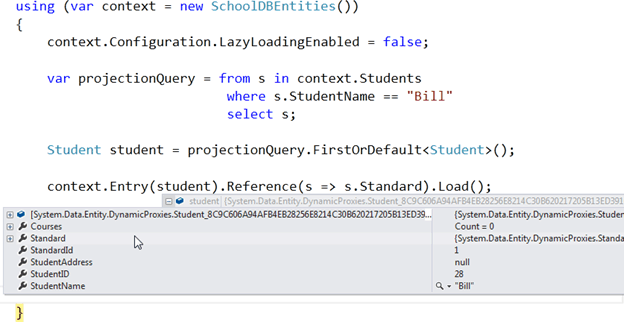
The code shown above will execute two different database queries. The first query gets Student and the second query gets Standard.
Load collection:
Use the Collection() method instead of Reference() method to load collection navigation property. The following example loads the courses of student.
using (var context = new SchoolDBEntities())
{
    context.Configuration.LazyLoadingEnabled = false;

    var student = (from s in context.Students
                        where s.StudentName == "Bill"
                        select s).FirstOrDefault<Student>();

    context.Entry(student).Collection(s => s.Courses).Load();
}
Note: The Load extension method works just like ToList, except that it avoids the creation of the list altogether.





 扫一扫
扫一扫


 2703
2703

 被折叠的 条评论
为什么被折叠?
被折叠的 条评论
为什么被折叠?
 到【灌水乐园】发言





