



 该博客围绕Java面向对象编程展开,介绍了面向对象概念、方法重载、对象创建与使用等对象相关知识,还阐述了面向对象三大特性,包括封装、继承关系、方法覆盖等,同时讲解了this和super关键字的使用,以及单继承的规则和相关习题。
视频地址
https://www.bilibili.com/video/BV1xE41137Qy?p=1
目录
对象
P01-面向对象概念-1 1:09:22
P02-面向对象概念-2 52:28
P03-方法的重载 48:38
P04-对象的创建和使用 47:41
P05-对象和引用 39:50
P06-this关键字 30:16
三大特性
P01-封装 1:14:55
P02-继承关系 1:27:13
P03-方法的覆盖 27:08
P10-super关键字 1:07:04
P11-单继承 16:49
P12-继承习题课 42:11
对象
P01-面向对象概念-1 1:09:22
一、 面向对象思想
1.对象组成:
1)属性   对象有什么
2)方法  对象能做什么  对外提供的行为

2.对象之间的关系
1) is a     汽车与车关系        继承关系
2) has a    汽车与发动机的关系   关联关系  一个对象是另一个对象的属性
3) use a    司机开汽车          依赖关系       一个对象调用另一个对象的方法

3.面向对象思想
面对需求, 找出解决问题的对象, 让对象之间建立适当的关系

二、 面向对象编程思想
模拟现实世界,用计算机中的对象,模拟现实世界中的对象
抽象:
用计算机中类型的概念,对象现实世界中类的概念
类: 对象共性的抽象,

三、 如何定义一个JAVA类
类包含: 属性,方法,构造方法
属性 :
     成员变量特点
     1) 成员变量有默认值  (0: 数值的7种   false boolean  null 对象类型 )
     2) 成员变量作用范围,整个类
     3)成员变量与局部变量可以同名

方法: 行为 函数
     方法声明: 修饰符  返回值  方法名(参数列表) 异常
     方法实现{}
构造方法:特殊方法
     1) 没有返回值类型
     2) 方法名必须与类名相同,包括大小写
     3) 不允许手工调用
     4)如果类没有定义任何构造方法,编译器自动提供默认无参构造方法
P02-面向对象概念-2 52:28
在这里插入代码片
P03-方法的重载 48:38

方法重载:(也叫编译时多态)
    1. 参数个数不同
    2. 参数类型不同
    3. 参数类型排列不同
    4. 构造方法也可以重载
为什么有重载的存在
重载的作用: 一个类的同一行为,由于参数不同,造成的实现差异,对对象的调用者是屏蔽的
P04-对象的创建和使用 47:41
对象的创建过程:
   1. 分配堆空间    属性被赋值为 默认值
   2. 初始化属性    属性被赋值为 初始值
   3. 调用构造方法  属性被赋值为 构造参数

package day6;
public class TestClass{
	public static void main(String[] args){
         Student s =new Student();
         System.out.println(s.name);
         System.out.println(s.age);
         System.out.println(s.score);
          s.eat();
	}
}

class Student{
	String name;
	int age;
	double score;
	public Student(){}
	public Student(String name){
		this.name=name;
	}

	void eat(){
		System.out.println("eating ....");
	}
	void sleep(){
		System.out.println("sleeping ... ");
	}
}
P05-对象和引用 39:50

对象都是存储在堆空间内的
String是引用类型,要注意String不是8种基本类型
成员变量  VS  局部变量
简单变量  VS  引用
   简单变量:  8中基本类型 存储值  作为函数的参数时候, 实参 形参 值相同
   引用:                存储地址  作为函数参数时候  , 实参形参 地址相同  ,指向同一对象
package day7;
public class TestReference{
	public static void main(String[] args){
        int a=10;
        int b=a;
        b++;
        System.out.println(a);  // 10
        MyClass mc1 =new MyClass();
        MyClass mc2 =mc1;
        mc2.value++;
        System.out.println(mc1.value);  //21

        MyClass mc3 =new MyClass();
        changeValue(mc3);
        System.out.println(mc3.value);  //21


	}


	static void changeValue(MyClass mc){
		mc.value++;
	}
}

class MyClass{
	int value=20;
}
P06-this关键字 30:16
this  代表对象自己 就是当前对象
对this 调用,必须是构造器第一个语句   ,见下图

面向对象三大特性
P01-封装 1:14:55


对象有明确的边界,对象边界对对象内部数据起到保护作用,隔离作用
可以利用修饰符,定义类的属性,方法 是否能被外部访问
    public
    private
    默认       属性或方法只能被同包的

访问方法:   get属性名();   set属性名();
对于boolean类型,get方法用is方法替换,如:getMale() 通常用isMale();

现实中文一个女生年龄:女生通过getAge()方法返回年龄
    1. 认识的人问此女生  会回答你,可能偏小
    2. 生病时,医生问此女生   回答一定真实
    3. 陌生人问此女生    女生会回答,滚 ,流氓  ....
这就是封装了,如果没有封装,直就是age 属性的公共方法了;
最简单的方式访问类
公共属性的方式
package day8;
public class TestEncapsulation{
	public static void main(String[] args){
          CredictCard card=new CredictCard();
          System.out.println(card.password);
          card.password ="654321";
          System.out.println(card.password);
	}
}
class CredictCard{
	String password="123456";
}
通过方法访问
属性私有化
属性访问通过方法完成,可以在方法中增加验证身份逻辑,来保护数据本身

package day8;
public class TestEncapsulation{
	public static void main(String[] args){
          CredictCard card=new CredictCard();
        //  System.out.println(card.password);
        //  card.password ="654321";
        //  System.out.println(card.password);

         System.out.println( card.getPassword());
          card.setPassword("654321");
         System.out.println( card.getPassword());
	}

}

class CredictCard{
	private String password="123456";
	public String getPassword(){
		// could do someting to protect the access ,such as role
		//  只有 管理员  &&  用户本身可以访问此方法  ,其他用户不可以访问此方法,(下同)
		return password;
	}
	public void setPassword(String password){
		this.password =password;
	}
}
P02-继承关系 1:27:13
20201228 55:50
子类 is a 父类 父类 – 子类 一般 – 特殊 父类有什么 ,子类就有什么
继承: 从可重用的角度,可扩展角度,子类自动继承父类,可以在父类基础上扩展
LSP:里氏代换原则 : 将父类替换为子类时,依然合乎逻辑
LSP 的经典案例: 长方形 , 正方形 ,
数学老师教:正方形 is a 特殊的长方形
计算机老师: 正方形 is a 特殊的矩形
长方形 is a 特殊的矩形
父类: 一定个各种子类的抽象,将子类的共性提炼出来形成的。
没有继承前的定义
package day8;
public class TestInheritance{
	public static void main(String[] args){

	}
}

class Animal{
	 int age;
	 char gender;
	 public void eat(){
	 }
	 public void sleep(){
	 }
}

class Dog{
	int age;
	char gender;
	public void eat(){

	}
	public void sleep(){

	}
	public void shout(){

	}
}
dog 继承 了 animal ,下面是示例
package day8;
public class TestInheritance2{
	public static void main(String[] args){
         Animal2 ani= new Dog2();
         ani.eat();
	}
}

class Animal2{
	 int age;
	 char gender;
	 public void eat(){
	 	System.out.println("eating by Animal2 ");
	 }
	 public void sleep(){
	 }
}

class Dog2 extends Animal2{
	//int age;
	//char gender;
	@Override
	public void eat(){
	 	System.out.println("eating by Dog2 ");
	}
	//public void sleep(){
	//}
	public void shout(){

	}
}
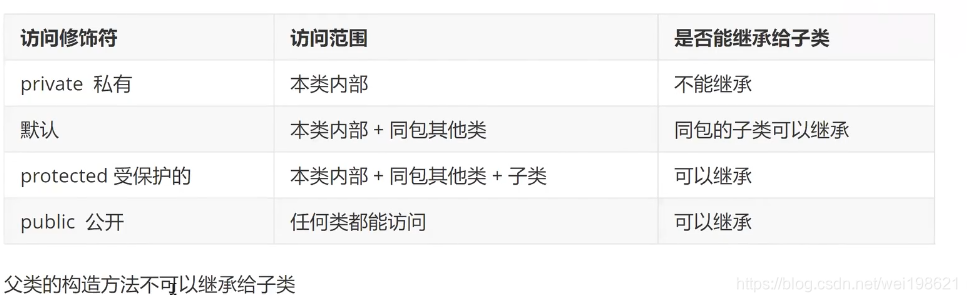
属性方法,访问符
private 本类
default 本类,同包
protected 本类,同包,子类
public all
P03-方法的覆盖 27:08
方法的覆盖
子类用自己的方法实现,替换父类的方法实现,覆盖==重写
P10-super关键字 1:07:04
视频地址
https://www.bilibili.com/video/BV1xE41137Qy?p=10
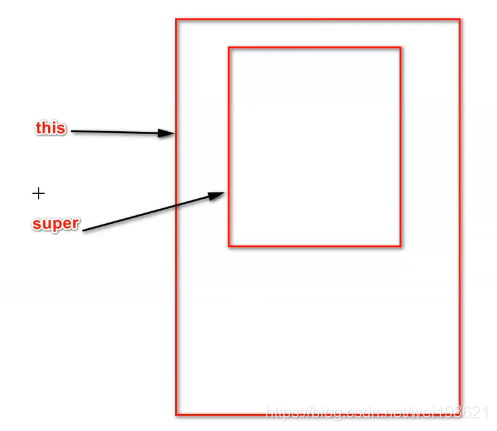
super
super 与 this 对照着学习,
this
-
super引用指向父类对象的属性、方法
super.m;
super.method(); -
super用在构造方法中,构造父类对象,必须是构造方法的第一条语句
- 程序员主动在构造方法第一行写了super()
- 程序员主动在构造方法第一行写了this() 真正执行的还是super();
- 构造方法的第一行 不是super 也不是this ,编译器自动为此构造方法添加super()
===> 任何一个类的构造方法,第一行一定是super()
最先执行的一定是 构造父类对象
构造子类对象,必须先构造父类对象 ,如果子类没有明确盗用父类哪个构造方法,用super调用无参的
编写类的时候,要给类添加无参构造函数
package day8;
public class TestSuper{
	public static void main(String[] args){
         //ClassB clsb=new ClassB();
         //clsb.method();
		new B();
		System.out.println("----------");
		new B(22,33);
	}
}

class ClassA{
	int m=10;
	public void method(){
		System.out.println("method by ClassA ");
	}
}

class ClassB extends ClassA{
	int m=20;
	public void method(){
		super.method();  //  子类 调用父类中被覆盖的方法
		System.out.println("method by ClassB ");
	}

	public void print(){
		System.out.println(this.m);  //20
		System.out.println(super.m);  //10    子类 调用父类 被覆盖的属性
	}
}


class A {
	public A(){
		System.out.println("A()");
	}
	public A(String s){
		System.out.println("A(String)");
	}

}

class B extends A {
	// type1
    public B(){
    	super(); // super 用在构造方法中,表示构造父类对象  // 利用父类的无参构造方法创建父类对象
    	System.out.println("B()");
    }
    // type2
    public B(int a){
    	this();       // this() ; 表示 public B() .... ,所以明面上构造方法首行是this,实际构造方法首行还是super();
		System.out.println("B(int)");
    }

    //type3  the method 2 is same
    public B(int a,int b){
        System.out.println("B(int,int)");    	//构造方法首行,不是this ,也不是 super ,编译器自动给该狗脏方法添加一个super();
    }
    /*public B(int a,int b){
    	super();
        System.out.println("hehe");
    }*/

}

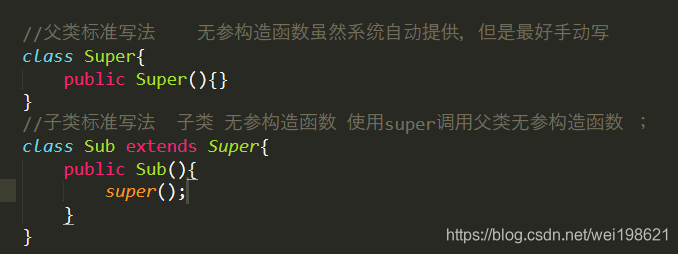
//父类标准写法    无参构造函数虽然系统自动提供,但是最好手动写
class Super{
	public Super(){}
}
//子类标准写法  子类 无参构造函数 使用super调用父类无参构造函数 ;
class Sub extends Super{
	public Sub(){
		super();
	}
}

// 程序员自己的写法
class MyClass{
	int a=10;
	int b;
	String s="abc";
	public MyClass(){
		System.out.println("hehe");
	}
}
//  编译器的执行顺序
class MyClassAfterCompile{
	int a;
	int b;
	String s;
	public MyClassAfterCompile(){
		super();
		a=10;
		s="abc"
		System.out.println("hehe");
	}
}

/*
对象创建过程
    0)分配堆空间   对象所需空间一次性分配好   ,属性赋值默认值
    1) 创建父类对象              super();
    2)初始化属性                a=10;
    3)执行构造方法的剩余语句     System.out.println("hehe");

*/
//父类标准写法    无参构造函数虽然系统自动提供,但是最好手动写
class Super{
	public Super(){}
}
//子类标准写法  子类 无参构造函数 使用super调用父类无参构造函数 ;
class Sub extends Super{
	public Sub(){
		super();
	}
}
P11-单继承 16:49
一个类只能有一个直接父类
class C extends B
class B extends A
java 为什么要单继承,为了保证类之间的树状结构
P12-继承习题课 42:11
//super 用法一 用在构造方法中,设置父类属性
// super 用法二 普通方法中 ,用于调用父类方法
package day9;
public class TestEmployee{
	public static void main(String[] args){

	}
}

class Employee{
    private String name;
    private int birthMonth;

    public Employee(String name,int birthMonth){
    	super();
    	this.name=name;
    	this.birthMonth = birthMonth;
    }

   public double getSalary(int month){
   	 if(this.birthMonth==month) return 100;
   	 return 0;
   }

}

class SalariedEmployee extends Employee{
     private double salary;
     public SalariedEmployee(String name,int birthMonth,double salary){
        super(name,birthMonth);    //super 用法一 用在构造方法中,设置父类属性
     	this.salary=salary;
     }

    public double getSalary(int month){
    	return this.salary +super.getSalary(month);    // super 用法二 普通方法中 ,用于调用父类方法
    }

}

class HourlyEmployee extends Employee{
    private double salaryPerHour;
    private int hours;

    public HourlyEmployee(String name,int birthMonth,double salaryPerHour,int hours){
    	super(name,birthMonth);
    	this.salaryPerHour =salaryPerHour;
    	this.hours = hours;
    }

    public double getSalary(int month){
    	return this.salaryPerHour * hours +super.getSalary(month);
    }

}

class SalesEmployee extends Employee{
    private int sales;
    private int rate;
    public SalesEmployee(String name,int birthMonth,double sales,int rate){
    	super(name,birthMonth);
    	this.sales =sales;
    	this.rate = rate;
    }

    public double getSalary(int month){
    	return this.sales*this.rate  +super.getSalary(month);
    }

}

class BasedPlusSalesEmployee extends SalesEmployee{
    private double basedSalary;
    public SalesEmployee(String name,int birthMonth,double sales,int rate,double basedSalary){
    	super(name,birthMonth,sales,rate);
    	this.basedSalary =basedSalary;
    }
    public double getSalary(int month){
    	return this.basedSalary  +super.getSalary(month);
    }
}





 扫一扫
扫一扫


 4万+
4万+

 被折叠的 条评论
为什么被折叠?
被折叠的 条评论
为什么被折叠?
 到【灌水乐园】发言





