



本次主要介绍单链表的基本题目
1、编程实现一个单链表的建立/测长/打印。
答案:
|
1
2
3
4
5
6
7
8
9
10
11
12
13
14
15
16
17
18
19
20
21
22
23
24
25
26
27
28
29
30
31
32
33
34
35
36
37
38
39
40
41
42
43
44
45
46
47
48
49
50
51
52
53
54
55
56
57
58
59
60
61
62
63
64
65
66
67
68
69
70
|
#include<iostream>
using
namespace
std;
//单链表结构体
typedef
struct
student
{
int
data;
struct
student *next;
}node;
//建立单链表
node *create()
{
node *head,*p,*s;
int
x,cycle=1;
head=(node*)
malloc
(
sizeof
(node));
//建立头节点
p=head;
while
(cycle)
{
printf
(
"\nPlease input the data:"
);
scanf
(
"%d"
,&x);
if
(x!=0)
{
s=(node*)
malloc
(
sizeof
(node));
//每次新建一个节点
s->data=x;
printf
(
"\n%d"
,s->data);
p->next=s;
p=s;
}
else
{
cycle=0;
}
}
head=head->next;
p->next=NULL;
printf
(
"\n yyy %d"
,head->data);
return
(head);
}
//单链表测长
int
length(node *head)
{
int
n=0;
node *p;
p=head;
while
(p!=NULL)
{
p=p->next;
n++;
}
return
(n);
}
//单链表打印
void
print(node *head)
{
node *p;
int
n;
n=length(head);
printf
(
"\nNow,These %d records are :\n"
,n);
p=head;
if
(head!=NULL)
p=p->next;
while
(p!=NULL)
{
printf
(
"\n uuu %d "
,p->data);
p=p->next;
}
}
|
2、编程实现单链表删除节点。
解析:如果删除的是头节点,如下图:
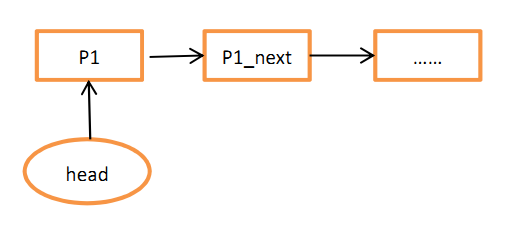
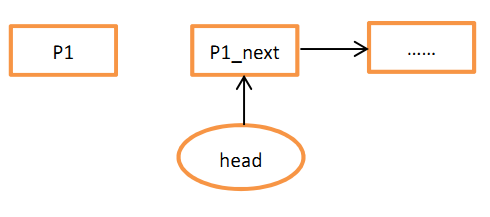
则把head指针指向头节点的下一个节点。同时free p1,如下图所示:
如果删除的是中间节点,如下图所示:
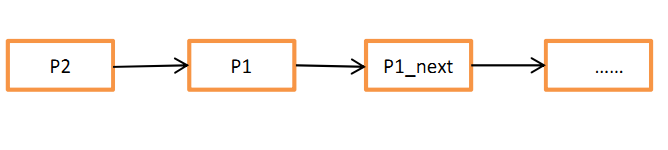
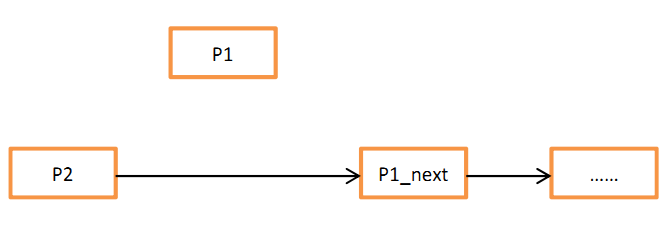
则用p2的next指向p1的next同时,free p1 ,如下图所示:
答案:
//单链表删除节点node *remove(node *head ,intnum){node *p1,*p2;p1=head;while(num!=p1->data && p1->next!=NULL)//查找data为num的节点{p2=p1;p1=p1->next;}if(num==p1->data)//如果存在num节点,则删除{if(p1==head){head=p1->next;free(p1);}else{p2->next=p1->next;}}else{printf("\n%d could not been found",num);}return(head);}
3、编写程序实现单链表的插入。
解析:单链表的插入,如下图所示:
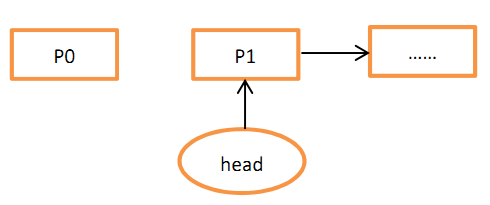
如果插入在头结点以前,则p0的next指向p1,头节点指向p0,如下图所示:

如果插入中间节点,如下图所示:
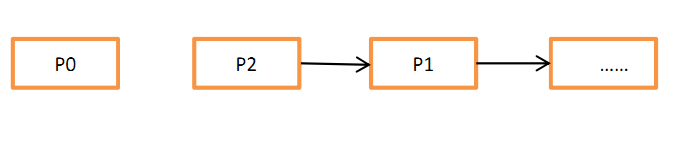
则先让p2的next指向p0,再让p0指向p1,如下图所示:
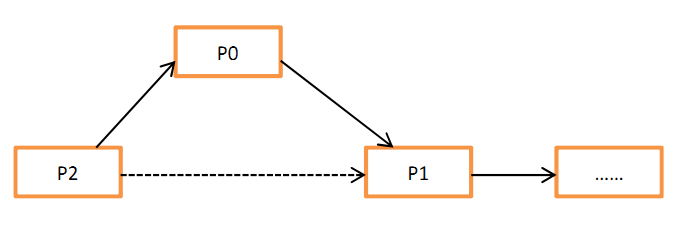
如果插入尾节点,如下图所示:

则先让p1的next指向p0,再让p0指向空,如下图所示:

答案:
//单链表插入节点node *insert(node *head,intnum){node *p0,*p1,*p2;p1=head;p0=(node *)malloc(sizeof(node));p0->data=num;while(p0->data > p1->data && p1->next!=NULL){p2==p1;p1=p1->next;}if(p0->data<=p1->data){if(head==p1){p0->next=p1;head=p0;}else{p2->next=p0;p0->next=p1;}}else{p1->next=p0;p0->next=NULL;}return(head);}
4、编程实现单链表的排序。
答案:
//单链表排序node *sort(node *head){node *p,*p2,*p3;intn;inttemp;n=length(head);if(head==NULL ||head->next==NULL)//如果只有一个或者没有节点returnhead;p=head;for(intj=1;j<n;++j){p=head;for(inti=0;i<n-j;++i){if(p->data > p->next->data){temp=p->data;p->data=p->next->data;p->next->data=temp;}p=p->next;}}return(head);}
5、编写实现单链表的逆置。
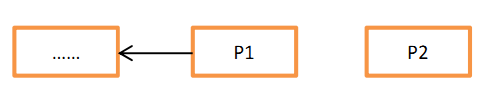
解析:单链表模型如下图所示:
进行单链表逆置,首先要让p2的next指向p1,如下图所示:

再由p1指向p2,p2指向p3,如下图所示:
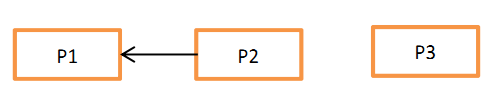
让后重复p2的next指向p1,p1指向p2,p2指向p3。
答案:
//单链表逆置node *reverse(node *head){node *p1,*p2,*p3;if(head==NULL || head->next==NULL)returnhead;p1=head;p2=p1->next;while(p2){p3=p2->next;p2->next=p1;p1=p2;p2=p3;}head->next=NULL;head=p1;returnhead;}
6、编程实现删除单链表的头元素。
答案:
//删除单链表的头元素voidRemoveHead(node *head){node *p;p=head;head=head->next;free(p);}
7、给出一个单链表,不知道节点N的值,怎么只遍历一次就可以求出中间节点,写出算法。
解析:设立两个指针,比如*p和*q。p每次移动两个位置,即p=p->next->next,q每次移动一个位置,即q=q->next。当p达到最后一个节点时,q就是中间节点了。
答案:
//给出一个单链表,不知道节点N的值,怎么只遍历一次就可以求出中间节点voidsearchmid(node *head,node *mid){node *p,*q;p=head;q=head;while(p->next->next!=NULL){p=p->next->next;q=q->next;mid=q;}}
8、给定一个单向链表,设计一个时间优化并且空间优化的算法,找出该链表的倒数第m个元素。实现您的算法,注意处理相关的出错情况。m定义为当m=0时,返回链表最后一个元素。
解析:这是一个难题,我们需要的是倒数第m个元素,所以如果我们从某个元素开始,遍历了m个元素之后刚好到达链表末尾,那么这个元素就是要找的元素。也许从链表的尾部倒推回去不是最好的办法,那么我们可以从链表头开始计数。
思路一:我们可以先一次遍历求出链表的总长度n,然后顺序变量求出第n-m个元素,那么这个就是我们要找的元素了。
思路二:我们用两个指针,一个当前位置指针p和一个指向第m个元素的指针q,需要确保两个指针之间相差m个元素,然后以同样的速度移动它们,如果当q到达链表末尾时,那么p指针就是指向倒数第m个元素了。
答案:
//思路一node *searchLastElement1(node *head,intm){if(head==NULL)returnNULL;node *p=head;intcount=0;while(p!=NULL){p=p->next;count++;}if(count<m)returnNULL;p=head;for(inti=0;i<count-m;i++){p=p->next;}returnp;}//思路二node *searchLastElement2(node *head,intm){if(head==NULL)returnNULL;node *p,*q;p=head;for(inti=0;i<m;i++){if(p->next!=NULL){p=p->next;}else{returnNULL;}}q=head;while(p->next!=NULL){p=p->next;q->next;}returnq;}
9、所用链表的节点结构如下:
struct Node
{int data ;
Node *next ;
};
typedef struct Node Node ;
(1)已知链表的头结点head,写一个函数把这个链表逆序 ( Intel)
Node * ReverseList(Node *head) //链表逆序
{
if ( head == NULL || head->next == NULL )
return head;
Node *p1 = head ;
Node *p2 = p1->next ;
Node *p3 = p2->next ;
p1->next = NULL ;
while ( p3 != NULL )
{
p2->next = p1 ;
p1 = p2 ;
p2 = p3 ;
p3 = p3->next ;
}
p2->next = p1 ;
head = p2 ;
return head ;
}
(2)已知两个链表head1 和head2 各自有序,请把它们合并成一个链表依然有序。(保留所有结点,即便大小相同)
Node * Merge(Node *head1 , Node *head2)
{
if ( head1 == NULL)
return head2 ;
if ( head2 == NULL)
return head1 ;
Node *head = NULL ;
Node *p1 = NULL;
Node *p2 = NULL;
if ( head1->data data )
{
head = head1 ;
p1 = head1->next;
p2 = head2 ;
}
else
{
head = head2 ;
p2 = head2->next ;
p1 = head1 ;
}
Node *pcurrent = head ;
while ( p1 != NULL && p2 != NULL)
{
if ( p1->data data )
{
pcurrent->next = p1 ;
pcurrent = p1 ;
p1 = p1->next ;
}
else
{
pcurrent->next = p2 ;
pcurrent = p2 ;
p2 = p2->next ;
}
}
if ( p1 != NULL )
pcurrent->next = p1 ;
if ( p2 != NULL )
pcurrent->next = p2 ;
return head ;
}
(3)已知两个链表head1 和head2 各自有序,请把它们合并成一个链表依然有序,这次要求用递归方法进行。 (Autodesk)
答案:
Node * MergeRecursive(Node *head1 , Node *head2)
{
if ( head1 == NULL )
return head2 ;
if ( head2 == NULL)
return head1 ;
Node *head = NULL ;
if ( head1->data data )
{
head = head1 ;
head->next = MergeRecursive(head1->next,head2);
}
else
{
head = head2 ;
head->next = MergeRecursive(head1,head2->next);
}
return head ;
}





 扫一扫
扫一扫


 1349
1349

 被折叠的 条评论
为什么被折叠?
被折叠的 条评论
为什么被折叠?
 到【灌水乐园】发言





