





 文章介绍了如何计算二叉树的所有左叶子节点之和,分别提供了递归和迭代两种解法,并通过示例解释了左叶子节点的定义。递归法采用后序遍历,迭代法使用前序遍历,重点在于通过父节点判断子节点是否为左叶子节点。
原文链接:代码随想录
404.左叶子之和
计算给定二叉树的所有左叶子之和。
示例:

#视频讲解
《代码随想录》算法视频公开课:二叉树的题目中,总有一些规则让你找不到北 | LeetCode:404.左叶子之和 (opens new window),相信结合视频在看本篇题解,更有助于大家对本题的理解。
#思路
首先要注意是判断左叶子,不是二叉树左侧节点,所以不要上来想着层序遍历。
因为题目中其实没有说清楚左叶子究竟是什么节点,那么我来给出左叶子的明确定义:节点A的左孩子不为空,且左孩子的左右孩子都为空(说明是叶子节点),那么A节点的左孩子为左叶子节点
大家思考一下如下图中二叉树,左叶子之和究竟是多少?

其实是0,因为这棵树根本没有左叶子!
但看这个图的左叶子之和是多少?
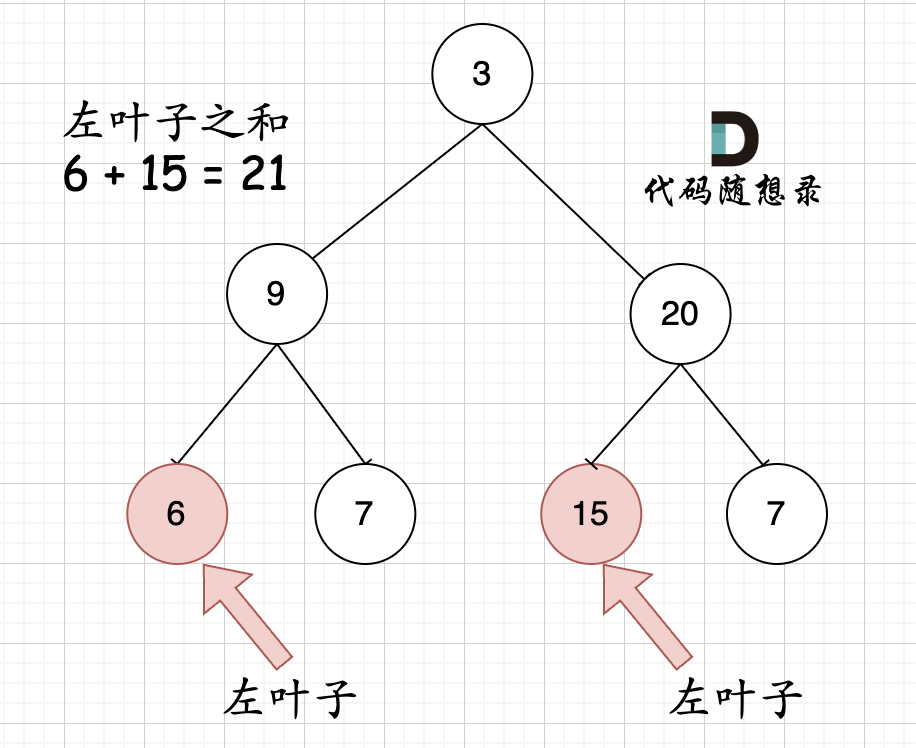
相信通过这两个图,大家对最左叶子的定义有明确理解了。
那么判断当前节点是不是左叶子是无法判断的,必须要通过节点的父节点来判断其左孩子是不是左叶子。
如果该节点的左节点不为空,该节点的左节点的左节点为空,该节点的左节点的右节点为空,则找到了一个左叶子,判断代码如下:
if (node->left != NULL && node->left->left == NULL && node->left->right == NULL) {
    左叶子节点处理逻辑
}
#递归法
递归的遍历顺序为后序遍历(左右中),是因为要通过递归函数的返回值来累加求取左叶子数值之和。
递归三部曲:
1. 确定递归函数的参数和返回值
判断一个树的左叶子节点之和,那么一定要传入树的根节点,递归函数的返回值为数值之和,所以为int
使用题目中给出的函数就可以了。
2. 确定终止条件
如果遍历到空节点,那么左叶子值一定是0
if (root == NULL) return 0;
注意,只有当前遍历的节点是父节点,才能判断其子节点是不是左叶子。 所以如果当前遍历的节点是叶子节点,那其左叶子也必定是0,那么终止条件为:
if (root == NULL) return 0;
if (root->left == NULL && root->right== NULL) return 0; //其实这个也可以不写,如果不写不影响结果,但就会让递归多进行了一层。
3. 确定单层递归的逻辑
当遇到左叶子节点的时候,记录数值,然后通过递归求取左子树左叶子之和,和 右子树左叶子之和,相加便是整个树的左叶子之和。
代码如下:
int leftValue = sumOfLeftLeaves(root->left);    // 左
if (root->left && !root->left->left && !root->left->right) {
    leftValue = root->left->val;
}
int rightValue = sumOfLeftLeaves(root->right);  // 右

int sum = leftValue + rightValue;               // 中
return sum;
整体递归代码如下:
class Solution {
public:
    int sumOfLeftLeaves(TreeNode* root) {
        if (root == NULL) return 0;
        if (root->left == NULL && root->right== NULL) return 0;

        int leftValue = sumOfLeftLeaves(root->left);    // 左
        if (root->left && !root->left->left && !root->left->right) { // 左子树就是一个左叶子的情况
            leftValue = root->left->val;
        }
        int rightValue = sumOfLeftLeaves(root->right);  // 右

        int sum = leftValue + rightValue;               // 中
        return sum;
    }
};
以上代码精简之后如下:
class Solution {
public:
    int sumOfLeftLeaves(TreeNode* root) {
        if (root == NULL) return 0;
        int leftValue = 0;
        if (root->left != NULL && root->left->left == NULL && root->left->right == NULL) {
            leftValue = root->left->val;
        }
        return leftValue + sumOfLeftLeaves(root->left) + sumOfLeftLeaves(root->right);
    }
};
精简之后的代码其实看不出来用的是什么遍历方式了,对于算法初学者以上根据第一个版本来学习。
#迭代法
本题迭代法使用前中后序都是可以的,只要把左叶子节点统计出来,就可以了,那么参考文章 二叉树:听说递归能做的,栈也能做! (opens new window)和二叉树:迭代法统一写法 (opens new window)中的写法,可以写出一个前序遍历的迭代法。
判断条件都是一样的,代码如下:
class Solution {
public:
    int sumOfLeftLeaves(TreeNode* root) {
        stack<TreeNode*> st;
        if (root == NULL) return 0;
        st.push(root);
        int result = 0;
        while (!st.empty()) {
            TreeNode* node = st.top();
            st.pop();
            if (node->left != NULL && node->left->left == NULL && node->left->right == NULL) {
                result += node->left->val;
            }
            if (node->right) st.push(node->right);
            if (node->left) st.push(node->left);
        }
        return result;
    }
};
这道题目要求左叶子之和,其实是比较绕的,因为不能判断本节点是不是左叶子节点。
此时就要通过节点的父节点来判断其左孩子是不是左叶子了。
平时我们解二叉树的题目时,已经习惯了通过节点的左右孩子判断本节点的属性,而本题我们要通过节点的父节点判断本节点的属性。
希望通过这道题目,可以扩展大家对二叉树的解题思路。
#其他语言版本
#Java
递归
class Solution {
    public int sumOfLeftLeaves(TreeNode root) {
        if (root == null) return 0;
        int leftValue = sumOfLeftLeaves(root.left);    // 左
        int rightValue = sumOfLeftLeaves(root.right);  // 右

        int midValue = 0;
        if (root.left != null && root.left.left == null && root.left.right == null) {
            midValue = root.left.val;
        }
        int sum = midValue + leftValue + rightValue;  // 中
        return sum;
    }
}
迭代
class Solution {
    public int sumOfLeftLeaves(TreeNode root) {
        if (root == null) return 0;
        Stack<TreeNode> stack = new Stack<> ();
        stack.add(root);
        int result = 0;
        while (!stack.isEmpty()) {
            TreeNode node = stack.pop();
            if (node.left != null && node.left.left == null && node.left.right == null) {
                result += node.left.val;
            }
            if (node.right != null) stack.add(node.right);
            if (node.left != null) stack.add(node.left);
        }
        return result;
    }
}
// 层序遍历迭代法
class Solution {
    public int sumOfLeftLeaves(TreeNode root) {
        int sum = 0;
        if (root == null) return 0;
        Queue<TreeNode> queue = new LinkedList<>();
        queue.offer(root);
        while (!queue.isEmpty()) {
            int size = queue.size();
            while (size -- > 0) {
                TreeNode node = queue.poll();
                if (node.left != null) { // 左节点不为空
                    queue.offer(node.left);
                    if (node.left.left == null && node.left.right == null){ // 左叶子节点
                        sum += node.left.val;
                    }
                }
                if (node.right != null) queue.offer(node.right);
            }
        }
        return sum;
    }
}
#Python
递归后序遍历
class Solution:
    def sumOfLeftLeaves(self, root: TreeNode) -> int:
        if not root:
            return 0

        left_left_leaves_sum = self.sumOfLeftLeaves(root.left)  # 左
        right_left_leaves_sum = self.sumOfLeftLeaves(root.right) # 右

        cur_left_leaf_val = 0
        if root.left and not root.left.left and not root.left.right:
            cur_left_leaf_val = root.left.val

        return cur_left_leaf_val + left_left_leaves_sum + right_left_leaves_sum # 中
迭代
class Solution:
    def sumOfLeftLeaves(self, root: TreeNode) -> int:
        """
        Idea: Each time check current node's left node.
              If current node don't have one, skip it.
        """
        stack = []
        if root:
            stack.append(root)
        res = 0

        while stack:
            # 每次都把当前节点的左节点加进去.
            cur_node = stack.pop()
            if cur_node.left and not cur_node.left.left and not cur_node.left.right:
                res += cur_node.left.val

            if cur_node.left:
                stack.append(cur_node.left)
            if cur_node.right:
                stack.append(cur_node.right)

        return res





 扫一扫
扫一扫


 1618
1618

 被折叠的 条评论
为什么被折叠?
被折叠的 条评论
为什么被折叠?
 到【灌水乐园】发言





