



目录
1.最重要思想
构造器私有
2.饿汉式单例
/**
 * 饿汉式
 * 问题:类加载时就初始化,不管你用不用,浪费内存
 */
public class HungryMan {
    private HungryMan(){

    }
    private static HungryMan hungryMan = new HungryMan();

    public static HungryMan getInstance(){
        return hungryMan;
    }
}
3.懒汉式单例
3.1 单线程可用
/**
 * 懒汉式初始形态
 * 单线程的情况下可用
 */
public class LazyMan01 {
    private LazyMan01(){};

    private static LazyMan01 lazyMan01;

    public static LazyMan01 getInstance(){
        if (lazyMan01 == null){
            lazyMan01 = new LazyMan01();
        }
        return lazyMan01;
    }
}
3.2 多线程可用
/**
 * 多线程可用,但是反射可破坏
 * double check 双重检查锁
 */
public class LazyMan02 {
    /**
     * 可以使用特殊标识符防止反射破坏单例,但仍有极端问题
    private static Boolean TAG = false;
    private LazyMan02(){
        synchronized (LazyMan02.class){
            if (TAG == false){
                TAG = true;
            }else {
                throw new RuntimeException("不要用反射破坏单例");
            }
        }
    };*/
    private LazyMan02(){};
    private volatile static LazyMan02 lazyMan02;//volatile 防止指令重排
    public static LazyMan02 getInstance(){
        if (lazyMan02==null){
            synchronized (LazyMan02.class){
                if (lazyMan02==null){
                    lazyMan02=new LazyMan02();
                }
            }
        }
        return lazyMan02;
    }
}
3.2 静态内部类
/**
 * 静态内部类的方法
 * 同样反射可破坏
 */
public class Holder {
    private Holder(){};

    private static Holder getInstance(){
        return HolderClass.Holder;
    }

    public static class HolderClass{
        public static final Holder Holder = new Holder();
    }
}
3.4 枚举
反射为什么不能破坏枚举?
Constructor<LazyMan02> declaredConstructor =
        LazyMan02.class.getDeclaredConstructor(null);//获得构造器
        declaredConstructor.setAccessible(true);//无视私有的构造器
LazyMan02 lazyMan021 = declaredConstructor.newInstance();

public T newInstance(Object ... initargs)
    throws InstantiationException, IllegalAccessException,
           IllegalArgumentException, InvocationTargetException
{
    if (!override) {
        if (!Reflection.quickCheckMemberAccess(clazz, modifiers)) {
            Class<?> caller = Reflection.getCallerClass();
            checkAccess(caller, clazz, null, modifiers);
        }
    }
    if ((clazz.getModifiers() & Modifier.ENUM) != 0)
        throw new IllegalArgumentException("Cannot reflectively create enum objects");
        //当一个类是枚举的时候不能被反射破坏
    ConstructorAccessor ca = constructorAccessor;   // read volatile
    if (ca == null) {
        ca = acquireConstructorAccessor();
    }
    @SuppressWarnings("unchecked")
    T inst = (T) ca.newInstance(initargs);
    return inst;
}
枚举实现单例模式
package shejimoshi.danli;

import java.lang.reflect.Constructor;
import java.lang.reflect.InvocationTargetException;

/**
 * 枚举可以简单使用,并且防止反射破坏
 */
public enum EnumSingle {

    INSTANCE;
    public EnumSingle getInstance(){

        return INSTANCE;
    };

    public static void main(String[] args) throws NoSuchMethodException, InvocationTargetException, InstantiationException, IllegalAccessException {
        EnumSingle instance = EnumSingle.INSTANCE;
        Constructor<EnumSingle> declaredConstructor = EnumSingle.class.getDeclaredConstructor(null);
        declaredConstructor.setAccessible(true);
        EnumSingle instance1 = declaredConstructor.newInstance();//报错
    }
}
当我们使用反射破坏的时候会显示,为什么不是Cannot reflectively create enum objects
 反编译我们的class文件:发现空参构造函数是存在的。那证明这个文件肯定是反编译出了问题
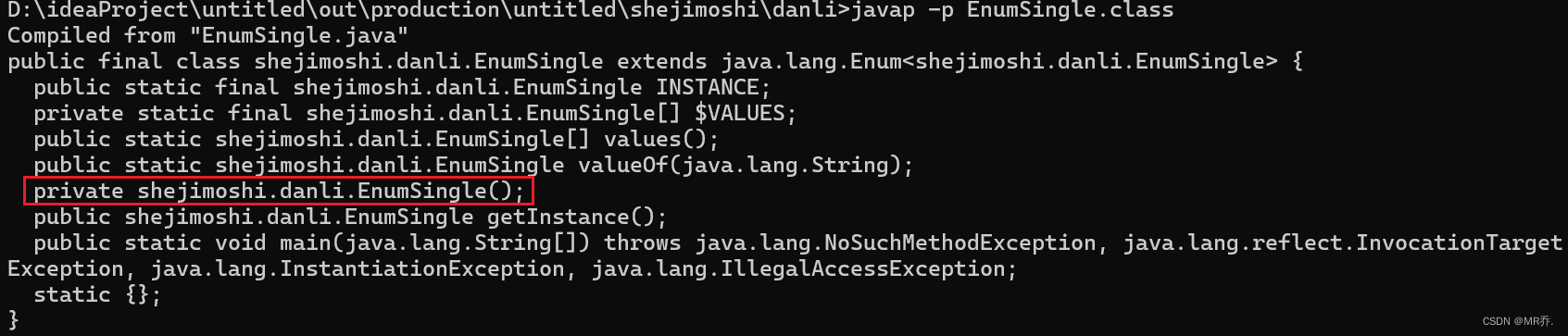
下载jad反编译软件,随后反编译,在对应的文件找反编译后的java文件。 反编译后的内容
import java.lang.reflect.Constructor;
import java.lang.reflect.InvocationTargetException;

public final class EnumSingle extends Enum
{

    public static EnumSingle[] values()
    {
        return (EnumSingle[])$VALUES.clone();
    }

    public static EnumSingle valueOf(String name)
    {
        return (EnumSingle)Enum.valueOf(shejimoshi/danli/EnumSingle, name);
    }

    private EnumSingle(String s, int i)//只有一个需要传入string和int的
    {
        super(s, i);
    }

    public EnumSingle getInstance()
    {
        return INSTANCE;
    }

    public static void main(String args[])
        throws NoSuchMethodException, InvocationTargetException, InstantiationException, IllegalAccessException
    {
        EnumSingle instance = INSTANCE;
        Constructor declaredConstructor = shejimoshi/danli/EnumSingle.getDeclaredConstructor(null);
        declaredConstructor.setAccessible(true);
        EnumSingle instance1 = (EnumSingle)declaredConstructor.newInstance(new Object[0]);
    }

    public static final EnumSingle INSTANCE;
    private static final EnumSingle $VALUES[];

    static
    {
        INSTANCE = new EnumSingle("INSTANCE", 0);
        $VALUES = (new EnumSingle[] {
            INSTANCE
        });
    }
}
将对应空参改为传入String和int
public static void main(String[] args) throws NoSuchMethodException, InvocationTargetException, InstantiationException, IllegalAccessException {
    EnumSingle instance = EnumSingle.INSTANCE;
    Constructor<EnumSingle> declaredConstructor = EnumSingle.class.getDeclaredConstructor(String.class,int.class);
    declaredConstructor.setAccessible(true);
    EnumSingle instance1 = declaredConstructor.newInstance();
}
正常显示






 扫一扫
扫一扫


 4035
4035

 被折叠的 条评论
为什么被折叠?
被折叠的 条评论
为什么被折叠?
 到【灌水乐园】发言





