论文笔记——Fine-grained Interest Matching for Neural News Recommendation

本文介绍了FIM模型在新闻推荐系统中的应用,该模型通过多级别用户兴趣表征和卷积神经网络提高兴趣匹配精度。FIM包括News Representation Model、Cross Interaction Model和Click Predictor Model三个部分,利用Hierarchical Dilated Convolution编码新闻特征,并通过交叉乘积和3D CNN捕捉用户与新闻的匹配向量,从而更准确地预测用户点击行为。

Abstract

本篇论文是针对个人新闻推荐系统再提出了一个新的模型——FIM(同样基于神经网络)

  • 核心问题: 用户的兴趣候选新闻二者的精确匹配
  • 现有模型存在的问题: 现存的模型都会选择将用户的兴趣表征为一个单独的向量,这样会使用户的很多兴趣表征缺失
  • FIM模型的基本构造思路: 不同于之前的模型将用户的兴趣表征为一个联合的向量,FIM模型使用多级别的用户兴趣表征方式使用卷积神经网络来提取用户的多方面的兴趣。

Approach

问题的建模

个人新闻推荐问题可以表述如下,给定用户 u,以及用户 u 的点击新闻历史 Su,然后给定候选新闻 Ci,候选新闻还带有标签 Yi,根据以上给出的数据来求一个模型 g,来通过给出一个用户 u 以及其历史点击新闻 Su 来预测用户是否会点击候选新闻。

Model View

FIM模型分为三部分,News Representation Model、Cross Interaction Model以及Click Predictor Model,分别为用于新闻表示的模型,交叉乘积的模型以及预测评分的模型
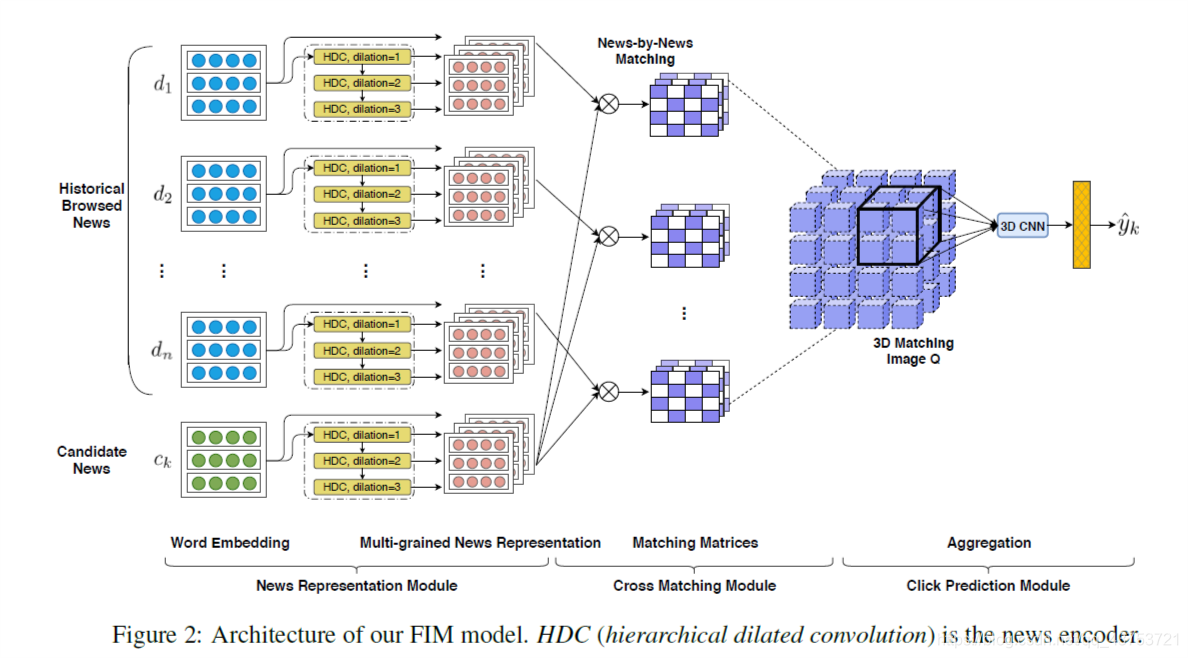
在这里插入图片描述

  • News Representation Model
    这一部分的模型是用来学习得到News的表征。
    首先,根据作者的阐述,一个用户点击News应该根据的是News的Title以及Category,所以将News的Title与Category做连接作为输入向量。
    Input: 模型的输入为

    在这里插入图片描述
    Word Embedding: 先对News的输入向量做词向量的转换进一步得到News的表征矩阵

    在这里插入图片描述
    CNN: 使用dilation convolution来构造HDC(Hierarchical Dilated Convolution)编码器来进一步学习News的特征表示
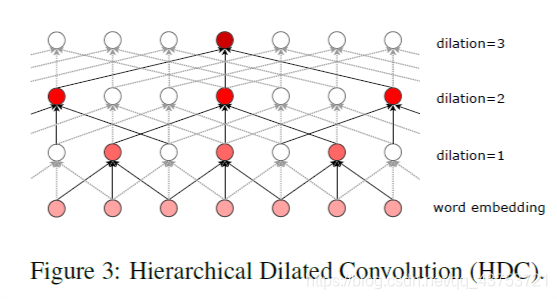
    在这里插入图片描述
    计算公式如下:在这里插入图片描述
    经过以上两步,一篇News就转换为 L 个表征向量,L 指的是使用了几层的空洞卷积,现在News的表征矩阵可以表示为
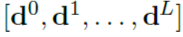
    在这里插入图片描述

  • Cross Interaction Model
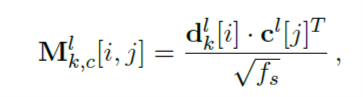
    在这个模型中,将上述得到各个News的表征矩阵与候选新闻的表征矩阵进行相乘
    在这里插入图片描述
    计算公式如上
    k,c表示第k个历史点击新闻以及候选新闻c
    为了很好地表示用户的兴趣信息,在这一步将所有交叉乘积得到的表征矩阵汇总到一个三维的矩阵中

    在这里插入图片描述
    n即为历史点击新闻的总数
    然后使用一个三维的卷积神经网络得到用户与候选新闻的匹配向量

  • Click Predictor
    这一层只有一个线性层来最后获得用户与候选新闻的匹配分数

    在这里插入图片描述

损失函数

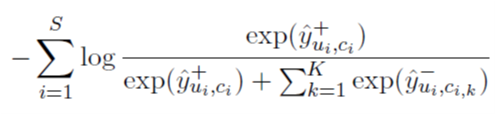
与之前几篇论文一样取了负样本进行一起训练,损失函数如下:
在这里插入图片描述

Experiment

实验参数的配置:
  • 词向量维度:300
  • News的表征单词数目:20
  • 卷积神经网络中窗口大小以及数目:3 150
  • HDC编码层:[1, 2, 3]
  • 3D卷积神经网络的过滤器:
    第一层:32-[3,3,3]
    第二层:16-[3,3,3]
    步幅:[1,1,1]
    池化层大小以及步幅:[3,3,3] [3,3,3]
    负样本数:4
    批大小:100
    学习率:1e-3
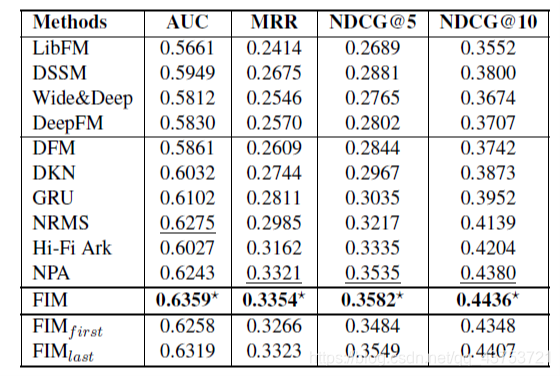
实验结果如下
在这里插入图片描述

心得

因为是刚刚入门推荐系统,也只是粗略的阅读了几篇论文,所以理解的并不深刻,后续如果有更深的理解会再进行补充

Object detection in remote sensing images is a challenging task due to the complex backgrounds, diverse object shapes and sizes, and varying imaging conditions. To address these challenges, fine-grained feature enhancement can be employed to improve object detection accuracy. Fine-grained feature enhancement is a technique that extracts and enhances features at multiple scales and resolutions to capture fine details of objects. This technique includes two main steps: feature extraction and feature enhancement. In the feature extraction step, convolutional neural networks (CNNs) are used to extract features from the input image. The extracted features are then fed into a feature enhancement module, which enhances the features by incorporating contextual information and fine-grained details. The feature enhancement module employs a multi-scale feature fusion technique to combine features at different scales and resolutions. This technique helps to capture fine details of objects and improve the accuracy of object detection. To evaluate the effectiveness of fine-grained feature enhancement for object detection in remote sensing images, experiments were conducted on two datasets: the NWPU-RESISC45 dataset and the DOTA dataset. The experimental results demonstrate that fine-grained feature enhancement can significantly improve the accuracy of object detection in remote sensing images. The proposed method outperforms state-of-the-art object detection methods on both datasets. In conclusion, fine-grained feature enhancement is an effective technique to improve the accuracy of object detection in remote sensing images. This technique can be applied to a wide range of applications, such as urban planning, disaster management, and environmental monitoring.
评论
成就一亿技术人!
拼手气红包6.0元
还能输入1000个字符
 
红包 添加红包
表情包 插入表情
 条评论被折叠 查看
添加红包

请填写红包祝福语或标题

红包个数最小为10个

红包金额最低5元

当前余额3.43前往充值 >
需支付:10.00
成就一亿技术人!
领取后你会自动成为博主和红包主的粉丝 规则
hope_wisdom
发出的红包
实付
使用余额支付
点击重新获取
扫码支付
钱包余额 0

抵扣说明:

1.余额是钱包充值的虚拟货币,按照1:1的比例进行支付金额的抵扣。
2.余额无法直接购买下载,可以购买VIP、付费专栏及课程。

余额充值