


 本文详细介绍了二叉排序树的概念、特性,并分别阐述了插入、中序遍历、查找、删除操作的步骤和实现代码。在删除操作中,讨论了删除叶子节点、只有一个子节点和有两个子节点的情况。同时,文章指出了删除操作可能遇到的问题,如节点无父节点和重复元素的情况。
文章目录
二叉排序树(Binary Sort Tree),又称为二叉查找树
特点:
若它的左子树不为空,则左子树上的所有结点的值均小于它的根结点的值。同理,右子树是大于根结点的值。它的左、右子树也分别为二叉排序树。
注: 若有相同的值,将该结点放在左子结点或右子结点均可(本文放在右子结点)
一、二叉排序树的插入(即二叉树的创建)
(1)步骤
- 若二叉排序树为空树,则新插入的结点为新的根结点。
- 若不为空树,且新结点的值 < 当前结点的值,且当前结点无左结点,则插入新结点(成为当前结点的左结点)。
- 否则,递归当前结点的左结点。
- 若新结点的值 > 当前结点的值,且当前结点无右结点,则插入新结点(成为当前结点的右结点)。
- 否则,递归当前结点的右结点。
(2)实现代码
- Node类的插入函数
  public void add(Node node){         //插入结点的方法
            if(node != null){
                if(node.value < this.value){            //1.若新结点的值 < 当前结点
                    if(this.left == null){                  //1.1当前结点无左结点
                        this.left = node;                       //新结点成为当前结点的左结点
                    }else {                                 //1.2若当前结点有左结点
                        this.left.add(node);                     //递归左结点
                    }
                } else if(this.right == null){          //2.若新结点的值>=当前结点,且当前结点无右结点
                    this.right = node;                          //2.1新结点成为当前结点的右结点
                }else{                                          //2.2当前结点有右结点
                    this.right.add(node);                           //递归右结点
                }
            }
         }
- BinarySortTree类的插入函数
 public void add(Node node ){        //二叉排序树插入结点的方法
                if(root == null){                   //1.若根结点为空
                    root = node;                    //1.1把输入的结点放在根结点
                }else{                              //2.若根结点不为空
                    root.add(node);                 //2.1调用Node类中的添加结点的方法
                }
            }
二、二叉排序树的遍历
和普通二叉树一样,也有前序、中序、后续遍历。这里代码实现了中序遍历。
(1)代码实现
- Node类的中序遍历函数
public void infixOrder(){            //树的中序遍历
             if(this.left != null){                 //1.若当前结点有左结点
                 this.left.infixOrder();                   //1.1递归该左结点
             }
                 System.out.println(this.value);            //2.一直递归到结点无左子结点。并输出这个结点
             if(this.right != null){                //3.若当前有右结点
                 this.right.infixOrder();                   //3.1递归该右结点(当右结点无左结点时,该右结点也会被2.1输出)
             }
         }
- BinarySortTree类的中序遍历函数
 public void infixOrder() {
            if(this.root != null) {
                this.root.infixOrder();
            } else {
                System.out.println("二叉排序树为空,不能遍历");
            }
        }
三、二叉排序树的查找
(1)步骤
二叉排序树可看作一个有序表,它的查找类似与二分查找。
- 若查找的关键字 = 根结点关键字,查找成功。
- 若查找的关键字 < 根结点关键字,递归查找左子树。
- 若查找的关键字 > 根结点关键字,递归查找右子树。
- 若子树为空,则查找失败。
(2)实现代码
- Node类的查找函数
 public Node BstSearch(int num){                                //结点的查找
             if(num == this.value){                                     //1.若查找的值 = 当前结点的值
                 return this;                                                       //1.1返回当前节点的索引
             }else if(num < this.value && this.left != null){           //2.若查找的值 < 当前结点的值
                 return this.left.BstSearch(num);                                   //2.1递归查找当前结点的左子结点
             }else if(num > this.value && this.right != null){          //3.若查找的值 > 当前结点的值
                 return this.right.BstSearch(num);                                  //3.1递归查找当前结点的右子结点
             }
             return null;                                               //若没查到,则返回索引null
         }
- BinarySortTree类的查找函数
 public Node BstSearch(int num){                         //树中的结点查找
                if(num == root.value){                          //1.若要查找的值正好 = 根结点的值
                    return root;                                    //1.1返回根结点的索引
                }else{                                          //2.若要查找的值 != 根结点的值
                    return root.BstSearch(num);                     //2.1递归在树中查找(进入Node类中的查找方法)
                }
        }
四、二叉排序树的删除
查找要删除结点的父结点
(1)代码实现
- Node类的查找父结点函数
public Node searchParent(int value){
             //若要查找的值与当前节点的左子结点的值相等 或 要查找的值与当前结点的右子结点的值相等
             if((this.left != null && this.left.value == value)||(this.right != null && this.right.value == value)){
                 return this;                                       //则当前结点就是父结点
             }else if(value < this.value && this.left != null){     //若查找值 < 当前结点的值,且当前结点的左子结点存在
                 return this.left.searchParent(value);                //向左子树递归查找
             }else if(value > this.value && this.right != null){    //若查找值 > 当前结点的值,且当前结点的右子结点存在
                 return this.right.searchParent(value);                 //向右子树递归查找
             }
             return null;
         }
- BinarySortTree类的查找父结点函数
 public Node searchParent(int value){
            if(this.root == null){
                return null;
            }else{
                return this.root.searchParent(value);
            }
        }
第一种删除情况
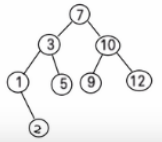
删除叶子结点(例如:2,5,9,12)
(1)算法思路
- 先找到要删除的结点target。
- 找到target的父节点parent。
- 确定target是parent的左子结点还是右子结点。
- 若是左子结点,则parent.left = null;若是右子结点,则parent.right = null。
(2)代码实现
 Node parent = searchParent(value);         //在二叉树中找到要删除结点的父结点
               if (target.left == null && target.right == null) {    //4.若要删除的结点是叶子结点
                   if (parent.left != null && parent.left.value == value) {      //4.1若要删除的结点是父结点的左子结点
                       parent.left = null;                                     //4.2将父结点的左子结点置空即可删除
                   }else if (parent.right != null && parent.right.value == value) {    //4.3若要删除的结点是父结点的右子结点
                       parent.right = null;                                        //4.4将父结点的右子结点置空即可删除
                   }
               }
第二种删除情况
删除只有一棵子树(只有左子树或右子树)的结点(例如:1)
(1)算法思路
- 先找到要删除的结点target。
- 找到target的父结点parent。
- 确定target的子结点是左子结点还是右子结点。
- 确定target是parent的左子结点还是右子结点。
- 若target有左子结点
5.1 若target是parent的左子结点,则parent.left = target.left。
5.2 若target是parent的右子结点,则parent.right = target.left。 - 若target是parent的右子结点
6.1 若target是parent的左子结点,则parent.left = target.right。
6.2 若taret是parent的右子结点,则parent.right = target.right。
(2)代码实现
if(target.left != null){                               //6.1若删除的结点只有左子树
                                if (parent.left.value == value)  {                   //6.11且target是父结点的的左子结点
                                parent.left = target.left;                                //把要删除结点的左子树连在它的父结点上
                            }else {                                                //6.12若target是父结点的右子结点
                                parent.right = target.left;                               //把要删除结点的右子树连在它的父结点上
                            }
                   }else{                                                         //6.2.若删除的结点只有右子树
                           if (parent.left.value == value)                     //6.21且target是父结点的的左子结点
                               parent.left = target.right;                             //把要删除结点的左子树连在它的父结点上
                       else {                                                //6.22若target是父结点的右子结点
                           parent.right = target.right;                                  //把要删除结点的左子树连在它的父结点上
                       }
                   }
第三种删除情况
删除有两棵子树的结点(例如:7,3,10)
(1)算法思路
- 先找到要删除的结点target。
- 找到target的父结点parent。
- 从target的右子树找到最小结点。
- 用一个临时变量,将最小结点的值保存
- 删除该最小结点
(2)解析
该算法思路的意思就是,从被删除结点的右子树中找到一个值最小的结点A(A的值为a),把A放在被删除结点的位置上,A原先的位置被清除。
(3)代码实现
- 删除target(要删除的结点)的右子树中的最小值结点
//返回以node为根结点的二叉排序树的最小结点的值,这是target就指向了最小结点,删除这个最小结点
       public int deleteTreeMin(Node node){        //该函数仅在被删除的结点左右子树都存在的情况下使用
           Node target = node;
           while(target.left != null){
               target = target.left;
           }
           deleteNode(target.value);
           return target.value;
       }
- 删除target结点
if(target.left != null && target.right != null) {           //5.删除有两棵子树的结点
                   int min = deleteTreeMin(target.right);
                   target.value = min;
               }
删除算法的代码(包含以上三种情况)
 public int deleteTreeMin(Node node){        //该函数仅在被删除的结点左右子树都存在的情况下使用
           Node target = node;
           while(target.left != null){
               target = target.left;
           }
           deleteNode(target.value);
           return target.value;
       }

  public boolean deleteNode(int value) {
           if (this.root == null) {              //1.若二叉树为空,则删除结点失败
               return false;
           } else {
               Node target = BstSearch(value);    //若二叉树不为空,先在二叉树中找到要删除的结点
               if (target == null) {                 //2.若在二叉树中没找到结点,则删除失败
                   return false;
               }
               if (root.left == null && root.right == null) {    //3.若整个二叉树只有一个根结点
                   root = null;                                        //3.1则将这个根结点置空,返回删除成功
                   return true;
               }
               Node parent = searchParent(value);         //在二叉树中找到要删除结点的父结点
               if (target.left == null && target.right == null) {    //4.若要删除的结点是叶子结点
                   if (parent.left != null && parent.left.value == value) {      //4.1若要删除的结点是父结点的左子结点
                       parent.left = null;                                     //4.2将父结点的左子结点置空即可删除
                   }else if (parent.right != null && parent.right.value == value) {    //4.3若要删除的结点是父结点的右子结点
                       parent.right = null;                                        //4.4将父结点的右子结点置空即可删除
                   }
               }else if(target.left != null && target.right != null) {           //5.删除有两棵子树的结点
                   int min = deleteTreeMin(target.right);
                   target.value = min;
               }
                   else {                                                        //6.删除只有一棵子树的结点
                            if(target.left != null){                               //6.1若删除的结点只有左子树
                                if (parent.left.value == value)  {                   //6.11且target是父结点的的左子结点
                                parent.left = target.left;                                //把要删除结点的左子树连在它的父结点上
                            }else {                                                //6.12若target是父结点的右子结点
                                parent.right = target.left;                               //把要删除结点的右子树连在它的父结点上
                            }
                   }else{                                                         //6.2.若删除的结点只有右子树
                           if (parent.left.value == value)                     //6.21且target是父结点的的左子结点
                               parent.left = target.right;                             //把要删除结点的左子树连在它的父结点上
                       else {                                                //6.22若target是父结点的右子结点
                           parent.right = target.right;                                  //把要删除结点的左子树连在它的父结点上
                       }
                   }
               }
           }
            return true;
       }
五、二叉排序树代码汇总
(1)结点Node类
class Node{             //建立结点
        int value;
        Node left;
        Node right;
        public Node(int value){
            this.value = value;
        }
         public void add(Node node){         //添加结点的方法
            if(node != null){
                if(node.value < this.value){            //1.若新结点的值比当前结点小
                    if(this.left == null){                  //1.1当前结点无左结点
                        this.left = node;                       //新结点成为当前结点的左结点
                    }else {                                 //1.2若当前结点有左结点
                        this.left.add(node);                     //递归左结点
                    }
                } else if(this.right == null){          //2.若新结点的值>=当前结点,且当前结点无右结点
                    this.right = node;                          //2.1新结点成为当前结点的右结点
                }else{                                          //2.2当前结点有右结点
                    this.right.add(node);                           //递归右结点
                }
            }
         }

         public void infixOrder(){            //树的中序遍历
             if(this.left != null){                 //1.若当前结点有左结点
                 this.left.infixOrder();                   //1.1递归该左结点
             }
                 System.out.println(this.value);            //2.一直递归到结点无左子结点。并输出这个结点
             if(this.right != null){                //3.若当前有右结点
                 this.right.infixOrder();                   //3.1递归该右结点(当右结点无左结点时,该右结点也会被2.1输出)
             }
         }

         public Node BstSearch(int num){                                //结点的查找
             if(num == this.value){                                     //1.若查找的值 = 当前结点的值
                 return this;                                                       //1.1返回当前节点的索引
             }else if(num < this.value && this.left != null){           //2.若查找的值 < 当前结点的值
                 return this.left.BstSearch(num);                                   //2.1递归查找当前结点的左子结点
             }else if(num > this.value && this.right != null){          //3.若查找的值 > 当前结点的值
                 return this.right.BstSearch(num);                                  //3.1递归查找当前结点的右子结点
             }
             return null;                                               //若没查到,则返回索引null
         }

         public Node searchParent(int value){
             //若要查找的值与当前节点的左子结点的值相等 或 要查找的值与当前结点的右子结点的值相等
             if((this.left != null && this.left.value == value)||(this.right != null && this.right.value == value)){
                 return this;                                       //则当前结点就是父结点
             }else if(value < this.value && this.left != null){     //若查找值 < 当前结点的值,且当前结点的左子结点存在
                 return this.left.searchParent(value);                //向左子树递归查找
             }else if(value > this.value && this.right != null){    //若查找值 > 当前结点的值,且当前结点的右子结点存在
                 return this.right.searchParent(value);                 //向右子树递归查找
             }
             return null;
         }
    }
(2)二叉排序树BinarySortTree类
static class BinarySortTree {             //创建二叉排序树
       private Node root;                 //根结点

       public void add(Node node) {        //二叉排序树添加结点的方法
           if (root == null) {                   //1.若根结点为空
               root = node;                    //1.1把输入的结点放在根结点
           } else {                              //2.若根结点不为空
               root.add(node);                 //2.1调用Node类中的添加结点的方法
           }
       }

       public void infixOrder() {
           if (this.root != null) {
               this.root.infixOrder();
           } else {
               System.out.println("二叉排序树为空,不能遍历");
           }

       }

       public Node BstSearch(int num) {                         //树中的结点查找
           if (num == root.value) {                          //1.若要查找的值正好 = 根结点的值
               return root;                                    //1.1返回根结点的索引
           } else {                                          //2.若要查找的值 != 根结点的值
               return root.BstSearch(num);                     //2.1递归在树中查找(进入Node类中的查找方法)
           }
       }

       public Node searchParent(int value) {
           if (this.root == null) {
               return null;
           } else {
               return this.root.searchParent(value);
           }
       }

       //返回以node为根结点的二叉排序树的最小结点的值,这是target就指向了最小结点,删除这个最小结点
       public int deleteTreeMin(Node node){        //该函数仅在被删除的结点左右子树都存在的情况下使用
           Node target = node;
           while(target.left != null){
               target = target.left;
           }
           deleteNode(target.value);
           return target.value;
       }

     public boolean deleteNode(int value) {
           if (this.root == null) {              //1.若二叉树为空,则删除结点失败
               return false;
           } else {
               Node target = BstSearch(value);    //若二叉树不为空,先在二叉树中找到要删除的结点
               if (target == null) {                 //2.若在二叉树中没找到结点,则删除失败
                   return false;
               }
               if (root.left == null && root.right == null) {    //3.若整个二叉树只有一个根结点
                   root = null;                                        //3.1则将这个根结点置空,返回删除成功
                   return true;
               }
               Node parent = searchParent(value);         //在二叉树中找到要删除结点的父结点
               if (target.left == null && target.right == null) {    //4.若要删除的结点是叶子结点
                   if (parent.left != null && parent.left.value == value) {      //4.1若要删除的结点是父结点的左子结点
                       parent.left = null;                                     //4.2将父结点的左子结点置空即可删除
                   }else if (parent.right != null && parent.right.value == value) {    //4.3若要删除的结点是父结点的右子结点
                       parent.right = null;                                        //4.4将父结点的右子结点置空即可删除
                   }
               }else if(target.left != null && target.right != null) {           //5.删除有两棵子树的结点
                   int min = deleteTreeMin(target.right);
                   target.value = min;

               }
                   else {                                                        //6.删除只有一棵子树的结点
                            if(target.left != null){                               //6.1若删除的结点只有左子树
                                if (parent.left.value == value)  {                   //6.11且target是父结点的的左子结点
                                parent.left = target.left;                                //把要删除结点的左子树连在它的父结点上
                            }else {                                                //6.12若target是父结点的右子结点
                                parent.right = target.left;                               //把要删除结点的右子树连在它的父结点上
                            }
                   }else{                                                         //6.2.若删除的结点只有右子树
                           if (parent.left.value == value)                     //6.21且target是父结点的的左子结点
                               parent.left = target.right;                             //把要删除结点的左子树连在它的父结点上
                       else {                                                //6.22若target是父结点的右子结点
                           parent.right = target.right;                                  //把要删除结点的左子树连在它的父结点上
                       }
                   }
               }
           }
            return true;
       }
   }
(3)主函数
public static void main(String[] args){
        int[] arr = new int[]{7, 3, 10, 12, 5, 1, 9, 2,7};
        BinarySortTree BST = new BinarySortTree();
        for(int i = 0; i < arr.length; ++i) {
            BST.add(new Node(arr[i]));
        }
        System.out.println("中序遍历二叉排序树~");
        BST.infixOrder();
        System.out.println("二叉排序树的查找~");
        System.out.println(BST.BstSearch(10).value);
        System.out.println("二叉排序树的查找结点的父结点~");
       // System.out.println(BST.searchParent(2).value);
        System.out.println("二叉排序树的删除~");
        BST.deleteNode(7);
    }
六、存在问题
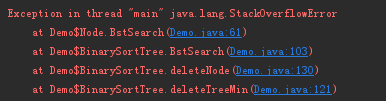
- 被删除的结点可能不存在父结点。
- 若二叉排序树中有重复元素,则删除会报错。
以上两种情况都会报错。





 扫一扫
扫一扫


 3263
3263

 被折叠的 条评论
为什么被折叠?
被折叠的 条评论
为什么被折叠?
 到【灌水乐园】发言





