


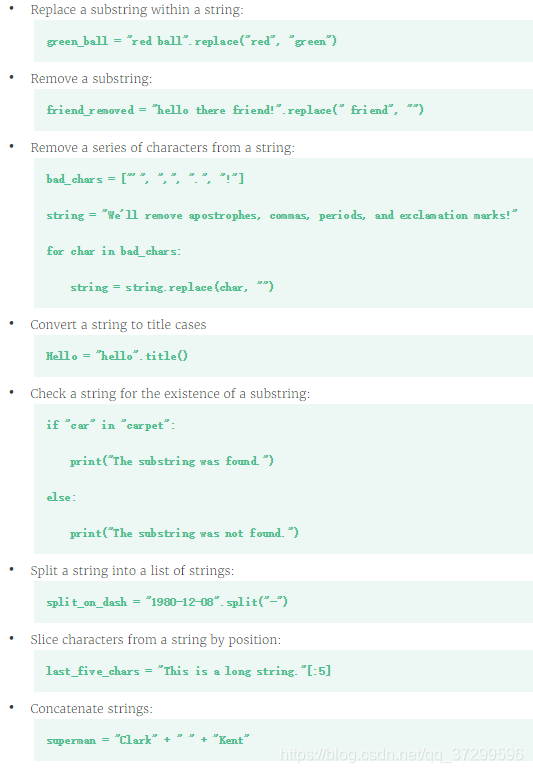
 本文介绍了Python中字符串处理的实用技巧,包括替换子串、转换大小写、去除特殊字符及字符串分割等,适合初学者掌握基本的字符串操作方法。
1. substring
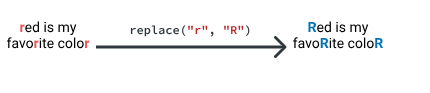
- str.replace() : find and replace
fav_color = "red is my favorite color"
fav_color = fav_color.replace("red", "blue")
print(fav_color)
输出:
blue is my favorite color

2. str.title():returns a copy of the string with the first letter of each word transformed to uppercase 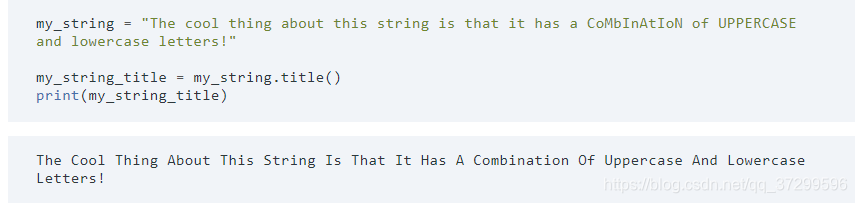
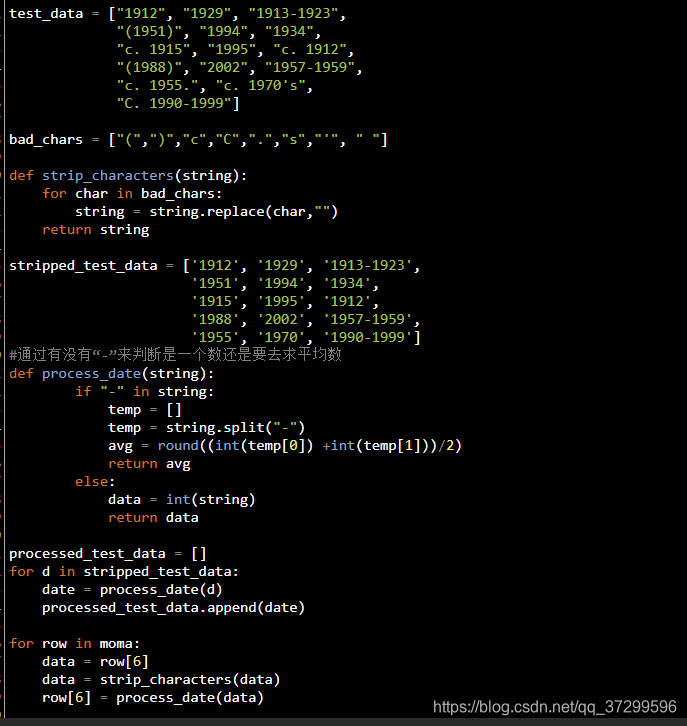
3. 用函数去掉字符串中不需要的符号
test_data = ["1912", "1929", "1913-1923",
             "(1951)", "1994", "1934",
             "c. 1915", "1995", "c. 1912",
             "(1988)", "2002", "1957-1959",
             "c. 1955.", "c. 1970's",
             "C. 1990-1999"]

bad_chars = ["(",")","c","C",".","s","'", " "]#需要删除的字符
bad_chars = ["(",")","c","C",".","s","'", " "]
def strip_characters(string):
    for char in bad_chars:
        string = string.replace(char,"")
    return string

stripped_test_data = []
for d in test_data:
    date = strip_characters(d)
    stripped_test_data.append(date)
-
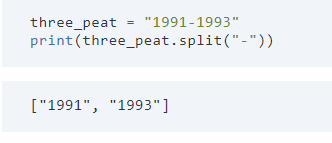
str.split(): split a CSV from one single string into a list of strings and then into a lists of lists.
-
-
str.format(): inserting values into strings.
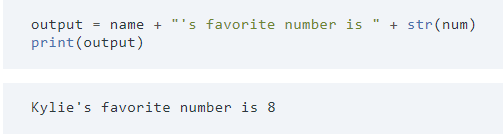 →→→
→→→ 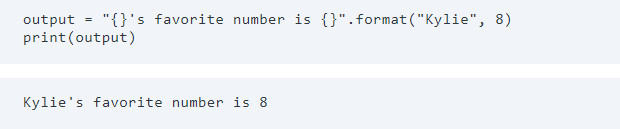 并且convert string from integer. 或者用key arguments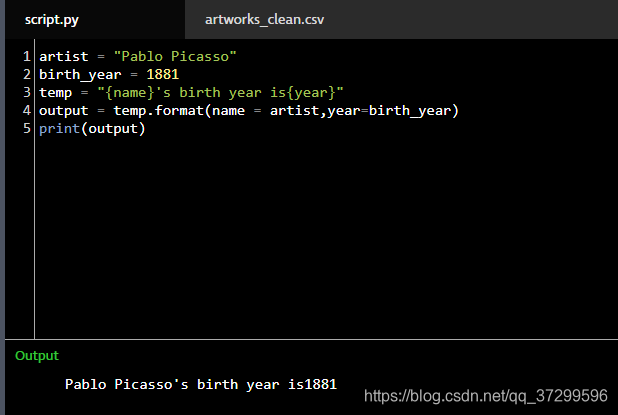
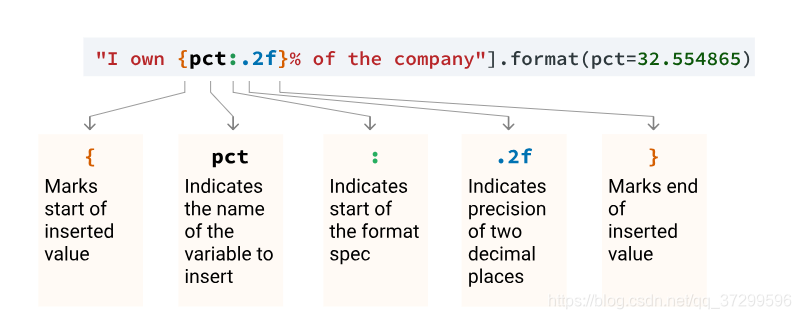
-
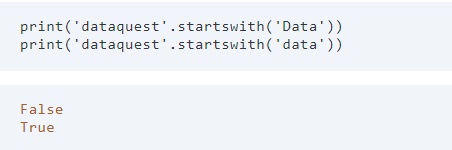
str.startswith()检查开头字符是否为我们要找的
-





 扫一扫
扫一扫


 5450
5450

 被折叠的 条评论
为什么被折叠?
被折叠的 条评论
为什么被折叠?
 到【灌水乐园】发言





