





文章目录
一、CountDownLatch 核心概念解析
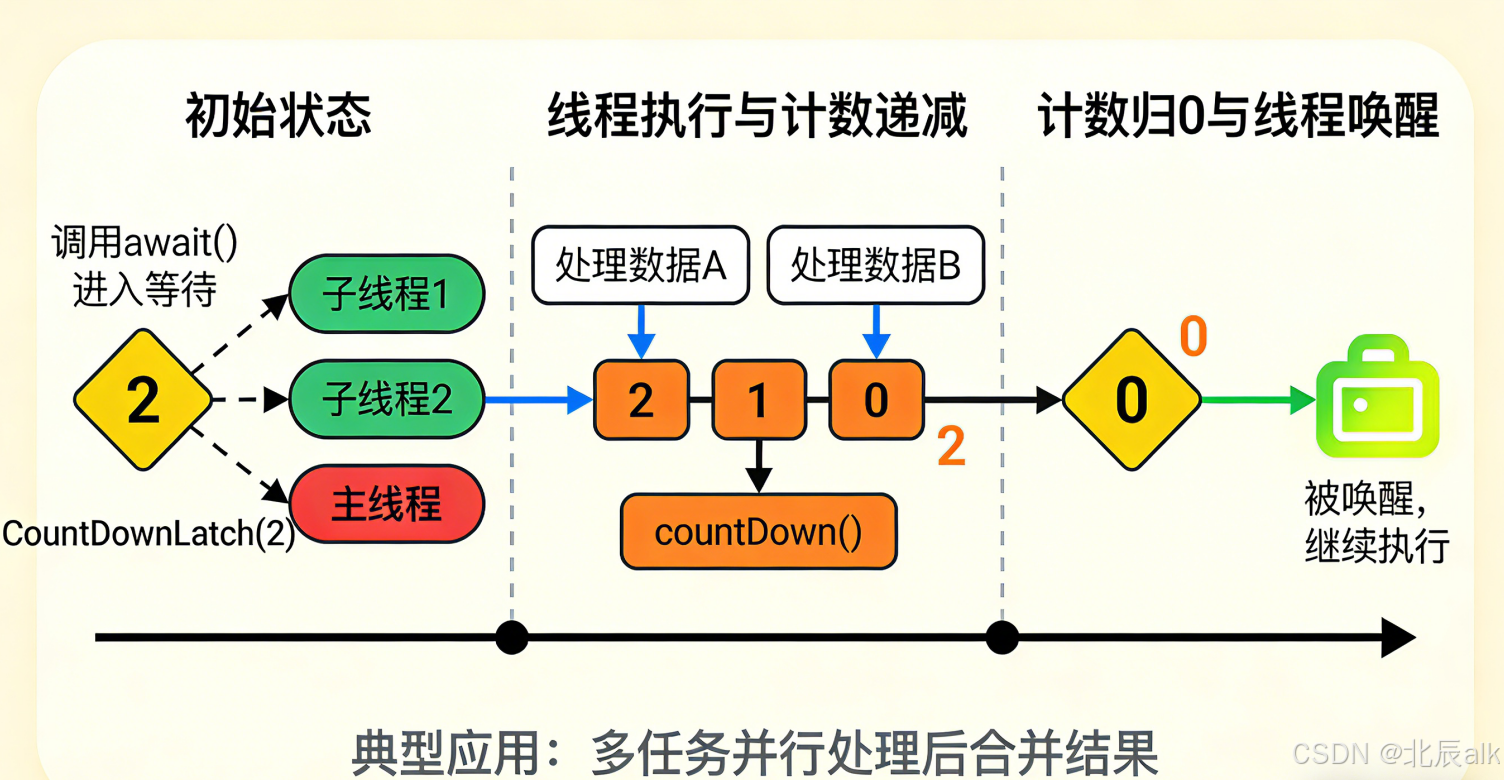
1.1 什么是 CountDownLatch?
CountDownLatch 是 Java 并发包(java.util.concurrent)中的一个同步辅助类,它允许一个或多个线程等待其他线程完成操作后再继续执行。可以将其理解为一个倒计时门闩,当计数器减到零时,等待的线程才会被释放。
import java.util.concurrent.CountDownLatch;

/**
 * CountDownLatch 基本结构示例
 *
 * 核心特性:
 * 1. 一次性使用:计数器归零后无法重置
 * 2. 不可逆性:计数器只能递减,不能递增
 * 3. 线程安全:内部使用AQS实现,保证线程安全
 * 4. 等待机制:支持多个线程同时等待
 */
public class CountDownLatchStructure {

    // CountDownLatch 的内部状态
    class LatchState {
        private int count;  // 计数器

        public LatchState(int count) {
            if (count < 0) {
                throw new IllegalArgumentException("count < 0");
            }
            this.count = count;
        }

        public void countDown() {
            synchronized (this) {
                if (count > 0) {
                    count--;
                }
            }
        }

        public boolean await() throws InterruptedException {
            synchronized (this) {
                while (count > 0) {
                    this.wait();  // 等待计数器归零
                }
                return true;
            }
        }
    }

    public static void main(String[] args) {
        // 创建 CountDownLatch,初始化计数器为3
        CountDownLatch latch = new CountDownLatch(3);

        System.out.println("CountDownLatch 创建完成,初始计数器 = " + 3);
        System.out.println("等待线程将阻塞,直到计数器归零");
    }
}
1.2 CountDownLatch 与相关工具对比
| 特性 | CountDownLatch | CyclicBarrier | Semaphore | Phaser |
|---|---|---|---|---|
| 核心功能 | 等待其他线程完成 | 线程互相等待 | 控制并发数 | 更灵活的同步 |
| 重用性 | 一次性 | 可重用 | 可重用 | 可重用 |
| 计数器方向 | 递减 | 递增 | 增减 | 复杂状态 |
| 线程角色 | 主从模式 | 对等模式 | 资源控制 | 多阶段 |
| 典型场景 | 启动准备、任务分片 | 并行计算 | 连接池、限流 | 多阶段任务 |
二、CountDownLatch 工作原理深度剖析
2.1 内部实现机制
import java.util.concurrent.locks.AbstractQueuedSynchronizer;

/**
 * CountDownLatch 内部 AQS 实现解析
 *
 * CountDownLatch 内部使用 AbstractQueuedSynchronizer (AQS) 实现,
 * 这是一个基于 CLH 队列锁的框架。
 */
public class CountDownLatchInternal {

    // 简化版 AQS 实现,展示 CountDownLatch 核心逻辑
    static class Sync extends AbstractQueuedSynchronizer {
        private static final long serialVersionUID = 4982264981922014374L;

        Sync(int count) {
            setState(count);  // 使用 AQS 的 state 存储计数器
        }

        int getCount() {
            return getState();
        }

        /**
         * 尝试获取共享锁
         * 当 state == 0 时返回 1,表示获取成功
         * 否则返回 -1,表示需要加入等待队列
         */
        protected int tryAcquireShared(int acquires) {
            return (getState() == 0) ? 1 : -1;
        }

        /**
         * 尝试释放共享锁(countDown 操作)
         * 通过 CAS 递减 state,当 state 减到 0 时返回 true
         */
        protected boolean tryReleaseShared(int releases) {
            // 自旋 CAS 操作
            for (;;) {
                int c = getState();
                if (c == 0)
                    return false;  // 计数器已为 0,无需操作
                int nextc = c - 1;
                if (compareAndSetState(c, nextc))
                    return nextc == 0;  // 返回是否减到 0
            }
        }
    }

    /**
     * 完整工作流程演示
     */
    public static void main(String[] args) throws InterruptedException {
        System.out.println("=== CountDownLatch 内部工作流程 ===");
        System.out.println("1. 初始化: state = N (N > 0)");
        System.out.println("2. await(): 调用 tryAcquireShared,如果 state != 0,线程进入等待队列");
        System.out.println("3. countDown(): 调用 tryReleaseShared,CAS 递减 state");
        System.out.println("4. 当 state 减到 0 时,唤醒所有等待线程");
        System.out.println("5. 被唤醒的线程从 await() 返回,继续执行");

        // 实际使用示例
        final int THREAD_COUNT = 3;
        CountDownLatch latch = new CountDownLatch(THREAD_COUNT);

        System.out.println("\n实际演示:");
        System.out.println("初始化 CountDownLatch,计数器 = " + THREAD_COUNT);

        for (int i = 0; i < THREAD_COUNT; i++) {
            final int threadId = i;
            new Thread(() -> {
                try {
                    System.out.println("线程 " + threadId + " 开始工作");
                    Thread.sleep(1000);  // 模拟工作
                    System.out.println("线程 " + threadId + " 完成工作,调用 countDown()");
                    latch.countDown();
                    System.out.println("线程 " + threadId + " countDown 后,当前计数: " + (THREAD_COUNT - threadId - 1));
                } catch (InterruptedException e) {
                    Thread.currentThread().interrupt();
                }
            }).start();
        }

        System.out.println("\n主线程调用 await(),等待所有线程完成...");
        latch.await();
        System.out.println("所有线程完成,主线程继续执行");
    }
}
2.2 工作流程详解
三、核心 API 详解与示例
3.1 构造函数
/**
 * CountDownLatch 构造函数详解
 */
public class ConstructorDemo {

    public static void main(String[] args) {
        // 示例 1: 基本用法
        System.out.println("=== 构造函数示例 ===");

        // 创建 CountDownLatch,指定初始计数值
        int initialCount = 5;
        CountDownLatch latch1 = new CountDownLatch(initialCount);
        System.out.println("创建 CountDownLatch,初始计数: " + initialCount);

        // 示例 2: 边界条件测试
        testBoundaryConditions();

        // 示例 3: 实际应用场景
        demonstrateRealWorldUsage();
    }

    private static void testBoundaryConditions() {
        System.out.println("\n=== 边界条件测试 ===");

        try {
            // 测试 1: 计数为 0
            CountDownLatch zeroLatch = new CountDownLatch(0);
            System.out.println("创建计数为 0 的 latch");
            zeroLatch.await();  // 应该立即返回
            System.out.println("计数为 0 的 latch await() 立即返回");

            // 测试 2: 计数为负数(应该抛出异常)
            try {
                CountDownLatch negativeLatch = new CountDownLatch(-1);
                System.out.println("ERROR: 应该抛出 IllegalArgumentException");
            } catch (IllegalArgumentException e) {
                System.out.println("正确捕获 IllegalArgumentException: " + e.getMessage());
            }

            // 测试 3: 大计数
            int largeCount = 10000;
            CountDownLatch largeLatch = new CountDownLatch(largeCount);
            System.out.println("创建大计数 latch: " + largeCount);

        } catch (InterruptedException e) {
            Thread.currentThread().interrupt();
        }
    }

    private static void demonstrateRealWorldUsage() {
        System.out.println("\n=== 实际应用场景演示 ===");

        // 场景: 并行加载多个模块,主线程等待所有模块加载完成
        String[] modules = {"用户模块", "订单模块", "支付模块", "库存模块", "日志模块"};
        CountDownLatch moduleLatch = new CountDownLatch(modules.length);

        System.out.println("开始并行加载 " + modules.length + " 个模块:");

        for (int i = 0; i < modules.length; i++) {
            final String moduleName = modules[i];
            new Thread(() -> {
                try {
                    // 模拟模块加载时间
                    long loadTime = (long) (Math.random() * 2000) + 500;
                    Thread.sleep(loadTime);

                    System.out.println("✓ " + moduleName + " 加载完成 (" + loadTime + "ms)");
                    moduleLatch.countDown();

                } catch (InterruptedException e) {
                    Thread.currentThread().interrupt();
                    System.out.println("✗ " + moduleName + " 加载被中断");
                    moduleLatch.countDown();  // 确保减少计数
                }
            }, "ModuleLoader-" + moduleName).start();
        }

        try {
            System.out.println("\n主线程等待所有模块加载完成...");
            long startWait = System.currentTimeMillis();
            moduleLatch.await();
            long endWait = System.currentTimeMillis();

            System.out.println("\n✅ 所有模块加载完成!");
            System.out.println("等待时间: " + (endWait - startWait) + "ms");
            System.out.println("应用程序启动完成,可以接收请求");

        } catch (InterruptedException e) {
            Thread.currentThread().interrupt();
            System.out.println("主线程等待被中断");
        }
    }
}
3.2 await() 方法详解
import java.util.concurrent.TimeUnit;
import java.util.concurrent.atomic.AtomicInteger;

/**
 * await() 方法深度解析
 *
 * CountDownLatch 提供了多种 await 方法:
 * 1. await(): 无限期等待
 * 2. await(long timeout, TimeUnit unit): 超时等待
 * 3. 组合使用模式
 */
public class AwaitMethodsDemo {

    public static void main(String[] args) {
        System.out.println("=== await() 方法详解 ===");

        // 演示 1: 基本 await()
        demonstrateBasicAwait();

        // 演示 2: 超时 await()
        demonstrateTimeoutAwait();

        // 演示 3: 多个线程同时 await()
        demonstrateMultipleAwait();

        // 演示 4: 中断处理
        demonstrateInterruption();
    }

    private static void demonstrateBasicAwait() {
        System.out.println("\n--- 演示 1: 基本 await() ---");

        CountDownLatch latch = new CountDownLatch(2);

        new Thread(() -> {
            try {
                Thread.sleep(1000);
                System.out.println("线程A 完成任务,countDown");
                latch.countDown();
            } catch (InterruptedException e) {
                Thread.currentThread().interrupt();
            }
        }).start();

        new Thread(() -> {
            try {
                Thread.sleep(1500);
                System.out.println("线程B 完成任务,countDown");
                latch.countDown();
            } catch (InterruptedException e) {
                Thread.currentThread().interrupt();
            }
        }).start();

        try {
            System.out.println("主线程调用 await(),开始等待...");
            long start = System.currentTimeMillis();
            latch.await();
            long end = System.currentTimeMillis();

            System.out.println("主线程等待结束,耗时: " + (end - start) + "ms");
            System.out.println("所有任务完成,继续执行主流程");

        } catch (InterruptedException e) {
            Thread.currentThread().interrupt();
            System.out.println("主线程等待被中断");
        }
    }

    private static void demonstrateTimeoutAwait() {
        System.out.println("\n--- 演示 2: 超时 await() ---");

        CountDownLatch latch = new CountDownLatch(3);

        // 启动两个线程,但第三个永远不会启动(模拟超时场景)
        for (int i = 1; i <= 2; i++) {
            final int id = i;
            new Thread(() -> {
                try {
                    Thread.sleep(id * 1000);
                    System.out.println("任务" + id + " 完成");
                    latch.countDown();
                } catch (InterruptedException e) {
                    Thread.currentThread().interrupt();
                }
            }).start();
        }

        try {
            System.out.println("主线程调用 await(2500ms),带超时等待...");
            long start = System.currentTimeMillis();
            boolean completed = latch.await(2500, TimeUnit.MILLISECONDS);
            long end = System.currentTimeMillis();

            if (completed) {
                System.out.println("✅ 所有任务在规定时间内完成");
            } else {
                System.out.println("⏰ 等待超时,仍有 " + latch.getCount() + " 个任务未完成");
            }
            System.out.println("实际等待时间: " + (end - start) + "ms");

            // 即使超时,也可以继续执行(但可能状态不完整)
            System.out.println("继续执行后续逻辑(可能基于不完整状态)");

        } catch (InterruptedException e) {
            Thread.currentThread().interrupt();
            System.out.println("等待被中断");
        }
    }

    private static void demonstrateMultipleAwait() {
        System.out.println("\n--- 演示 3: 多个线程同时 await() ---");

        final int WAITER_COUNT = 5;
        final int TASK_COUNT = 3;

        CountDownLatch startLatch = new CountDownLatch(1);  // 统一开始
        CountDownLatch completionLatch = new CountDownLatch(TASK_COUNT);  // 任务完成

        AtomicInteger waitersReady = new AtomicInteger(0);

        // 创建多个等待线程
        for (int i = 0; i < WAITER_COUNT; i++) {
            final int waiterId = i;
            new Thread(() -> {
                try {
                    waitersReady.incrementAndGet();
                    System.out.println("等待线程 " + waiterId + " 准备就绪,调用 await()");

                    startLatch.await();  // 等待开始信号

                    System.out.println("等待线程 " + waiterId + " 被唤醒,开始工作...");
                    Thread.sleep(500);  // 模拟工作

                    completionLatch.countDown();  // 完成任务
                    System.out.println("等待线程 " + waiterId + " 完成任务");

                } catch (InterruptedException e) {
                    Thread.currentThread().interrupt();
                }
            }).start();
        }

        // 等待所有等待线程就绪
        while (waitersReady.get() < WAITER_COUNT) {
            Thread.yield();
        }

        try {
            Thread.sleep(1000);  // 给线程一些时间进入等待状态
            System.out.println("\n所有 " + WAITER_COUNT + " 个等待线程已进入 await 状态");
            System.out.println("主线程释放开始门闩...");

            startLatch.countDown();  // 释放所有等待线程

            System.out.println("主线程等待所有任务完成...");
            completionLatch.await();

            System.out.println("\n✅ 所有 " + WAITER_COUNT + " 个线程都完成了工作");

        } catch (InterruptedException e) {
            Thread.currentThread().interrupt();
        }
    }

    private static void demonstrateInterruption() {
        System.out.println("\n--- 演示 4: 中断处理 ---");

        CountDownLatch latch = new CountDownLatch(2);

        Thread waitingThread = new Thread(() -> {
            try {
                System.out.println("等待线程: 调用 await()");
                latch.await();
                System.out.println("等待线程: await() 返回,继续执行");
            } catch (InterruptedException e) {
                System.out.println("等待线程: 在 await() 中被中断,中断状态: " +
                                 Thread.currentThread().isInterrupted());
                Thread.currentThread().interrupt();  // 恢复中断状态
            }
        });

        waitingThread.start();

        try {
            // 给等待线程时间进入等待状态
            Thread.sleep(100);

            System.out.println("主线程: 中断等待线程");
            waitingThread.interrupt();

            // 等待线程结束
            waitingThread.join(1000);

            // 测试 latch 是否还能使用
            System.out.println("\n中断后 latch 状态:");
            System.out.println("当前计数: " + latch.getCount());
            System.out.println("尝试 countDown...");
            latch.countDown();
            System.out.println("countDown 后计数: " + latch.getCount());

        } catch (InterruptedException e) {
            Thread.currentThread().interrupt();
        }
    }
}
3.3 countDown() 方法详解
import java.util.concurrent.atomic.AtomicLong;

/**
 * countDown() 方法深度解析
 *
 * 关键特性:
 * 1. 线程安全:使用 CAS 操作保证线程安全
 * 2. 幂等性:计数为 0 后多次调用无效果
 * 3. 无阻塞:立即返回,不会阻塞调用线程
 */
public class CountDownMethodDemo {

    public static void main(String[] args) throws InterruptedException {
        System.out.println("=== countDown() 方法详解 ===");

        // 演示 1: 基本 countDown()
        demonstrateBasicCountDown();

        // 演示 2: 多线程并发 countDown()
        demonstrateConcurrentCountDown();

        // 演示 3: 计数为 0 后的行为
        demonstrateZeroCountBehavior();

        // 演示 4: countDown() 的性能特性
        demonstratePerformance();
    }

    private static void demonstrateBasicCountDown() {
        System.out.println("\n--- 演示 1: 基本 countDown() ---");

        CountDownLatch latch = new CountDownLatch(3);

        System.out.println("初始状态:");
        System.out.println("  计数器: " + latch.getCount());
        System.out.println("  是否归零: " + (latch.getCount() == 0));

        System.out.println("\n执行 countDown() 1:");
        latch.countDown();
        System.out.println("  计数器: " + latch.getCount());

        System.out.println("执行 countDown() 2:");
        latch.countDown();
        System.out.println("  计数器: " + latch.getCount());

        System.out.println("执行 countDown() 3:");
        latch.countDown();
        System.out.println("  计数器: " + latch.getCount());
        System.out.println("  是否归零: " + (latch.getCount() == 0));

        System.out.println("\n尝试在归零后 await():");
        try {
            latch.await();  // 应该立即返回
            System.out.println("  await() 立即返回");
        } catch (InterruptedException e) {
            Thread.currentThread().interrupt();
        }
    }

    private static void demonstrateConcurrentCountDown() throws InterruptedException {
        System.out.println("\n--- 演示 2: 多线程并发 countDown() ---");

        final int THREAD_COUNT = 100;
        final int INITIAL_COUNT = THREAD_COUNT;

        CountDownLatch latch = new CountDownLatch(INITIAL_COUNT);
        AtomicLong completedThreads = new AtomicLong(0);

        System.out.println("启动 " + THREAD_COUNT + " 个线程并发执行 countDown()");
        System.out.println("初始计数: " + latch.getCount());

        // 启动多个线程同时执行 countDown
        Thread[] threads = new Thread[THREAD_COUNT];
        for (int i = 0; i < THREAD_COUNT; i++) {
            final int threadId = i;
            threads[i] = new Thread(() -> {
                try {
                    // 随机睡眠,模拟不同的执行时间
                    Thread.sleep((long) (Math.random() * 100));

                    long before = latch.getCount();
                    latch.countDown();
                    long after = latch.getCount();

                    completedThreads.incrementAndGet();

                    System.out.printf("线程 %03d: 计数 %d -> %d%n",
                                     threadId, before, after);

                } catch (InterruptedException e) {
                    Thread.currentThread().interrupt();
                }
            });
            threads[i].start();
        }

        // 等待所有线程启动
        for (Thread thread : threads) {
            thread.join();
        }

        System.out.println("\n最终状态:");
        System.out.println("  完成 countDown 的线程数: " + completedThreads.get());
        System.out.println("  最终计数器值: " + latch.getCount());
        System.out.println("  计数器是否归零: " + (latch.getCount() == 0));

        // 验证线程安全性
        if (completedThreads.get() == THREAD_COUNT && latch.getCount() == 0) {
            System.out.println("✅ 并发 countDown() 测试通过:线程安全");
        } else {
            System.out.println("❌ 并发 countDown() 测试失败");
        }
    }

    private static void demonstrateZeroCountBehavior() {
        System.out.println("\n--- 演示 3: 计数为 0 后的行为 ---");

        CountDownLatch latch = new CountDownLatch(1);

        System.out.println("初始状态: 计数 = " + latch.getCount());

        // 第一次 countDown,计数归零
        System.out.println("执行 countDown() 1:");
        latch.countDown();
        System.out.println("  计数: " + latch.getCount());

        // 第二次 countDown,计数已为 0
        System.out.println("执行 countDown() 2 (计数已为 0):");
        latch.countDown();
        System.out.println("  计数: " + latch.getCount());

        // 第三次 countDown,计数仍为 0
        System.out.println("执行 countDown() 3 (计数已为 0):");
        latch.countDown();
        System.out.println("  计数: " + latch.getCount());

        System.out.println("\n结论: countDown() 在计数为 0 后调用是安全的,但无实际效果");

        // 测试 await() 在计数归零后的行为
        System.out.println("\n测试计数归零后 await() 的行为:");
        try {
            System.out.println("  调用 await()...");
            long start = System.currentTimeMillis();
            latch.await();
            long end = System.currentTimeMillis();
            System.out.println("  await() 立即返回,耗时: " + (end - start) + "ms");
        } catch (InterruptedException e) {
            Thread.currentThread().interrupt();
        }
    }

    private static void demonstratePerformance() {
        System.out.println("\n--- 演示 4: countDown() 性能特性 ---");

        final int ITERATIONS = 1000000;  // 100万次
        final int LATCH_COUNT = 1000000;

        System.out.println("性能测试: " + ITERATIONS + " 次 countDown() 调用");

        // 测试 1: 单个线程连续调用
        System.out.println("\n测试 1: 单个线程连续调用");
        CountDownLatch latch1 = new CountDownLatch(LATCH_COUNT);

        long start1 = System.currentTimeMillis();
        for (int i = 0; i < ITERATIONS; i++) {
            latch1.countDown();
        }
        long end1 = System.currentTimeMillis();

        System.out.println("  耗时: " + (end1 - start1) + "ms");
        System.out.println("  平均每次调用: " +
                          ((double)(end1 - start1) / ITERATIONS * 1000000) + "ns");

        // 测试 2: 多线程并发调用
        System.out.println("\n测试 2: 多线程并发调用");
        final int THREAD_COUNT = 10;
        final int COUNT_PER_THREAD = ITERATIONS / THREAD_COUNT;

        CountDownLatch latch2 = new CountDownLatch(ITERATIONS);
        CountDownLatch startLatch = new CountDownLatch(1);
        CountDownLatch finishLatch = new CountDownLatch(THREAD_COUNT);

        Thread[] threads = new Thread[THREAD_COUNT];

        long start2 = System.currentTimeMillis();

        for (int t = 0; t < THREAD_COUNT; t++) {
            final int threadId = t;
            threads[t] = new Thread(() -> {
                try {
                    startLatch.await();  // 等待开始信号

                    for (int i = 0; i < COUNT_PER_THREAD; i++) {
                        latch2.countDown();
                    }

                    finishLatch.countDown();

                } catch (InterruptedException e) {
                    Thread.currentThread().interrupt();
                }
            });
            threads[t].start();
        }

        // 所有线程准备就绪后同时开始
        startLatch.countDown();

        try {
            finishLatch.await();  // 等待所有线程完成
            long end2 = System.currentTimeMillis();

            System.out.println("  耗时: " + (end2 - start2) + "ms");
            System.out.println("  平均每次调用: " +
                              ((double)(end2 - start2) / ITERATIONS * 1000000) + "ns");

        } catch (InterruptedException e) {
            Thread.currentThread().interrupt();
        }

        System.out.println("\n性能结论:");
        System.out.println("1. countDown() 是非常轻量级的操作");
        System.out.println("2. 多线程并发调用有很好的扩展性");
        System.out.println("3. 在计数归零后调用几乎无开销");
    }
}
3.4 getCount() 方法详解
/**
 * getCount() 方法详解
 *
 * getCount() 返回当前的计数值,常用于调试和状态监控。
 * 注意:getCount() 的返回值只是一个快照,可能立即过时。
 */
public class GetCountMethodDemo {

    public static void main(String[] args) throws InterruptedException {
        System.out.println("=== getCount() 方法详解 ===");

        // 演示 1: 基本使用
        demonstrateBasicUsage();

        // 演示 2: 监控和调试
        demonstrateMonitoring();

        // 演示 3: 竞态条件演示
        demonstrateRaceCondition();

        // 演示 4: 实际应用场景
        demonstrateRealWorldUsage();
    }

    private static void demonstrateBasicUsage() {
        System.out.println("\n--- 演示 1: 基本使用 ---");

        CountDownLatch latch = new CountDownLatch(5);

        System.out.println("初始状态:");
        System.out.println("  getCount() = " + latch.getCount());

        System.out.println("\n执行 countDown() 后:");
        latch.countDown();
        System.out.println("  getCount() = " + latch.getCount());

        latch.countDown();
        System.out.println("  getCount() = " + latch.getCount());

        latch.countDown();
        latch.countDown();
        latch.countDown();
        System.out.println("  执行3次 countDown() 后:");
        System.out.println("  getCount() = " + latch.getCount());

        System.out.println("\n重要提示:");
        System.out.println("1. getCount() 返回的是调用瞬间的快照值");
        System.out.println("2. 在多线程环境中,返回值可能立即过时");
        System.out.println("3. 不要基于 getCount() 的返回值做业务决策");
    }

    private static void demonstrateMonitoring() throws InterruptedException {
        System.out.println("\n--- 演示 2: 监控和调试 ---");

        final int TASK_COUNT = 10;
        CountDownLatch latch = new CountDownLatch(TASK_COUNT);

        System.out.println("启动 " + TASK_COUNT + " 个任务");
        System.out.println("初始计数: " + latch.getCount());

        // 启动监控线程
        Thread monitorThread = new Thread(() -> {
            try {
                while (latch.getCount() > 0) {
                    System.out.printf("监控: 剩余任务数 = %d%n", latch.getCount());
                    Thread.sleep(200);  // 每200ms监控一次
                }
                System.out.println("监控: 所有任务完成!");
            } catch (InterruptedException e) {
                Thread.currentThread().interrupt();
            }
        });
        monitorThread.setDaemon(true);
        monitorThread.start();

        // 启动工作线程
        for (int i = 0; i < TASK_COUNT; i++) {
            final int taskId = i;
            new Thread(() -> {
                try {
                    // 模拟任务执行时间
                    long duration = (long) (Math.random() * 1000) + 500;
                    Thread.sleep(duration);

                    latch.countDown();
                    System.out.printf("任务 %d 完成,耗时 %dms%n", taskId, duration);

                } catch (InterruptedException e) {
                    Thread.currentThread().interrupt();
                }
            }).start();
        }

        latch.await();
        System.out.println("\n主线程: 所有任务完成确认");

        // 给监控线程一点时间输出最后一条信息
        Thread.sleep(300);
    }

    private static void demonstrateRaceCondition() throws InterruptedException {
        System.out.println("\n--- 演示 3: 竞态条件演示 ---");

        final int THREAD_COUNT = 50;
        CountDownLatch latch = new CountDownLatch(THREAD_COUNT);

        System.out.println("演示 getCount() 的竞态条件");
        System.out.println("启动 " + THREAD_COUNT + " 个线程快速执行 countDown()");

        // 创建快速执行的线程
        Thread[] threads = new Thread[THREAD_COUNT];
        for (int i = 0; i < THREAD_COUNT; i++) {
            final int threadId = i;
            threads[i] = new Thread(() -> {
                // 尽可能快地执行 countDown
                latch.countDown();
            });
        }

        // 同时启动所有线程
        for (Thread thread : threads) {
            thread.start();
        }

        // 在主线程中连续调用 getCount()
        System.out.println("\n主线程连续调用 getCount():");
        for (int i = 0; i < 20; i++) {
            long count = latch.getCount();
            System.out.printf("  getCount() 调用 %2d: 计数 = %2d%n", i + 1, count);
            if (count == 0) {
                System.out.println("  注意: 计数已归零,但其他线程可能仍在运行");
            }
            Thread.yield();  // 让出CPU,增加竞态条件概率
        }

        // 等待所有线程完成
        for (Thread thread : threads) {
            thread.join();
        }

        System.out.println("\n最终 getCount(): " + latch.getCount());
        System.out.println("\n竞态条件总结:");
        System.out.println("1. getCount() 返回的是瞬时值");
        System.out.println("2. 在调用 getCount() 和实际使用返回值之间,状态可能已改变");
        System.out.println("3. 适合用于监控和调试,不适合用于同步控制");
    }

    private static void demonstrateRealWorldUsage() {
        System.out.println("\n--- 演示 4: 实际应用场景 ---");

        // 场景: 批量处理任务,显示进度
        final int BATCH_SIZE = 100;
        CountDownLatch latch = new CountDownLatch(BATCH_SIZE);

        System.out.println("批量处理 " + BATCH_SIZE + " 个任务");
        System.out.println("显示处理进度:\n");

        // 进度显示线程
        new Thread(() -> {
            try {
                long total = BATCH_SIZE;
                while (true) {
                    long remaining = latch.getCount();
                    long completed = total - remaining;

                    // 计算进度百分比
                    double percent = (double) completed / total * 100;

                    // 显示进度条
                    int barWidth = 50;
                    int progress = (int) (barWidth * completed / total);

                    System.out.printf("\r进度: [%-" + barWidth + "s] %6.2f%% (%d/%d)",
                                     "=".repeat(progress), percent, completed, total);

                    if (remaining == 0) {
                        System.out.println("\n\n✅ 批量处理完成!");
                        break;
                    }

                    Thread.sleep(100);  // 每100ms更新一次进度
                }
            } catch (InterruptedException e) {
                Thread.currentThread().interrupt();
            }
        }).start();

        // 模拟批量处理任务
        for (int i = 0; i < BATCH_SIZE; i++) {
            final int taskId = i;
            new Thread(() -> {
                try {
                    // 模拟任务处理时间
                    Thread.sleep((long) (Math.random() * 100));
                    latch.countDown();
                } catch (InterruptedException e) {
                    Thread.currentThread().interrupt();
                    latch.countDown();  // 确保计数减少
                }
            }).start();
        }

        try {
            latch.await();
        } catch (InterruptedException e) {
            Thread.currentThread().interrupt();
        }
    }
}
四、高级应用场景与实战
4.1 复杂并发模式实现
import java.util.ArrayList;
import java.util.List;
import java.util.concurrent.*;

/**
 * CountDownLatch 高级应用场景
 *
 * 1. 并行任务分片与聚合
 * 2. 多阶段工作流
 * 3. 资源初始化协调
 * 4. 测试并发场景
 */
public class AdvancedUsageDemo {

    /**
     * 场景 1: 并行计算 Map-Reduce 模式
     */
    static class ParallelMapReduce {

        public static void main(String[] args) throws InterruptedException {
            System.out.println("=== 场景 1: 并行 Map-Reduce ===");

            // 模拟数据
            List<Integer> data = new ArrayList<>();
            for (int i = 1; i <= 100; i++) {
                data.add(i);
            }

            // 将数据分成4个分片
            int sliceCount = 4;
            int sliceSize = data.size() / sliceCount;

            CountDownLatch mapLatch = new CountDownLatch(sliceCount);
            List<Future<Integer>> results = new ArrayList<>();
            ExecutorService executor = Executors.newFixedThreadPool(sliceCount);

            System.out.println("开始并行 Map 阶段...");
            long startTime = System.currentTimeMillis();

            // Map 阶段:并行处理每个分片
            for (int i = 0; i < sliceCount; i++) {
                final int sliceIndex = i;
                final int fromIndex = i * sliceSize;
                final int toIndex = (i == sliceCount - 1) ? data.size() : (i + 1) * sliceSize;

                Callable<Integer> task = () -> {
                    try {
                        // 模拟计算密集型任务
                        int sum = 0;
                        for (int j = fromIndex; j < toIndex; j++) {
                            sum += data.get(j);
                            // 模拟处理时间
                            Thread.sleep(1);
                        }
                        System.out.printf("分片 %d 计算完成: sum = %d%n", sliceIndex, sum);
                        return sum;
                    } finally {
                        mapLatch.countDown();
                    }
                };

                results.add(executor.submit(task));
            }

            // 等待所有 Map 任务完成
            mapLatch.await();
            System.out.println("Map 阶段完成,开始 Reduce 阶段...");

            // Reduce 阶段:聚合结果
            int finalResult = 0;
            for (Future<Integer> future : results) {
                try {
                    finalResult += future.get();
                } catch (ExecutionException e) {
                    e.printStackTrace();
                }
            }

            long endTime = System.currentTimeMillis();

            System.out.println("最终结果: " + finalResult);
            System.out.println("总耗时: " + (endTime - startTime) + "ms");

            // 验证结果
            int expected = data.stream().mapToInt(Integer::intValue).sum();
            System.out.println("预期结果: " + expected);
            System.out.println("结果验证: " + (finalResult == expected ? "✅ 正确" : "❌ 错误"));

            executor.shutdown();
        }
    }

    /**
     * 场景 2: 多阶段工作流协调
     */
    static class MultiStageWorkflow {

        public static void main(String[] args) throws InterruptedException {
            System.out.println("\n=== 场景 2: 多阶段工作流 ===");

            // 定义三个阶段
            CountDownLatch stage1Latch = new CountDownLatch(3);  // 数据加载
            CountDownLatch stage2Latch = new CountDownLatch(2);  // 数据处理
            CountDownLatch stage3Latch = new CountDownLatch(1);  // 结果汇总

            System.out.println("开始三阶段工作流执行...\n");

            // 阶段1:数据加载
            System.out.println("【阶段1】数据加载(3个并行任务)");
            for (int i = 1; i <= 3; i++) {
                final int taskId = i;
                new Thread(() -> {
                    try {
                        System.out.printf("  数据加载任务 %d 开始...%n", taskId);
                        Thread.sleep(500 + taskId * 100);
                        System.out.printf("  ✓ 数据加载任务 %d 完成%n", taskId);
                        stage1Latch.countDown();
                    } catch (InterruptedException e) {
                        Thread.currentThread().interrupt();
                    }
                }).start();
            }

            // 阶段2:数据处理(等待阶段1完成后开始)
            new Thread(() -> {
                try {
                    stage1Latch.await();
                    System.out.println("\n【阶段2】数据处理(2个并行任务)");

                    CountDownLatch processLatch = new CountDownLatch(2);

                    for (int i = 1; i <= 2; i++) {
                        final int taskId = i;
                        new Thread(() -> {
                            try {
                                System.out.printf("  数据处理任务 %d 开始...%n", taskId);
                                Thread.sleep(800 + taskId * 100);
                                System.out.printf("  ✓ 数据处理任务 %d 完成%n", taskId);
                                processLatch.countDown();
                            } catch (InterruptedException e) {
                                Thread.currentThread().interrupt();
                            }
                        }).start();
                    }

                    processLatch.await();
                    System.out.println("  → 阶段2完成,触发阶段3");
                    stage2Latch.countDown();

                } catch (InterruptedException e) {
                    Thread.currentThread().interrupt();
                }
            }).start();

            // 阶段3:结果汇总(等待阶段2完成后开始)
            new Thread(() -> {
                try {
                    stage2Latch.await();
                    System.out.println("\n【阶段3】结果汇总");
                    System.out.println("  开始汇总所有处理结果...");
                    Thread.sleep(1000);
                    System.out.println("  ✓ 结果汇总完成");
                    stage3Latch.countDown();

                } catch (InterruptedException e) {
                    Thread.currentThread().interrupt();
                }
            }).start();

            // 主线程等待整个工作流完成
            stage3Latch.await();
            System.out.println("\n🎉 整个工作流执行完成!");
        }
    }

    /**
     * 场景 3: 服务启动协调
     */
    static class ServiceInitializationCoordinator {

        static class Service {
            private final String name;
            private final int initTime;
            private volatile boolean initialized = false;

            public Service(String name, int initTime) {
                this.name = name;
                this.initTime = initTime;
            }

            public void initialize(CountDownLatch latch) {
                new Thread(() -> {
                    try {
                        System.out.printf("服务 '%s' 开始初始化(预计 %dms)...%n",
                                         name, initTime);
                        Thread.sleep(initTime);
                        initialized = true;
                        System.out.printf("✅ 服务 '%s' 初始化完成%n", name);
                        latch.countDown();
                    } catch (InterruptedException e) {
                        Thread.currentThread().interrupt();
                        System.out.printf("❌ 服务 '%s' 初始化被中断%n", name);
                        latch.countDown();  // 确保计数减少
                    }
                }).start();
            }

            public boolean isInitialized() {
                return initialized;
            }
        }

        public static void main(String[] args) throws InterruptedException {
            System.out.println("\n=== 场景 3: 服务启动协调 ===");

            // 定义需要初始化的服务
            Service[] services = {
                new Service("数据库连接池", 2000),
                new Service("Redis缓存", 1500),
                new Service("消息队列", 2500),
                new Service("配置中心", 800),
                new Service("监控系统", 1200)
            };

            CountDownLatch initLatch = new CountDownLatch(services.length);

            System.out.println("开始并行初始化 " + services.length + " 个服务...\n");

            // 并行初始化所有服务
            for (Service service : services) {
                service.initialize(initLatch);
            }

            // 显示初始化进度
            new Thread(() -> {
                try {
                    while (initLatch.getCount() > 0) {
                        long remaining = initLatch.getCount();
                        System.out.printf("\r等待服务初始化... 剩余 %d 个服务 ", remaining);
                        Thread.sleep(200);
                    }
                } catch (InterruptedException e) {
                    Thread.currentThread().interrupt();
                }
            }).start();

            // 等待所有服务初始化完成
            initLatch.await();

            System.out.println("\n\n🎉 所有服务初始化完成!");
            System.out.println("应用程序可以正常启动...");

            // 验证所有服务状态
            boolean allReady = true;
            for (Service service : services) {
                if (!service.isInitialized()) {
                    System.out.printf("警告: 服务 '%s' 未正确初始化%n", service.name);
                    allReady = false;
                }
            }

            if (allReady) {
                System.out.println("✅ 所有服务状态验证通过");
            } else {
                System.out.println("⚠️ 部分服务可能有问题,建议检查");
            }
        }
    }

    /**
     * 场景 4: 并发测试工具
     */
    static class ConcurrentTestHarness {

        public static long timeTasks(int nThreads, final Runnable task)
                throws InterruptedException {

            // 起始门:确保所有线程同时开始
            final CountDownLatch startGate = new CountDownLatch(1);

            // 结束门:等待所有线程完成
            final CountDownLatch endGate = new CountDownLatch(nThreads);

            for (int i = 0; i < nThreads; i++) {
                Thread t = new Thread(() -> {
                    try {
                        // 等待开始信号
                        startGate.await();
                        try {
                            task.run();
                        } finally {
                            // 通知任务完成
                            endGate.countDown();
                        }
                    } catch (InterruptedException e) {
                        Thread.currentThread().interrupt();
                    }
                });
                t.start();
            }

            long start = System.nanoTime();

            // 释放起始门,所有线程同时开始执行
            startGate.countDown();

            // 等待所有线程完成
            endGate.await();

            long end = System.nanoTime();

            return end - start;
        }

        public static void main(String[] args) throws InterruptedException {
            System.out.println("\n=== 场景 4: 并发测试工具 ===");

            // 测试任务:模拟一些工作
            Runnable testTask = () -> {
                // 模拟一些计算工作
                long sum = 0;
                for (int i = 0; i < 1000000; i++) {
                    sum += i % 3;
                }
                // 模拟一些IO等待
                try {
                    Thread.sleep(10);
                } catch (InterruptedException e) {
                    Thread.currentThread().interrupt();
                }
            };

            // 测试不同线程数下的性能
            int[] threadCounts = {1, 2, 4, 8, 16, 32};

            System.out.println("并发性能测试(每个线程执行相同任务)");
            System.out.println("线程数 | 耗时(ns) | 加速比");
            System.out.println("------|----------|------");

            long singleThreadTime = 0;

            for (int nThreads : threadCounts) {
                long duration = timeTasks(nThreads, testTask);

                if (nThreads == 1) {
                    singleThreadTime = duration;
                }

                double speedup = (double) singleThreadTime / duration;

                System.out.printf("%6d | %9d | %.2fx%n",
                                 nThreads, duration, speedup);
            }

            System.out.println("\n测试说明:");
            System.out.println("1. 使用 CountDownLatch 确保所有线程同时开始");
            System.out.println("2. 使用 CountDownLatch 等待所有线程完成");
            System.out.println("3. 可以准确测量并发执行时间");
            System.out.println("4. 适用于性能基准测试和并发问题复现");
        }
    }
}
4.2 生产环境最佳实践
import java.util.concurrent.atomic.AtomicBoolean;

/**
 * CountDownLatch 生产环境最佳实践
 *
 * 包括错误处理、资源管理、性能优化等
 */
public class ProductionBestPractices {

    /**
     * 实践 1: 异常安全的使用模式
     */
    static class ExceptionSafePattern {

        public static void executeWithWorkers(int workerCount)
                throws InterruptedException {

            CountDownLatch completionLatch = new CountDownLatch(workerCount);
            AtomicBoolean hasError = new AtomicBoolean(false);

            for (int i = 0; i < workerCount; i++) {
                final int workerId = i;
                new Thread(() -> {
                    try {
                        // 执行工作任务
                        doWork(workerId);

                        // 只有成功完成才减少计数
                        if (!hasError.get()) {
                            completionLatch.countDown();
                            System.out.printf("Worker %d completed successfully%n", workerId);
                        }

                    } catch (Exception e) {
                        // 发生异常,设置错误标志
                        hasError.set(true);
                        System.err.printf("Worker %d failed: %s%n", workerId, e.getMessage());

                        // 立即减少计数,让主线程可以继续处理
                        while (completionLatch.getCount() > 0) {
                            completionLatch.countDown();
                        }
                    }
                }).start();
            }

            // 等待所有工作完成或发生错误
            completionLatch.await();

            if (hasError.get()) {
                System.out.println("任务执行过程中发生错误,进行错误处理...");
                handleError();
            } else {
                System.out.println("所有任务成功完成");
            }
        }

        private static void doWork(int workerId) throws Exception {
            // 模拟工作,随机失败
            if (Math.random() < 0.2) {
                throw new Exception("模拟的工作错误");
            }
            Thread.sleep(1000);
        }

        private static void handleError() {
            // 错误处理逻辑
            System.out.println("执行错误恢复操作...");
        }
    }

    /**
     * 实践 2: 超时与中断处理
     */
    static class TimeoutAndInterruption {

        public static class TaskExecutor {
            private final CountDownLatch latch;
            private final AtomicBoolean cancelled;

            public TaskExecutor(int taskCount) {
                this.latch = new CountDownLatch(taskCount);
                this.cancelled = new AtomicBoolean(false);
            }

            public void executeTask(Runnable task) {
                new Thread(() -> {
                    if (cancelled.get()) {
                        System.out.println("任务已取消,跳过执行");
                        latch.countDown();
                        return;
                    }

                    try {
                        task.run();
                        System.out.println("任务执行完成");
                    } catch (Exception e) {
                        System.err.println("任务执行异常: " + e.getMessage());
                    } finally {
                        latch.countDown();
                    }
                }).start();
            }

            public boolean awaitCompletion(long timeout, TimeUnit unit)
                    throws InterruptedException {
                return latch.await(timeout, unit);
            }

            public void cancelAll() {
                cancelled.set(true);
                // 快速释放所有等待
                while (latch.getCount() > 0) {
                    latch.countDown();
                }
            }
        }

        public static void main(String[] args) {
            TaskExecutor executor = new TaskExecutor(5);

            // 添加任务
            for (int i = 0; i < 5; i++) {
                final int taskId = i;
                executor.executeTask(() -> {
                    try {
                        Thread.sleep(2000);  // 模拟长时间任务
                        System.out.println("Task " + taskId + " finished");
                    } catch (InterruptedException e) {
                        Thread.currentThread().interrupt();
                    }
                });
            }

            // 监控线程:超时后取消任务
            new Thread(() -> {
                try {
                    Thread.sleep(3000);  // 3秒后超时
                    System.out.println("超时,取消所有任务");
                    executor.cancelAll();
                } catch (InterruptedException e) {
                    Thread.currentThread().interrupt();
                }
            }).start();

            try {
                boolean completed = executor.awaitCompletion(5, TimeUnit.SECONDS);
                if (completed) {
                    System.out.println("所有任务正常完成");
                } else {
                    System.out.println("任务执行超时或被取消");
                }
            } catch (InterruptedException e) {
                System.out.println("等待被中断");
                executor.cancelAll();
            }
        }
    }

    /**
     * 实践 3: 资源清理模式
     */
    static class ResourceCleanupPattern {

        static class ResourceManager {
            private final CountDownLatch shutdownLatch;
            private final List<AutoCloseable> resources;

            public ResourceManager() {
                this.shutdownLatch = new CountDownLatch(1);
                this.resources = new ArrayList<>();
            }

            public void addResource(AutoCloseable resource) {
                resources.add(resource);
            }

            public void shutdown() {
                System.out.println("开始关闭资源...");

                // 使用 CountDownLatch 协调资源关闭
                CountDownLatch cleanupLatch = new CountDownLatch(resources.size());

                for (AutoCloseable resource : resources) {
                    new Thread(() -> {
                        try {
                            resource.close();
                            System.out.println("资源关闭成功: " + resource.getClass().getSimpleName());
                        } catch (Exception e) {
                            System.err.println("资源关闭失败: " + e.getMessage());
                        } finally {
                            cleanupLatch.countDown();
                        }
                    }).start();
                }

                try {
                    // 等待所有资源关闭完成
                    cleanupLatch.await(10, TimeUnit.SECONDS);
                    System.out.println("所有资源关闭完成");
                } catch (InterruptedException e) {
                    Thread.currentThread().interrupt();
                    System.out.println("资源关闭被中断");
                } finally {
                    // 通知主线程可以继续
                    shutdownLatch.countDown();
                }
            }

            public void awaitShutdown() throws InterruptedException {
                shutdownLatch.await();
            }
        }

        public static void main(String[] args) throws Exception {
            ResourceManager manager = new ResourceManager();

            // 模拟添加资源
            manager.addResource(() -> {
                System.out.println("关闭数据库连接");
                Thread.sleep(500);
            });

            manager.addResource(() -> {
                System.out.println("关闭网络连接");
                Thread.sleep(300);
            });

            manager.addResource(() -> {
                System.out.println("关闭文件句柄");
                Thread.sleep(200);
            });

            // 启动关闭过程
            new Thread(manager::shutdown).start();

            // 等待关闭完成
            manager.awaitShutdown();
            System.out.println("应用程序安全退出");
        }
    }

    /**
     * 实践 4: 性能监控与调试
     */
    static class PerformanceMonitoring {

        static class MonitoredLatch extends CountDownLatch {
            private final String name;
            private final long creationTime;
            private volatile long lastCountDownTime;
            private final AtomicLong countDownCount = new AtomicLong();

            public MonitoredLatch(String name, int count) {
                super(count);
                this.name = name;
                this.creationTime = System.currentTimeMillis();
                this.lastCountDownTime = creationTime;
            }

            @Override
            public void countDown() {
                super.countDown();
                countDownCount.incrementAndGet();
                lastCountDownTime = System.currentTimeMillis();
            }

            public void printStats() {
                long currentCount = getCount();
                long elapsed = System.currentTimeMillis() - creationTime;
                long timeSinceLastCountDown = System.currentTimeMillis() - lastCountDownTime;

                System.out.println("\n=== Latch 统计信息 ===");
                System.out.println("名称: " + name);
                System.out.println("初始计数: " + countDownCount.get() + currentCount);
                System.out.println("当前剩余计数: " + currentCount);
                System.out.println("已执行 countDown 次数: " + countDownCount.get());
                System.out.println("创建时间: " + elapsed + "ms 前");
                System.out.println("距离上次 countDown: " + timeSinceLastCountDown + "ms");

                if (currentCount == 0) {
                    System.out.println("状态: 已完成");
                } else if (timeSinceLastCountDown > 10000) {
                    System.out.println("警告: 超过10秒没有 countDown 活动");
                } else {
                    System.out.println("状态: 进行中");
                }
            }
        }

        public static void main(String[] args) throws InterruptedException {
            MonitoredLatch latch = new MonitoredLatch("数据处理门闩", 5);

            // 启动任务
            for (int i = 0; i < 5; i++) {
                final int taskId = i;
                new Thread(() -> {
                    try {
                        Thread.sleep(1000 + taskId * 500);
                        latch.countDown();
                        System.out.println("任务 " + taskId + " 完成");
                    } catch (InterruptedException e) {
                        Thread.currentThread().interrupt();
                    }
                }).start();
            }

            // 监控线程
            new Thread(() -> {
                while (latch.getCount() > 0) {
                    try {
                        Thread.sleep(1000);
                        latch.printStats();
                    } catch (InterruptedException e) {
                        Thread.currentThread().interrupt();
                        break;
                    }
                }
            }).start();

            latch.await();
            System.out.println("\n最终统计:");
            latch.printStats();
        }
    }
}
五、常见问题与解决方案
5.1 典型错误与陷阱
import java.util.concurrent.atomic.AtomicInteger;

/**
 * CountDownLatch 常见错误与解决方案
 */
public class CommonPitfallsAndSolutions {

    /**
     * 陷阱 1: 忘记调用 countDown()
     */
    static class Pitfall1_ForgetCountDown {

        public static void wrongWay() throws InterruptedException {
            System.out.println("=== 陷阱 1: 忘记调用 countDown() ===");

            CountDownLatch latch = new CountDownLatch(3);

            // 只启动两个线程,但 latch 需要三个 countDown
            for (int i = 0; i < 2; i++) {
                new Thread(() -> {
                    try {
                        Thread.sleep(1000);
                        latch.countDown();  // 这里只调用两次
                    } catch (InterruptedException e) {
                        Thread.currentThread().interrupt();
                    }
                }).start();
            }

            System.out.println("主线程等待...");
            latch.await();  // 这里会永远等待!
            System.out.println("这行永远不会执行");
        }

        public static void correctWay() throws InterruptedException {
            System.out.println("\n✅ 正确做法: 确保 countDown() 被调用");

            CountDownLatch latch = new CountDownLatch(3);
            AtomicInteger completedTasks = new AtomicInteger(0);

            // 使用 try-finally 确保 countDown 被调用
            for (int i = 0; i < 3; i++) {
                new Thread(() -> {
                    try {
                        // 模拟可能失败的任务
                        if (Math.random() < 0.3) {
                            throw new RuntimeException("任务执行失败");
                        }
                        Thread.sleep(1000);
                        completedTasks.incrementAndGet();
                    } catch (Exception e) {
                        System.err.println("任务异常: " + e.getMessage());
                    } finally {
                        // 确保无论成功失败都减少计数
                        latch.countDown();
                        System.out.println("countDown 被调用,剩余: " + latch.getCount());
                    }
                }).start();
            }

            // 设置超时,防止永久等待
            boolean completed = latch.await(5, TimeUnit.SECONDS);

            if (completed) {
                System.out.println("所有任务完成,成功数: " + completedTasks.get());
            } else {
                System.out.println("等待超时,剩余任务: " + latch.getCount());
            }
        }
    }

    /**
     * 陷阱 2: 在 countDown() 之前 await()
     */
    static class Pitfall2_AwaitBeforeCountDown {

        public static void wrongWay() {
            System.out.println("\n=== 陷阱 2: 线程启动顺序问题 ===");

            CountDownLatch latch = new CountDownLatch(1);

            // 先 await 再启动线程
            new Thread(() -> {
                try {
                    System.out.println("等待线程开始等待...");
                    latch.await();  // 这会阻塞
                    System.out.println("等待线程被唤醒");
                } catch (InterruptedException e) {
                    Thread.currentThread().interrupt();
                }
            }).start();

            // 主线程直接继续执行
            System.out.println("主线程继续执行...");
            // 忘记启动 countDown 线程!
        }

        public static void correctWay() throws InterruptedException {
            System.out.println("\n✅ 正确做法: 确保线程启动顺序");

            CountDownLatch startLatch = new CountDownLatch(1);
            CountDownLatch finishLatch = new CountDownLatch(1);

            // 工作线程
            Thread worker = new Thread(() -> {
                try {
                    System.out.println("工作线程: 等待开始信号...");
                    startLatch.await();  // 等待开始信号

                    System.out.println("工作线程: 开始工作...");
                    Thread.sleep(1000);
                    System.out.println("工作线程: 工作完成");

                } catch (InterruptedException e) {
                    Thread.currentThread().interrupt();
                } finally {
                    finishLatch.countDown();  // 通知完成
                }
            });

            // 启动工作线程
            worker.start();

            // 给工作线程时间进入等待状态
            Thread.sleep(100);

            System.out.println("主线程: 发送开始信号");
            startLatch.countDown();  // 释放工作线程

            System.out.println("主线程: 等待工作完成");
            finishLatch.await();     // 等待工作完成

            System.out.println("主线程: 所有任务完成");
        }
    }

    /**
     * 陷阱 3: 错误的重用尝试
     */
    static class Pitfall3_ReuseAttempt {

        public static void wrongWay() throws InterruptedException {
            System.out.println("\n=== 陷阱 3: 错误的重用尝试 ===");

            CountDownLatch latch = new CountDownLatch(1);

            // 第一次使用
            new Thread(() -> {
                try {
                    Thread.sleep(500);
                    latch.countDown();
                } catch (InterruptedException e) {
                    Thread.currentThread().interrupt();
                }
            }).start();

            latch.await();
            System.out.println("第一次等待完成");

            // 错误地尝试重用
            System.out.println("尝试重用 latch...");

            new Thread(() -> {
                try {
                    Thread.sleep(500);
                    latch.countDown();  // 这不会生效!
                } catch (InterruptedException e) {
                    Thread.currentThread().interrupt();
                }
            }).start();

            // 这里会立即返回,但并不是因为新线程完成了
            latch.await();
            System.out.println("第二次等待完成(但可能是错误的!)");
        }

        public static void correctWay() throws InterruptedException {
            System.out.println("\n✅ 正确做法: 使用 CyclicBarrier 或创建新实例");

            // 方案1: 使用 CyclicBarrier(如果需要重用)
            System.out.println("方案1: 使用 CyclicBarrier 替代");

            java.util.concurrent.CyclicBarrier barrier =
                new java.util.concurrent.CyclicBarrier(2);

            for (int i = 0; i < 2; i++) {  // 重用两次
                final int round = i + 1;
                new Thread(() -> {
                    try {
                        System.out.println("第" + round + "轮: 线程工作...");
                        Thread.sleep(500);
                        barrier.await();  // 等待另一个线程
                        System.out.println("第" + round + "轮: 同步完成");
                    } catch (Exception e) {
                        e.printStackTrace();
                    }
                }).start();

                Thread.sleep(100);  // 错开启动时间
            }

            Thread.sleep(1500);

            // 方案2: 每次都创建新的 CountDownLatch
            System.out.println("\n方案2: 创建新的 CountDownLatch 实例");

            for (int i = 0; i < 2; i++) {
                CountDownLatch newLatch = new CountDownLatch(1);
                final int round = i + 1;

                new Thread(() -> {
                    try {
                        System.out.println("第" + round + "轮: 新线程工作...");
                        Thread.sleep(500);
                        newLatch.countDown();
                    } catch (InterruptedException e) {
                        Thread.currentThread().interrupt();
                    }
                }).start();

                newLatch.await();
                System.out.println("第" + round + "轮: 等待完成");
            }
        }
    }

    /**
     * 陷阱 4: 计数不匹配
     */
    static class Pitfall4_CountMismatch {

        public static void wrongWay() throws InterruptedException {
            System.out.println("\n=== 陷阱 4: 计数不匹配 ===");

            // 动态任务列表
            List<Runnable> tasks = new ArrayList<>();
            for (int i = 0; i < 3; i++) {
                final int taskId = i;
                tasks.add(() -> {
                    try {
                        Thread.sleep(500);
                        System.out.println("任务 " + taskId + " 完成");
                    } catch (InterruptedException e) {
                        Thread.currentThread().interrupt();
                    }
                });
            }

            // 错误:硬编码计数
            CountDownLatch latch = new CountDownLatch(5);  // 硬编码为5

            for (Runnable task : tasks) {
                new Thread(() -> {
                    task.run();
                    latch.countDown();
                }).start();
            }

            latch.await();  // 会永远等待额外的2个 countDown
            System.out.println("这行可能不会执行");
        }

        public static void correctWay() throws InterruptedException {
            System.out.println("\n✅ 正确做法: 动态计算计数");

            // 动态任务列表
            List<Runnable> tasks = new ArrayList<>();
            for (int i = 0; i < 3; i++) {
                final int taskId = i;
                tasks.add(() -> {
                    try {
                        Thread.sleep(500);
                        System.out.println("任务 " + taskId + " 完成");
                    } catch (InterruptedException e) {
                        Thread.currentThread().interrupt();
                    }
                });
            }

            // 正确:根据任务数量动态设置计数
            CountDownLatch latch = new CountDownLatch(tasks.size());

            for (Runnable task : tasks) {
                new Thread(() -> {
                    try {
                        task.run();
                    } finally {
                        latch.countDown();
                    }
                }).start();
            }

            boolean completed = latch.await(2, TimeUnit.SECONDS);
            if (completed) {
                System.out.println("所有任务完成");
            } else {
                System.out.println("等待超时,剩余任务: " + latch.getCount());
            }

            // 更好的做法:使用 ExecutorService
            System.out.println("\n更好的做法: 使用 ExecutorService");

            ExecutorService executor = Executors.newFixedThreadPool(3);
            List<Future<?>> futures = new ArrayList<>();

            for (Runnable task : tasks) {
                futures.add(executor.submit(task));
            }

            // 等待所有任务完成
            for (Future<?> future : futures) {
                try {
                    future.get();
                } catch (ExecutionException e) {
                    System.err.println("任务执行异常: " + e.getCause().getMessage());
                }
            }

            System.out.println("所有任务完成(使用 ExecutorService)");
            executor.shutdown();
        }
    }

    public static void main(String[] args) throws InterruptedException {
        // 演示各种陷阱和解决方案
        Pitfall1_ForgetCountDown.correctWay();
        Pitfall2_AwaitBeforeCountDown.correctWay();
        Pitfall3_ReuseAttempt.correctWay();
        Pitfall4_CountMismatch.correctWay();

        // 注意:wrongWay() 方法可能导致死锁,这里不实际执行
        System.out.println("\n⚠️ 注意:错误的用法可能导致死锁,实际使用时要小心");
    }
}
5.2 调试技巧与工具
import java.lang.management.ManagementFactory;
import java.lang.management.ThreadInfo;
import java.lang.management.ThreadMXBean;
import java.util.concurrent.locks.LockSupport;
/**
* CountDownLatch 调试技巧与工具
*/
public class DebuggingTechniques {
/**
* 技巧 1: 线程转储分析
*/
static class ThreadDumpAnalyzer {
public static void analyzeDeadlock() throws InterruptedException {
System.out.println("=== 调试技巧 1: 线程转储分析 ===");
CountDownLatch latch = new CountDownLatch(1);
// 创建可能死锁的场景
Thread waitingThread = new Thread(() -> {
try {
System.out.println("等待线程: 开始等待 latch");
latch.await(); // 这会阻塞
System.out.println("等待线程: 被唤醒");
} catch (InterruptedException e) {
System.out.println("等待线程: 被中断");
Thread.currentThread().interrupt();
}
}, "WaitingThread");
waitingThread.start();
// 给线程时间进入等待状态
Thread.sleep(100);
System.out.println("\n当前线程状态:");
printThreadDump();
// 模拟忘记调用 countDown
System.out.println("\n模拟死锁场景:忘记调用 countDown()");
System.out.println("等待 3 秒后检查线程状态...");
Thread.sleep(3000);
System.out.println("\n3秒后的线程状态:");
printThreadDump();
// 最后释放 latch 避免永久阻塞
latch.countDown();
waitingThread.join();
}
private static void printThreadDump() {
ThreadMXBean threadMXBean = ManagementFactory.getThreadMXBean();
// 检测死锁
long[] deadlockedThreads = threadMXBean.findDeadlockedThreads();
if (deadlockedThreads != null && deadlockedThreads.length > 0) {
System.out.println("⚠️ 检测到死锁线程:");
for (long threadId : deadlockedThreads) {
ThreadInfo threadInfo = threadMXBean.getThreadInfo(threadId);
System.out.println(" - " + threadInfo.getThreadName());
}
} else {
System.out.println("未检测到死锁");
}
// 打印所有线程状态
System.out.println("\n所有线程状态:");
ThreadInfo[] threadInfos = threadMXBean.dumpAllThreads(false, false);
for (ThreadInfo threadInfo : threadInfos) {
if (threadInfo.getThreadName().contains("Thread") ||
threadInfo.getThreadName().equals("main")) {
System.out.printf(" %-20s: %s%n",
threadInfo.getThreadName(),
threadInfo.getThreadState());
}
}
}
}
/**
* 技巧 2: 自定义监控 Latch
*/
static class DebuggableCountDownLatch extends CountDownLatch {
private final String name;
private final StackTraceElement[] creationStackTrace;
private final List<StackTraceElement[]> awaitStackTraces =
Collections.synchronizedList(new ArrayList<>());
private final List<Long> countDownTimestamps =
Collections.synchronizedList(new ArrayList<>());
public DebuggableCountDownLatch(String name, int count) {
super(count);
this.name = name;
this.creationStackTrace = Thread.currentThread().getStackTrace();
}
@Override
public void await() throws InterruptedException {
// 记录谁在等待
awaitStackTraces.add(Thread.currentThread().getStackTrace());
System.out.printf("[DEBUG] %s: 线程 '%s' 开始等待%n",
name, Thread.currentThread().getName());
long start = System.currentTimeMillis();
super.await();
long end = System.currentTimeMillis();
System.out.printf("[DEBUG] %s: 线程 '%s' 等待结束,耗时 %dms%n",
name, Thread.currentThread().getName(), end - start);
}
@Override
public boolean await(long timeout, TimeUnit unit)
throws InterruptedException {
awaitStackTraces.add(Thread.currentThread().getStackTrace());
System.out.printf("[DEBUG] %s: 线程 '%s' 开始超时等待 (%d %s)%n",
name, Thread.currentThread().getName(),
timeout, unit);
long start = System.currentTimeMillis();
boolean result = super.await(timeout, unit);
long end = System.currentTimeMillis();
System.out.printf("[DEBUG] %s: 线程 '%s' 超时等待结束,结果=%s,耗时 %dms%n",
name, Thread.currentThread().getName(),
result, end - start);
return result;
}
@Override
public void countDown() {
countDownTimestamps.add(System.currentTimeMillis());
System.out.printf("[DEBUG] %s: countDown 调用,剩余计数=%d%n",
name, getCount() - 1);
super.countDown();
}
public void printDebugInfo() {
System.out.println("\n=== " + name + " 调试信息 ===");
System.out.println("创建位置:");
for (int i = 2; i < Math.min(creationStackTrace.length, 6); i++) {
System.out.println(" " + creationStackTrace[i]);
}
System.out.println("\n等待线程栈追踪 (" + awaitStackTraces.size() + " 个):");
for (int i = 0; i < awaitStackTraces.size(); i++) {
System.out.println(" 等待 #" + (i + 1) + ":");
StackTraceElement[] trace = awaitStackTraces.get(i);
for (int j = 2; j < Math.min(trace.length, 5); j++) {
System.out.println(" " + trace[j]);
}
}
System.out.println("\ncountDown 时间戳 (" + countDownTimestamps.size() + " 次):");
if (!countDownTimestamps.isEmpty()) {
long first = countDownTimestamps.get(0);
for (int i = 0; i < countDownTimestamps.size(); i++) {
long timestamp = countDownTimestamps.get(i);
System.out.printf(" #%d: +%dms%n",
i + 1, timestamp - first);
}
}
System.out.println("\n当前状态: 计数=" + getCount());
}
}
/**
* 技巧 3: 使用 JMX 监控
*/
static class JMXMonitor {
static class MonitoredService implements MonitoredServiceMBean {
private final CountDownLatch latch;
private final String serviceName;
private volatile long startTime;
private volatile long lastActivityTime;
public MonitoredService(String name, int taskCount) {
this.serviceName = name;
this.latch = new CountDownLatch(taskCount);
this.startTime = System.currentTimeMillis();
this.lastActivityTime = startTime;
}
public void countDown() {
latch.countDown();
lastActivityTime = System.currentTimeMillis();
}
public void await() throws InterruptedException {
latch.await();
}
// JMX 属性
@Override
public String getServiceName() {
return serviceName;
}
@Override
public long getRemainingCount() {
return latch.getCount();
}
@Override
public long getUptime() {
return System.currentTimeMillis() - startTime;
}
@Override
public long getTimeSinceLastActivity() {
return System.currentTimeMillis() - lastActivityTime;
}
@Override
public boolean isCompleted() {
return latch.getCount() == 0;
}
}
interface MonitoredServiceMBean {
String getServiceName();
long getRemainingCount();
long getUptime();
long getTimeSinceLastActivity();
boolean isCompleted();
}
public static void main(String[] args) throws Exception {
System.out.println("=== 调试技巧 3: JMX 监控 ===");
MonitoredService service = new MonitoredService("数据处理服务", 5);
// 注册 JMX MBean(简化版,实际需要完整的 JMX 注册代码)
System.out.println("服务已创建,可通过 JMX 监控:");
System.out.println(" 服务名称: " + service.getServiceName());
System.out.println(" 初始计数: " + service.getRemainingCount());
System.out.println(" 运行时间: " + service.getUptime() + "ms");
// 模拟任务执行
for (int i = 0; i < 5; i++) {
final int taskId = i;
new Thread(() -> {
try {
Thread.sleep(1000 + taskId * 500);
service.countDown();
System.out.printf("任务 %d 完成,剩余计数: %d%n",
taskId, service.getRemainingCount());
} catch (InterruptedException e) {
Thread.currentThread().interrupt();
}
}).start();
}
// 监控线程
new Thread(() -> {
while (service.getRemainingCount() > 0) {
try {
Thread.sleep(1000);
System.out.printf("\r监控: 剩余=%d, 最后活动=%dms前",
service.getRemainingCount(),
service.getTimeSinceLastActivity());
} catch (InterruptedException e) {
Thread.currentThread().interrupt();
break;
}
}
System.out.println("\n监控: 服务完成");
}).start();
service.await();
System.out.println("\n✅ 所有任务完成");
}
}
/**
* 技巧 4: 单元测试模式
*/
static class UnitTestPatterns {
static class LatchTestUtils {
/**
* 测试 CountDownLatch 是否正常工作的工具方法
*/
public static boolean testLatchFunctionality(
int threadCount,
long timeout,
TimeUnit unit) throws InterruptedException {
CountDownLatch latch = new CountDownLatch(threadCount);
AtomicInteger completedCount = new AtomicInteger(0);
// 启动工作线程
for (int i = 0; i < threadCount; i++) {
new Thread(() -> {
try {
// 模拟工作
Thread.sleep(100);
completedCount.incrementAndGet();
} catch (InterruptedException e) {
Thread.currentThread().interrupt();
} finally {
latch.countDown();
}
}).start();
}
// 等待完成
boolean completed = latch.await(timeout, unit);
// 验证结果
if (completed && completedCount.get() == threadCount) {
System.out.println("✅ Latch 功能测试通过");
return true;
} else {
System.out.printf("❌ Latch 功能测试失败: completed=%s, count=%d/%d%n",
completed, completedCount.get(), threadCount);
return false;
}
}
/**
* 测试超时功能
*/
public static boolean testTimeoutFunctionality()
throws InterruptedException {
CountDownLatch latch = new CountDownLatch(3);
// 只启动2个线程,故意制造超时
for (int i = 0; i < 2; i++) {
new Thread(() -> {
try {
Thread.sleep(500);
latch.countDown();
} catch (InterruptedException e) {
Thread.currentThread().interrupt();
}
}).start();
}
// 应该超时
boolean completed = latch.await(1000, TimeUnit.MILLISECONDS);
if (!completed && latch.getCount() == 1) {
System.out.println("✅ 超时功能测试通过");
return true;
} else {
System.out.printf("❌ 超时功能测试失败: completed=%s, remaining=%d%n",
completed, latch.getCount());
return false;
}
}
/**
* 测试中断处理
*/
public static boolean testInterruptionHandling()
throws InterruptedException {
CountDownLatch latch = new CountDownLatch(1);
AtomicBoolean wasInterrupted = new AtomicBoolean(false);
Thread waitingThread = new Thread(() -> {
try {
latch.await();
} catch (InterruptedException e) {
wasInterrupted.set(true);
Thread.currentThread().interrupt();
}
});
waitingThread.start();
// 给线程时间进入等待状态
Thread.sleep(100);
// 中断等待线程
waitingThread.interrupt();
waitingThread.join(1000);
// 验证中断状态
boolean interrupted = wasInterrupted.get() ||
waitingThread.isInterrupted();
if (interrupted) {
System.out.println("✅ 中断处理测试通过");
return true;
} else {
System.out.println("❌ 中断处理测试失败");
return false;
}
}
}
public static void main(String[] args) throws InterruptedException {
System.out.println("=== 调试技巧 4: 单元测试模式 ===");
System.out.println("\n测试 1: 基本功能测试");
boolean test1 = LatchTestUtils.testLatchFunctionality(5, 2000, TimeUnit.MILLISECONDS);
System.out.println("\n测试 2: 超时功能测试");
boolean test2 = LatchTestUtils.testTimeoutFunctionality();
System.out.println("\n测试 3: 中断处理测试");
boolean test3 = LatchTestUtils.testInterruptionHandling();
System.out.println("\n=== 测试结果汇总 ===");
System.out.println("测试 1 (基本功能): " + (test1 ? "✅ 通过" : "❌ 失败"));
System.out.println("测试 2 (超时功能): " + (test2 ? "✅ 通过" : "❌ 失败"));
System.out.println("测试 3 (中断处理): " + (test3 ? "✅ 通过" : "❌ 失败"));
if (test1 && test2 && test3) {
System.out.println("\n🎉 所有测试通过!");
} else {
System.out.println("\n⚠️ 部分测试失败,需要检查实现");
}
}
}
public static void main(String[] args) throws Exception {
System.out.println("CountDownLatch 调试技巧演示");
System.out.println("=" .repeat(50));
// 注意:ThreadDumpAnalyzer.analyzeDeadlock() 会模拟死锁场景
// 在实际调试时才运行
System.out.println("运行调试工具演示...");
// 演示可调试的 Latch
System.out.println("\n1. 可调试的 CountDownLatch 演示:");
DebuggableCountDownLatch debugLatch =
new DebuggableCountDownLatch("测试Latch", 2);
new Thread(() -> {
try {
debugLatch.await();
} catch (InterruptedException e) {
Thread.currentThread().interrupt();
}
}, "测试线程1").start();
new Thread(() -> {
try {
Thread.sleep(500);
debugLatch.countDown();
Thread.sleep(500);
debugLatch.countDown();
} catch (InterruptedException e) {
Thread.currentThread().interrupt();
}
}).start();
Thread.sleep(2000);
debugLatch.printDebugInfo();
// 演示单元测试
System.out.println("\n2. 单元测试演示:");
UnitTestPatterns.main(new String[0]);
}
}
六、总结与最佳实践
6.1 CountDownLatch 核心要点总结
/**
 * CountDownLatch 使用总结
 */
public class CountDownLatchSummary {

    /**
     * 适用场景
     */
    static class UseCases {
        // 1. 服务启动协调
        // 2. 并行任务分片聚合
        // 3. 测试并发场景
        // 4. 多阶段工作流协调
        // 5. 资源初始化同步
    }

    /**
     * 最佳实践
     */
    static class BestPractices {
        // 1. 总是在 finally 块中调用 countDown()
        // 2. 设置合理的超时时间
        // 3. 根据实际任务数量动态设置计数
        // 4. 考虑使用 ExecutorService 替代手动线程管理
        // 5. 添加适当的监控和日志
    }

    /**
     * 常见陷阱
     */
    static class CommonPitfalls {
        // 1. 忘记调用 countDown() - 导致永久等待
        // 2. 计数不匹配 - 多计数或少计数
        // 3. 尝试重用 - CountDownLatch 是一次性的
        // 4. 没有处理中断 - await() 可能被中断
        // 5. 依赖 getCount() 做业务逻辑 - 返回值是快照
    }

    /**
     * 替代方案
     */
    static class Alternatives {
        // 1. CyclicBarrier - 可重用的屏障
        // 2. Phaser - 更灵活的同步器
        // 3. CompletableFuture - 更现代的异步编程
        // 4. ExecutorService.invokeAll() - 批量任务执行
    }

    public static void main(String[] args) {
        System.out.println("=== CountDownLatch 总结 ===");
        System.out.println("\n🎯 核心价值:");
        System.out.println("  1. 简单的线程协调机制");
        System.out.println("  2. 高效的并发控制");
        System.out.println("  3. 清晰的等待/通知语义");

        System.out.println("\n🔧 适用场景:");
        System.out.println("  ✅ 并行任务分片聚合");
        System.out.println("  ✅ 服务/资源初始化");
        System.out.println("  ✅ 并发测试和基准测试");
        System.out.println("  ✅ 简单的多阶段工作流");

        System.out.println("\n⚠️ 注意事项:");
        System.out.println("  1. 一次性使用,不能重置");
        System.out.println("  2. 确保 countDown() 被调用");
        System.out.println("  3. 考虑设置超时时间");
        System.out.println("  4. 处理可能的中断");

        System.out.println("\n🚀 性能特点:");
        System.out.println("  1. 基于 AQS,性能优秀");
        System.out.println("  2. countDown() 是轻量级操作");
        System.out.println("  3. 支持大量线程同时等待");

        System.out.println("\n📊 监控建议:");
        System.out.println("  1. 记录 latch 的创建和销毁");
        System.out.println("  2. 监控 await() 的等待时间");
        System.out.println("  3. 跟踪 countDown() 的调用频率");

        System.out.println("\n💡 进阶建议:");
        System.out.println("  1. 考虑使用 CompletableFuture 处理复杂异步流程");
        System.out.println("  2. 使用 ExecutorService 管理线程生命周期");
        System.out.println("  3. 为生产环境添加监控和告警");

        System.out.println("\n🎉 总结:");
        System.out.println("CountDownLatch 是 Java 并发工具箱中的瑞士军刀之一。");
        System.out.println("正确使用时,它可以简化复杂的线程协调问题;");
        System.out.println("错误使用时,可能导致难以调试的死锁。");
        System.out.println("理解其原理和最佳实践是成为并发编程专家的关键一步。");
    }
}
6.2 完整示例:电商订单处理系统
import java.util.*;
import java.util.concurrent.*;
import java.util.concurrent.atomic.*;
/**
* 完整示例:电商订单处理系统
* 演示 CountDownLatch 在实际业务场景中的应用
*/
public class ECommerceOrderSystem {
/**
* 订单处理服务
*/
static class OrderProcessingService {
private final ExecutorService executor;
private final InventoryService inventoryService;
private final PaymentService paymentService;
private final ShippingService shippingService;
private final NotificationService notificationService;
public OrderProcessingService(int threadPoolSize) {
this.executor = Executors.newFixedThreadPool(threadPoolSize);
this.inventoryService = new InventoryService();
this.paymentService = new PaymentService();
this.shippingService = new ShippingService();
this.notificationService = new NotificationService();
}
/**
* 处理单个订单
*/
public CompletableFuture<OrderResult> processOrder(Order order) {
return CompletableFuture.supplyAsync(() -> {
System.out.printf("开始处理订单: %s%n", order.getId());
// 使用 CountDownLatch 协调并行检查
CountDownLatch validationLatch = new CountDownLatch(2);
AtomicBoolean inventoryAvailable = new AtomicBoolean(false);
AtomicBoolean paymentValid = new AtomicBoolean(false);
// 并行检查库存和支付
executor.execute(() -> {
try {
boolean available = inventoryService.checkInventory(
order.getProductId(), order.getQuantity());
inventoryAvailable.set(available);
} finally {
validationLatch.countDown();
}
});
executor.execute(() -> {
try {
boolean valid = paymentService.validatePayment(
order.getPaymentMethod(), order.getAmount());
paymentValid.set(valid);
} finally {
validationLatch.countDown();
}
});
try {
// 等待验证完成
if (!validationLatch.await(5, TimeUnit.SECONDS)) {
return OrderResult.failed(order.getId(),
"验证超时");
}
// 检查验证结果
if (!inventoryAvailable.get()) {
return OrderResult.failed(order.getId(),
"库存不足");
}
if (!paymentValid.get()) {
return OrderResult.failed(order.getId(),
"支付验证失败");
}
// 并行执行后续步骤
CountDownLatch processingLatch = new CountDownLatch(3);
AtomicReference<String> inventoryResult = new AtomicReference<>();
AtomicReference<String> paymentResult = new AtomicReference<>();
AtomicReference<String> shippingResult = new AtomicReference<>();
// 扣减库存
executor.execute(() -> {
try {
String result = inventoryService.deductInventory(
order.getProductId(), order.getQuantity());
inventoryResult.set(result);
} finally {
processingLatch.countDown();
}
});
// 处理支付
executor.execute(() -> {
try {
String result = paymentService.processPayment(
order.getPaymentMethod(), order.getAmount());
paymentResult.set(result);
} finally {
processingLatch.countDown();
}
});
// 安排发货
executor.execute(() -> {
try {
String result = shippingService.arrangeShipping(
order.getShippingAddress());
shippingResult.set(result);
} finally {
processingLatch.countDown();
}
});
// 等待所有处理完成
if (!processingLatch.await(10, TimeUnit.SECONDS)) {
return OrderResult.failed(order.getId(),
"处理超时");
}
// 检查处理结果
if (inventoryResult.get() == null ||
paymentResult.get() == null ||
shippingResult.get() == null) {
return OrderResult.failed(order.getId(),
"处理失败");
}
// 发送通知(异步,不阻塞)
notificationService.sendOrderConfirmation(order);
return OrderResult.success(order.getId(),
Arrays.asList(
inventoryResult.get(),
paymentResult.get(),
shippingResult.get()
));
} catch (InterruptedException e) {
Thread.currentThread().interrupt();
return OrderResult.failed(order.getId(), "处理被中断");
}
}, executor);
}
/**
* 批量处理订单
*/
public CompletableFuture<BatchResult> processBatch(List<Order> orders) {
System.out.printf("开始批量处理 %d 个订单%n", orders.size());
CountDownLatch batchLatch = new CountDownLatch(orders.size());
AtomicInteger successCount = new AtomicInteger(0);
AtomicInteger failureCount = new AtomicInteger(0);
List<OrderResult> results =
Collections.synchronizedList(new ArrayList<>());
// 并行处理所有订单
for (Order order : orders) {
processOrder(order).whenComplete((result, error) -> {
if (error != null) {
failureCount.incrementAndGet();
results.add(OrderResult.failed(order.getId(),
error.getMessage()));
} else if (result.isSuccess()) {
successCount.incrementAndGet();
results.add(result);
} else {
failureCount.incrementAndGet();
results.add(result);
}
batchLatch.countDown();
});
}
return CompletableFuture.supplyAsync(() -> {
try {
// 等待所有订单处理完成
batchLatch.await(30, TimeUnit.SECONDS);
return new BatchResult(
orders.size(),
successCount.get(),
failureCount.get(),
results
);
} catch (InterruptedException e) {
Thread.currentThread().interrupt();
return BatchResult.failed("批量处理被中断");
}
});
}
public void shutdown() {
executor.shutdown();
try {
if (!executor.awaitTermination(5, TimeUnit.SECONDS)) {
executor.shutdownNow();
}
} catch (InterruptedException e) {
executor.shutdownNow();
Thread.currentThread().interrupt();
}
}
}
// 模拟的服务类
static class InventoryService {
boolean checkInventory(String productId, int quantity) {
// 模拟检查库存
return Math.random() > 0.1; // 90% 有库存
}
String deductInventory(String productId, int quantity) {
// 模拟扣减库存
try {
Thread.sleep((long) (Math.random() * 100));
return "库存扣减成功";
} catch (InterruptedException e) {
Thread.currentThread().interrupt();
return "库存扣减被中断";
}
}
}
static class PaymentService {
boolean validatePayment(String method, double amount) {
// 模拟支付验证
return Math.random() > 0.05; // 95% 验证通过
}
String processPayment(String method, double amount) {
// 模拟支付处理
try {
Thread.sleep((long) (Math.random() * 200));
return String.format("支付成功: %.2f via %s", amount, method);
} catch (InterruptedException e) {
Thread.currentThread().interrupt();
return "支付处理被中断";
}
}
}
static class ShippingService {
String arrangeShipping(String address) {
// 模拟安排发货
try {
Thread.sleep((long) (Math.random() * 300));
return "发货安排成功,地址: " + address;
} catch (InterruptedException e) {
Thread.currentThread().interrupt();
return "发货安排被中断";
}
}
}
static class NotificationService {
void sendOrderConfirmation(Order order) {
// 模拟发送通知(异步)
CompletableFuture.runAsync(() -> {
try {
Thread.sleep(100);
System.out.printf("已发送订单确认通知: %s%n", order.getId());
} catch (InterruptedException e) {
Thread.currentThread().interrupt();
}
});
}
}
// 数据模型
static class Order {
private final String id;
private final String productId;
private final int quantity;
private final String paymentMethod;
private final double amount;
private final String shippingAddress;
public Order(String id, String productId, int quantity,
String paymentMethod, double amount, String shippingAddress) {
this.id = id;
this.productId = productId;
this.quantity = quantity;
this.paymentMethod = paymentMethod;
this.amount = amount;
this.shippingAddress = shippingAddress;
}
// getters
public String getId() { return id; }
public String getProductId() { return productId; }
public int getQuantity() { return quantity; }
public String getPaymentMethod() { return paymentMethod; }
public double getAmount() { return amount; }
public String getShippingAddress() { return shippingAddress; }
}
static class OrderResult {
private final String orderId;
private final boolean success;
private final String message;
private final List<String> details;
private OrderResult(String orderId, boolean success,
String message, List<String> details) {
this.orderId = orderId;
this.success = success;
this.message = message;
this.details = details;
}
public static OrderResult success(String orderId, List<String> details) {
return new OrderResult(orderId, true, "处理成功", details);
}
public static OrderResult failed(String orderId, String message) {
return new OrderResult(orderId, false, message, null);
}
// getters
public boolean isSuccess() { return success; }
public String getOrderId() { return orderId; }
public String getMessage() { return message; }
public List<String> getDetails() { return details; }
}
static class BatchResult {
private final int total;
private final int success;
private final int failure;
private final List<OrderResult> details;
private final String error;
public BatchResult(int total, int success, int failure,
List<OrderResult> details) {
this.total = total;
this.success = success;
this.failure = failure;
this.details = details;
this.error = null;
}
public static BatchResult failed(String error) {
return new BatchResult(0, 0, 0, null, error);
}
private BatchResult(int total, int success, int failure,
List<OrderResult> details, String error) {
this.total = total;
this.success = success;
this.failure = failure;
this.details = details;
this.error = error;
}
// getters
public int getTotal() { return total; }
public int getSuccess() { return success; }
public int getFailure() { return failure; }
public double getSuccessRate() {
return total > 0 ? (double) success / total * 100 : 0;
}
}
public static void main(String[] args) throws Exception {
System.out.println("=== 电商订单处理系统演示 ===");
System.out.println("演示 CountDownLatch 在实际业务中的应用\n");
// 创建订单处理服务
OrderProcessingService service = new OrderProcessingService(10);
// 生成测试订单
List<Order> orders = new ArrayList<>();
for (int i = 1; i <= 20; i++) {
orders.add(new Order(
"ORD" + String.format("%04d", i),
"PROD" + (i % 5 + 1),
(i % 3 + 1) * 2,
i % 2 == 0 ? "信用卡" : "支付宝",
99.99 * (i % 4 + 1),
"地址" + i
));
}
System.out.printf("生成 %d 个测试订单%n", orders.size());
// 批量处理订单
long startTime = System.currentTimeMillis();
BatchResult result = service.processBatch(orders).get();
long endTime = System.currentTimeMillis();
// 输出结果
System.out.println("\n=== 处理结果 ===");
System.out.printf("总订单数: %d%n", result.getTotal());
System.out.printf("成功: %d%n", result.getSuccess());
System.out.printf("失败: %d%n", result.getFailure());
System.out.printf("成功率: %.1f%%%n", result.getSuccessRate());
System.out.printf("总耗时: %dms%n", endTime - startTime);
// 输出部分订单详情
System.out.println("\n=== 部分订单详情 ===");
if (result.getDetails() != null) {
int count = 0;
for (OrderResult orderResult : result.getDetails()) {
if (count++ < 5) { // 只显示前5个
System.out.printf("订单 %s: %s%n",
orderResult.getOrderId(),
orderResult.getMessage());
}
}
if (result.getDetails().size() > 5) {
System.out.printf("... 还有 %d 个订单%n",
result.getDetails().size() - 5);
}
}
// 关闭服务
service.shutdown();
System.out.println("\n=== 系统总结 ===");
System.out.println("CountDownLatch 在本系统中的应用:");
System.out.println("1. 订单验证阶段: 并行检查库存和支付");
System.out.println("2. 订单处理阶段: 并行扣库存、支付、发货");
System.out.println("3. 批量处理阶段: 协调多个订单的并发处理");
System.out.println("4. 超时控制: 防止单个环节阻塞整个系统");
System.out.println("\n🎉 演示完成!");
}
}
6.3 学习路径建议
# CountDownLatch 学习路径

## 阶段 1:基础掌握(1-2天)
1. 理解基本概念和原理
2. 掌握 await() 和 countDown() 方法
3. 完成简单的示例代码
4. 理解一次性使用的特点

## 阶段 2:应用实践(3-5天)
1. 在项目中实际应用 CountDownLatch
2. 处理各种边界条件和异常
3. 学习与 ExecutorService 结合使用
4. 实现并行任务分片模式

## 阶段 3:深入理解(1-2周)
1. 研究 AQS 实现原理
2. 理解内存模型和 happens-before
3. 学习性能优化技巧
4. 掌握调试和监控方法

## 阶段 4:扩展应用(持续学习)
1. 学习其他同步工具对比
2. 掌握 CompletableFuture 等现代并发工具
3. 理解分布式系统中的同步问题
4. 参与开源项目,学习最佳实践

## 推荐资源
1. 《Java并发编程实战》
2. Java官方文档:java.util.concurrent 包
3. 相关开源项目源码
4. 并发编程相关的技术博客和视频教程
七、总结
CountDownLatch 是 Java 并发编程中的基础且强大的工具,它的核心价值在于:
- 简单性:API 简单易懂,学习成本低
- 高效性:基于 AQS 实现,性能优秀
- 可靠性:经过充分测试和验证
- 灵活性:适用于多种并发协调场景
关键要点回顾:
- CountDownLatch 是一次性使用的,不能重置
- 总是使用 try-finally 确保 countDown() 被调用
- 设置合理的超时时间,避免永久等待
- 理解其底层基于 AQS 的实现原理
- 在生产环境中添加适当的监控和日志
进阶方向:
- 学习 CyclicBarrier 和 Phaser 等其他同步工具
- 掌握 CompletableFuture 进行异步编程
- 理解分布式系统中的同步协调机制
- 参与复杂并发系统的设计和优化
掌握 CountDownLatch 不仅是学习一个工具,更是理解并发编程思想的重要一步。它在简单的 API 背后,体现了并发控制的核心原则:协调、同步和通信。







 扫一扫
扫一扫


 253
253


 被折叠的 条评论
为什么被折叠?
被折叠的 条评论
为什么被折叠?
 到【灌水乐园】发言




