


 文章提供三个C语言程序示例,涉及多线程编程。第一个程序创建两个线程,一个用于实时显示时间,另一个读取用户输入,当输入quit时退出。第二个程序在单线程中实现字符串倒置,不使用辅助数组。第三个程序使用两个线程分别拷贝图片的前半部分和后半部分,不使用sleep函数进行同步。
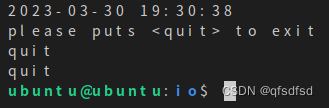
标准IO函数时候讲解的时钟代码,要求输入quit字符串后,结束进程
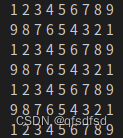
要求定义一个全局变量 char buf[] = "1234567",创建两个线程,不考虑退出条件。
A线程循环打印buf字符串,
B线程循环倒置buf字符串,即buf中本来存储1234567,倒置后buf中存储7654321. 不打印!!
倒置不允许使用辅助数组。
要求A线程打印出来的结果只能为 1234567 或者 7654321 不允许出现7634521 7234567
不允许使用sleep函数
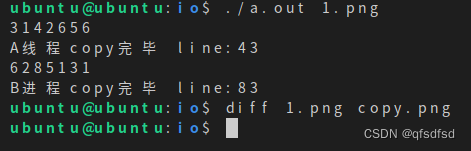
要求用两个线程拷贝一张图片。A线程拷贝前半部分,B线程拷贝后半部分,不允许使用sleep函数
#include <stdio.h>
#include <stdlib.h>
#include <string.h>
#include <time.h>
#include <unistd.h>
#include<pthread.h>
void *callback(void *arg)
{
	time_t t;
	struct tm *info;
	char c;
	while (1)
	{
		system("clear");
		time(&t);
		info = localtime(&t);
		fprintf(stdout, "%d-%02d-%02d %02d:%02d:%02d\n",
				info->tm_year + 1900, info->tm_mon + 1, info->tm_mday,
				info->tm_hour, info->tm_min, info->tm_sec);
		printf("please puts <quit> to exit\n");
		sleep(1);
	}
}

int main(int argc, const char *argv[])
{
	char str[20]="";
	pthread_t pth;
	pthread_create(&pth,NULL,callback,NULL);

	while (1)
	{
		scanf("%s",str);
		if(!strcmp(str,"quit"))
		{

			break ;
		}
		else
			printf("please again\n");
	}
	printf("quit\n");
	return 0;
}
2.
#include <stdio.h>
#include <stdlib.h>
#include <string.h>
#include <time.h>
#include <unistd.h>
#include <pthread.h>
char str[10] = "123456789";
void *callback(void *arg)
{
    int i = 0, j = strlen(str)-1;

    while(i<j)
    {
        str[i]=str[i]+str[j];
        str[j]=str[i]-str[j];
        str[i]=str[i]-str[j];
        i++;
        j--;
    }

    pthread_exit(NULL);
}
int main(int argc, const char *argv[])
{

    pthread_t pth;

    while(1)
    {
        pthread_create(&pth,NULL,callback,NULL);
        printf("%s\n",str);
        pthread_join(pth,NULL);

    }

    return 0;
}
3.
#include <stdio.h>
#include <stdlib.h>
#include <string.h>
#include <time.h>
#include <unistd.h>
#include <pthread.h>
#include <sys/types.h>
#include <sys/stat.h>
#include <fcntl.h>
void *callback1(void *arg)
{

    int fd_r = open((char *)arg, O_RDONLY);
    int fd_w = open("./copy.png", O_WRONLY | O_CREAT | O_TRUNC, 0664);
    if (fd_r < 0)
    {

        fprintf(stderr, "line:%d", __LINE__);
        perror("open");
        return NULL;
    }
    if (fd_w < 0)
    {

        fprintf(stderr, "line:%d", __LINE__);
        perror("open");
        return NULL;
    }
    off_t size = lseek(fd_r, 0, SEEK_END);
    lseek(fd_r, 0, SEEK_SET);
    lseek(fd_w, 0, SEEK_SET);

    char str;
    int i = 0;
    int res = 0;
    for (i = 0; i <size / 2; i += res)
    {
        res = read(fd_r, &str, sizeof(str));

        write(fd_w, &str, res);
    }
    printf("%d\n", i);
    printf("A线程copy完毕 line:%d\n", __LINE__);
    close(fd_r);
    close(fd_w);
    pthread_exit(arg);
}
void *callback2(void *arg)
{
    pthread_t pth = *(pthread_t *)arg;
    void *name;

    pthread_join(pth, &name);
    printf("%s\n",(char*)name);
    int fd_r = open((char *)name, O_RDONLY);
    int fd_w = open("./copy.png", O_WRONLY | O_CREAT | O_APPEND, 0664);

    if (fd_r < 0)
    {

        fprintf(stderr, "line:%d", __LINE__);
        perror("open");
        return NULL;
    }
    if (fd_w < 0)
    {

        fprintf(stderr, "line:%d", __LINE__);
        perror("open");
        return NULL;
    }
     int size=lseek(fd_r, 0, SEEK_END);
     printf("%d\n",size);
     lseek(fd_r,size/2,SEEK_SET);
    char str;
    int i = 0;
    int res = 0;
    while( res = read(fd_r, &str, sizeof(str)))
    {

        write(fd_w, &str, res);
    }
    printf("B进程copy完毕 line:%d\n", __LINE__);
    close(fd_r);
    close(fd_w);
    pthread_exit(NULL);
}

int main(int argc, const char *argv[])
{
    if (argc < 2)
    {
        printf("请输入文件名\n");
        return -1;
    }
    pthread_t pth;
    pthread_t pth1;

    if (pthread_create(&pth, NULL, callback1, (void *)argv[1]))
    {
        printf("failed %d\n",__LINE__);
        return -1;
    }
    if(pthread_create(&pth1, NULL, callback2, (void *)&pth))
     {
        printf("failed %d\n",__LINE__);
        return -1;
    }

    pthread_join(pth1, NULL);

    return 0;
}





 扫一扫
扫一扫


 798
798

 被折叠的 条评论
为什么被折叠?
被折叠的 条评论
为什么被折叠?
 到【灌水乐园】发言





